7 Best Hiking Sandals For Women in 2026
We buy shoes ourselves. We earn commissions when you buy through us, at no extra cost. Why trust us
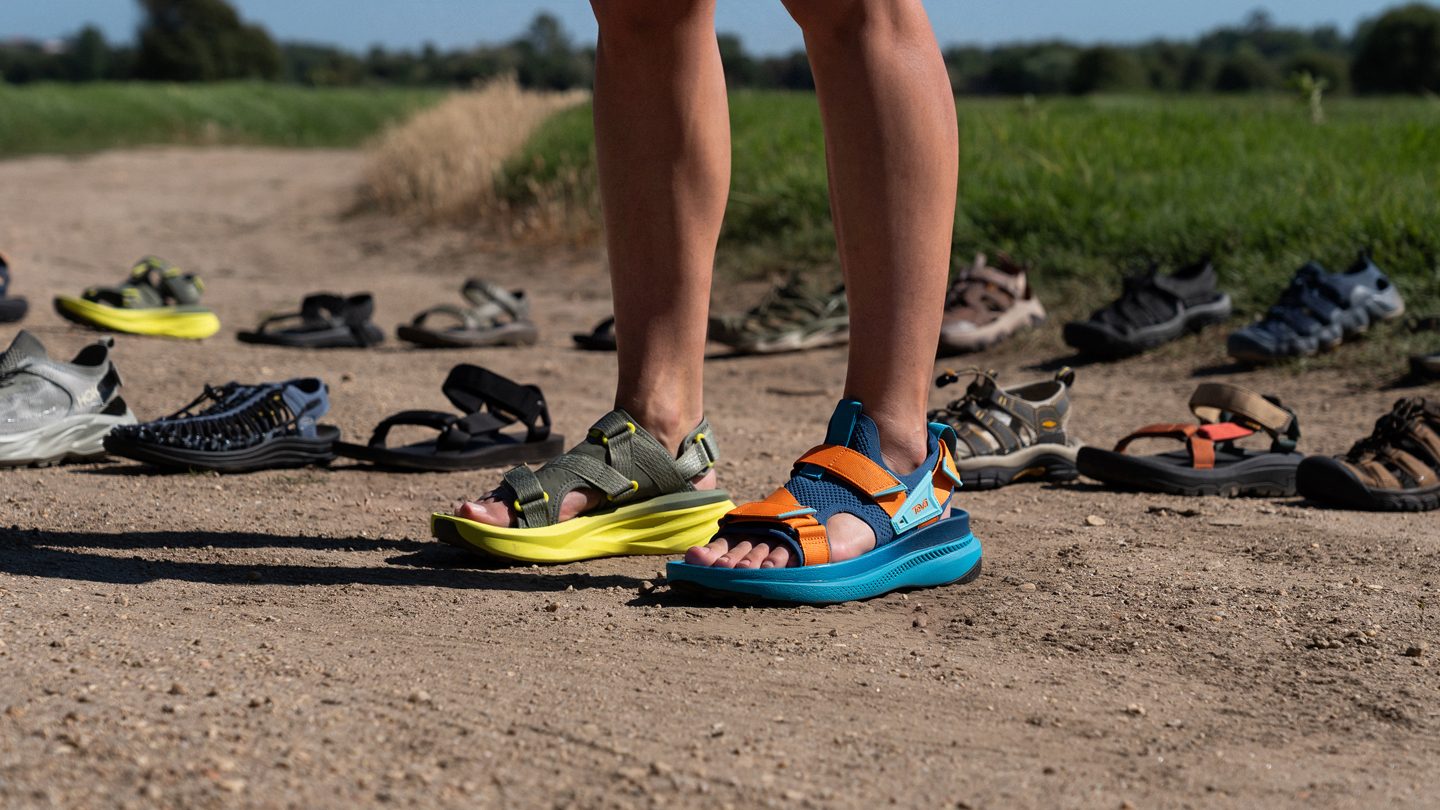
Easy summer hikes call for hiking sandals! Women love them for their customizable fit, great performance, and (often) gorgeous design. From rugged to stylish, or hiking over large rocks to hitting the city, sandals are a great option for active ladies.
We tested hiking sandals on the trails, around and in the water, and in our lab, and we're happy to present here our top picks in different categories. And, if you want to learn more about specific features, read the guide section where we dig deep into our lab data!
How we test hiking sandals for women
We are laser-focused on delivering objective hiking sandal reviews, which is why:
- We buy all sandals using our own money to ensure unbiasedness in each review.
- We test every pair. Yes, we hike in the sandals we purchase to see the best of the best, primarily based on grip, comfort, durability, and stability.
- We perform lab tests. We are not only focused on how the sandals perform on foot, which is why we also present the lab data that (most often) backs up our first-hand experience with the sandals!
- After summarising everything (our personal experience with the sandals and lab data), we cherry-pick the best performers.
Best hiking sandals for women overall


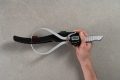
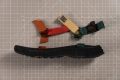
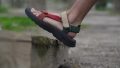
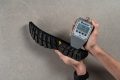




What makes it the best?
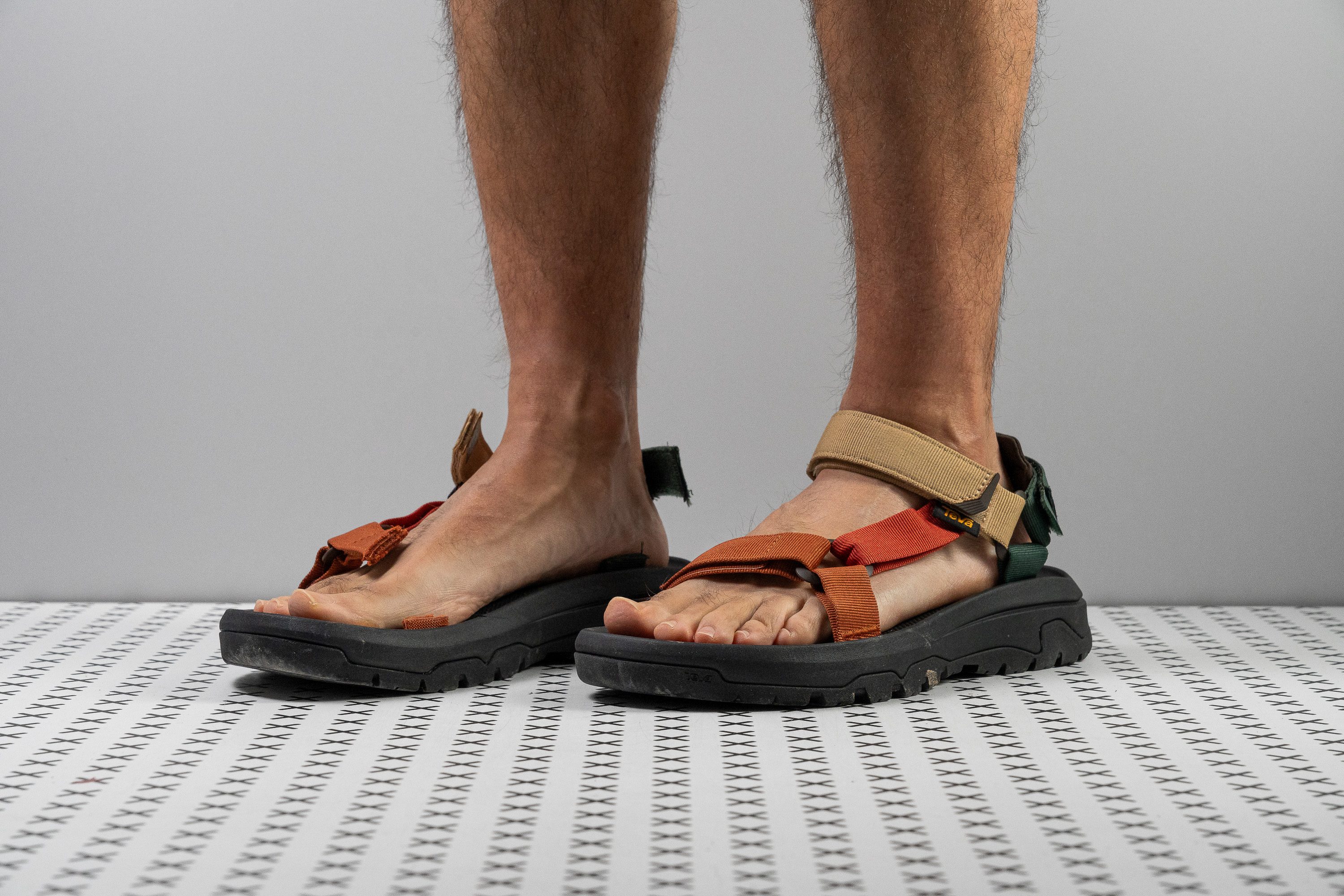
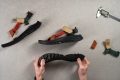
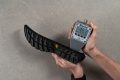
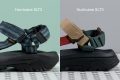
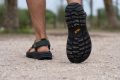
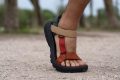
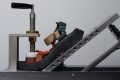
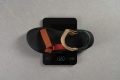
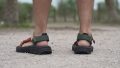
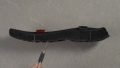
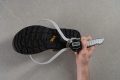
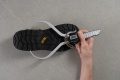
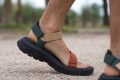
The Teva Hurricane XLT3 knows what a girl wants: lasting comfort with support and grip that gives us the confidence to explore new trails. And it does so in style with its clean design and colourful straps. Lab tests show it’s one of the most cushioned sandals we’ve tested, but assures us of control and safe footing. It's a clear winner in the women’s hiking sandal category.
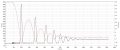
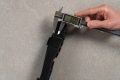
We measured the stack height at 35.5/23.6 mm, making it one of the tallest sandals in our roster. Beyond its thick foam, the heel reduces the stress from impact with its impressive shock absorption of 124 SA. Compared to the average, it offers 12% more protection and comfort.
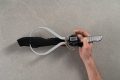
Its plush nature is complemented by a nylon shank in the midfoot for added stability. It offers undeniable lateral support, especially as we tackle rocky or hilly paths without buckling over. Hurricane XLT3 features a wide 126.1 mm forefoot that suits the natural foot shape of ladies, who tend to have a broader shape up front than in the heel.
The added width also allows a bigger area to be covered by the tacky outsole and 3.7 mm lugs underneath, which reliably performed on both wet and dry surfaces. Our traction test backs us up with a high 0.69 score.
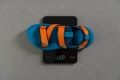
Unfortunately, all these benefits come at the expense of added weight. At 12.5 oz (354g), this sandal is 10% heavier than average, which may lose its appeal to women seeking a sleek sandal.
Pros
- Exceptionally high shock absorption
- Great underfoot protection
- Convenient 3-strap fit regulation
- Excellent outsole grip on dry and wet
- Super wide and stable platform
- Impressive outsole durability
- Sustainable materials
Cons
- Got heavier than average
- $20 price hike
Women's hiking sandals with the best support










What makes it the best?
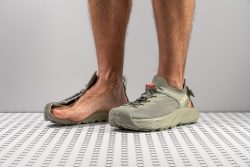
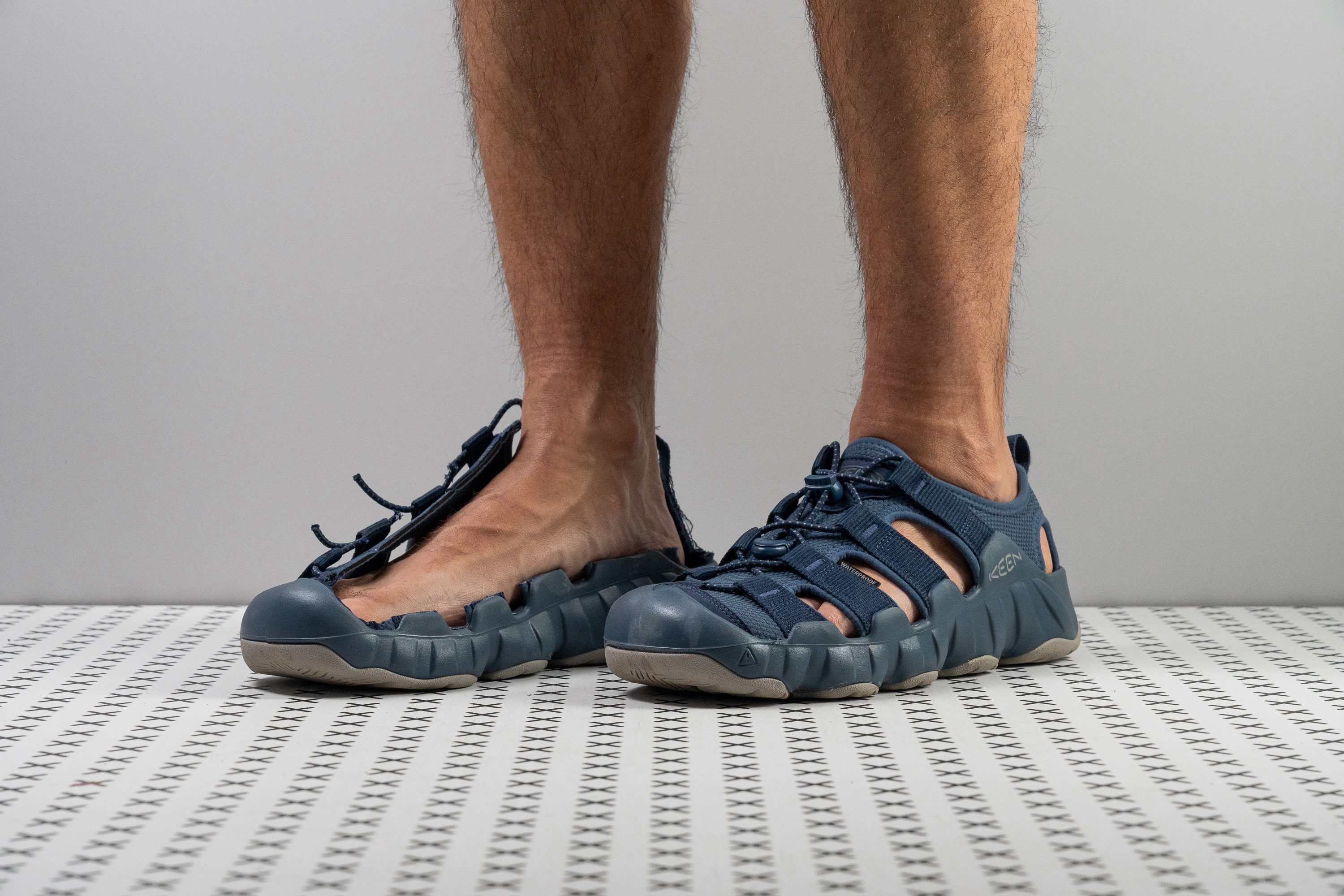
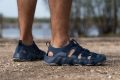
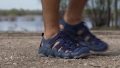
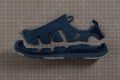
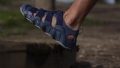
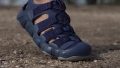
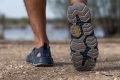
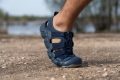
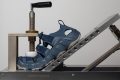
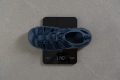
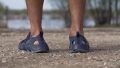
Our hikes in the KEEN Newport H2 were filled with confidence and ease because we had zero foot pain and unsteadiness. Our lab tests verify its cushioned and protective platform, making it our top hiking sandal that offers the best support for women.
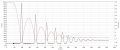
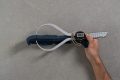
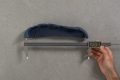
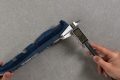
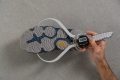
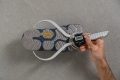
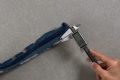
This sandal’s platform feels as cushioned as a hiking shoe, and our calliper shows a generous heel height of 28.0 mm. While it has a well-balanced sensation, as verified by its average 102 SA shock absorption, it has a springy feel that reduces the effort to move forward, as shown by its 57.5% energy return score in the rear.
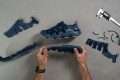
Besides the well-balanced cushioning, the midsole walls extend and connect to its straps, forming a sturdy framework that keeps us centred. It also features a topsole that’s curved to prevent our arches from collapsing, which suits women who stay long hours on foot.
Up front is the sturdy KEEN.PROTECT toe bumper, guarding us from painful stabs and extending the shoe’s life.
However, stiffness is the price to pay for this sandal’s protection. Those who prefer a looser and more natural feel should find alternatives.
Pros
- Lively and responsive ride
- Stable and supportive build
- Highly protective toe bumper
- Generous toe space
- Light for a closed-toe sandal
- Good traction on dry and wet
Cons
- Not the best shock absorption
- Not very flexible
Women's hiking sandals with the best traction








What makes it the best?
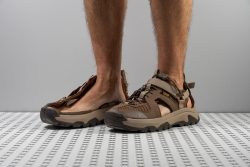
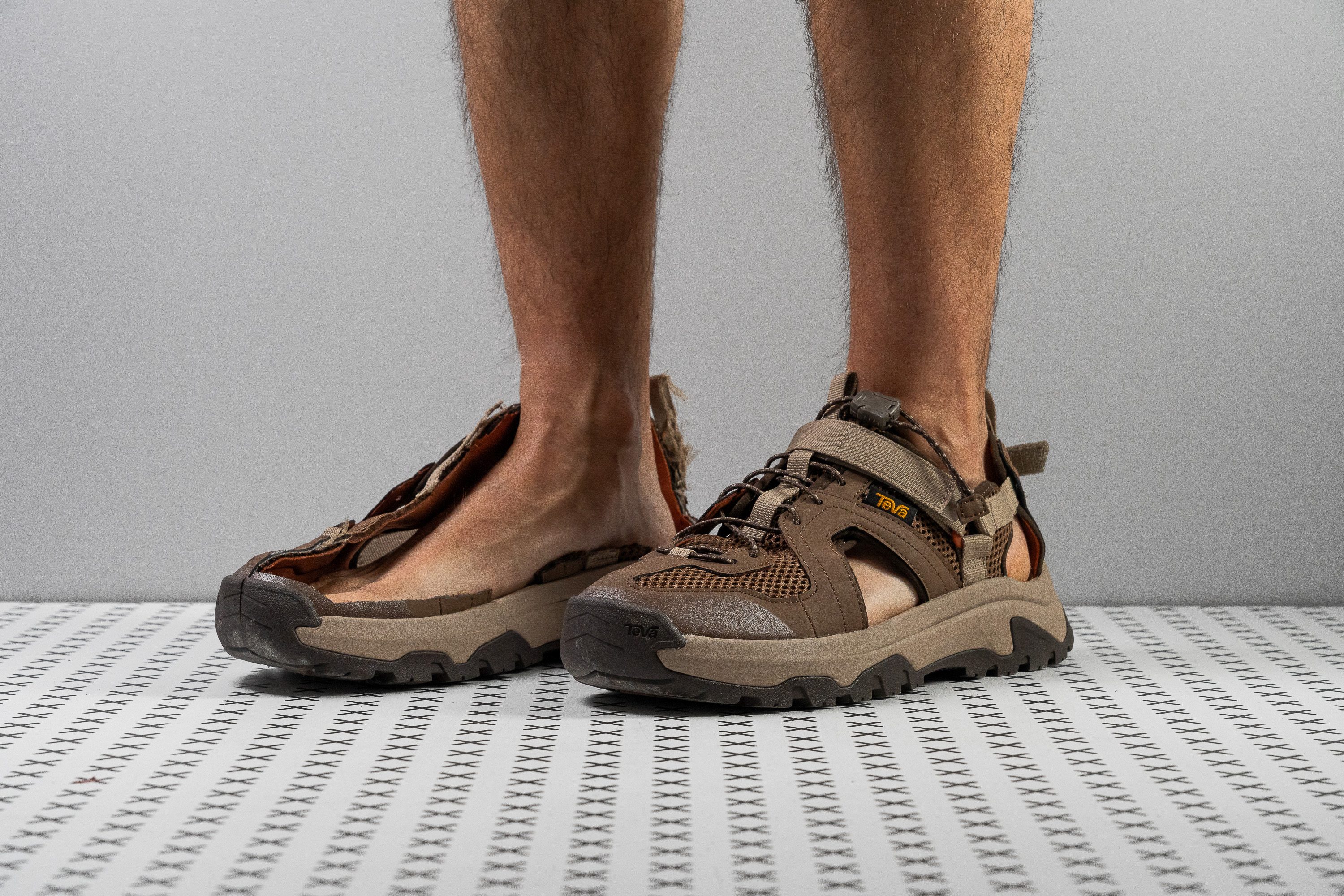
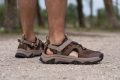
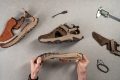
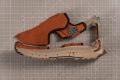
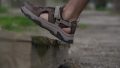
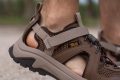
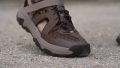
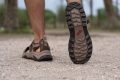
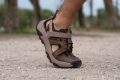
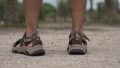
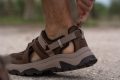
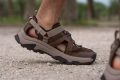
Durable, steady, and in control, our feet felt so safe exploring the wild using the Teva Hurricane XLT3 Closed Toe. Numbers were cross-checked in the lab, and the outsole offered a reliable grip on a variety of surfaces. It delivered the best traction among women’s hiking sandals we tested.
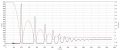
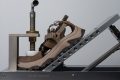
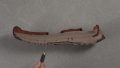
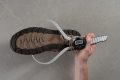
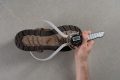
Whether on wet or rocky conditions, the Hurricane XLT3 Closed Toe took care of our footing. We measured the outsole’s traction in our lab test, and it scored a massive 0.73, underscoring its slip resistance. It features wide, blocky 3.0 mm lugs that are angled to add control on inclined surfaces.
Its outsole is our main defender even against debris and premature wear, as our Dremel only produced a tiny 0.6 mm dent. At this level, it’s 53% sturdier than average. Even the toebox emerged victorious in our abrasion test, earning an impressive 4/5 durability score.
The midsole includes a nylon shank and a raised topline, which creates a steady platform for our feet. It took much effort to twist our ankles or lose balance, as the sandals felt very supportive.
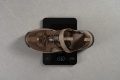
However, this armour is edging closer to hiking shoes, and its 12.6 oz (357g) build shows it. Women who want a more compact or versatile sandal should look for more forgiving models.
Pros
- Fantastic traction on dry and wet
- Amazingly durable materials
- Stable and grounded platform
- Soft topsole directly under the foot
- Solid shock absorption for a sandal
- Great breathability for a closed-toe sandal
- Convenient fit regulation
- Sustainable materials
Cons
- Heavier than average sandal
- Less cushioning than in the open-toe XLT3
Women's hiking sandals with the best style







What makes it the best?
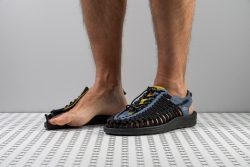
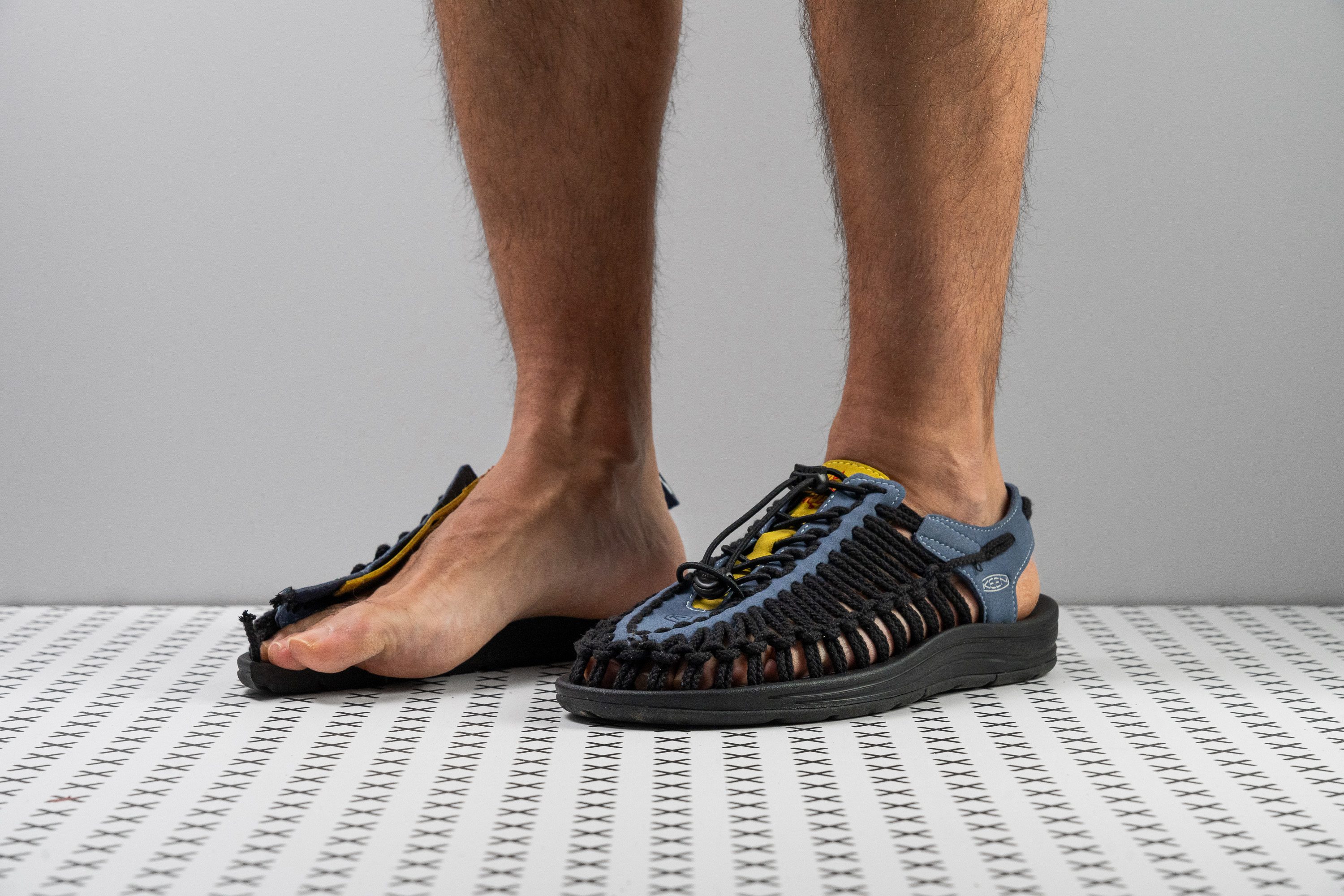
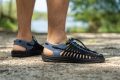
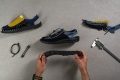
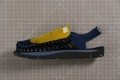
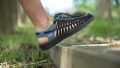
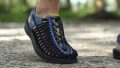
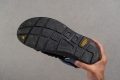
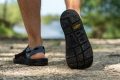
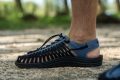
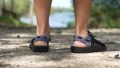
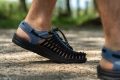
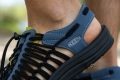
Based on our lab results and outdoor wear tests, the KEEN Uneek feels natural and carefree on foot as this sandal adapts to our movement and foot shape. Even as we venture through river banks, lounge by the beach, or walk around town, this sandal does the job of keeping us safe. And it does so as a statement piece, making it our most stylish women’s hiking sandal.
Uneek has a unique design that goes well with many outfits! Its cord upper instantly elevates the look, ensuring women will feel confident in this pair. It feels like an extension of our foot as the free-moving cords stretch to accommodate our own foot shape.
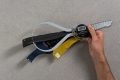
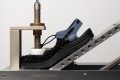
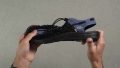
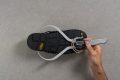
Moreover, its effortless feel comes from its ultra-flexible midsole. Our bend test shows it’s 55% more pliable than average, making it the most adaptive sandal we’ve tested. It has a barely-there sensation, and our scales show it’s lighter than average at 11.1 oz (315g).
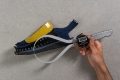
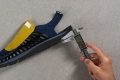
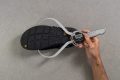
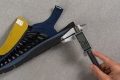
We feel at home in the low 20.5/12.9 mm cushion, offering ground feel to navigate uneven paths better. Maintaining our balance is easy since the topsole has a Contour Arch design to prevent our feet from collapsing in. Meanwhile, grip is reliable on hard-packed terrain and wet boardwalks.
Unfortunately, women will need a more heavy-duty sandal on moderately challenging trails. We find the Uneek works best for casual wear and simple water-based activities.
Pros
- Head-turning cord design
- Ultra flexible construction
- Impressively durable outsole
- Intimate contact with the ground
- Grippy on wet and smooth surfaces
- Feels light and airy on the foot
- Cords made of recycled materials
Cons
- Not much support
- Little protection from debris
Women's hiking sandals with the best shock absorption






What makes it the best?
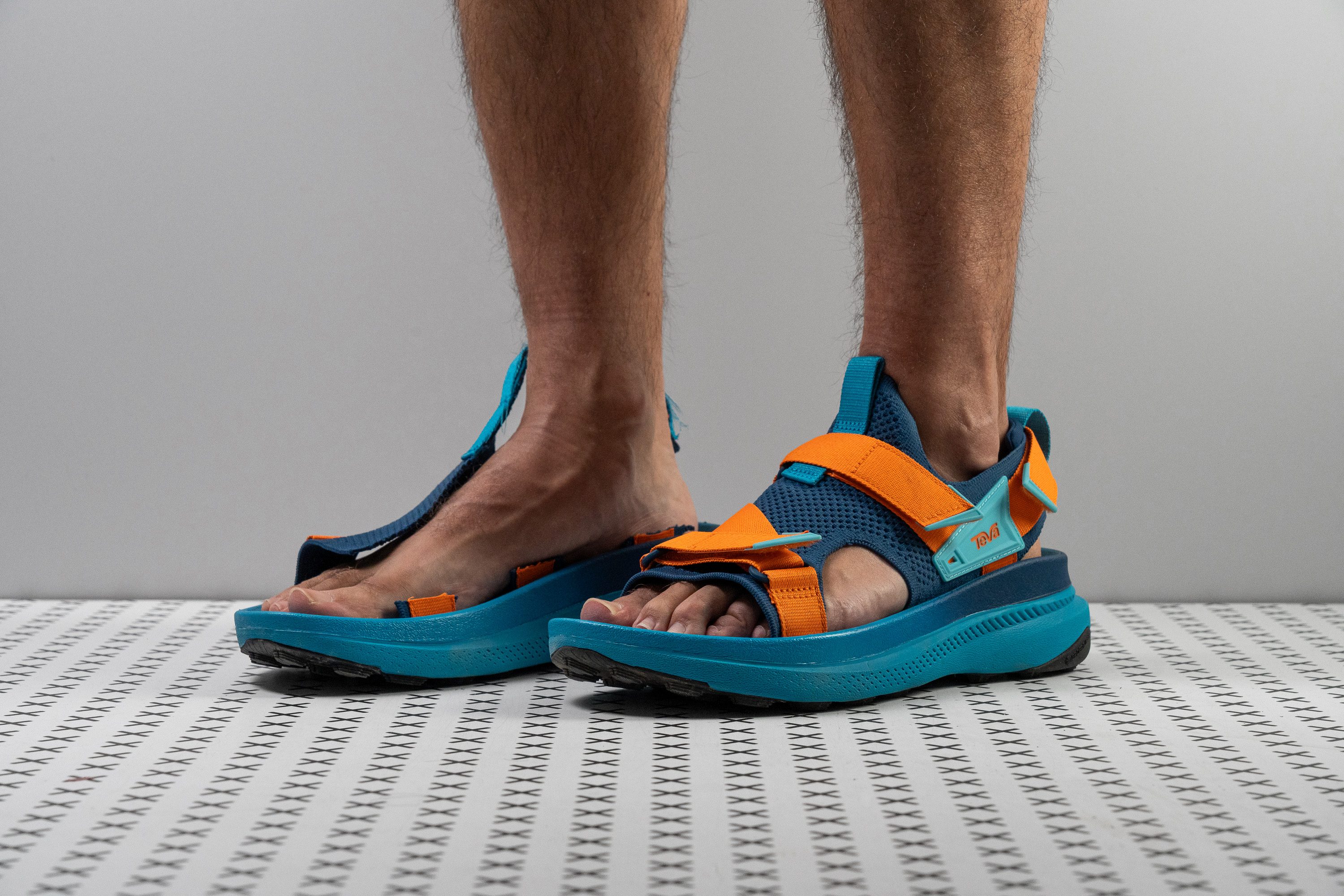
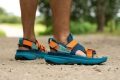
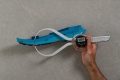
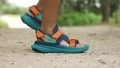
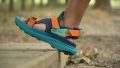
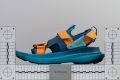
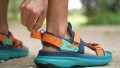
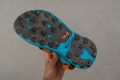
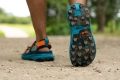
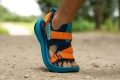
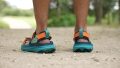
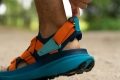
Our trail explorations with the Aventrail Sandal felt well-cushioned, springy, and stable, which kept us on foot longer since we didn’t feel the fatigue right away. Of all the best women’s hiking sandals in the lab, the Teva Aventrail Sandal stands out with record-breaking shock absorption.
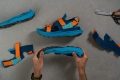
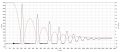
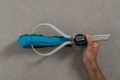
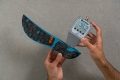
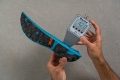
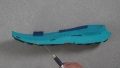
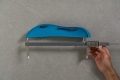
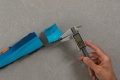
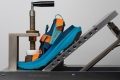
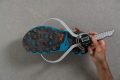
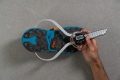
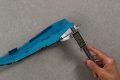
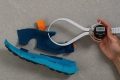
We sliced the midsole in half and measured a generous height of 41.5/25.1 mm. However, the cushioning felt even more delightful thanks to its high level of compression with every stride, evidenced by its insane shock absorption reading of 147 SA. At this rate, it exceeds the standard by 26% and is officially the highest we’ve seen so far!
We liked how the cushioning doesn’t compress drastically under heavy loads, and even has a fun bounce to it. We measured the rear’s energy return at 57.7%, creating a dynamic sensation and quicker turnover. We also discovered a nylon shank in the midfoot and forefoot area, contributing to a more peppy yet stable experience.
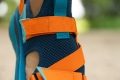
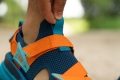
The buttery foam is complemented by a wide 104.2 mm heel to further stabilise the ride. The midsole design is deeper than usual, which cradles us in place. We never felt like losing our footing while sporting this sandal, especially since the W Strapping System offers a more form-fitting hold with the stretch-knit sleeve underneath.
However, the maximum cushioning stiffened this sandal a lot. Women who prefer a more natural, relaxed sensation underfoot should consider more flexible pairs.
Pros
- Unmtached cushioning for long miles
- Can be used for trail running
- Amazingly stable for its high stack
- Impressive outsole durability
- Smooth heel-to-toe trasitions
- Foot-hugging knit sleeve
- Adjustable strapping system
Cons
- Overly steep drop
- Not for technical terrain
Women's hiking sandals with the best comfort


















What makes it the best?
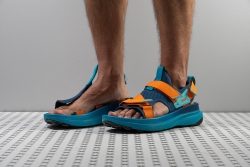
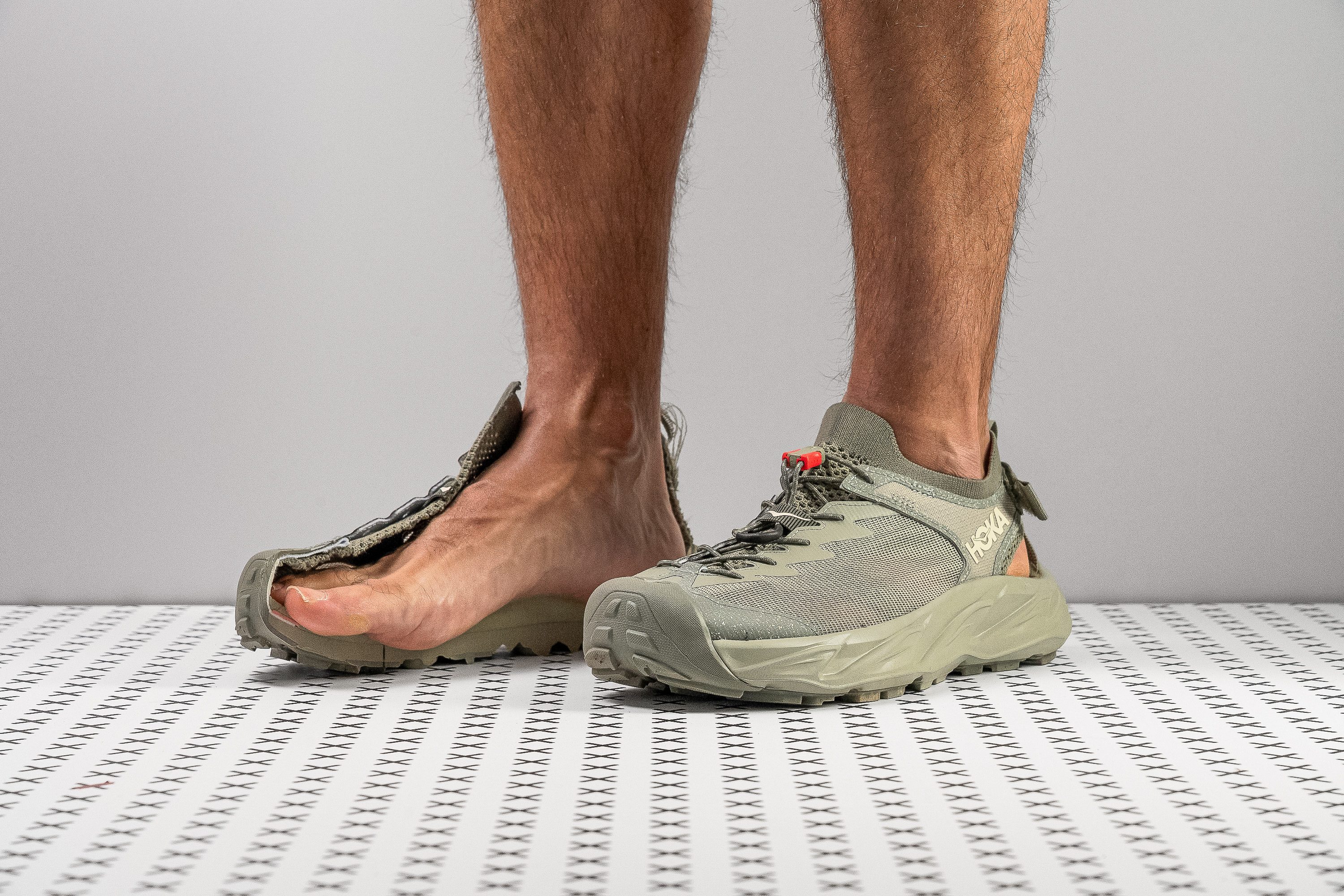
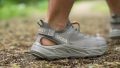
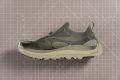
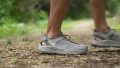
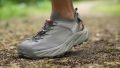
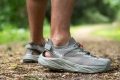
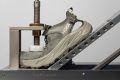
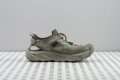
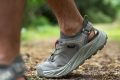
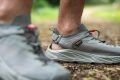
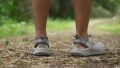
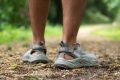
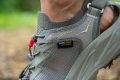
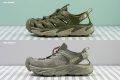
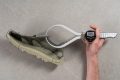
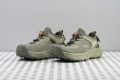
Our near-water adventures with the HOKA Hopara 2 were a stable and comfortable experience while receiving the utmost care and protection. Our lab tests show it has a highly supportive platform, making it our most comfortable hiking sandal for women.
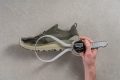
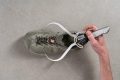
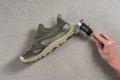
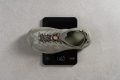
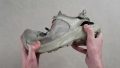
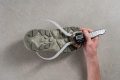
Despite its visual bulk, Hopara 2 is quite light at 11.6 oz (329g) for a closed-toe sandal. Our calliper reveals the stack height is close to the standard at 26.2/23.0 mm, when our feet felt more comfortable than the numbers suggest. Our shock absorption test reveals why: the heel scored a high 123 SA rating, creating a sensation that's 11% more cushioned than average.
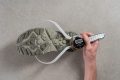
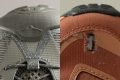
The shoe’s design feels inherently stable, notably the midsole sidewalls that cradle our feet and keep us centred. We also measured the base to be a wide 121.9/98.4 mm, ensuring a well-planted feeling, along with the grippy lugs that kept us safe.
The upper showed excellent versatility, which is perfect for multitasking women. The Cordura mesh is highly protective and sturdy, but still offers room for ventilation and water drainage without pebbles and dirt getting in. However, we can’t say the same for sand. We recommend women who visit the beach often to find a more suitable sandal.
Pros
- Comfortable cushioning
- Highly durable construction
- Light for a closed-toe sandal
- Unmatched cushioning and impact protection
- Feels stable and grounded
- Fantastic grip on slippery surfaces
- Plenty of toe room
- Sustainable materials
- Sustainable materials
Cons
- Traps sand easily
- Not for narrow feet
- Colour discrepancy
Best budget women's hiking sandals







What makes it the best?
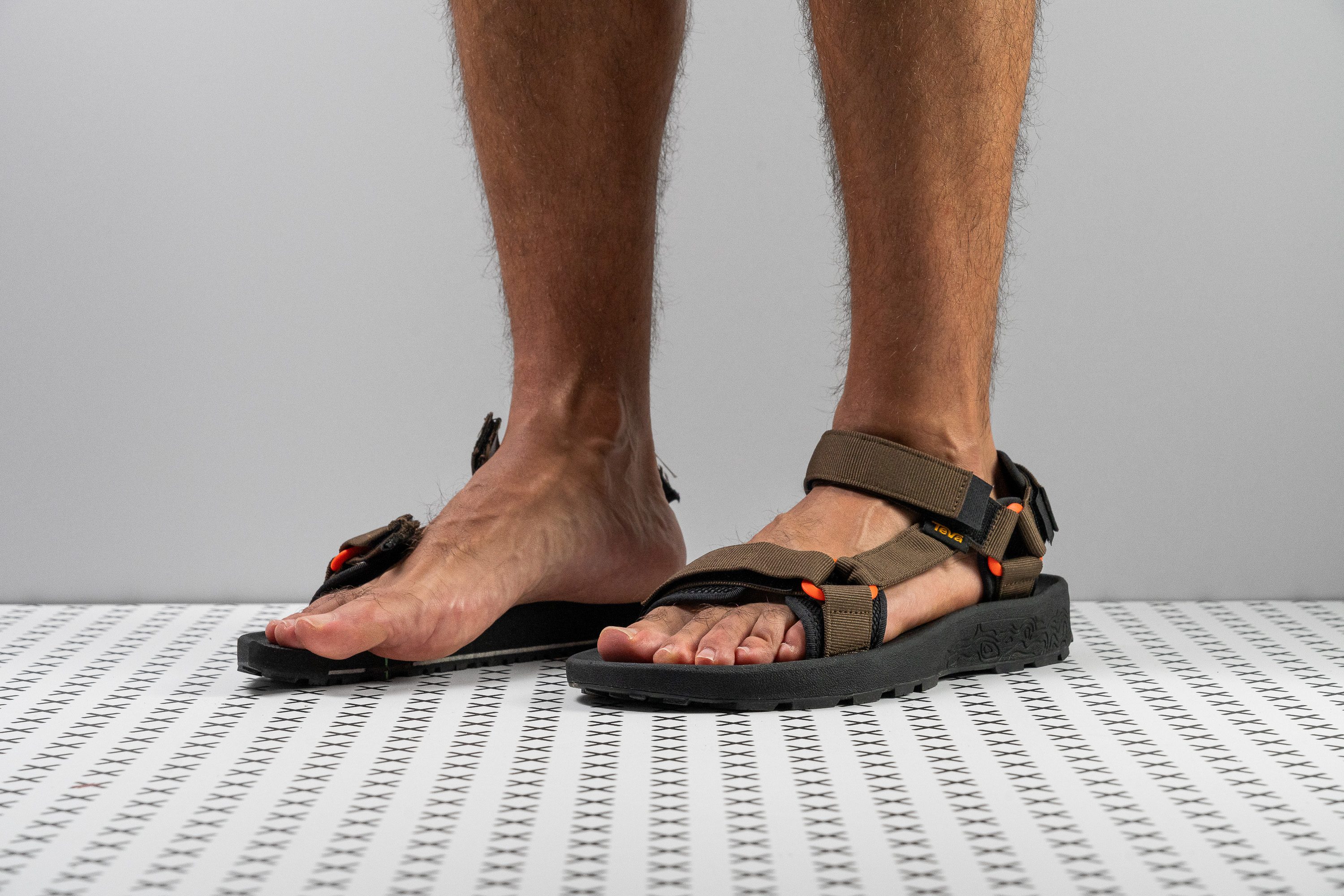
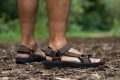
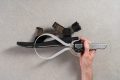
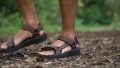
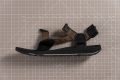
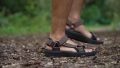
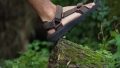
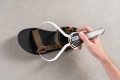
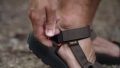
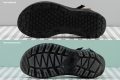
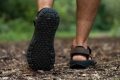
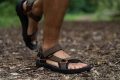
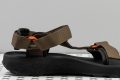
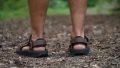
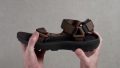
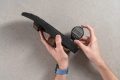
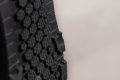
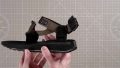
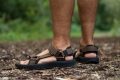
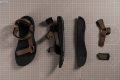
Versatile and wallet-friendly, the Teva Hydratrek is ideal for women on the move, and our lab results confirm its lightweight, carefree style. Simple yet comfortable, it’s only £80, making it our best budget women’s hiking sandal.
Wearing this sandal feels like walking barefoot without the discomfort. Our scales show it’s only 10.8 oz (305), 4% lighter than average.
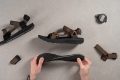
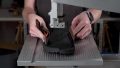
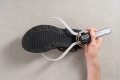
Yet its true effortless sensation comes from its forgiving midsole. We could easily bend our feet without resistance. Our 30-degree test reveals it’s 28% more flexible than average! With impressive adaptability, it's easy to use for daily walks and other activities.
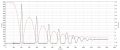
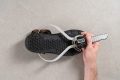
Despite its light build, it actually delivers generous cushioning of 29.2/17.5 mm underneath our feet. Its heel is thicker than average and offers strong shock absorption of 116 SA, allowing us to go on and on without our legs feeling beaten up.
However, the Hydratrek can’t be used for more serious hiking since it lacks sturdy support and protection with its open and vulnerable design. Women who want to explore tougher terrains should find a more protective shoe.
Pros
- Versatile: water activities, light hiking, casual
- Great value for money
- Comfortable softer cushioning
- Wide and stable platform
- Enhanced grip on wet surfaces
- Very flexible construction
- Padded straps prevent blisters
- A high % of recycled components
Cons
- Mud gets stuck between lugs
- Fiddly when putting on (pads fold over)
Difference between women’s and men’s hiking sandals
We know that, in general, women’s feet are wider at the forefoot and narrower at the heel than men’s feet. However, that’s not always the case. It’s also not always the case that the brands make different designs (lasts) for women’s and men’s footwear.
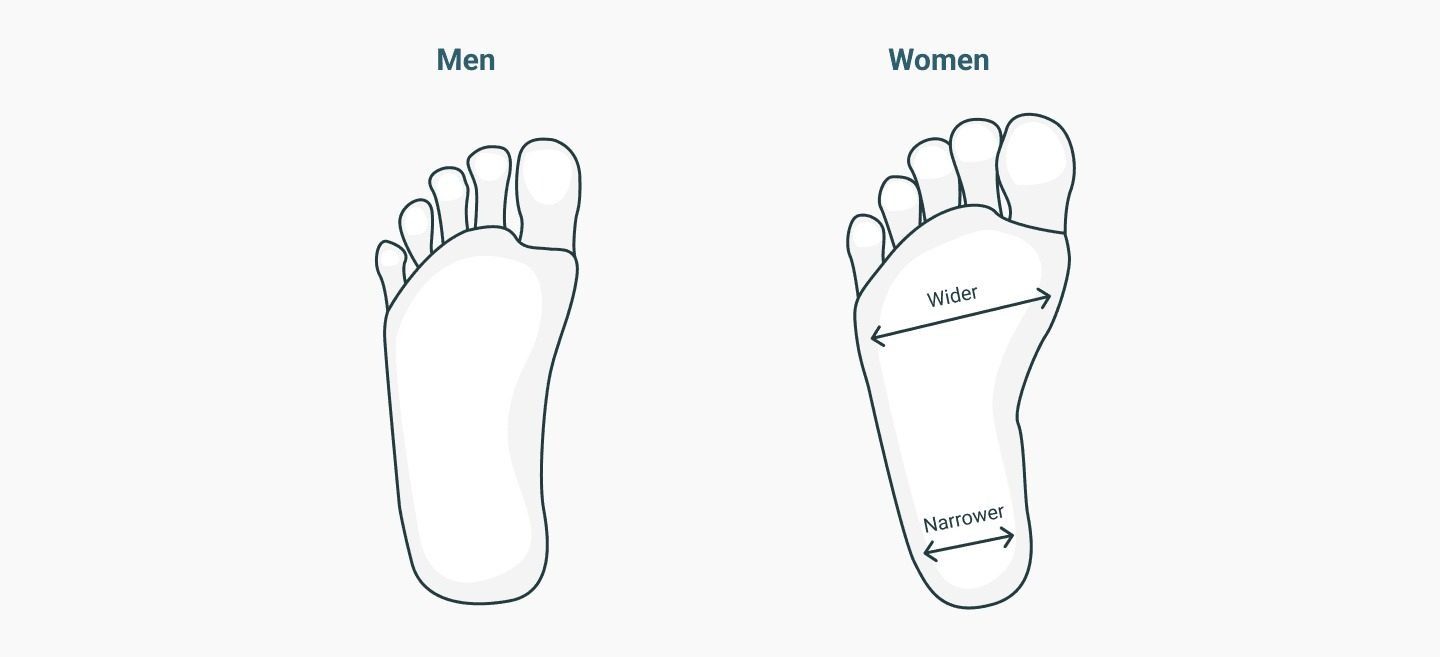
It simply depends on the brand: sometimes there’s no difference, other times the sandals for women are slightly narrower. You simply have to try them on.
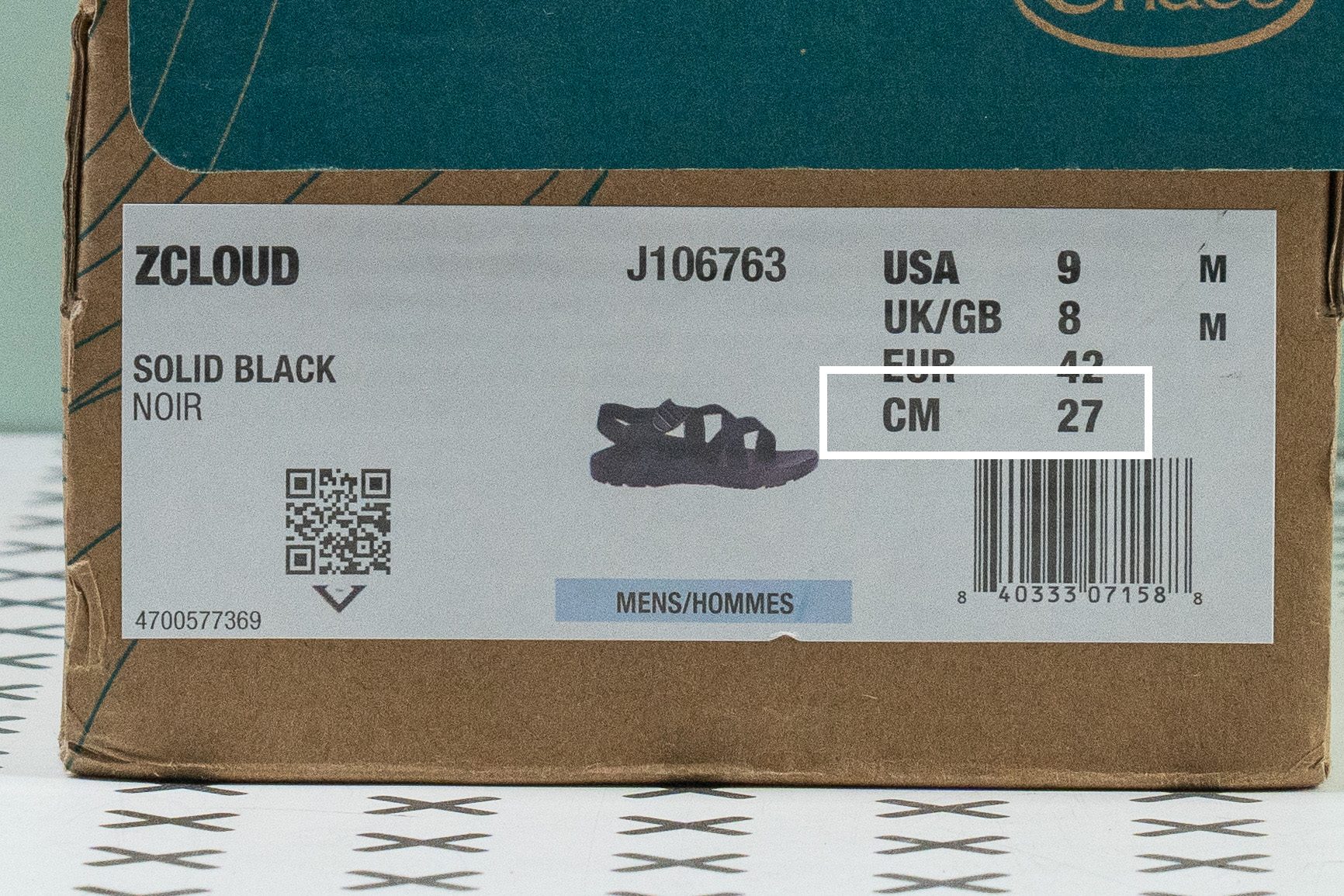
And, in case your feet are long enough to wear men’s sizes, it is best to look at the length (given in centimetres) and match your size (in men’s) that way.
Pros and cons of wearing hiking sandals
Hiking sandals are great because they are lighter than other hiking footwear (on average), they are incomparably more breathable, the price is more affordable, the fit is customizable thanks to the strap length that can be regulated (around the heel, toes, and/or the ankle), and they are easy to maintain.
What you might lack in hiking sandals is good protection, even in closed-toe designs, tiny rocks and debris can hurt your feet. Because of this, it’s also impossible (not advised) to hike over technical terrain. The grip is not good enough and the protection is lacking! And, if that wasn’t obvious, you can’t use sandals for hikes in cold weather.
Terrain type dictates features to look for
In hiking, we usually differentiate between light, moderate, and technical terrain. Given that sandals are not made for technical terrain, we will cover light and moderate options here.
|
Light terrain |
Moderate terrain |
|
|
Surface |
Very easy hikes, hard-packed trails, road-to-trail (urban environments) |
Varying terrain, can include soft ground, hard ground, wet terrain, but nothing technical (no sharp rocks, mud, etc.) |
|
Closure |
Open or closed-toe |
Better if closed-toe for protection |
|
Grip |
Shallow lugs (bellow 3-3.5mm) |
Deeper lugs (minimum 3mm) |
|
Stiffness |
Can be quite flexible |
Better when stiffer for extra support and stability on uneven surfaces |
|
Weight |
Lightweight |
Heavier |
|
Stack |
Can be minimalist and low to the ground |
Usually no ground feel because of the needed cushion and protection |
|
Outsole durability |
Varying |
Must be more durable |
We will cover all of these features below in greater detail.
3 design features in women’s hiking sandals
Just by looking at the sandals, we can notice their a) closure, b) material, c) upper type.
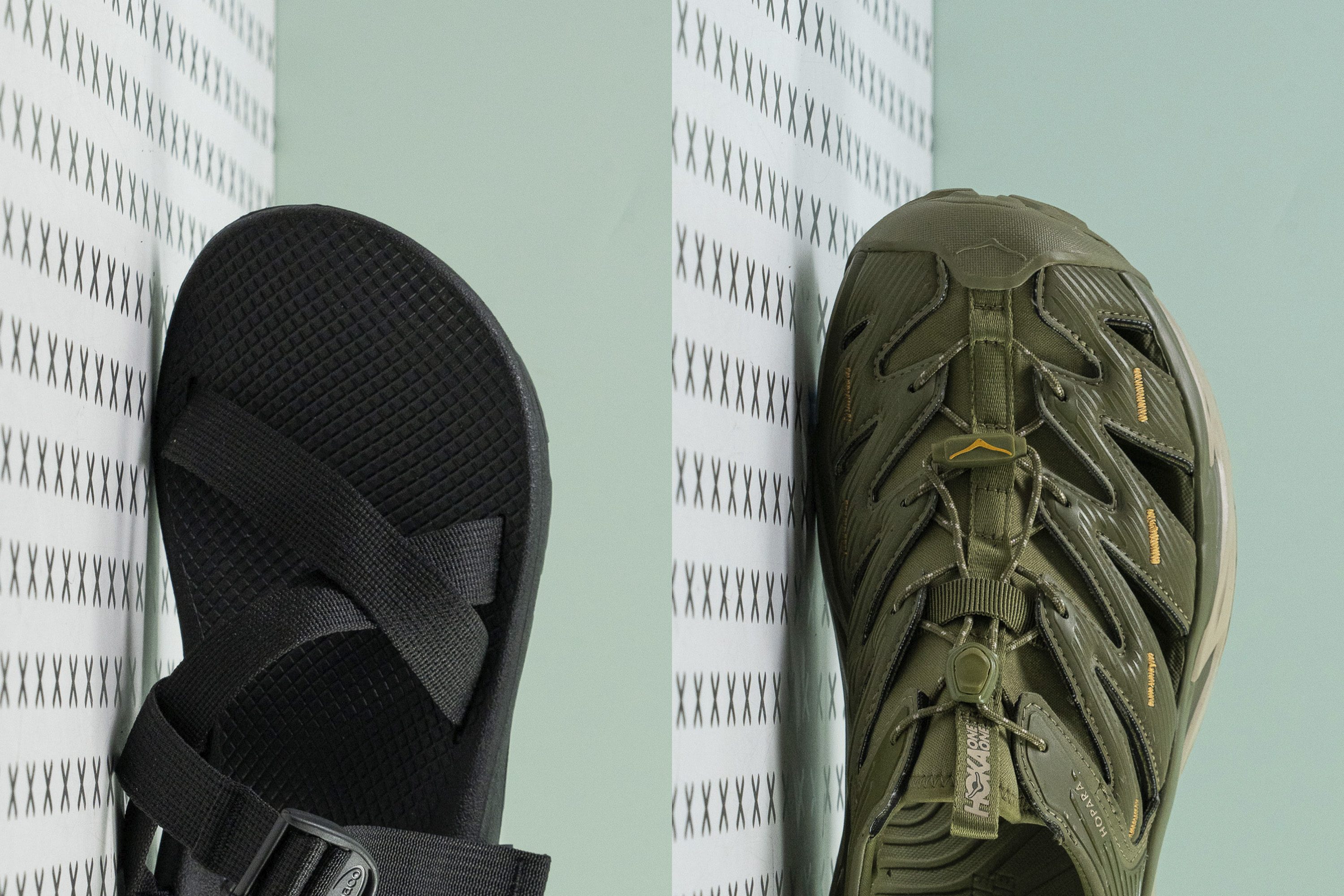
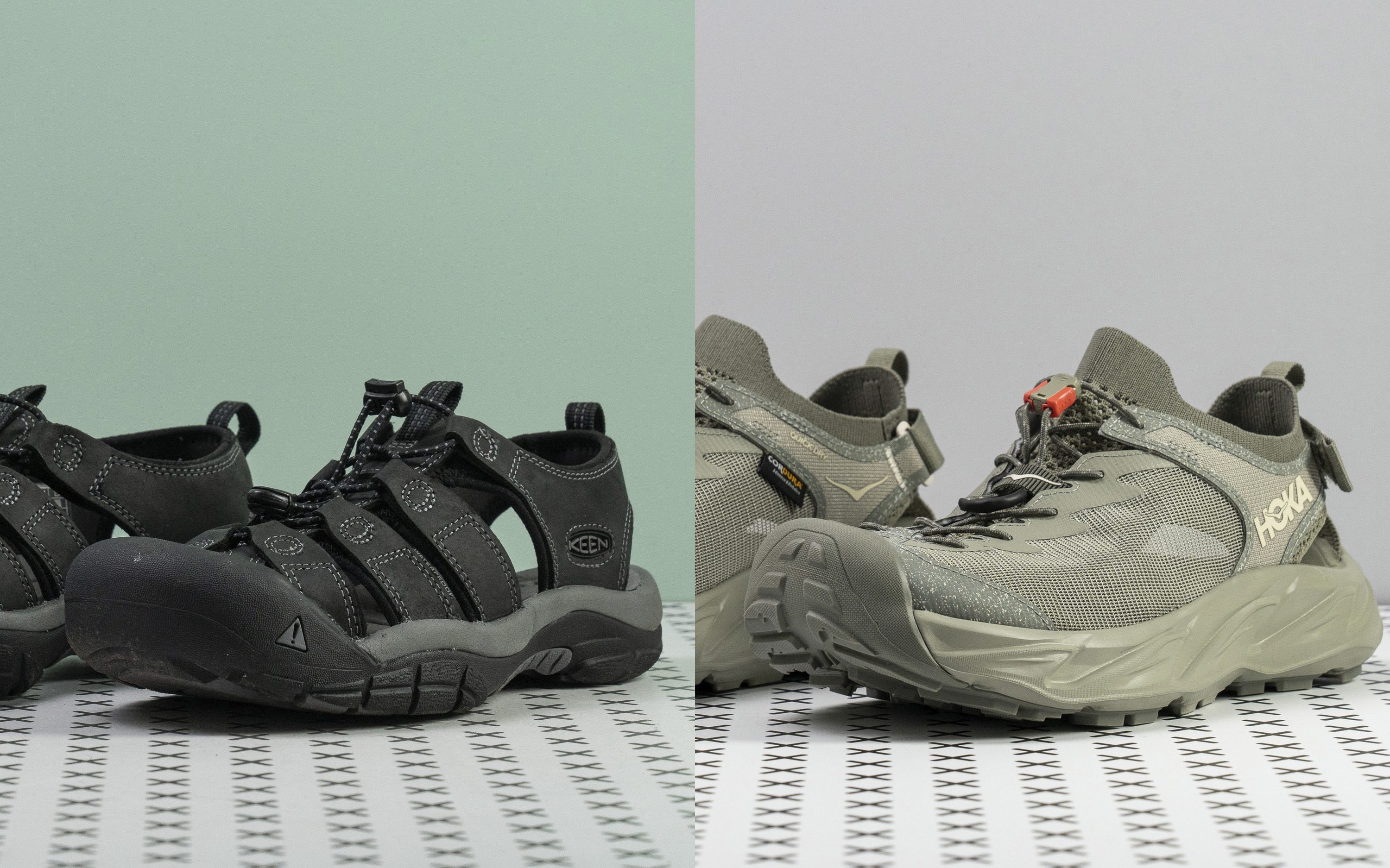
There are 2 types of closure: open-toe and closed-toe. Open-toe closure is great when you want all the freedom of movement and feel the breeze on your toes. Closed-toe sandals basically have a toe bumper like many hiking shoes and even trail running shoes have. This is great when you need extra protection and don’t want to hit rocks or branches with your toes or get scratches on your toes.
When it comes to materials, we usually notice the difference between leather and synthetic straps at first glance. Leather is more durable, a natural material, and more protective. On the other hand, synthetic straps are lighter and dry faster. This is especially important if you plan to go water hiking.
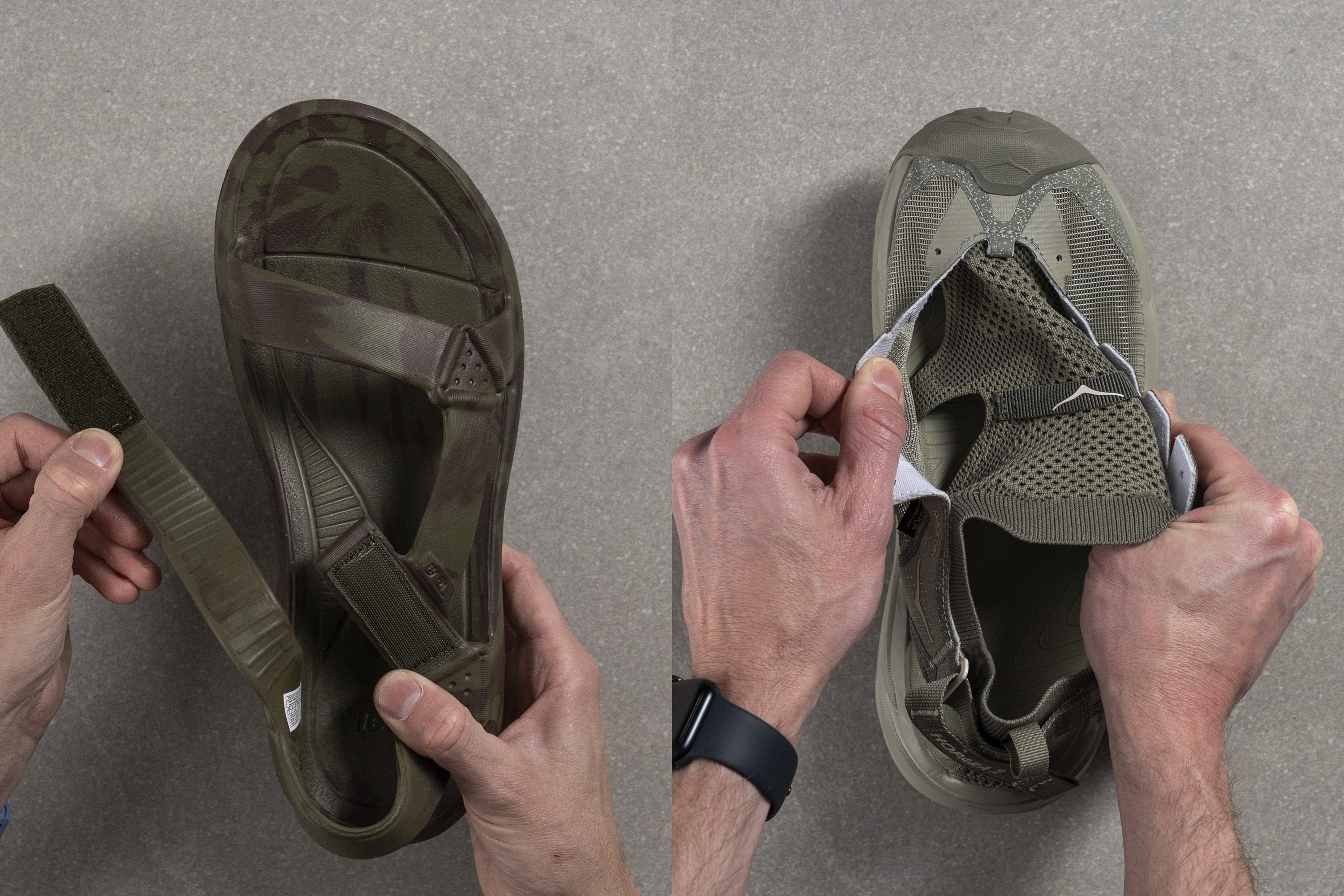
Looking at the upper, you can choose straps, braids, or a regular upper. Straps allow, by far, the highest level of customization! Braided uppers can work wonderfully with a single-lace pull, as it can create a superb lockdown. Regular uppers keep the feet in place the most but offer customization only at the heel. They are great for moderate hikes where you really need all the support you can get!
Grip in hiking sandals for women
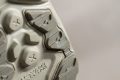
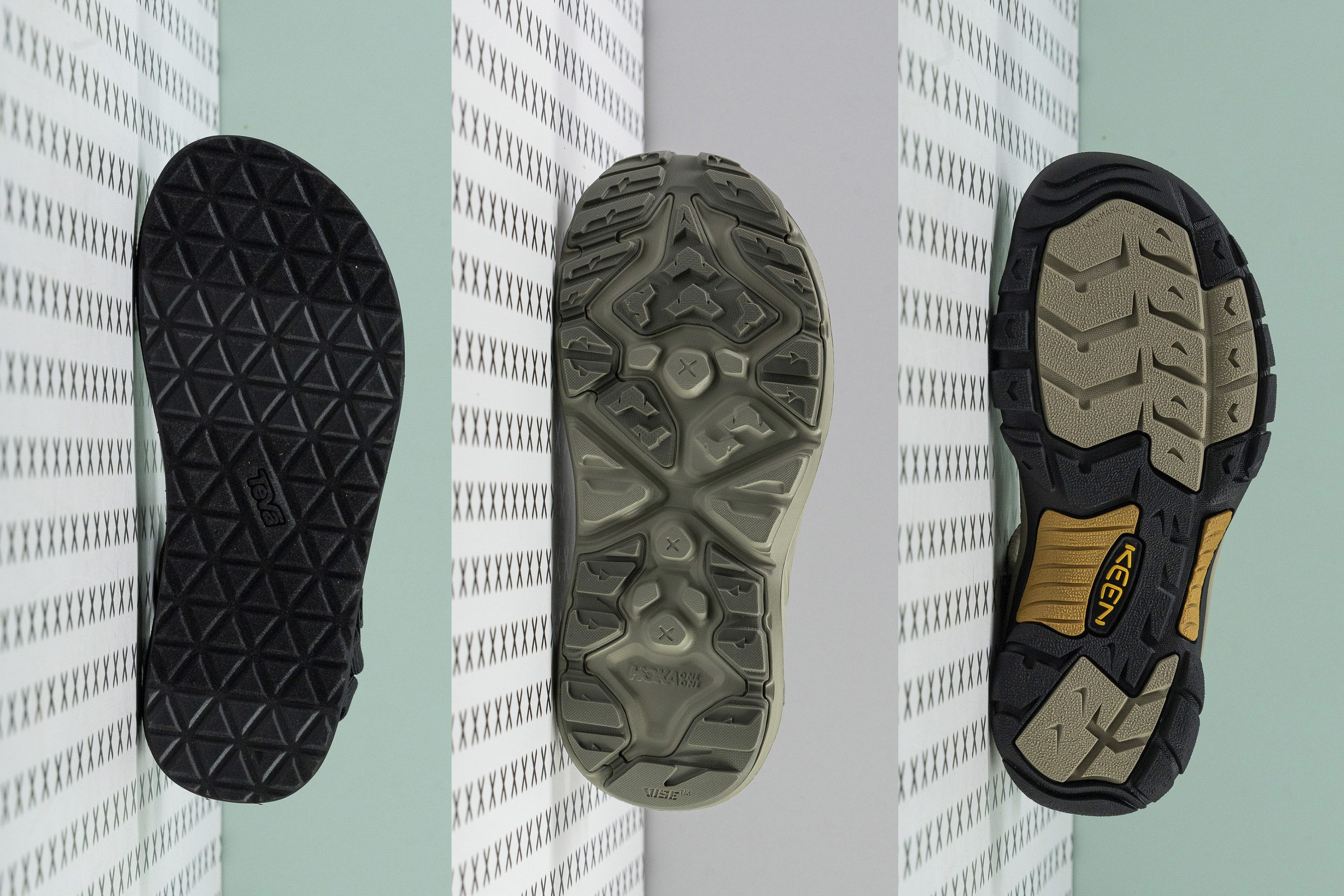
Reminder: if you want to hike in muddy terrain, over sharp rocks, or trails covered with debris, consider getting hiking shoes or trail running shoes. If you want to keep it “light” and stick to light and moderate terrain, it’s best to look at the lugs to understand what the sandals are made for. We look at the lug depth and the lug pattern.
The deeper the lugs, the better the grip in hiking sandals. However, we also recommend looking at the shape of the lugs, their orientation, and their distance from one another.
Minimalist vs cushioned sandals: pros and cons
Women usually go with minimalist sandals when they want a) a good ground feel, b) a flexible platform that promotes natural movement, and c) a softer feel.
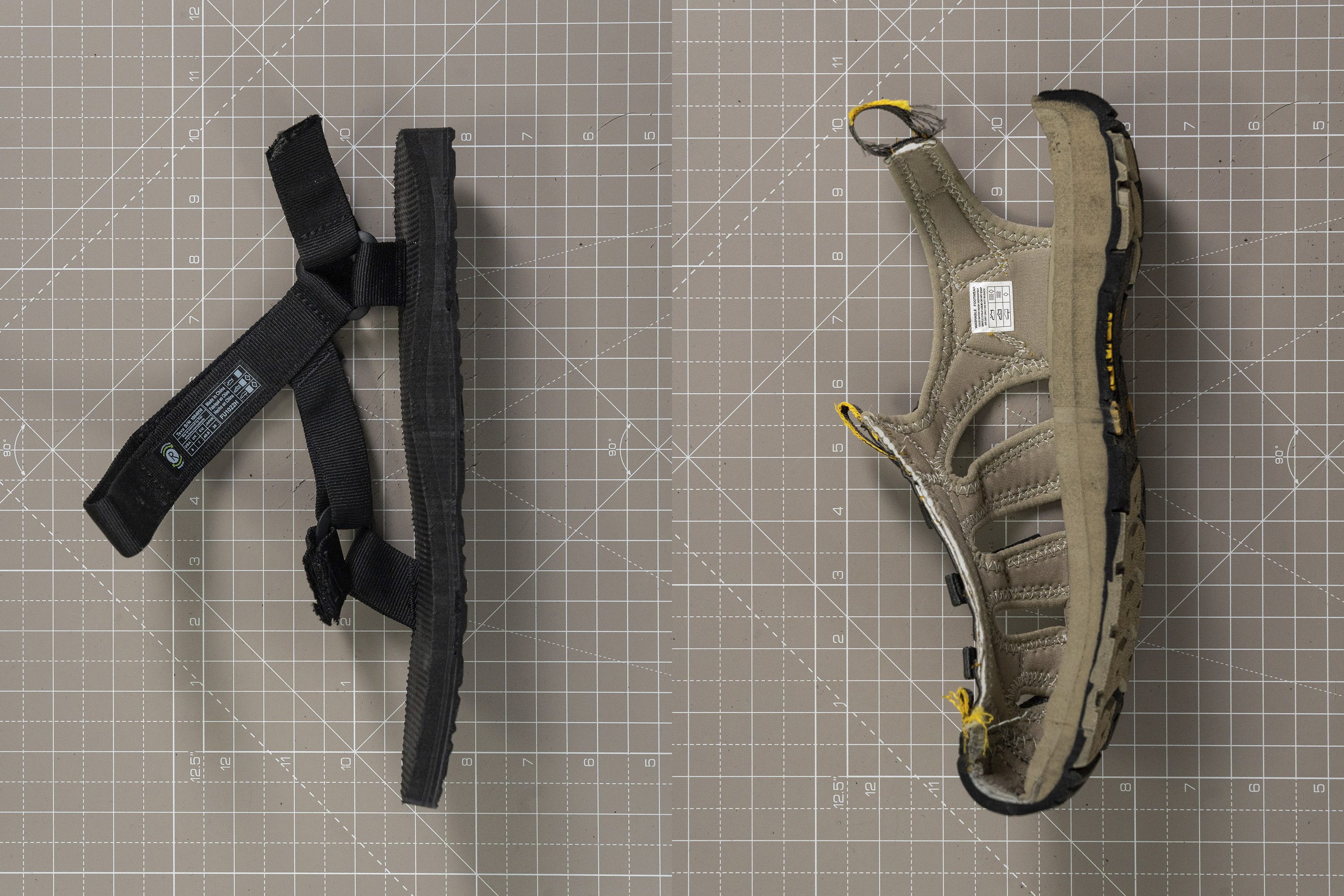
On the other hand, cushioned sandals offer more impact and overall protection, durability, and support.
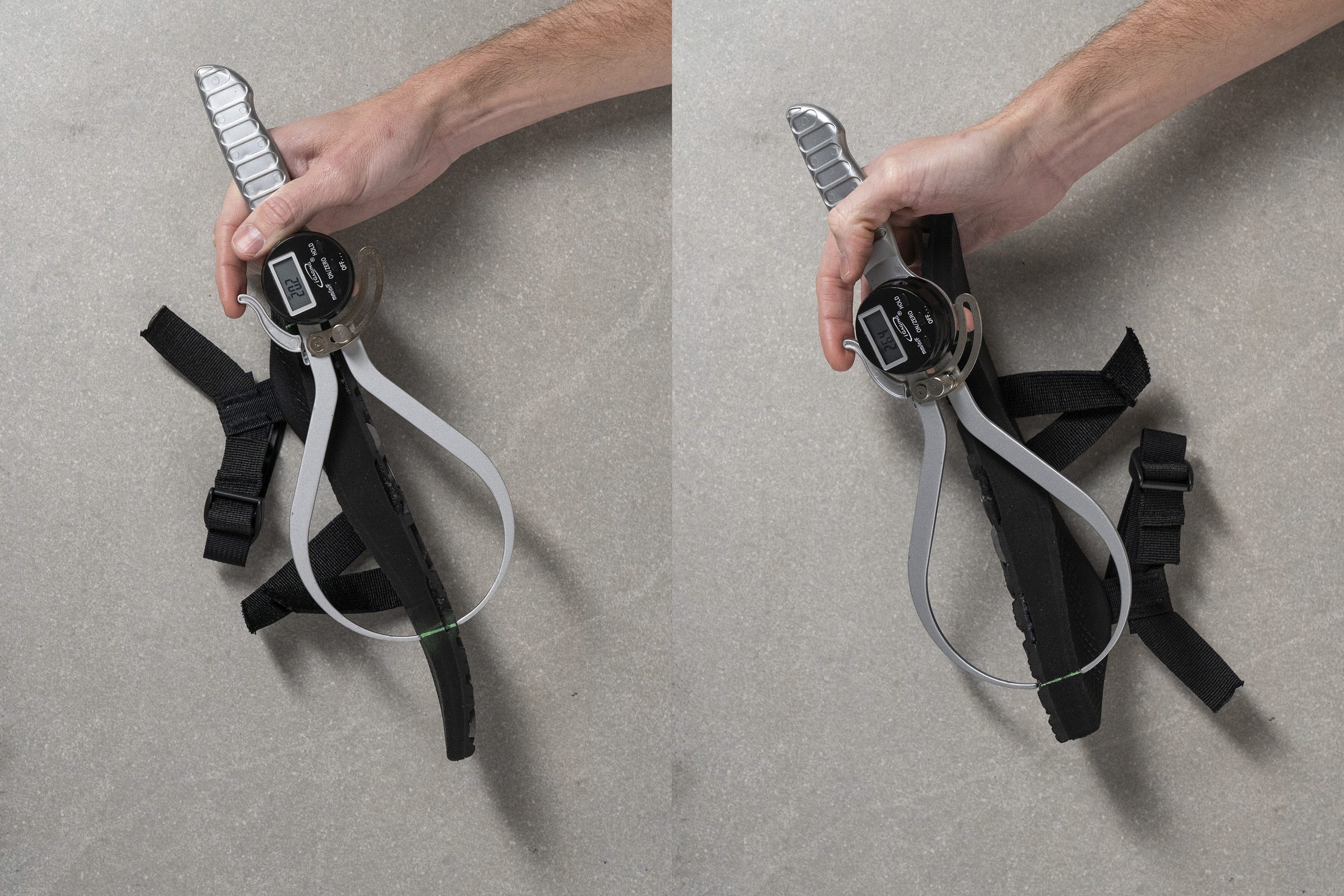
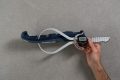
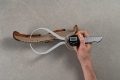
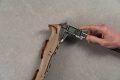
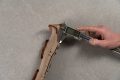
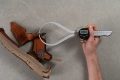
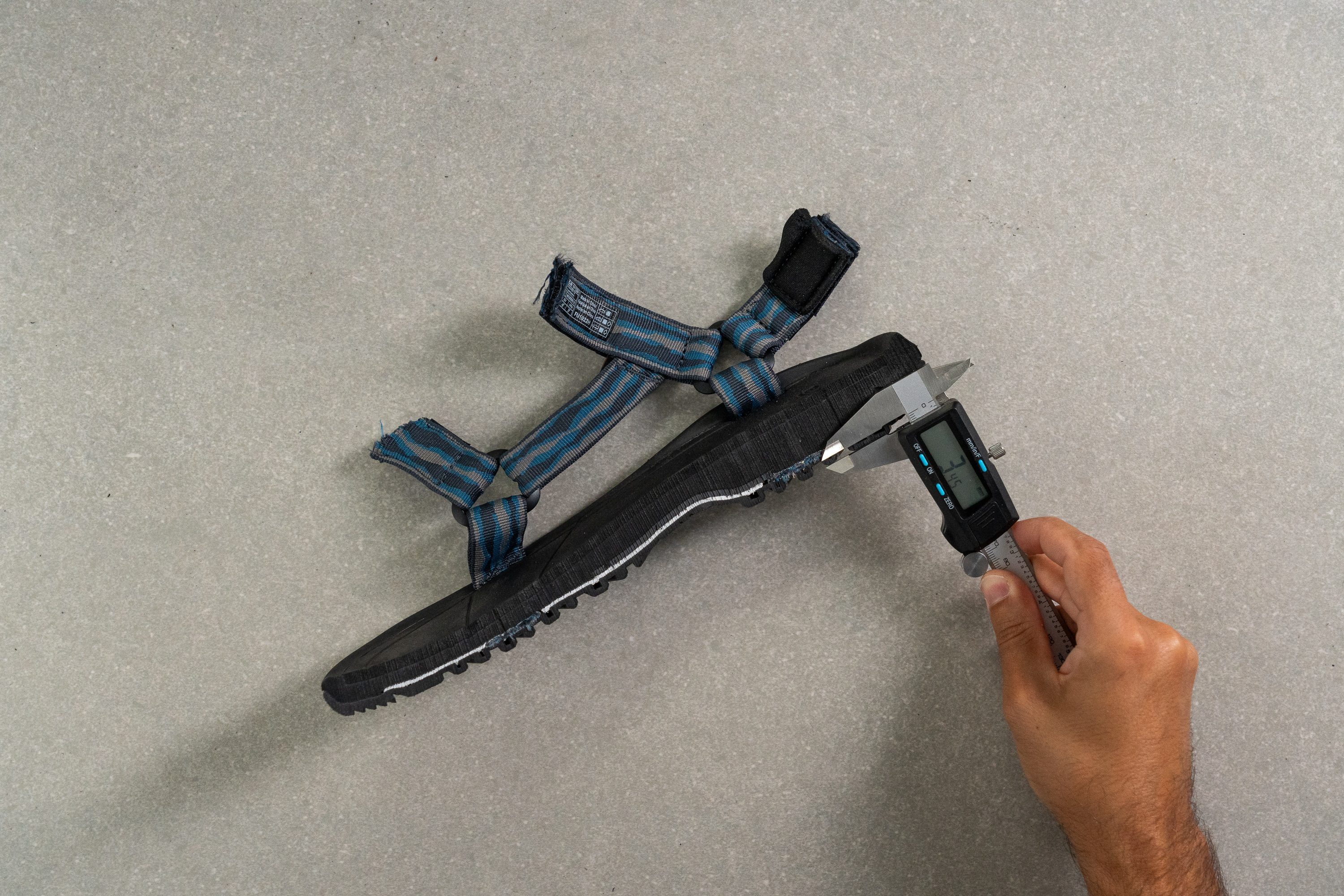
We use a digital calliper to measure the stack heights of hiking sandals. Bigger stack heights mean more cushioning and more impact protection!
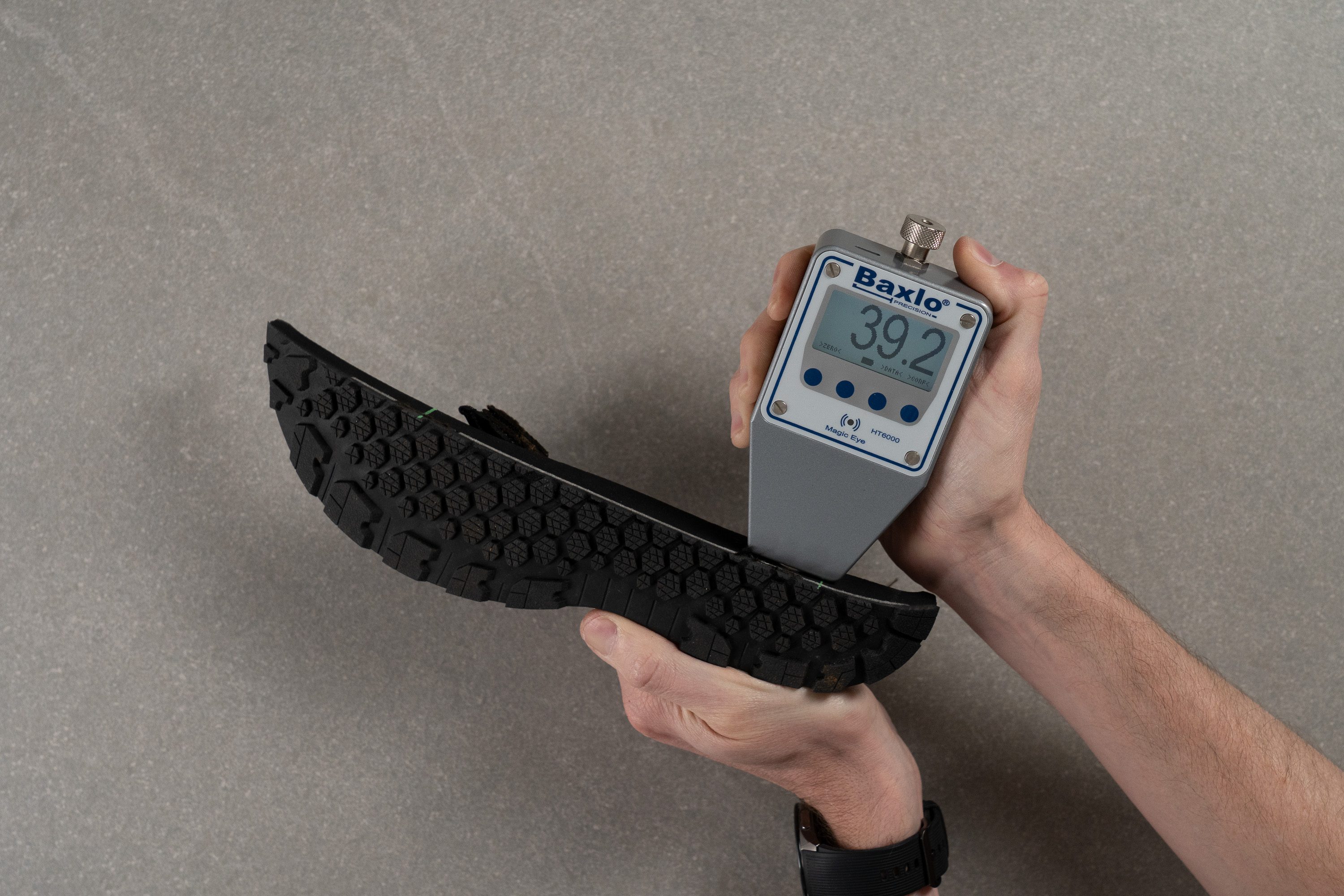
In our lab, we measure the softness of the midsole in hiking sandals using an Asker C durometer. The lower the reading on the durometer, the softer the sandal. Many women prioritise softness when they look for comfort, so if that’s you, here are the softest sandals we’ve tested so far.
On the other hand, stiffness can get you far when it comes to uneven terrain. Stiffer sandals feel more supportive and make our feet work less when we’re covering terrain that would make our feet wobble!
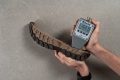
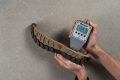
Minimalist hiking sandals are usually quite flexible, while cushioned ones are stiffer. Both torsionally and longitudinally. When we measure the stiffness in our lab, the higher numbers on the digital force gauge mean it’s a stiffer sandal because we needed more force to bend it to 90 degrees. Lower numbers mean it’s a more flexible sandal.
Durability of hiking sandals for women
When it comes to other footwear, we’re able to test the durability of the heel padding and toebox. In hiking sandals, that does not apply as often they don’t have a heel area or a toebox. So, we focus on the outsole here.
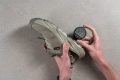
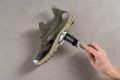
We test the durability of a sandal by pressing a dremel against the outsole. We have standardised this test which means we always apply the same RPMs, force, and time duration. The deeper the dent on the outsole, the less durable it is.
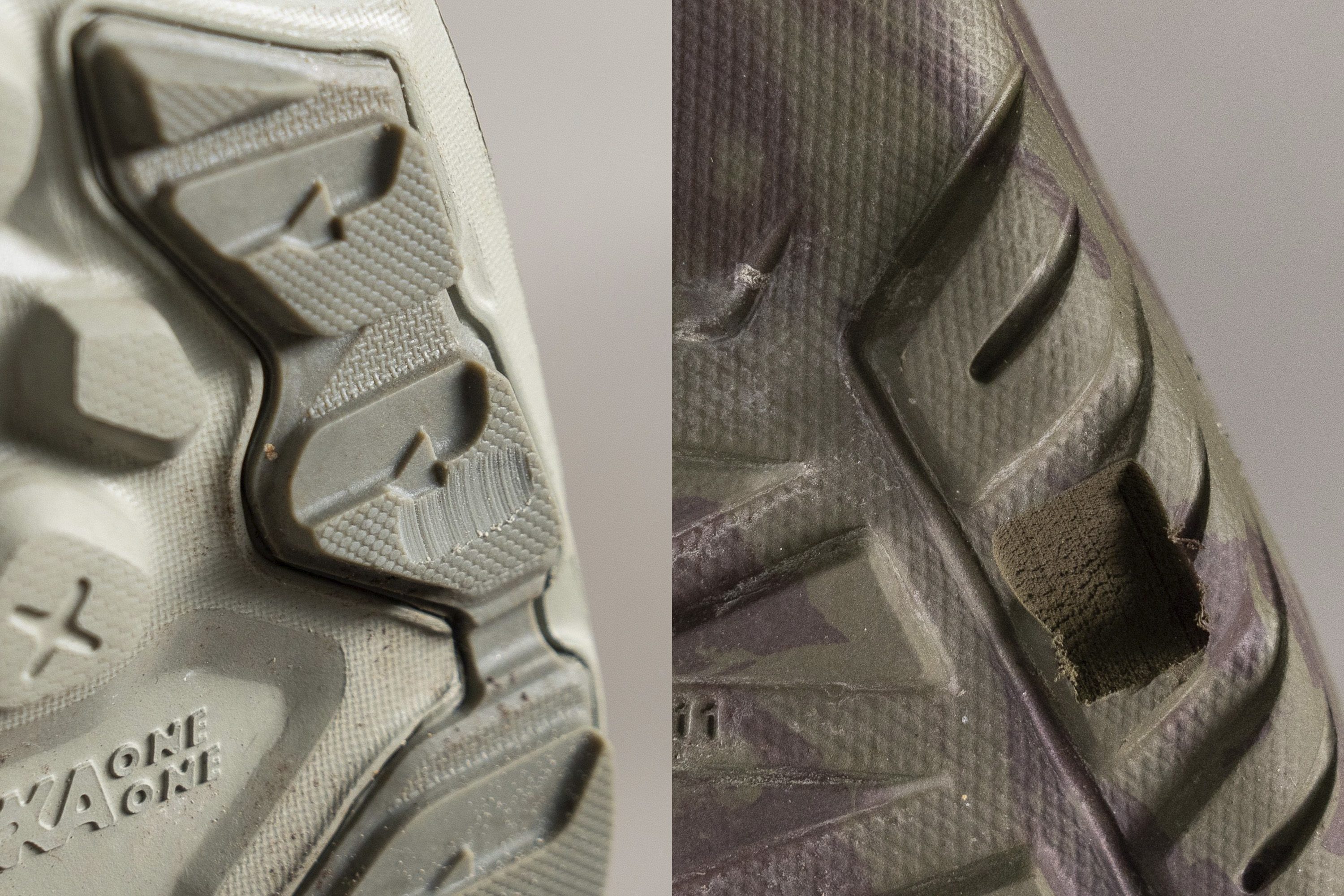
We measure the depth of the dent using a tyre tread gauge.
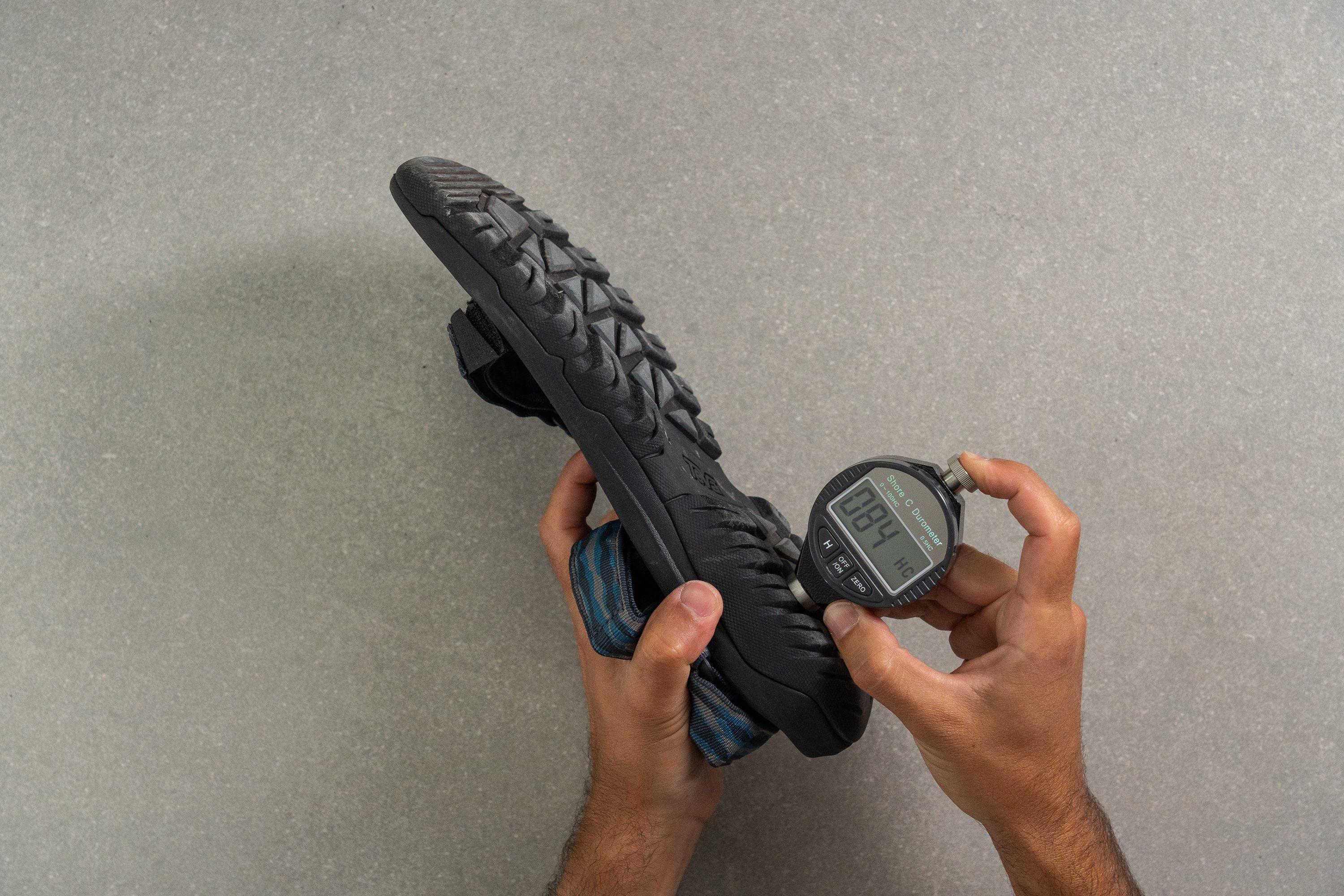
Here, we also measure the hardness of the outsole. Harder rubber is usually more durable and protective, while softer rubber is stickier and more flexible. Lower durometer numbers indicate softer rubber.
When NOT to buy hiking sandals
As mentioned together, it’s best to opt for hiking shoes or trail running shoes if you want to hike over technical terrain. Sandals don’t have the grip or protection needed for mud or rocky trails. Given the lack of material in the upper, you should not use hiking sandals in cold weather. Even with socks, you can get frostbites in winter temperatures!
Another thing to pay attention to is the heel stabilisation. You might need it if you’re overpronating or experiencing plantar fasciitis. A stiff heel counter that’s found both in trail running shoes and hiking shoes might offer the support you actually need.
And, if you want the best support needed for backpacking with heavy loads (backpacks), consider getting hiking boots.
Similar buying guides