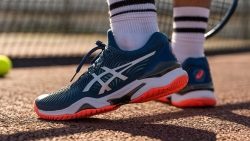
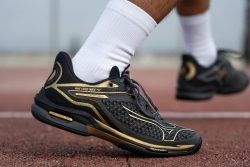
6 Best Nike Tennis Shoes in 2026


We buy shoes ourselves. We earn commissions when you buy through us, at no extra cost. Why trust us
Is it your first time to try Nike tennis shoes or you are about to park your old pair and you're uncertain which Swoosh to grab? We hope our highly recommended picks will help you in deciding which one to purchase.
Several factors come into play when picking the best Nike tennis shoes, including cushioning, speed, durability, and price competitiveness. We noted all the salient and critical points in filtering our top choices among the pairs we have playtested and scrutinised inside our independent lab.
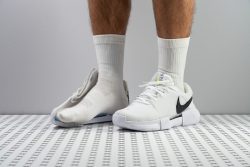



How we test Nike tennis shoes
The only way to recommend the best Nike tennis shoes is to be critical and hella nerdy in examining each of them. And during our testing procedure, we sure do stand by this!
First things first, it is fundamental to explicitly cite that we buy the shoes that we test using our own money. We do not patronise sponsorships but we choose not to participate in these kinds of deals because we want to be as candid as we can in expressing our opinions.
We exercise our expertise by assessing the shoes on racket games, mainly focusing on tennis. We play in these shoes on hard and clay courts, both indoors and outdoors. We also observe how the shoes react when we do sudden stops, quick turns, and nimble movements.
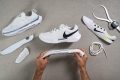
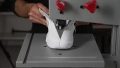
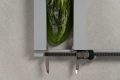
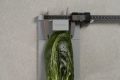
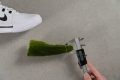
We are not satisfied with that. We want facts and figures. And we acquire them through a series of tests in our lab. After cutting the shoes in half, we measure 20+ parameters and compare them to other related models and the average values.
Best Nike tennis shoes overall








What makes it the best?
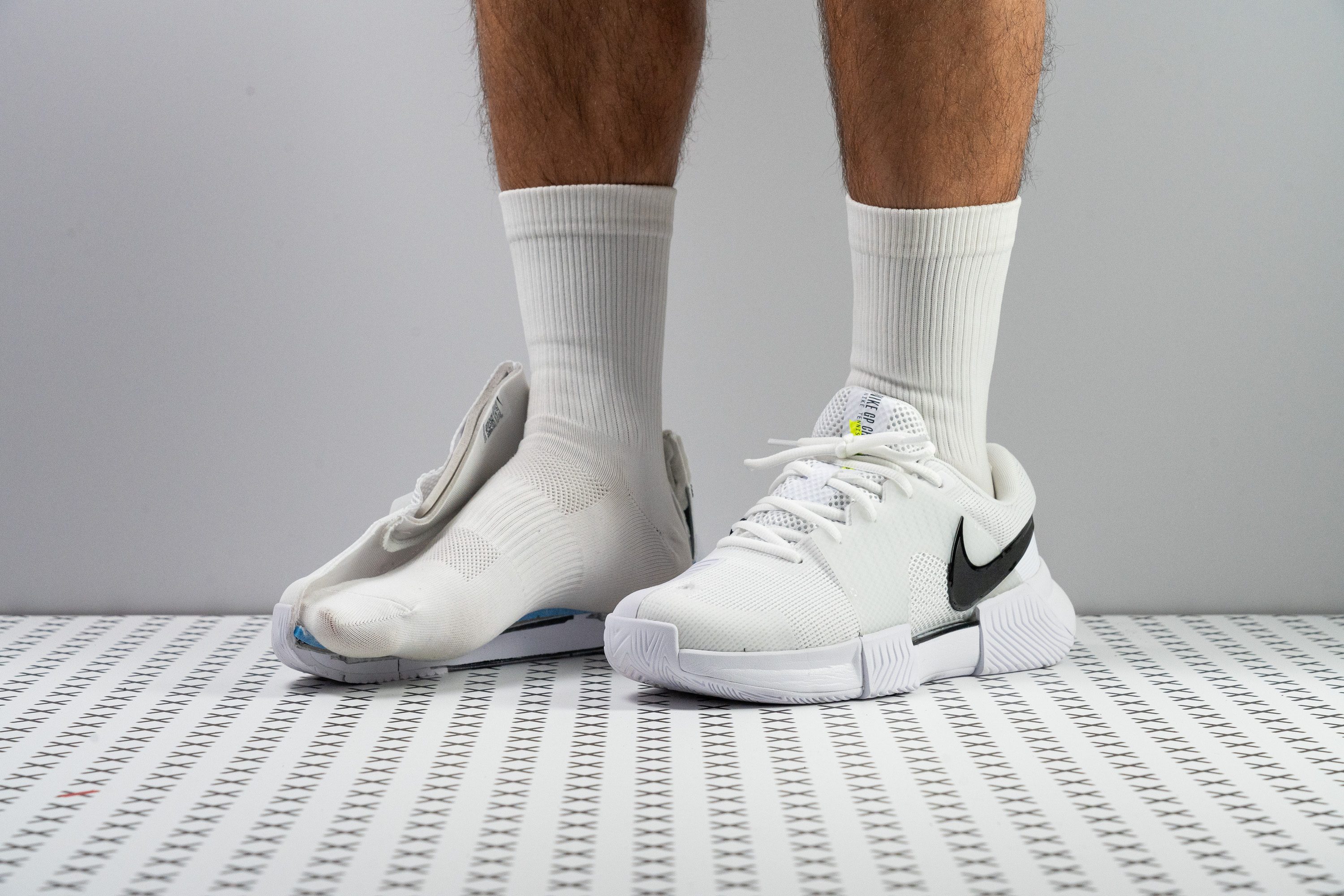
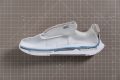
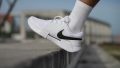
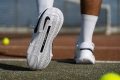
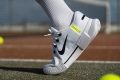
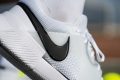
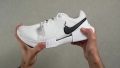
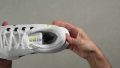
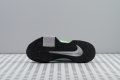
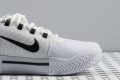
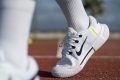
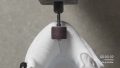
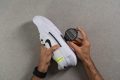
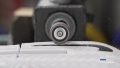
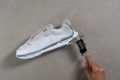
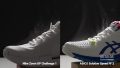
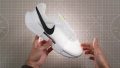
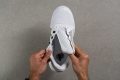
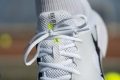
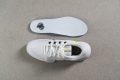
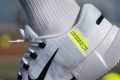
Challenging us to be more aggressive on court, Zoom GP Challenge 1 offers a dynamic yet highly supportive ride so that we can focus on the game without worries of discomfort and injuries. This elite performer offers massive energy propulsion while ensuring a well-planted feeling so that we don’t topple over the edge, making it our best Nike tennis shoe.
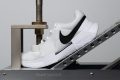
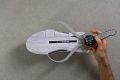
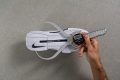
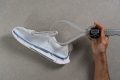
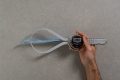
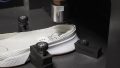
Our initial playtests already reveal the platform’s emphasis on bounce and impact protection. It features two large Zoom Air units in the heel and forefoot to soften impact and energise our toe-offs. This made us feel agile as we performed hard dashes and crossovers on court. Boosting our speed further is the highly rigid and wide shank that propels us for a more enjoyable ride. Our bend test reveals it’s 43.5% more resistant than average.
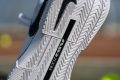
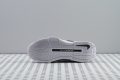
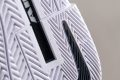
Zoom GP Challenge 1 ensures stability and control with its wide platform, rigid shank, and supportive overlays. The firm 51.5 AC midsole and grippy herringbone outsole pattern further enhance our footing, allowing for confident movements even during aggressive play.
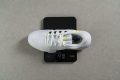
Unfortunately. Its 14.7 oz (417g) is a whale on scale compared to the 12.8 oz (364g) average tennis shoe. Those who prefer lightweight options should explore further.
Pros
- Excellent lateral support and stability
- Highly responsive and bouncy cushioning
- Great impact protection
- Stiff shank adds lots of propulsiveness
- Rockered heel makes heel-to-toes smoother
- Very durable and thick outsole
- Cosy step-in feel
- Strong grip on hard court
Cons
- Heavier than average
- Not enough protection for toe drags
- A bit fiddly tongue
Best Nike tennis shoes for beginners


What makes it the best?
As its name suggests, we effortlessly felt like a pro, ready to take any challenge with the GP Challenge Pro. The comfort and unwavering support it delivers make the game less intimidating, allowing us to move safely through sudden stops and direction changes. Priced at £110, it offers a taste of premium tennis shoes at a 9.1% discount compared to average prices, making it our top Nike tennis shoe for entry-level players.
We love the shoe’s comfortable and effortless feel, thanks to its well-cushioned landings and rocker sole. Its firm 54.7 AC Phylon foam includes a large Air Zoom unit in the heel to soften repetitive impact.
In addition to its dense platform, the GP Challenge Pro features a stiff midfoot shank within the midsole, enhancing stability and preventing ankle twists. The shoe's design includes several elements to securely hold the feet in place, such as a rigid heel and a synthetic foot cage integrated with the lacing system.
Our calliper shows a wide 115.8/93.9 mm forefoot and heel for added surefootedness. Underneath, a herringbone-patterned rubber grips excellently on court, allowing us to stop, pivot, and slide as needed, even extending upwards to protect areas prone to toe-dragging.
Unfortunately, we wanted to stop playing as soon as the mercury rose because the shoe lacked ventilation for warmer days. We recommend using this pair in cooler weather.
Pros
- Excellent stability and lateral support
- Great impact protection
- Rockered sole smoothens heel-to-toe transitions
- Stiff shank and sole add propulsion
- Sturdy rubberized drag guard
- Hard and durable rubber outsole
- Gusseted tongue enhances foothold
- Comfortable and padded in-shoe feel
- Outsole balances grip and give
Cons
- Not very breathable
- Heavier than average
- Mesh is easily damaged
Nike tennis shoes with the best versatility











What makes it the best?
Our games with the Nike Vapour Pro 3 tell us it suits a wide range of players on court, making it our most versatile Nike tennis shoe. From top to bottom, it features a well-balanced design: the midsole offers comfort and stability, the upper ensures solid protection, and the outsole delivers grip and give.
The stack is near our lab average with a cushioned 28.6 mm heel and a grounded 20.0 mm forefoot, enhancing quick footwork. The midsole has a balanced 49.8 AC durometer reading, making us feel surefooted. However, it feels softer than the number suggests because of the pressurised Zoom Air unit in the forefoot.
We could easily slide and do hard stops in our playtests. The rubber smoothens out over time, making it particularly suitable for sliders. In terms of longevity, the outsole erased any doubts of premature wear when it only obtained a shallow 0.5 mm dent against our Dremel.
The upper offers a stable feel with its lacing system securing lockdown. The toe guard showed minimal wear after our toe drags and earned a remarkable 4/5 durability rating in our Dremel test. We had no worries about the toebox because it also received a high 4/5 durability score.
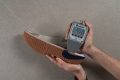
However, all the comfort and toughness come at the expense of weight. At 13.5 oz (383g), VP3 is 6.4% heavier than the average tennis shoe.
Pros
- Highly secure midfoot lockdown
- Solid lateral support and stability
- Reliable impact protection
- Good mix of cushioning and court feel
- Predictable medium fit
- Fantastic durability (even in high-wear areas)
- Nice balance of grip and give
- Comfortable step-in feel
Cons
- Smaller Zoom Air unit has lower energy return
- No added flexibility (as promised)
- Still heavier than average
- Not so breathable
Best Nike tennis shoes for speed


What makes it the best?
In tennis matches, we win some and we lose some, but Nike Vapour 12 undoubtedly wins the speed game among Nike’s tennis contenders. It’s extremely supportive and offers a stable ride for such a fast shoe. Its outsole has much room for gliding, promising ease of movement and durability even in the face of constant friction.
The midsole feels agile, offering pronounced court connection with its average stack height of 29.5/19.6 mm. The heel includes an Air Zoom unit, adding spring to our strides, with a high score of 54.8% in our energy return test.
Vapour 12 has a stiff TPU shank in the midfoot, translating to a more stable and surefooted ride since the sidewalls centre our foot alignment. Lateral movements feel more controlled, especially since the shoe received the maximum 5/5 torsional rigidity in our manual assessment.
The outsole is non-sticky, evidenced by its low 0.55 friction coefficient in our traction test. We see this as an advantage for a speedy shoe since we can slide and pivot effortlessly. The rubber also proved to be tough, showing a minimal 0.6 mm dent in our Dremel test.
Unfortunately, this shoe can’t handle the heat. With a low 2/5 breathability score, it will feel best only in cooler weather.
Pros
- Balanced cushioning and court feel
- Excellent lateral stability and support
- Firm and planted platform
- The ride feels dynamic
- Fantastic durability
- Ergonomic one-to-one fit
- Great for sliding and pivoting
- Lighter than the Vapour 11
Cons
- Not for wide feet
- Not the stickiest traction
- Still heavier than average
- Lacks breathability
Nike tennis shoes with the best energy return





What makes it the best?
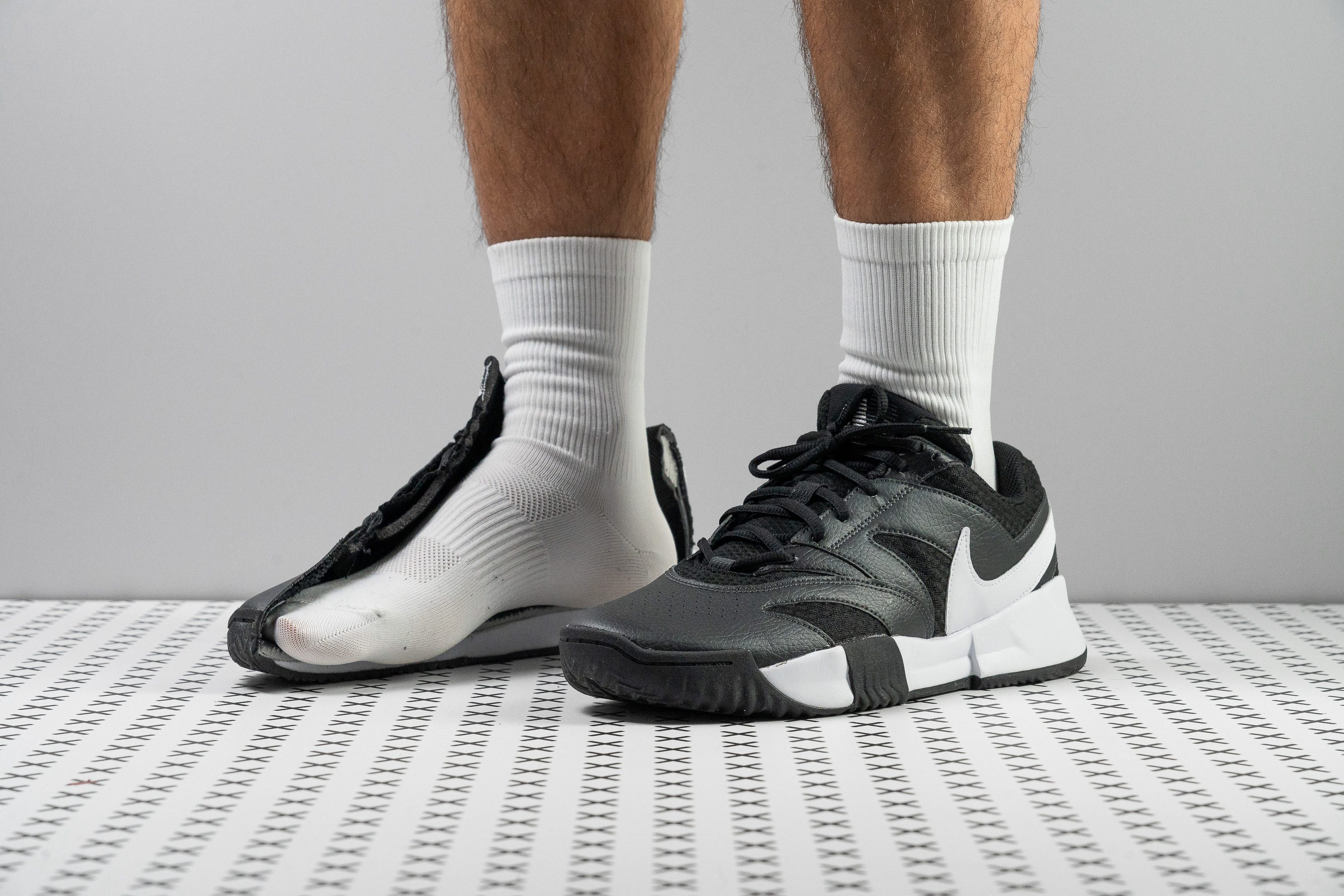
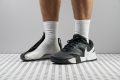
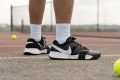
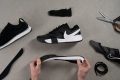
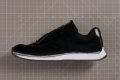
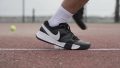
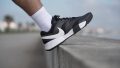
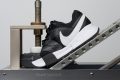
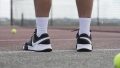
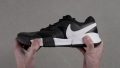
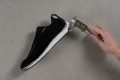
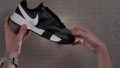
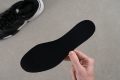
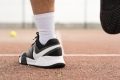
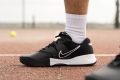
The NikeCourt Lite 4 encouraged quick and nimble footwork in our playtests through its strong rebound and sturdy lateral support, while maintaining court control. Lab results confirm what our feet couldn’t deny: it offers the best energy return in Nike’s tennis roster.
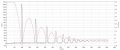
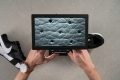
Each step we made translates into springy toe-offs, allowing us to move from one end of the court to the other in a flash. We tested for the midsole’s energy return and recorded above-average measurements of 58.4% in the heel and 60.6% in the forefoot. For context, the forefoot is 19.1% more responsive than average, and made a real difference in our games.
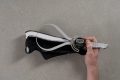
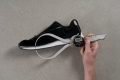
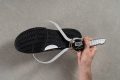
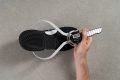
NikeCourt Lite 4 offers a good amount of ground feel through its moderate stack. When performing crossovers and split steps, we felt well-planted, and the wide 113.5/94.1 mm base contained our movements.
On top of that, we experienced a sturdy foothold through the reassuring heel counter, which scored 4/5 in stiffness in our manual assessments. In terms of twisting, the shoe strongly resisted and received the maximum 5/5 torsional rigidity score, boosting our stability.
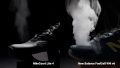
Unfortunately, we felt like overheating when playing in warmer conditions. Those seeking maximum ventilation should go for another pair.
Pros
- Solid lateral support for an entry-level shoe
- Wide and stable base
- Great durability for the price
- Sufficient impact protection
- Lively and responsive midsole
- Excellent outsole grip
- Decent weight
- Accommodating toebox
Cons
- Not so breathable
- Not very comfy
Best budget Nike tennis shoes



What makes it the best?
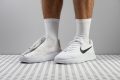
Breathable on top, springy in the middle, and protective below is the perfect way we can describe the Nike Vapour Lite 3. It allowed us to enjoy our playtests freely with its light and agile build, all at a non-intimidating price of £80. Other Nike tennis shoes we’ve tested in the lab are at least £90, making this pair our best budget pick.
Suiting its name well, Vapour Lite 3 weighs 6.1% lighter than average at 12.0 oz (340g). It sports an average stack of 29.7/18.4 mm, offering the perfect balance of cushioning and court connection.
The midsole offers an immediate spring that launches us quickly with every move, evidenced by high energy return scores of 56.6% in the heel and 59.6% in the forefoot.
The mesh upper has large ventilation holes that promote airflow, evidenced by its impressive 5/5 mark in our smoke test. The refreshing feel adds to our comfort and ease.
Thankfully, wear resistance isn’t sacrificed as the toe guard is ready for sliding and toe drags, rating the maximum 5/5 durability score in our Dremel test. Even underfoot, the rubber proved to be resilient, showing a minimal 0.5 mm dent vs. the 0.7 mm average, cementing the shoe's value for money.
Note that the shoe has a narrow fit, so it’s not ideal for players with wide or high-volume feet.
Pros
- Excellent value for money
- Durable upper and outsole for the price
- Impressively responsive and dynamic
- Lighter than average
- Great side-to-side stability for beginners
- Reliable impact protection
- Well-padded shoe interiors
- Good grip on hard court
- Highly breathable upper
Cons
- Not lighter than v2 (as promised)
- Not for wide feet
How to choose the best Nike tennis shoes for you
With their cutting-edge innovation and high-quality designs, Nike tennis shoes are a popular choice for amateurs and professionals alike.

But to know which one is a better match for your needs on the court, you need to consider the following:
- Court surface: Nike makes tennis shoes for both hard courts and clay courts.
- Player type: Depending on your playing style and preferences, you may favour Nike shoes that prioritise lateral stability and cushioning or lighter, more agile models designed for speed. Competitive players may appreciate Nike's advanced performance technologies, while beginners and recreational players may find its more affordable options perfectly sufficient.
- Cushioning: Nike tennis shoes vary in the amount of shock absorption, responsiveness, and court feel they provide.
- Traction: Depending on the rubber blend and outsole design, some Nike tennis shoes are grippier, and others give more freedom to slide and pivot.
- Durability: Not all Nike shoes are equally durable. Outsole rubber compounds, protective overlays, and upper materials influence how well each shoe withstands abrasion.
- Fit: Nike tennis shoes vary in toebox space and overall fit, ranging from snugger to more accommodating models.

Hard-court vs. clay-court Nike tennis shoes
In the US, hard courts are the most common playing surface, so most players will be better served by Nike's hard-court models. These shoes feature durable rubber outsoles to withstand the abrasive nature of asphalt or concrete covered with acrylic surfacing.
Meanwhile, clay-court versions have more pronounced tread lines to provide grip, accommodate sliding on loose clay, and prevent clay buildup underfoot.

Can you use hard-court Nike shoes for clay?
Yes, as long as it’s occasional play. The outsole patterns of hard-court tennis shoes aren't optimised for loose surfaces, so you may not get the best possible traction, sliding control, or resistance to clay buildup compared to dedicated clay-court shoes.
Can you use clay-court Nike shoes for hard courts?
Yes, but we wouldn’t recommend it for regular play. As acrylic surfaces generate more friction than clay, the clay-court shoe’s herringbone tread lines may wear down faster on hard courts. Braking and pivoting can also feel less predictable in clay-court shoes.
Types of Nike tennis shoes for different players
Nike’s current tennis shoe lineup can be roughly split into the following categories:
| Main focus | Shoes |
| Stability, lateral support |
GP Challenge (flagship) GP Challenge Pro (more affordable) |
| Speed, agility, court feel |
Vapour (flagship) Vapour Pro (more affordable) |
| Comfort, budget-friendly |
CourtLite Vapour Lite |
But please note that this classification is overgeneralized, as you can still find some solid stability and cushioning not only in the GP Challenge shoes but also in the Vapour silhouettes and the more affordable Lite models.
We found that Nike shoes are quite well-rounded but slightly oriented towards one thing or another.
For example, our lab tests revealed that most Nike shoes have solid torsional rigidity, stiff and structured heel counters, and pronounced midsole outriggers. However, it’s the stability-oriented GP Challenge models that take these features a step further, making them more supportive than the rest of Nike tennis shoes.

In other words, stability is a spectrum, and you can see it reflected in our scores below:
The same is true for speed and agility. None of the Nike shoes stop you from moving all over the court, performing hard cuts, or doing some nimble footwork. But you are more likely to feel at home with these moves when wearing one of the Vapour models, as they are a bit more pliable in the forefoot, weigh a little less, and keep the ball of the foot a little closer to the court.

And if you're a beginner who's just testing the waters or only plays occasionally on weekends, you may not need Nike's latest and greatest technologies. A more basic but functional, comfort-oriented option for £100 or less can get you through your court sessions without sacrificing the essentials of a good tennis shoe.
We also encourage you to take a look at our individual reviews of Nike tennis shoes, as models can vary widely even within the same shoe series. Some versions can be lighter or more supportive; others can have a better balance of features that are personally important to you. Be sure to check out the pros and cons section to see where the shoe’s greatest benefits and drawbacks are.
Cushioning in Nike tennis shoes
Tennis shoes, in general, face a paradox: on the one hand, they need to provide enough impact protection for the nonstop landings, braking, and lunges involved in tennis; but on the other hand, they can’t be overly cushioned, as that would compromise stability and connection to the court.
Our lab tests showed that Nike shoes vary in the amount of cushioning they provide. Depending on their stack heights and midsole technologies, these shoes can feel more substantial or low-profile.
A thicker or softer midsole doesn't automatically mean better impact protection. That's why we perform a scientifically validated lab test to measure the shock absorption of each Nike tennis shoe in both the heel and forefoot. The higher the SA reading, the better the protection.
We recommend Nike tennis shoes with higher shock absorption measurements to players who:
- Play tennis several times a week or spend long hours on the court.
- Have a heavier body weight and appreciate a more protective underfoot feel.
- Prefer extra cushioning in the heel, forefoot, or both, depending on your landing patterns and personal comfort needs.
Higher shock absorption may also benefit players with certain foot or joint conditions, provided it aligns with their healthcare professional’s recommendations. The conditions include:
- Heel spurs, plantar fasciitis, Achilles tendonitis (higher heel SA is preferred).
- Metatarsalgia, toe joint arthritis, Morton’s neuroma (higher forefoot SA is preferred).
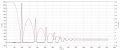
However, shock absorption is only one part of the cushioning equation. We also measure each Nike shoe’s energy return, which indicates how much mechanical energy the midsole gives back after compression. A higher reading (%) suggests a more responsive, springy ride, while a lower one typically means less rebound.

Nike often incorporates its proprietary Air Zoom units into flagship tennis shoes, placing them in the heel, forefoot, or both. These units are designed to add a springier sensation during push-offs.
However, our lab measurements show that Nike shoes with Air Zoom units don't necessarily provide dramatically higher energy return than models without it. The differences we've observed are relatively modest, as the overall cushioning setup matters more than the presence of a premium technology alone.
Last but not least, consider how much court feel you prefer. Nike tennis shoes with lower forefoot stack heights generally place the ball of the foot closer to the playing surface, creating a more connected underfoot sensation. This can appeal to players who prefer a low-profile platform for quick footwork and directional changes, even if it means giving up some cushioning.

Nike tennis shoes with the best traction
A strong outsole grip is essential in tennis as it prevents undesirable slipping during aggressive cuts, abrupt braking, and acceleration. But at the same time, excessive friction is no good either, as it can make pivots and rotational movements feel less fluid.
The ideal level of grip depends on your playing style and movement preferences:
- Choose higher traction for explosive starts, abrupt stops, and aggressive lateral cuts.
- Choose moderate traction for a more controlled give during pivots.
In the lab, our machine mimics a stopping foot motion and records each shoe's coefficient of friction (CoF) at the forefoot. The higher the CoF, the stronger the braking power.
But please note that this measurement is only part of the equation, as we are yet to develop tests for multidirectional grip, rotational resistance, and the shoe’s performance on clay.
Having measured the CoF in dozens of Nike tennis shoes, we found that most of them provide a good mix of grip and give without being too tacky or too slippery.
How durable are Nike tennis shoes
Tennis puts a tonne of stress on shoes, especially if your playing style involves frequent toe dragging or if you mostly play on hard courts.
We found that some of the most vulnerable and wear-prone parts of a shoe are its outsole, medial forefoot zone (where toe drag guards are usually placed), exposed upper fabric, and interior collar lining.
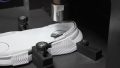
That’s why we subject each of these shoe areas to a demanding Dremel test that mimics long-term friction and abrasion. We then assess the severity of the damage and rate each Nike shoe’s durability to ensure comparable results.
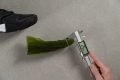
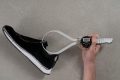
For the outsole, we use a calliper to measure the depth of the dent created by the Dremel. The shallower the dent, the better the durability. We also take each shoe’s outsole thickness into account, measuring it with a calliper.

But outsole wear isn't the only concern, particularly for players who frequently drag their toes during serves, slides, or lunges.

Some Nike tennis shoes feature reinforced toe guards, rubber overlays, or strategically placed protective materials to withstand abrasion in high-wear areas.
We assess the shoe’s toe-drag guard durability on a 1-5 scale, where 5 is the most hard-wearing.
The top of the shoe’s toebox often features exposed textile, which may result in premature wear and tear. Thus, we subject this area to the Dremel test as well.
The inner heel lining is another potential weak point, as repeated friction from the foot and sock can gradually wear the fabric down.
Curiously, our test results show that cheaper Nike tennis shoes aren’t necessarily less durable.
Finding the best fit in Nike tennis shoes
With its abrupt stops and aggressive lateral movements, tennis calls for a secure yet non-restricting shoe fit.
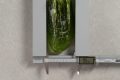
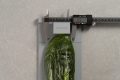
To provide the most objective information about each Nike tennis shoe’s fit, we create one-to-one gel casts of their interiors and use a digital calliper to measure the following parameters:
- Width: The internal width at the widest point.
- Toebox width: Shoe width in the big toe area.
- Toebox height: Vertical toebox space.
These measurements showed the fit can vary considerably between different Nike tennis shoes. At the time of writing, the difference between the narrowest (89.9 mm) and the widest (96.0 mm) shoes is 6.1 mm!

However, a roomier shoe isn't necessarily a better tennis shoe. Players with narrow feet may appreciate a more tapered, close-fitting design, while those with wider feet or a preference for natural toe splaying may benefit from additional forefoot space.

It's also important to distinguish fit from sizing. A shoe can fit true to size in length but still feel too narrow or restrictive around the toes. That's why we recommend checking each Nike model's individual review for sizing advice rather than assuming every shoe from the brand fits the same way.
You might as well want to measure your current foot length to be 100% sure you’re getting the right size in the first place.
Similar buying guides