4 Best New Balance Trail Running Shoes in 2026


We buy shoes ourselves. We earn commissions when you buy through us, at no extra cost. Why trust us
Remember seeing minimalist New Balance shoes on Anton Krupicka? We do! And the times have changed, haven’t they? Trail shoes got chunkier and even plated, but we shouldn't forget to give New Balance a high-five for staying true and still offering a minimalist shoe today (MT10).
No matter how New Balance entered the trail running world, we’ll look at today’s models, what they offer, how they performed in our lab tests, and how they feel. We can’t do this in one paragraph, but if you don’t want to get nerdy, look at the top picks we highlighted in various categories!


How we test New Balance trail running shoes
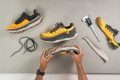
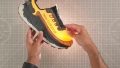
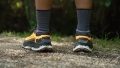
To properly review New Balance trail running shoes, we test them on the trails and in the lab. When on trails, we make sure to give them a proper beating in order to experience their fit, comfort, and ride. We take into account the terrain and weather they are made for and submit them to various conditions.
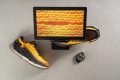
When in the lab, we test the shoes’ shock absorption, energy return, midsole softness, traction, lug depth, and other features that paint the full picture and leave you with all questions answered. You can use our lab data to compare the shoes and find the one that offers exactly what you need, be it a very padded tongue, a roomy toebox, an energetic ride, or very deep lugs.
Best New Balance trail running shoes overall

















What makes it the best?
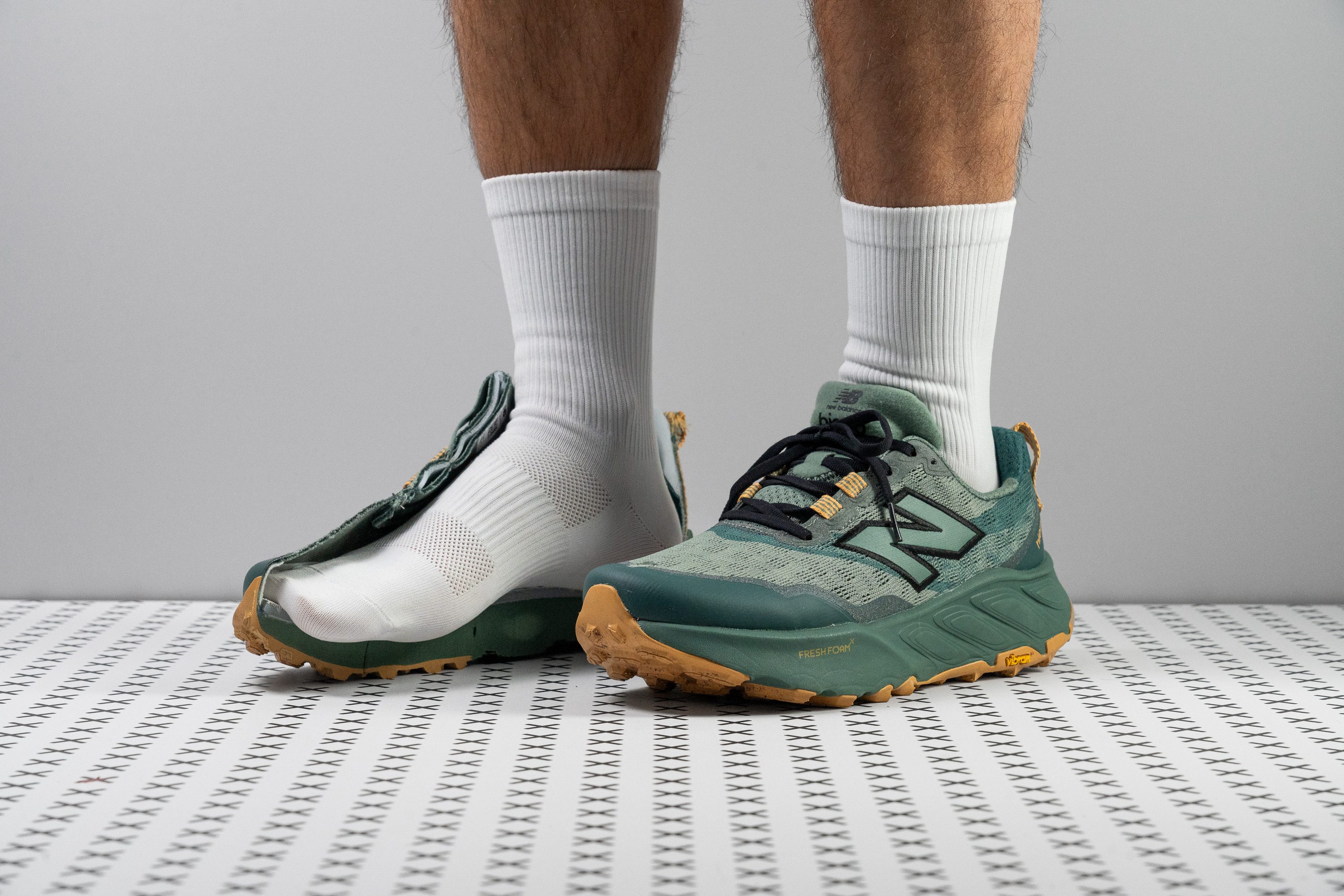
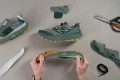
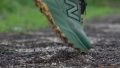
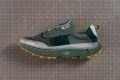
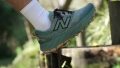
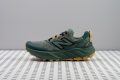
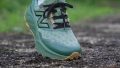
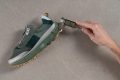
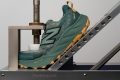
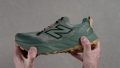
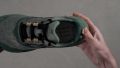
The Fresh Foam X Hierro v9 stands as New Balance's leading trail running shoe, excelling in our mountain runs and lab tests. Blending soft with stiff elements, it caters to trail enthusiasts seeking comfort and support. Its performance is further solidified with the Vibram Megagrip outsole, ensuring reliable traction and underfoot protection.
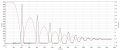
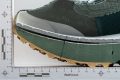
With a stack height of 37.3/33.1 mm and a 29.7 AC durometer rating, the Hierro v9 offers remarkable impact protection and plushness without being overly soft. The cushion is so thick that all foot strikers will feel protected even up to ultra distances.
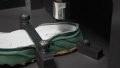
Its stiff midsole enhances stability, confirmed by its perfect 5/5 torsional rigidity score in our manual assessment. In addition, it features a broad 116.9/94.1 mm base to safekeep our strides.
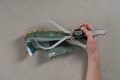
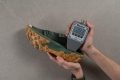
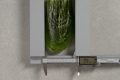
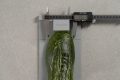
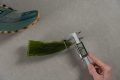
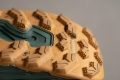
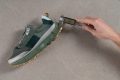
Underfoot, the Vibram Megagrip impresses with durability and grip. Despite an above-average 88.6 HC hardness, it displays resilience and a solid bite on mixed surfaces. The toothy 3.3 mm lugs kept us in control and boosted our confidence in our trail adventures.
However, it features a moderate 4.2 mm drop that suits mid to forefoot strikers only. We recommend heel strikers to find a higher drop to feel at home.
Pros
- So much foam underfoot!
- Vibram Megagrip outsole
- Improved Fresh Foam X midsole
- Surprisingly stable
- Amazing durability
- Ideal for long distances
- Available in multiple widths
- Good quality materials
- Excellent for forefoot and midfoot strikers
Cons
- Not the roomiest fit
- Heavier than before
- Lost its flexible nature
- Low drop won't suit everyone
New Balance trail running shoes with the best shock absorption













What makes it the best?
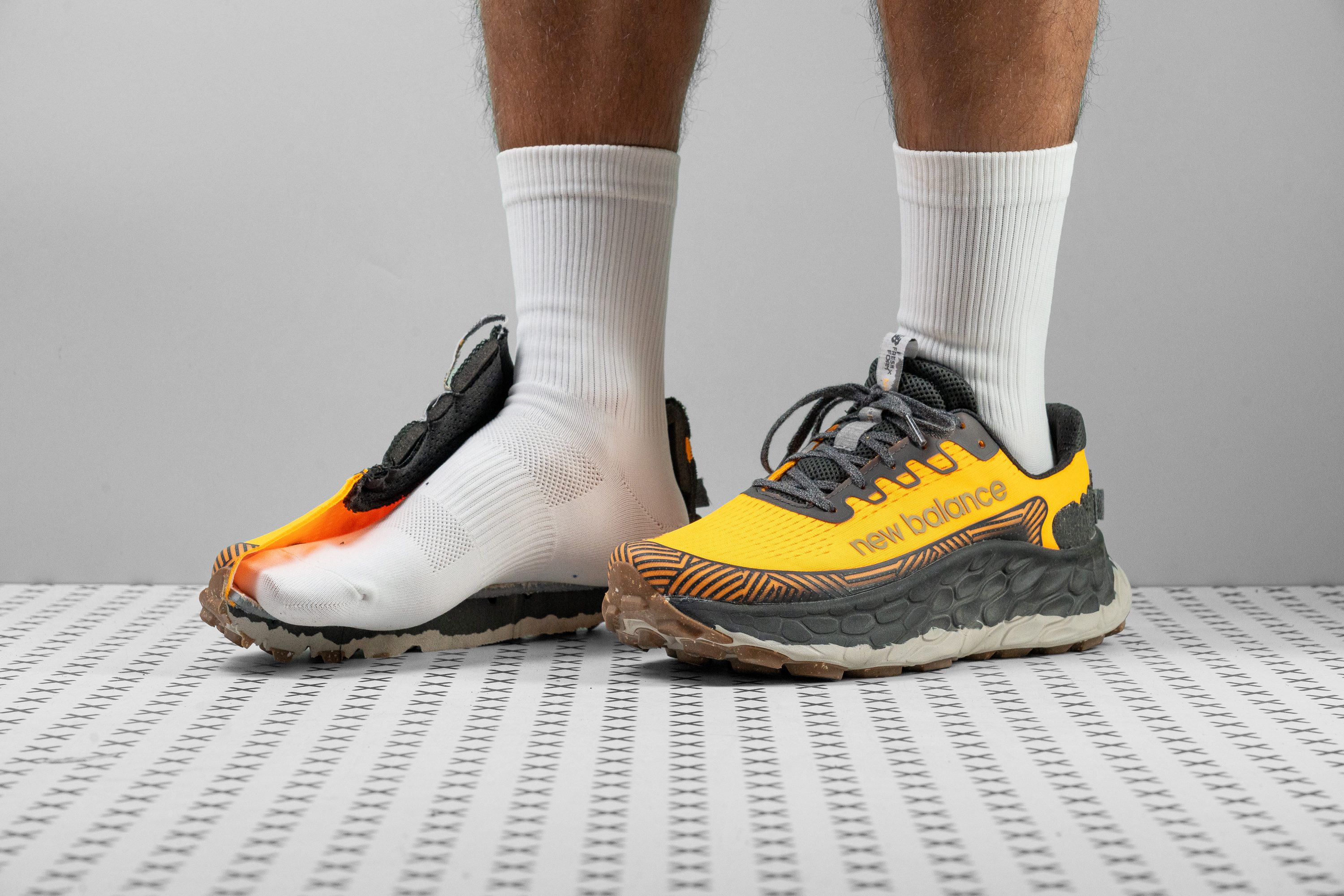
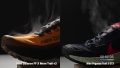
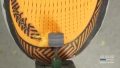
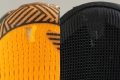
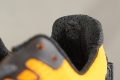
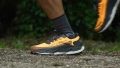
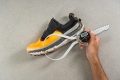
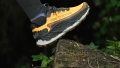
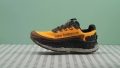
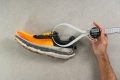
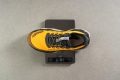
Fresh Foam X More Trail v3's max-cushion is immediately noticeable upon the first look and the first step. This protective shoe handles off the beaten paths easily with its excellent traction. Our lab testers and runners agree it’s New Balance’s best shock-absorbing trail shoe.
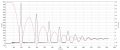
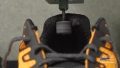
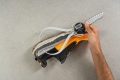
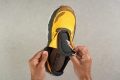
This is one of the most cushioned shoes we've tested with its 158 SA rating, offering 31.7% better shock absorption than average. This explains why our legs feel fresh after running long miles. It has a thick dual-density foam that rises 38.6/31.5 mm in the heel and forefoot. What’s surprising is how steady and bouncy it is despite the stack. It has high sidewalls and a wide base that prevents the ankles from rolling in.
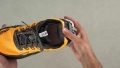
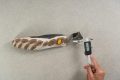
The outsole delivers the perfect balance of grip and protection. Our durometer measurement is 84.6 HC, slightly below the 85.1 HC average. This means it’s soft enough to increase traction and hard enough for a shield. Its 5.0 mm lugs provide extra grip on loose dirt and muddy tracks. This improves our sense of control as we move through uneven terrains.
As a highly cushioned shoe, there's little ground feel. This makes it less attractive for tackling more technical trails.
Pros
- Insanely protective even without a rock plate
- Soft cushioning without feeling mushy
- Solid amount of bounce
- Incredibly stable
- Plush and airy upper
- Good grip on mild to moderate trails
- Durable outsole
- Light on the run
- Really smooth ride
- Best for easy days and long runs
- Sustainable
- Sustainable
Cons
- Upper could use more support
- Not great for technical trails
- Pointy toebox
Best New Balance trail running supershoe




What makes it the best?
The FuelCell SuperComp Trail delivers a thrilling yet comforting ride in our mountain runs. Our lab tests show it maintains a light build, features a plush yet stable ride, and offers reliable traction for high-speed action, making it our best super shoe among New Balance trail running shoes.
It’s amazing how weightless this shoe feels, even more so when we pick up the pace! Our scales reveal it’s only 8.8 oz (248g), 14.5% below average, allowing us to breeze through the trails.
The plush midsole blew us away with its bottomless comfort, especially since trail shoes tend to be firm. We recorded a durometer reading of 11.5 HA, a whopping 49.1% softer than the average! To keep our balance, this shoe has a forked plate to enhance its stability and propulsion.
Another feature that gave us the confidence to go flat out is its reliable Vibram Megagrip Litebase. True to its name, it offers mega grip even with its shallow 2.9 mm lugs. We like how it’s not bulky and is best suited for fast and easy trails.
However, this shoe features a steep 13.0 mm drop that heavily favours rear strikers. If otherwise, we recommend finding a more balanced shoe.
Pros
- Extremely lightweight
- Plush FuelCell foam
- High-performance Vibram Megagrip outsole
- Breathable upper
- Ideal for heel strikers
- Priced below trail supershoes
- Secure fit
- Good durability
Cons
- Lacks energy return
- Narrow toebox limits toe splay
- Not very stable
- Steep drop punishes forefoot strikers
Best minimalist New Balance trail running shoes


What makes it the best?
The MT10 is a reliable shoe with an unassuming build. With its low profile, it offers high ground sensitivity. It’s light and easy on the foot, with lab assessments verifying its flexibility. MT10 stands for “Minimus Trail 10,” and indeed, it’s our best minimalist New Balance trail running shoe.
MT10’s low configuration creates an inherently stable ride. Our calliper shows minimal padding between our feet and the ground, specifically with a 15.6/10.6 mm thinness. It features a low offset of 5.0 mm and has low shock absorption, proven by its 61 SA score, which both enhance ground feel.
MT10 feels incredibly versatile for walks and hikes thanks to its flexibility and lightness. In our bend test, it's boldly 78.1% more flexible than average, translating to almost zero resistance to our natural motions.
MT10 boasts remarkable lightness at 7.1 oz (200g), staying way below the average trail shoe’s weight of 10.2 oz (289g).
However, we can only recommend this shoe to runners with a neutral foot strike. It lacks any sturdy elements to control side-to-side movements.
Pros
- Super-flexible build
- Good durability
- Low stack height
- Sock-like comfortable upper
- Cushioned heel
- Great value
- Works for road and trail running
- Works for road and trail running
Cons
- Limited toe splay
- Non-removable insole reduces customization
- Lacks a zero-drop geometry
- Poor traction
New Balance trail collections: overview
Fresh Foam X Hierro is a trail flagship model from New Balance. It excels on moderate/versatile terrain thanks to its durability, protection, and lug depth (3.3 mm), making it ideal for mixed terrain.
Fresh Foam X Garoé has the features and the price that make it a great package for beginners. It’s also good for hiking, so beginners can mix the two.
FuelCell SuperComp Trail is a trail supershoe. V1 didn't impress us (to be gentle), and we’re hoping things have improved since then.
Minimus Trail has a name that implies it’s minimalist, but it does not look so. It’s certainly not a traditional cushioned running shoe, but its chunky heel and rubbery toe bumper make it look protective and heavy. It has a tight toebox and a moderate heel drop on one hand, and low shock absorption and less than 20 mm at the heel on the other hand. An odd bunch for sure.
Traction and grip in New Balance trail running shoes
Traction and grip are a priority when running on trails. Terrain varies, from flat to steep, from hard-packed and easy to covered in rocks or roots in no time. We often want one shoe to be able to do it all (keep us safe at all times), but that’s impossible. We’re here to explain which features are needed for different terrains.

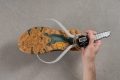
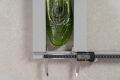
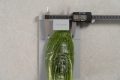
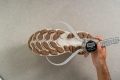
In the lab, we use a digital calliper to measure the thickness of the lugs. You may think: the deeper the lugs, the better, but that’s not entirely true. It is, if we’re talking about mud, snow, and slush. Then, you actually need very deep lugs (4 mm and deeper) that are placed further apart from each other to allow mud or snow shedding.

On the other hand, if you’re mostly running on gravel or hard-packed and well-maintained trails, you’ll enjoy trail shoes with shallow (around 2 mm) and dense lugs.

And finally, trail running shoes for mixed terrain (versatile or moderate) have average-to-deep lugs, often of varying shapes and orientation.
Here, we also have to talk about traction. We perform a test in the lab that allows us to measure the dynamic coefficient of friction. The higher it is, the better, for runners who often do road-to-trail runs in wet weather, or who frequently run on flat wet surfaces (like large rocks/boulders).
If you’re one of those runners, we recommend finding shoes with a coefficient of friction that’s higher than 0.45.
Cushioning in New Balance trail running shoes
We’ve already mentioned that New Balance makes both minimalist and cushioned running shoes. So, it’s expected for the stack heights in those to be significantly different.

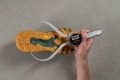
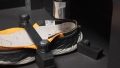
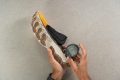
In our lab, we cut the shoes in half and measure their stack heights at 12% and 75% of their inner shoe length to honour the guidelines from WorldAthletics
So, we’ve shown that the stack heights can vary. What varies with them is shock absorption. That’s the midsole’s ability to dampen the impact forces when running. Every time we land and hit the ground with the shoe, the shoe absorbs the shock. If it wasn’t doing that, running would hurt as it (usually) does when we run barefoot.
The test we do in the lab measures the shock absorption and energy return at the same time. The higher they are, the better. However, we have to make a few disclaimers here:
- Race shoes often have (as they should) high energy return and high shock absorption. We can attribute this to premium foams, sometimes in collaboration with carbon-fibre plates.
- Daily trainers often do not have high energy return because they prioritise durability (plus, they are cheaper than premium race shoes because they usually use standard foams).
- Minimalist and barefoot running shoes physically can’t have high shock absorption because their midsoles are too thin.
So, you should prioritise high shock absorption if you plan to run long distances or do recovery runs. That’s the metric that matters in these cases, although many runners would think that it’s the softness that counts the most. But soft shoes can easily bottom out and give nothing or very little in return, which can lead to premature foot fatigue and even pain or injuries.

If softness is what you care about the most (or a lot), you can rest because we measure that as well in the lab. We stick the durometer’s needle into the foam and get a reading. If we notice that the midsole is made of more than 1 foam (so-called dual-density midsole), we measure the softness of both foams. It’s important to understand, though, that the softness that we perceive is about the whole shoe, so it’s sometimes a combination of 2 foams, and we must not forget about the insole.


Most durable New Balance trail running shoes
In road running, we usually worry about durability when we overpronate excessively or when our big toe is pointing up. In trail running, there are even more factors to consider: what if the obstacles are sharp and rip the upper material? What if the same obstacles cut into the soft, sticky rubber or wear down the lugs prematurely?
If it wasn’t obvious until now, we hope now it is: we have to talk about durability!
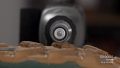
When doing these durability tests, we use a Dremel to intentionally try to damage the shoes and then assess or measure the damage. In the case of the toebox and heel padding, we assign a durability score on a 1-5 scale. Naturally, 5/5 is the most durable.
Finally, we get to the outsole. Here, we don’t have to assess anything. We can use a tyre tread gauge to measure the exact depth of the hole, and the deeper it is, the less durable the outsole on New Balance trail shoes.
For those who prioritise stability
Unlike stability road running shoes, trail shoes do not come with such features. The reasoning is simple: there are too many variables, the biggest one being the terrain. It varies a lot, which means that the position of our feet, the angle at which we land, and everything included, is not constant. It’s everything but constant. So we can’t talk about stability in the traditional (corrective) sense.
But we can talk about overall stability, which comes from a wide platform, torsional rigidity, and a structured upper. Runners usually look for these features after experiencing trail shoes with high and narrow midsoles. They often feel too unstable.

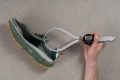
In the lab, we also measure the torsional rigidity. It basically tells us how difficult it is to twist the shoe (the more force needed = the stiffer the shoe).

This torsional rigidity is important if you often run on technical terrain, as it stabilises the shoe and, with it, the foot. Your feet then don't have to overwork by trying to grasp for bottoms (surface) to find stability.
New Balance technologies you should know
Fresh Foam X is currently found in Hierro 9, and it’s mainly a standard foam (EVA with a bit of PEBA). Its predecessor, Fresh Foam (no X), was made only of EVA. Is the new version better? It depends on the shoe model, which highlights that the shoe is a whole system; we can’t isolate one thing and credit it for upgrades. Hierro 9 scored only slightly above average in our energy return and shock absorption test.
FuelCell is a foam that got an update in 2024, which moved it from the standard category to the premium category! Surprisingly, in the Rebel Trail, both shock absorption and energy return are below average.
Energy Arc is a carbon-plate system we’ve seen in SuperComp Trail. It starts as a regular plate at the heel and switches to a forked design in the forefoot. This was New Balance’s first trail supershoe attempt (and a very good one).

AT Tread is found on the outsoles made for a hybrid use (road and trail). We’ve seen it in Garoe v2 and Minimus Trail. It may be combined with Hydrohesion, specifically made for wet weather.

Small bonus
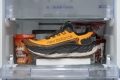
Here's how a New Balance MT110AK (Anton Krupicka collaboration) looks today, 15 years after its release, still in the box and never worn!

Similar buying guides