





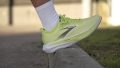



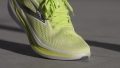




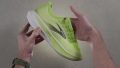


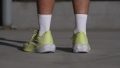
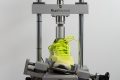
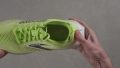







Nuestra conclusión
- Tiradas diarias / rodajes 82
- Tempo 70
- Competición 53
- Estabilidad 78
Pros
- Upper excepcional
- Buena relación calidad-precio sin ser más caras
- Ajuste seguro y mullido
- Mediasuela más alta que las hace más versátiles
- Mediasuela más blandita que la de la versión 2
- Duraderas
- Excelentes para los talonadores
- Lengüeta elástica estupenda
- Buena opción para principiantes
Contras
- Mucho más pesadas que sus predecesoras
- Necesitan un retorno de energía más alto
- Se sienten menos naturales que antes en los pies
Comparativa
Las zapatillas de running más parecidas
+ + Añadir unas zapatillas | |||||
|---|---|---|---|---|---|
| Nuestra puntuación | 78 Buenas | 86 Geniales | 91 Magníficas | 94 Magníficas | |
| Precio | 150 € | 130 € | 150 € | 200 € | |
| Ritmo | Correr a diarioTempo / series | Correr a diario | Correr a diario | Tempo / series | |
| Absorción de impactos | Moderada | Alta | Alta | Alta | |
| Retorno de energía | Moderado | Moderado | Alto | Alto | |
| Tracción | Alta | Alta | Alta | Alta | |
| Sujeción arco del pié | Neutral | Neutral | Neutral | Neutral | |
| Peso laboratorio Peso marca | 8.6 oz / 244g 8.6 oz / 244g | 9.3 oz / 264g 9.2 oz / 260g | 9.2 oz / 261g 9.3 oz / 264g | 8.5 oz / 241g 8.4 oz / 238g | |
| Ligero | ✓ | ✗ | ✗ | ✓ | |
| Drop laboratorio Drop marca | 11.3 mm 8.0 mm | 7.6 mm 8.0 mm | 11.5 mm 10.0 mm | 10.6 mm 8.0 mm | |
| Técnica de carrera | Talón | Medio/antepié | Talón | Talón | |
| Talla | Tallan un poquito pequeño | Tallan bien | Tallan bien | Tallan un poquito pequeño | |
| Rigidez de la mediasuela | Equilibrada | Equilibrada | Blanda | Firme | |
| Diferencia de la rigidez de la mediasuela en frío | Pequeña | Normal | Pequeña | Normal | |
| Durabilidad de la parte delantera | Decente | Buena | Buena | Decente | |
| Durabilidad del acolchado del talón | Alta | Alta | Media | Alta | |
| Durabilidad de la suela exterior | Buena | Buena | Decente | Buena | |
| Transpirabilidad | Alta | Media | Alta | Alta | |
| Anchura / ajuste | Media | Media | Media | Media | |
| Anchura de la parte delantera | Media | Media | Media | Media | |
| Flexibilidad | Moderada | Moderada | Rígida | Moderada | |
| Rigidez torsional | Moderadas | Moderadas | Flexibles | Moderadas | |
| Rigidez del contrafuerte del talón | Rígido | Rígido | Moderado | Rígido | |
| Con rocker | ✗ | ✗ | ✗ | ✓ | |
| Talón laboratorio Talón marca | 36.5 mm 36.0 mm | 39.4 mm 39.0 mm | 37.4 mm 40.0 mm | 37.4 mm 36.0 mm | |
| Antepié laboratorio Antepié marca | 25.2 mm 28.0 mm | 31.8 mm 31.0 mm | 25.9 mm 30.0 mm | 26.8 mm 28.0 mm | |
| Anchuras disponibles | Estándar | Estándar | EstándarAncho | EstándarAncho | |
| Compatibles con plantillas personalizadas | ✓ | ✓ | ✓ | ✓ | |
| Estación | VeranoTodas las estaciones | Todas las estaciones | VeranoTodas las estaciones | VeranoTodas las estaciones | |
| Plantilla extraíble | ✓ | ✓ | ✓ | ✓ | |
| Clasificación | #262 34% inferior | #93 Top 24% | #28 Top 8% | #4 Top 1% | |
| Popularidad | #124 Top 31% | #209 47% inferior | #229 42% inferior | #21 Top 6% |



Quién debería comprárselas
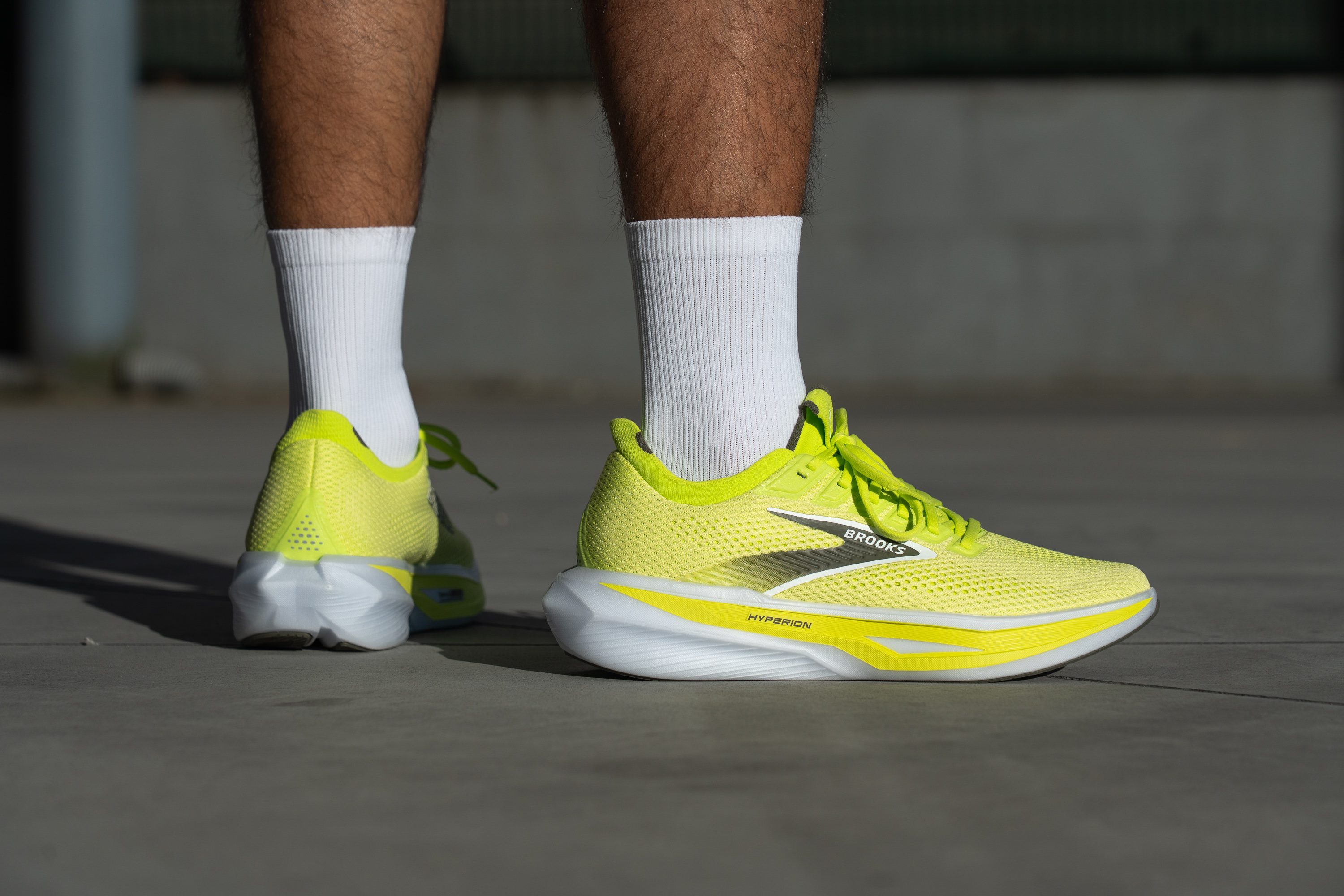
En nuestra opinión, las Brooks Hyperion 3 les van a encantar a:
- Los runners que están buscando un upper de última generación a un precio muy razonable.
- Los que sintieron que las Hyperion 1 o 2 no ofrecían suficiente amortiguación bajo los pies.
- Los talonadores que están buscando un modelo cómodo, transpirable y duradero para las tiradas fáciles o los entrenamientos sencillos de tempo.
Quién NO debería comprárselas
Creemos que las Hyperion 3 no son la mejor opción para los corredores que necesitan amortiguación, ya que su absorción de impactos no nos parece suficiente para las distancias largas. Las Hyperion Max 3 nos lo dejan claro con su nombre, y es que ofrecen una excelente protección contra los impactos sin perder la esencia de Brooks. Pero si estás buscando algo más económico, entonces las ASICS Novablast 5 son la respuesta.
Tampoco creemos que sean la mejor opción para los deportistas que se centran en el tempo y que quieren un retorno de energía alto. Gracias a nuestras pruebas, descubrimos que la mediasuela de este modelo se queda un poco corta en ese aspecto. Zapatillas como las PUMA Velocity Nitro 4 o las adidas Adizero EVO SL vienen... pisando fuerte, literalmente.
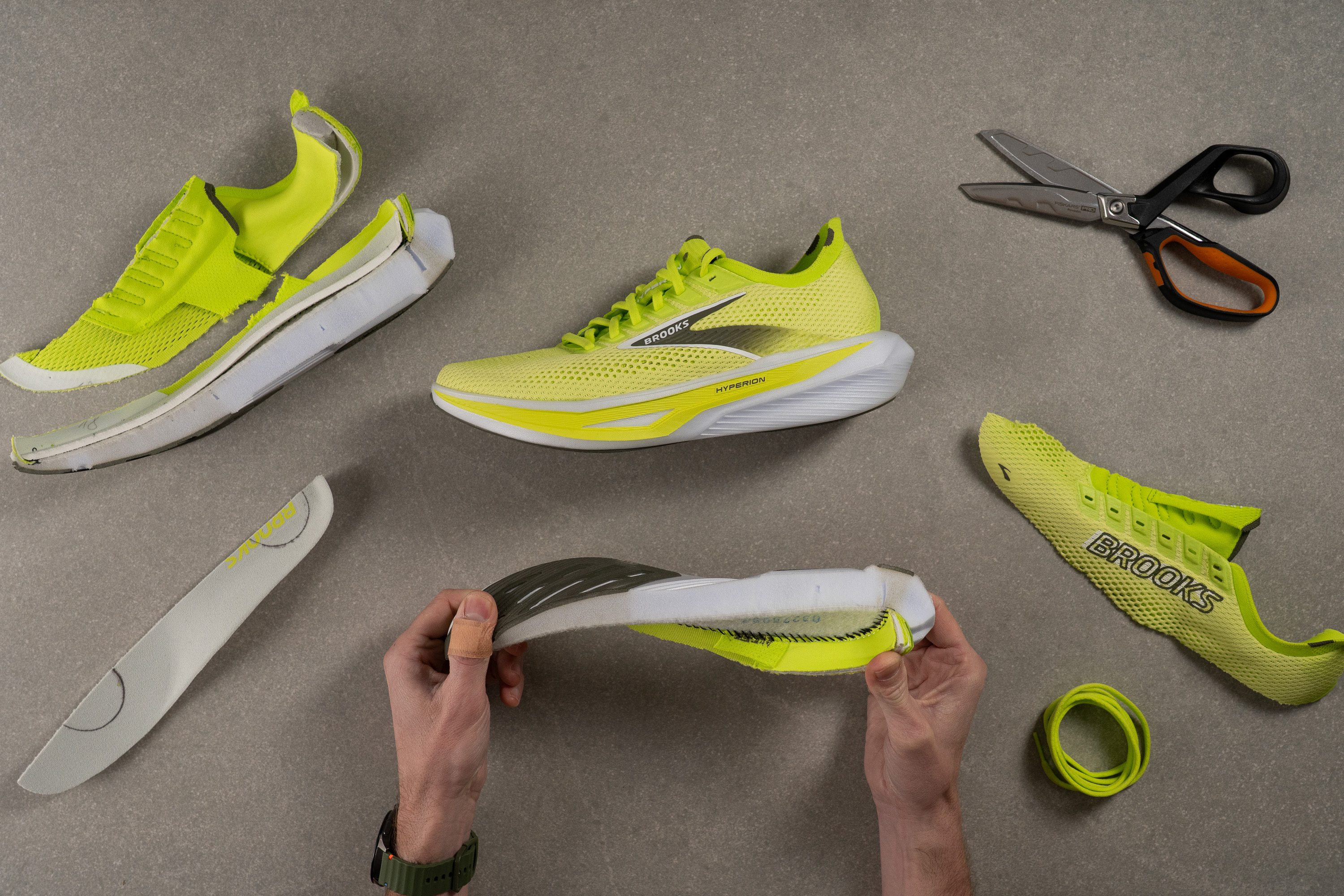
Amortiguación
Shock absorption
En la prueba ASTM F1976, descubrimos que las Hyperion 3 ofrecen casi la misma absorción de impactos que las Hyperion 2, así que no te esperes muchos cambios en este aspecto.
Con 130 SA en el talón y 98 SA en el antepié, no se separan mucho de la media. Entre que las zapatillas se van volviendo cada vez más altas y que están saliendo nuevas superzapatillas de entrenamiento al mercado, resultados como estos pronto podrían ser un 15 o 20 % más bajos que la media.
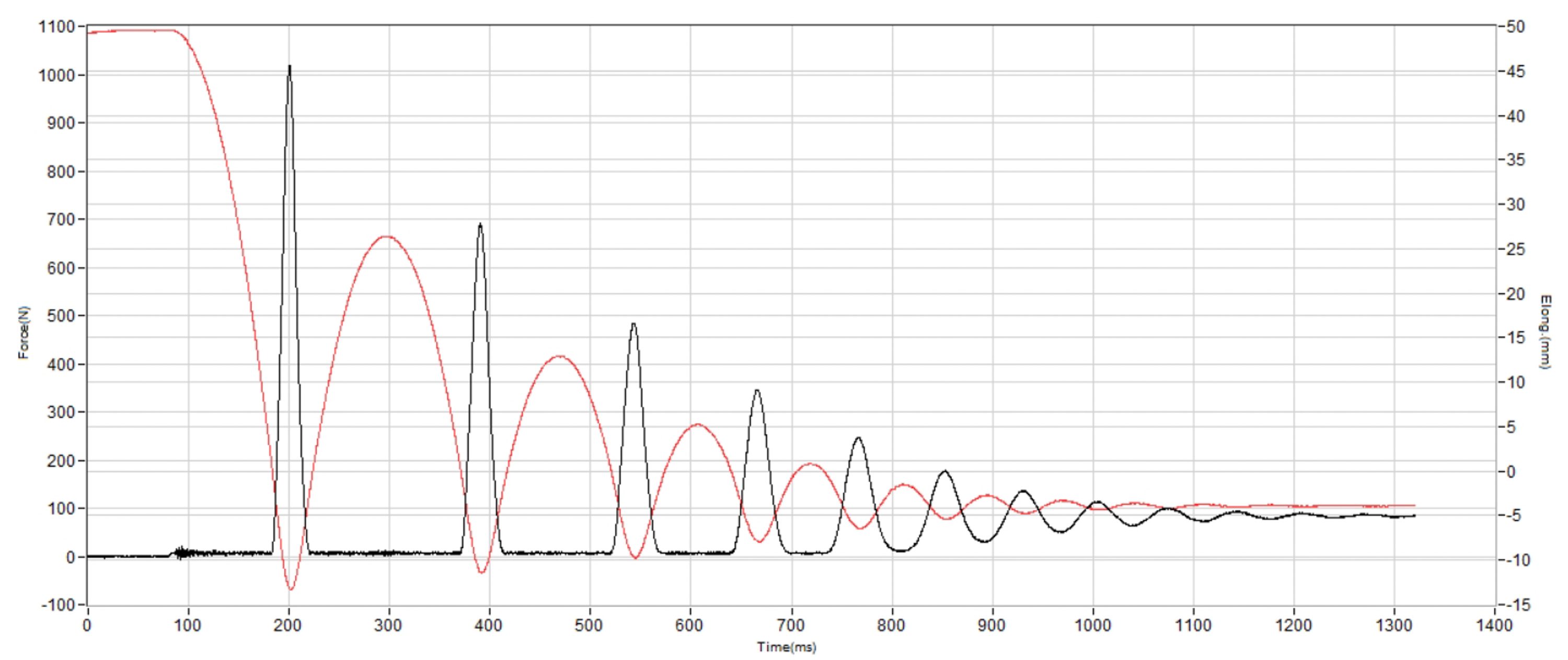
| Hyperion 3 | 130 SA |
| Media | 131 SA |
Energy return
Las Hyperion 3 tienen una espuma EVA supercrítica, así que no nos esperábamos un retorno de energía excepcional, pero tampoco la sensación apagada y aburrida de una EVA común.
Después de analizarla, descubrimos que su retorno de energía es del 56,0 % en el talón y del 59,9 % en el antepié, cifras que eran buenas hace unos años. Pero es que ya no estamos en 2022, y como las zapatillas de este rango de precios están empezando a utilizar compuestos mejores, creemos que Brooks necesita empezar a buscar una espuma A-TPU asequible lo antes posible.
| Hyperion 3 | 59.9% |
| Media | 61.4% |
Altura de la suela en la zona del talón
Tenemos malas noticias para los deportistas a los que les gustaba el perfil bajo de las Hyperion anteriores. Ya le puedes decir adiós a ese diseño, ya que las Hyperion 3 tienen una suela de 36,5 mm de altura en el talón, que es un cambio importante en su carácter. ¡La versión 2 tenía solo 32,2 mm!
Esto hace que estas zapatillas estén más cerca de un modelo de entrenamiento diario moderno que de un par con una estructura natural y conectada con el suelo, que es lo que hacía únicas a las versiones anteriores. Y aunque entendemos por qué Brooks tomó esta decisión, la verdad es que habríamos preferido un diseño más bajito, ya que hoy en día hay montones de zapatillas amortiguadísimas en el mercado.
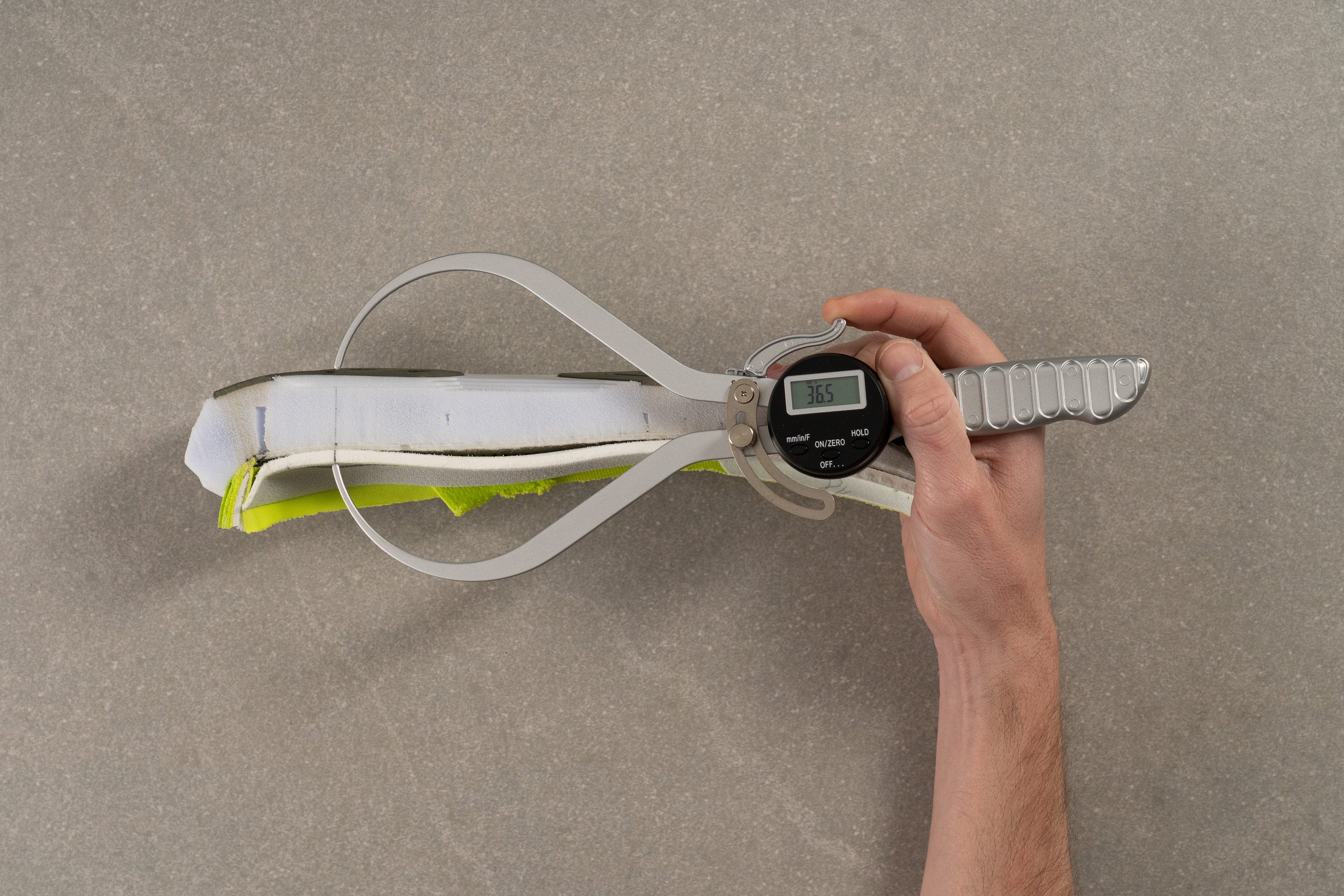
| Hyperion 3 | 36.5 mm |
| Media | 35.5 mm |
Altura de la suela en el antepié
El antepié también cambia el carácter de las zapatillas, ya que sus 25,2 mm son más adecuados para enfrentarse a las distancias largas. Las Hyperion 3 se han vuelto más versátiles y ahora se adaptan a más gente, pero esa sensación ligera y conectada con el suelo de las versiones anteriores ha desaparecido.
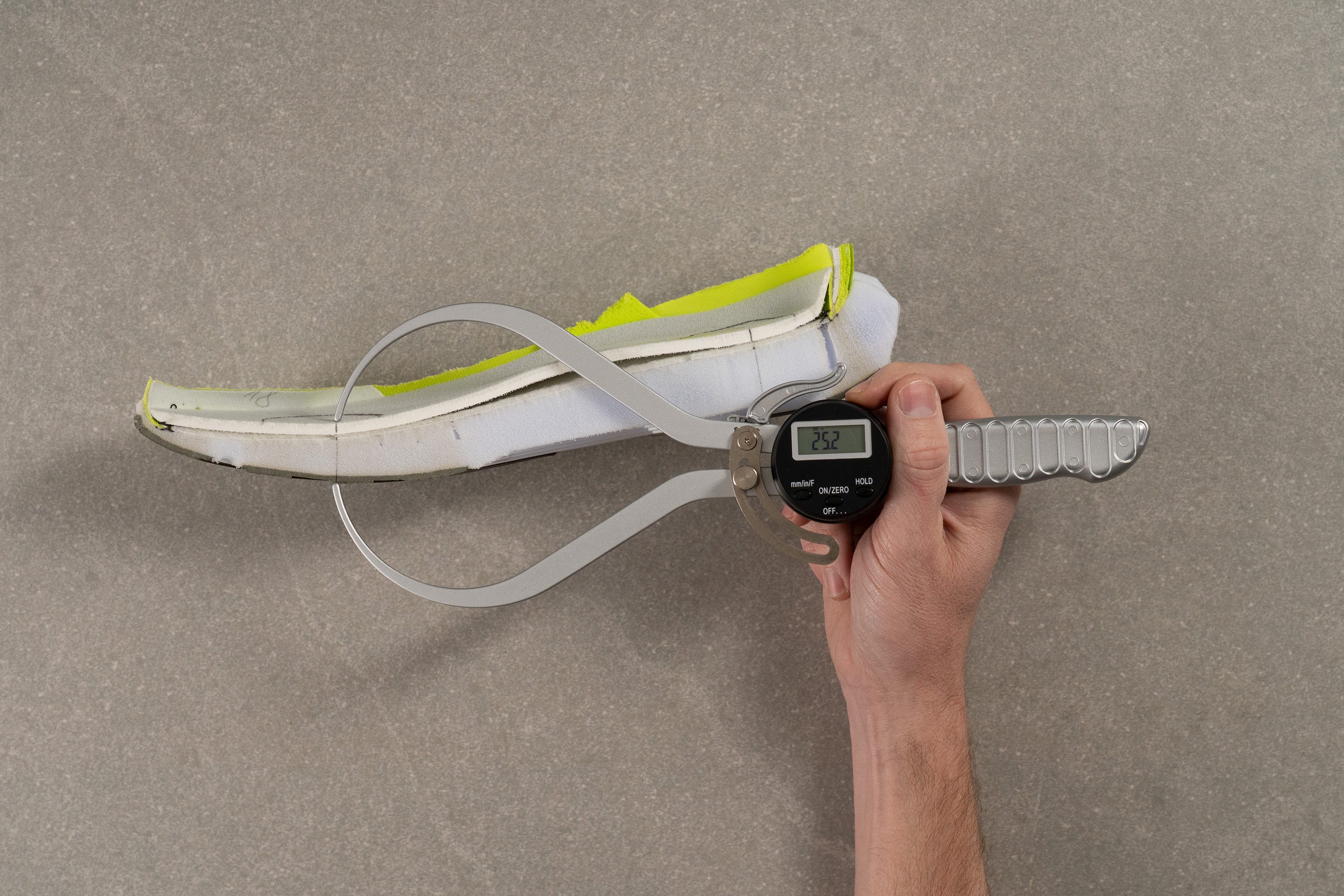
| Hyperion 3 | 25.2 mm |
| Media | 27.1 mm |
Drop
El drop es muy alto, alcanzando 11,3 mm, aunque esto siempre ha sido parte de la línea Hyperion.
Creemos que este diseño se adapta mejor a los talonadores, pero a los runners que prefieren los drops altos (como los que tienen problemas recurrentes en el tendón de Aquiles) también puede venirles bien.
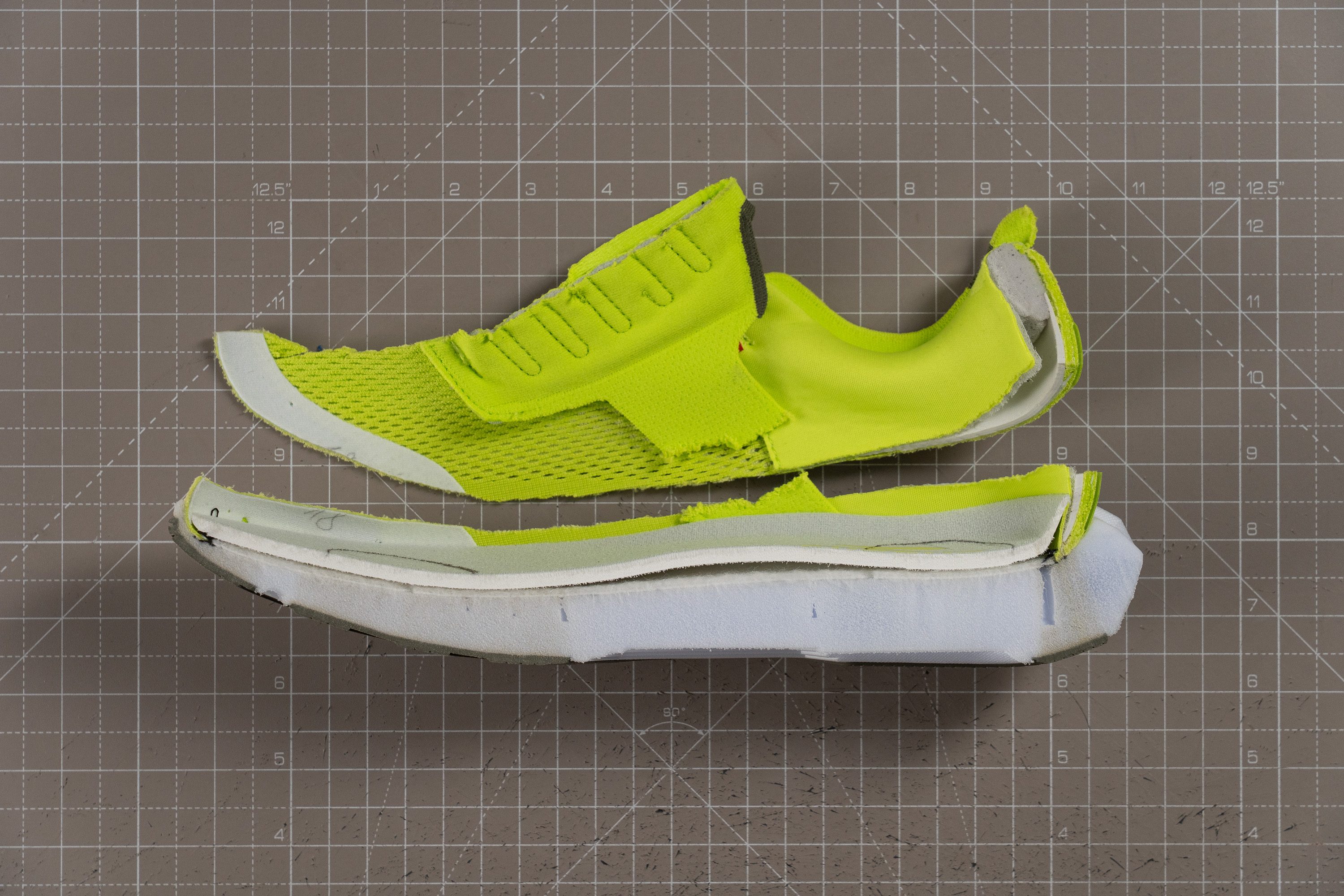
| Hyperion 3 | 11.3 mm |
| Media | 8.4 mm |
Dureza de la mediasuela
Una de las quejas más comunes que escuchamos sobre las Hyperion 2 es que se sienten rígidas bajo los pies. Vamos, que no eran lo suficientemente blanditas para los estándares actuales.
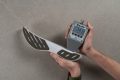
Brooks abordó este aspecto con la versión actualizada de la espuma DNA Flash v2, que obtuvo un resultado de 34,9 AC en nuestro durómetro. Sigue sin ser muy mullida, así que ojo si es eso lo que estás buscando, pero recuerda que al tener una mediasuela de altura moderada, la pisada nunca va a ser ultrablanda. Esto también explica por qué Brooks mantuvo una sensación más firme en la versión anterior, que tiene un perfil más bajo.
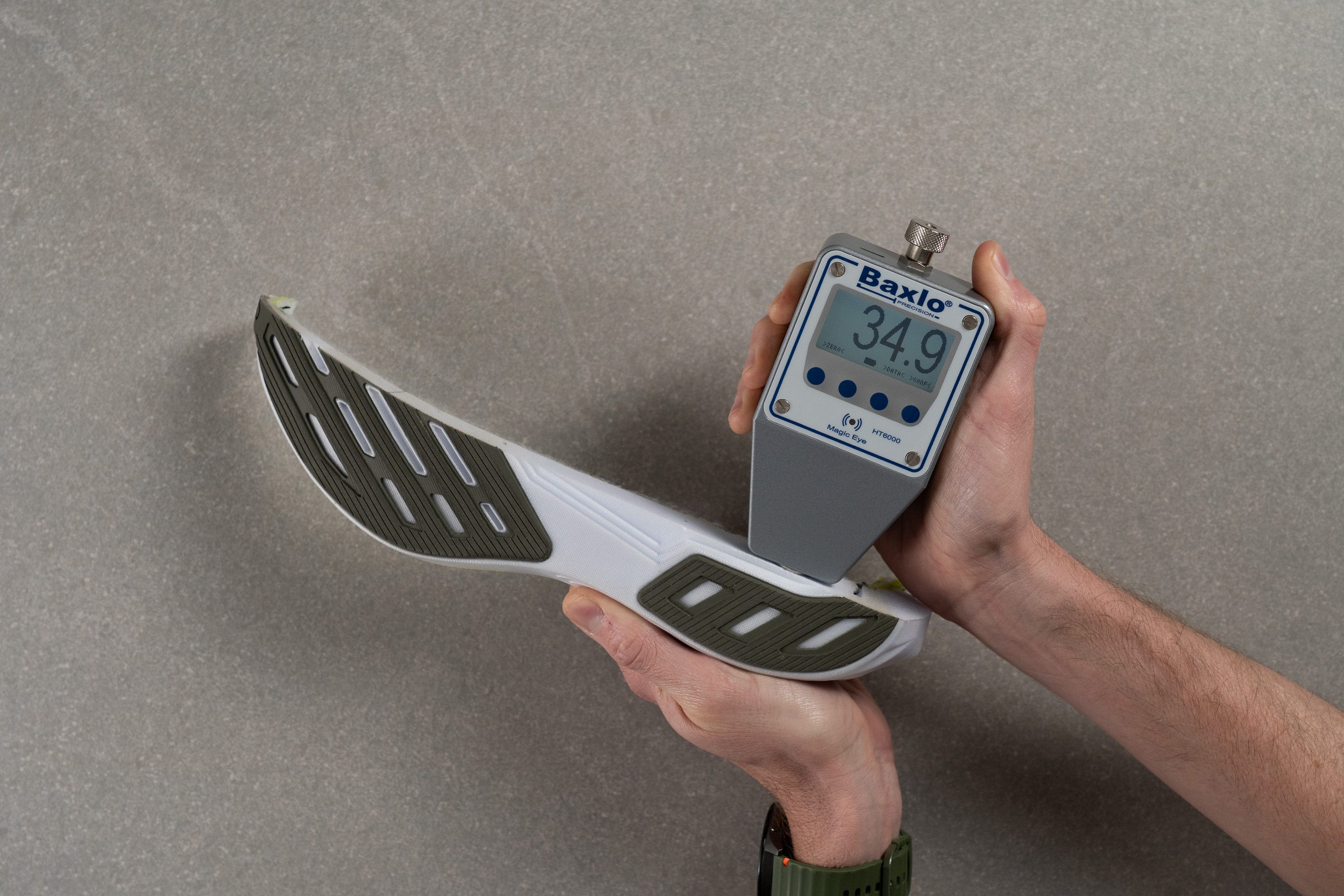
| Hyperion 3 | 34.9 AC |
| Media | 35.5 AC |
Rocker
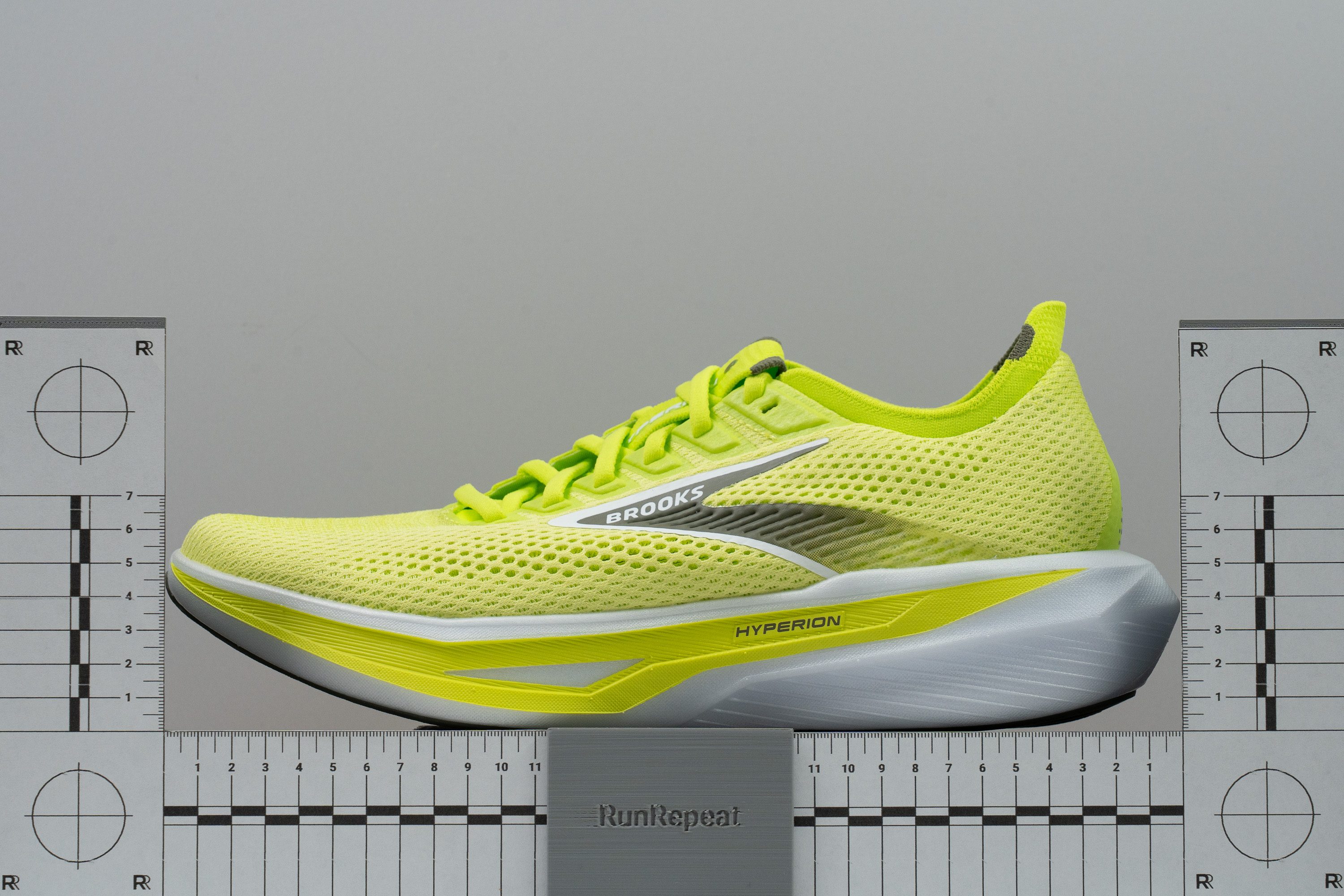
Aunque tienen un poco más de espuma en el talón y en el antepié, nos alegró ver que el rocker casi no ha cambiado nada. Conserva solo la ligera curvatura necesaria para que la pisada esté protagonizada por la fluidez, sin tener una forma exagerada.
Tallaje y ajuste
Talla
Las Brooks Hyperion 3 quedan un poco pequeñas (19 votos).
Anchura / Ajuste
Descubrimos que las Hyperion 3 tienen un ajuste que se acerca más a una sensación de bajo volumen, aunque debería adaptarse bien a la mayoría de los corredores que prefieren un upper más ceñido y compacto.
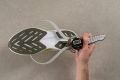
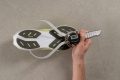
Para ayudarte a compararlas con otros modelos, hicimos nuestro molde de gel, y cuando medimos su punto más ancho nos dio 96,3 mm.
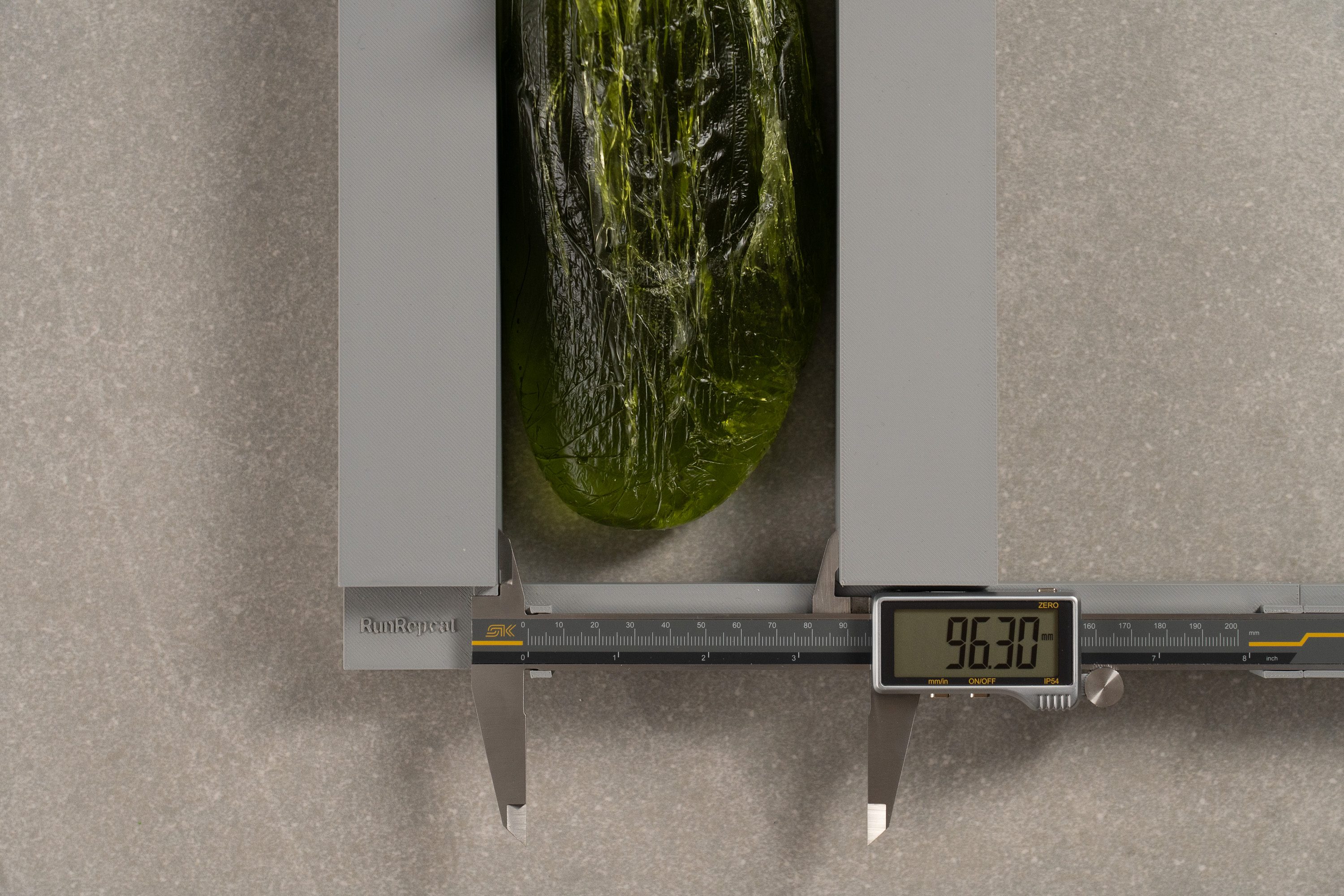
| Hyperion 3 | 96.3 mm |
| Media | 95.2 mm |
Anchura de la parte delantera
Nuestra segunda medición se centró en la parte delantera, donde la cosa se estrechó hasta 72,1 mm, dándonos una idea más clara de por qué sentimos que estas zapatillas nos quedaban un poco ajustadas cuando salimos a correr con ellas puestas.
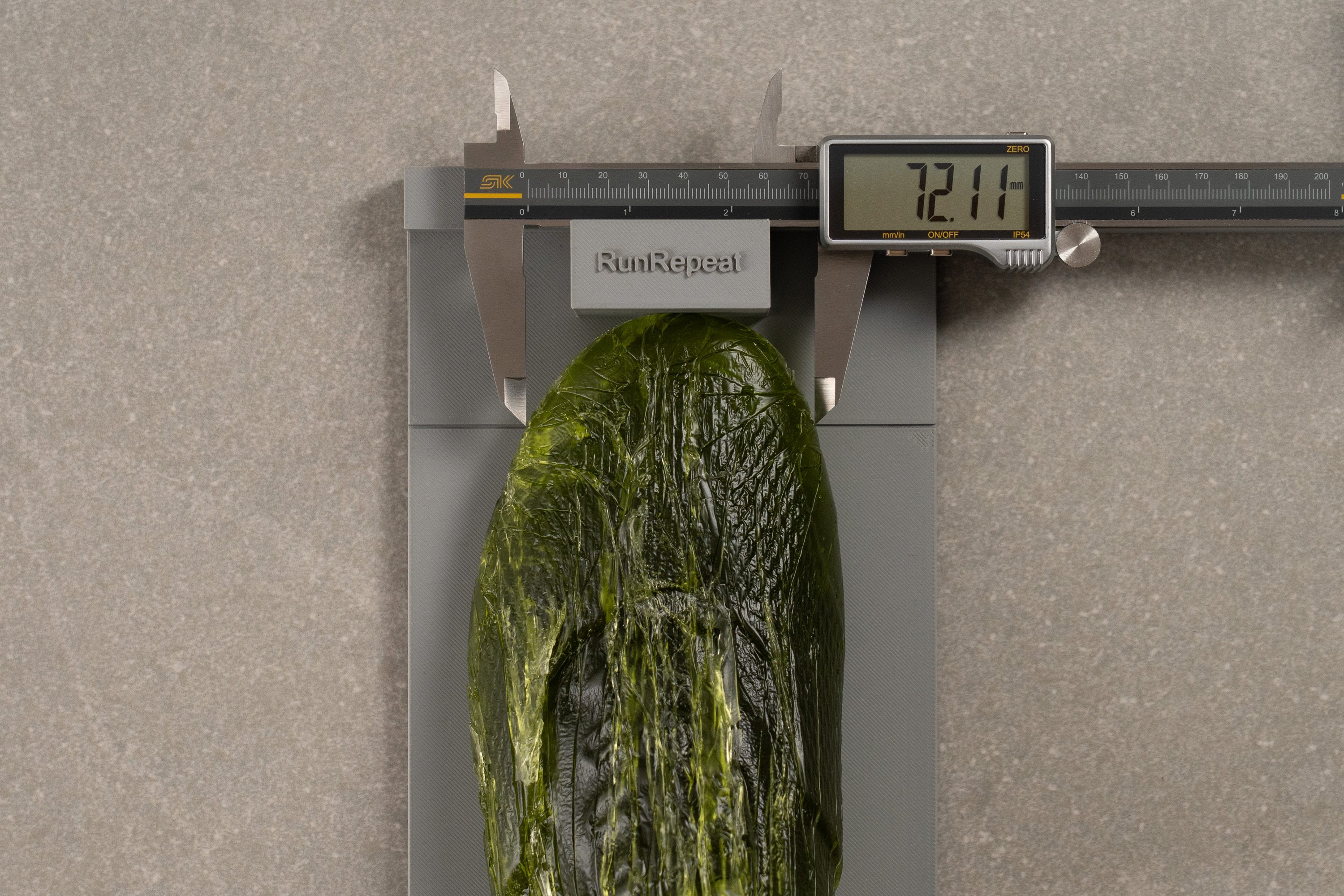
| Hyperion 3 | 72.1 mm |
| Media | 73.2 mm |
Altura de la parte delantera
La tercera medición confirmó esa sensación de bajo volumen de la que hablábamos.
Con solo 24,7 mm está claro que, aunque las Hyperion 3 ahora pueden enfrentarse a distancias un poco más largas, Brooks las diseñó pensando en la velocidad.
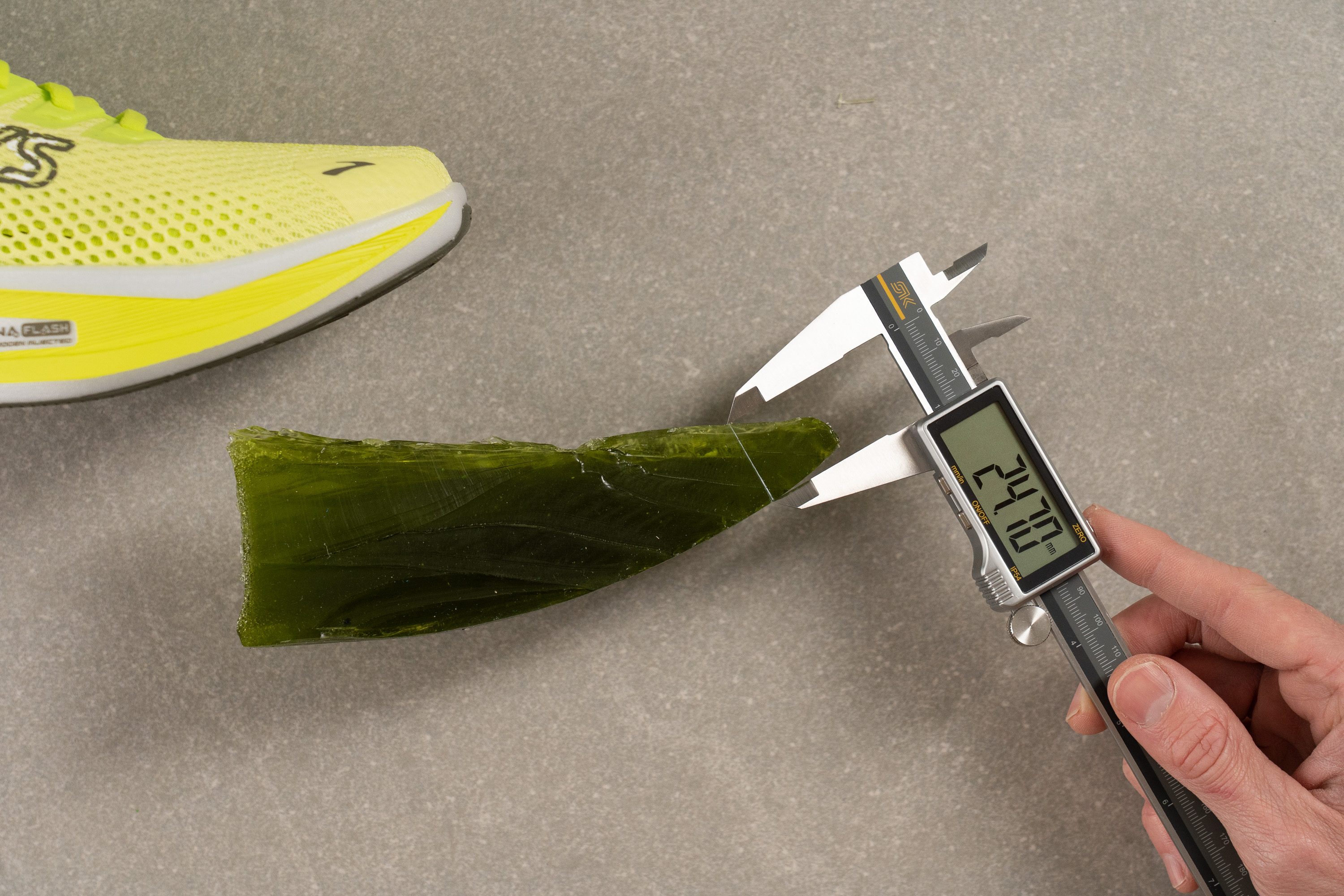
| Hyperion 3 | 24.7 mm |
| Media | 27.0 mm |
Tracción / Agarre
Traction test
La suela de las Hyperion 3 ofrece una tracción sólida en superficies secas, ya que en nuestra prueba obtuvo un coeficiente de 0,46. En las zonas mojadas sí que se siente un poco menos estable, aunque creemos que su rendimiento sigue siendo razonable bajo una lluvia ligera.
| Hyperion 3 | 0.46 |
| Media | 0.53 |
Diseño de la suela exterior
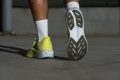
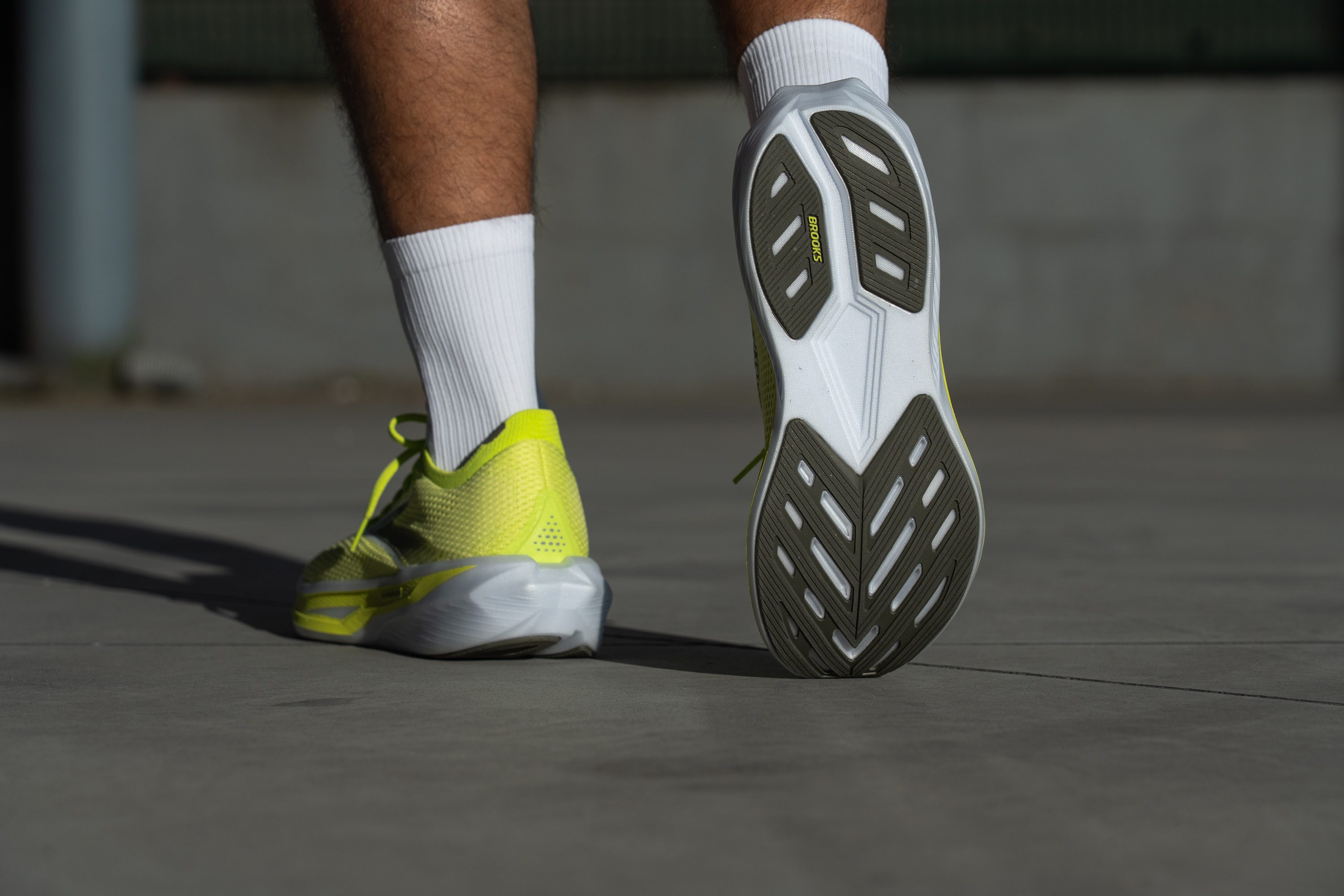
Cuando analizamos la suela, nos dimos cuenta de que tiene dos grandes piezas ovaladas de caucho en el talón con pequeñas aperturas rectangulares, y el meidopié tiene espuma expuesta con líneas simples y un corte poco profundo a su alrededor.
El antepié presume de una V grande de caucho que está hecha de rectángulos largos, cada uno separado por canales de espuma, creando un diseño claro y organizado. Y como ahora hay un poco menos de caucho en general, eso afecta un poco la tracción, como ya habíamos dicho antes.
Flexibilidad / Rigidez
Las Hyperion 3 tienen una suela más alta y, como era de esperar, ahora son más rígidas. Pasaron de 13,0 N a 15,8 N en esta prueba, marcando un paso más hacia un diseño menos natural que el de las versiones anteriores.
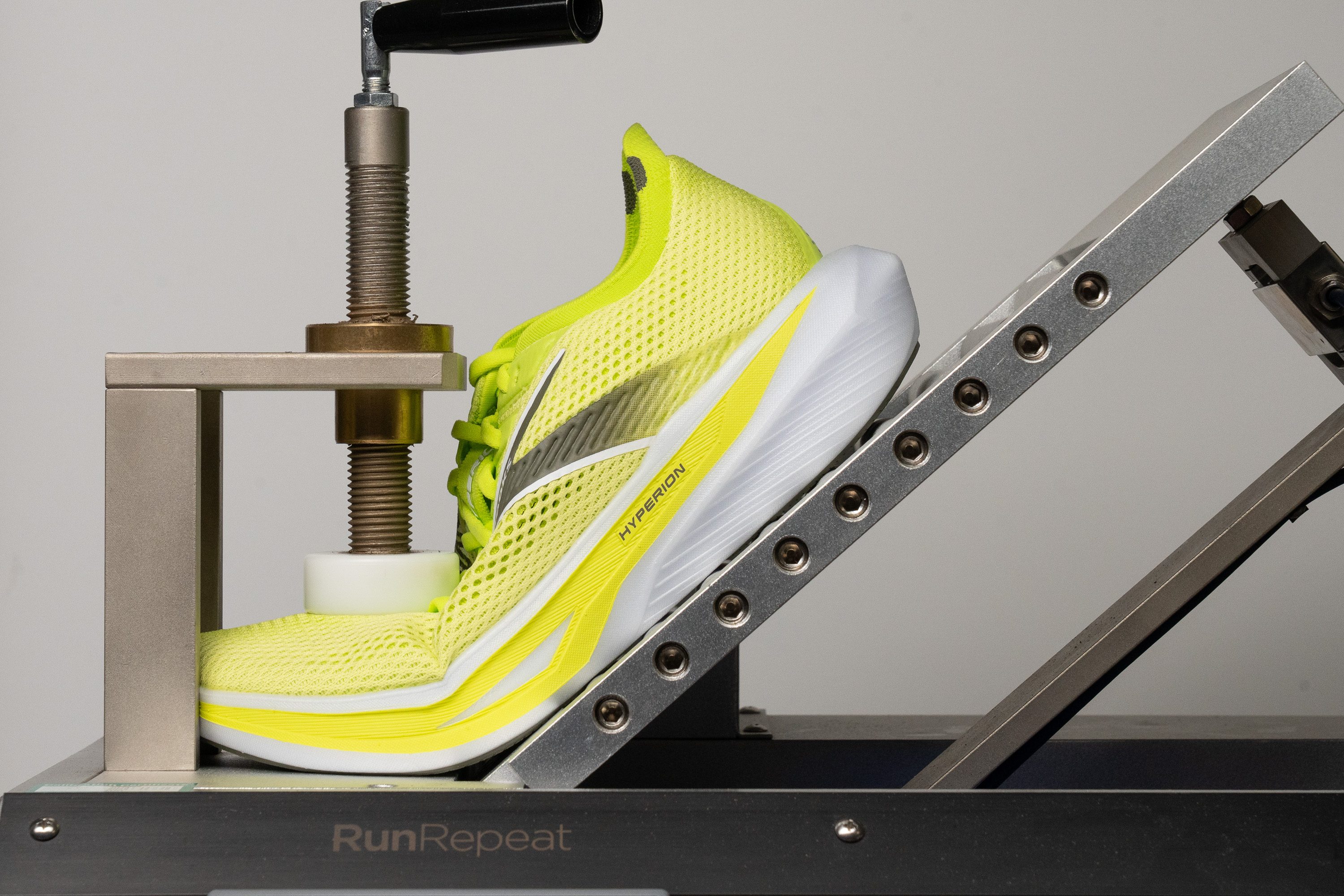
| Hyperion 3 | 15.8N |
| Media | 15.5N |
Peso
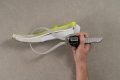
Una de las cosas que nos gustaron de las Hyperion 2 fue lo ligeras que eran, y es que casi nos olvidamos de ellas cuando salimos a correr. Cuando analizamos la versión 3, descubrimos que esa sensación había desaparecido, ya que ahora pesan 244 g. La verdad es que es un aumento considerable en comparación con los 203 g de sus predecesoras.
Personalmente, creemos que esta subida podría hacer que muchos corredores se echasen para atrás, o incluso que buscasen la versión 2 rebajada.
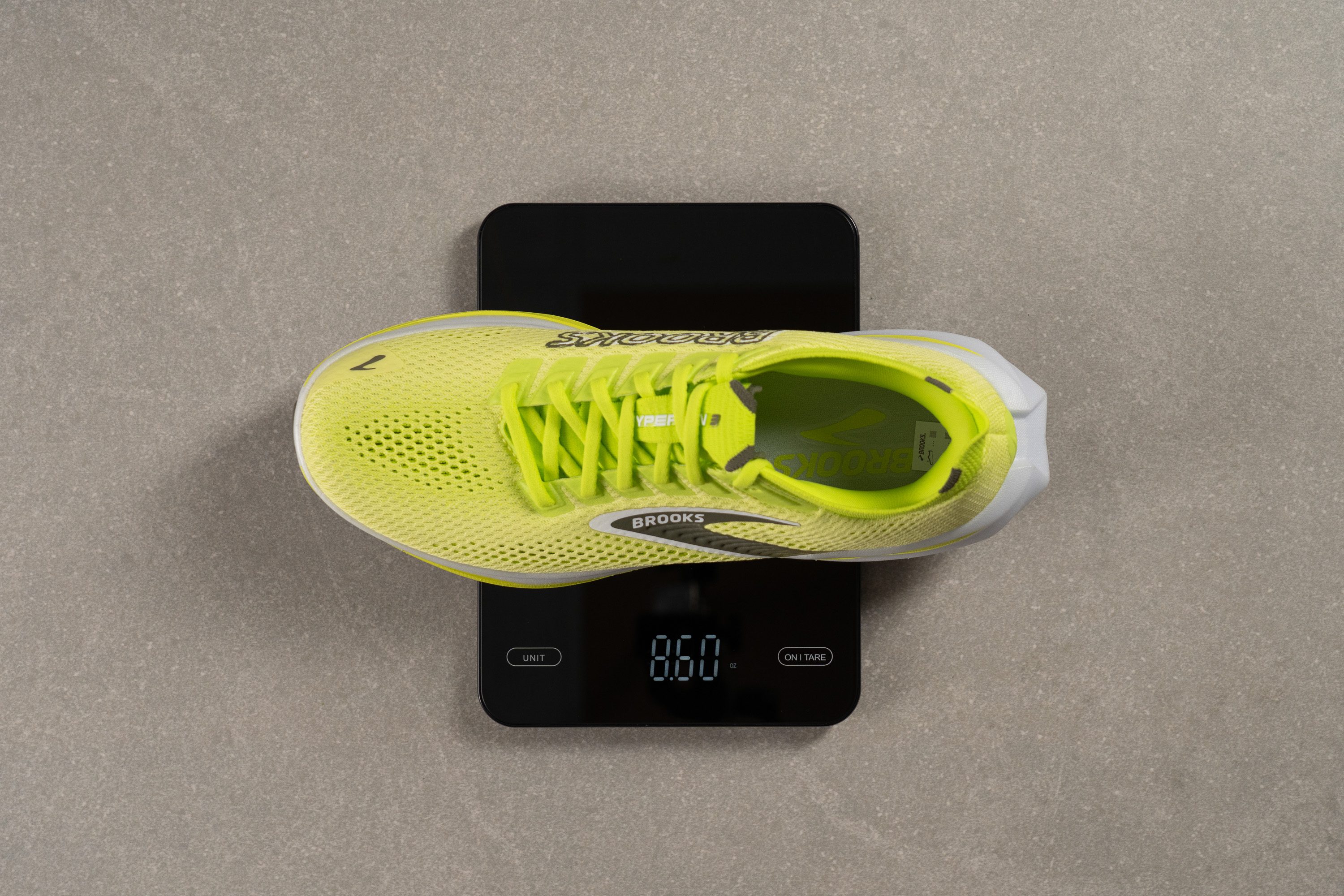
| Hyperion 3 | 8.6 oz (244g) |
| Media | 9.2 oz (261g) |
Transpirabilidad
Breathability test
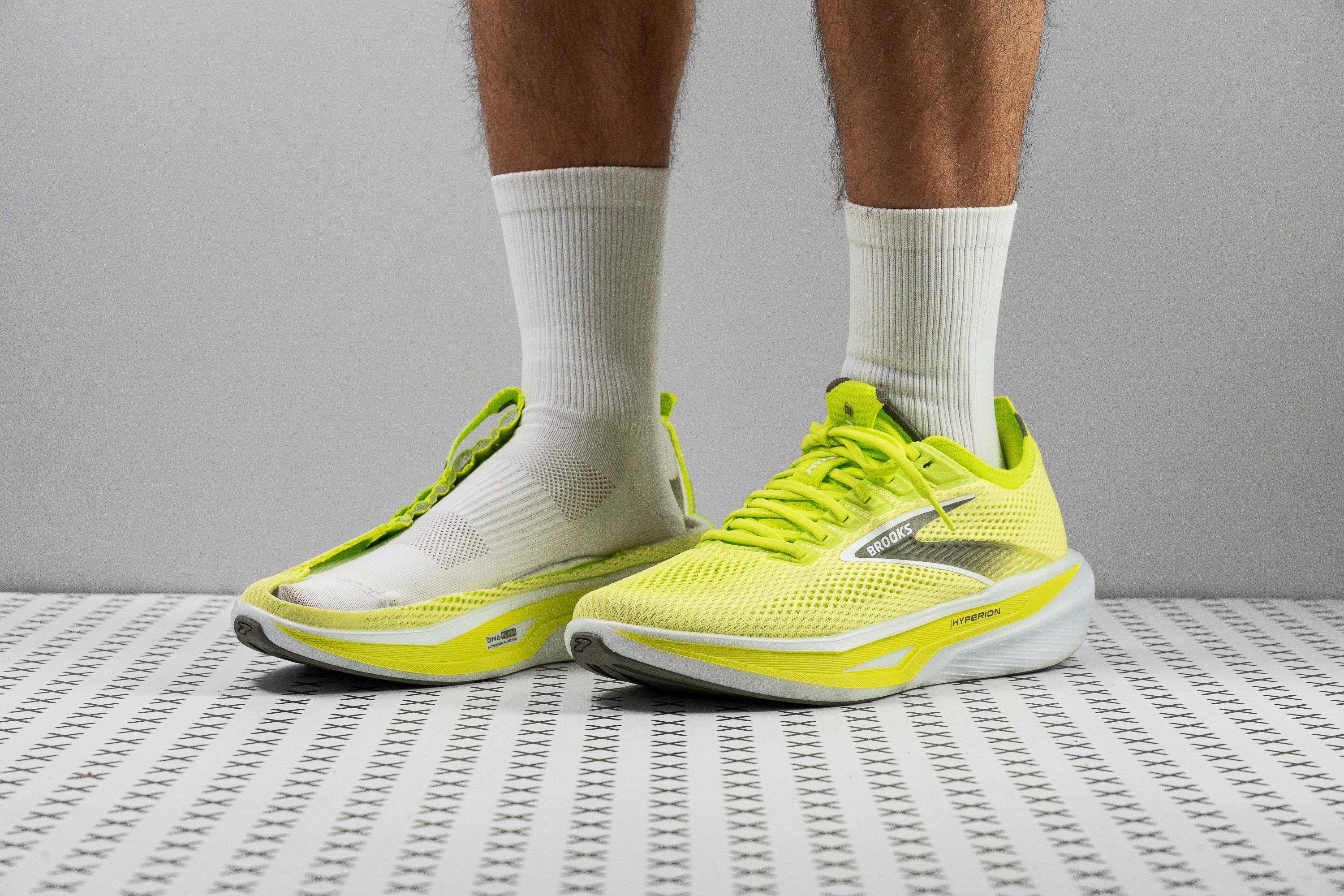
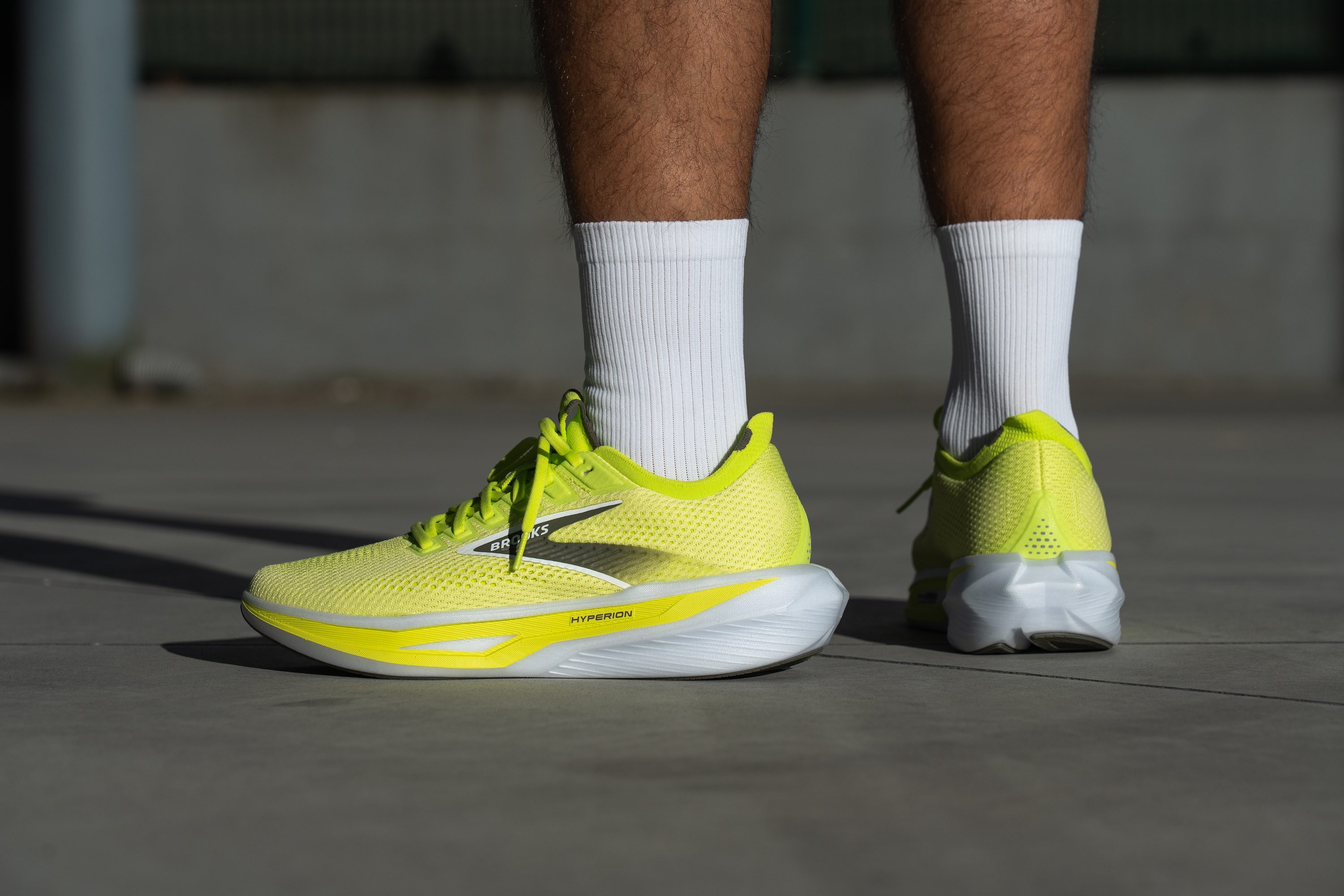
Brooks may be behind brands like ASICS or PUMA in pure performance, but there is one area where they are clearly on top: uppers. We were amazed by the Hyperion Elite 5, and the Hyperion 3 arrives with one of the best uppers you can get at this price point.
It uses a double jacquard mesh that delivers excellent ventilation and great comfort. In our airflow test, it reached a perfect 5/5.
Ventilation is not limited to the toebox. Most of the upper lets air escape well, making this shoe a top option for runners in very hot climates.
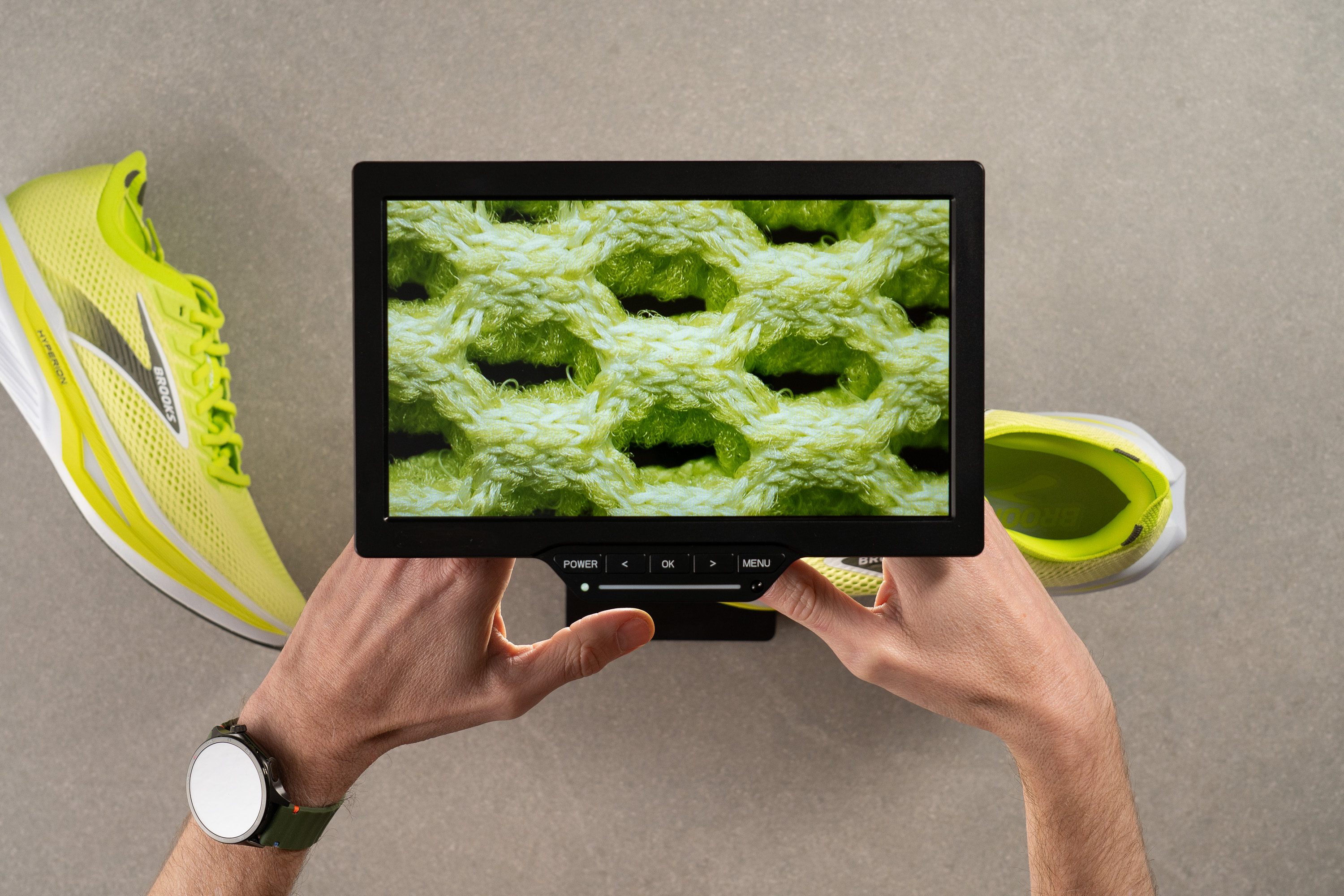
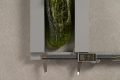
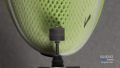
Under the microscope, we found a very nice detail. Instead of using an inner layer that blocks airflow like many other brands, Brooks aligned the holes of both layers to keep air moving.
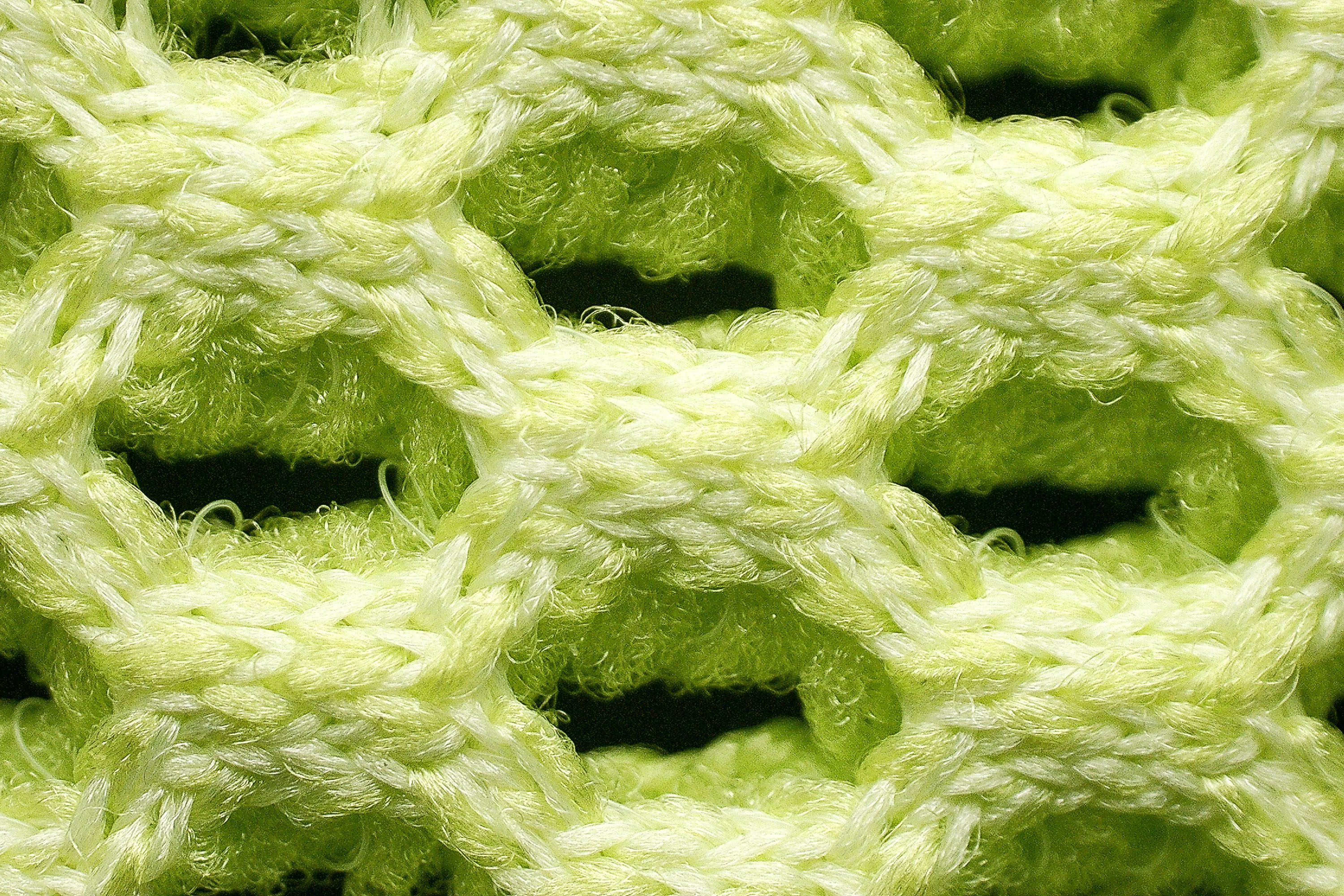
Comfort is also outstanding thanks to the tongue, which uses variable padding instead of a single foam sheet. In our opinion, this upper has a premium touch that you rarely find at such a low price.
| Hyperion 3 | 5 |
| Media | 3.6 |
Estabilidad
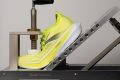
Prueba de estabilidad lateral
Brooks añadió pequeñas paredes laterales a ambos lados de las zapatillas, lo que hace que las Hyperion 3 sean un poco más estables, ayudando a compensar la altura de la mediasuela en comparación con versiones anteriores. Sin embargo, seguimos pensando que este modelo les irá mejor a los corredores neutros que no necesitan sujeción adicional.
Rigidez torsional
Con una puntuación de 13,4 Nm en nuestra prueba de rigidez torsional, las Hyperion 3 mantienen una flexibilidad razonable y están lejos de ser unas zapatillas demasiado rígidas.
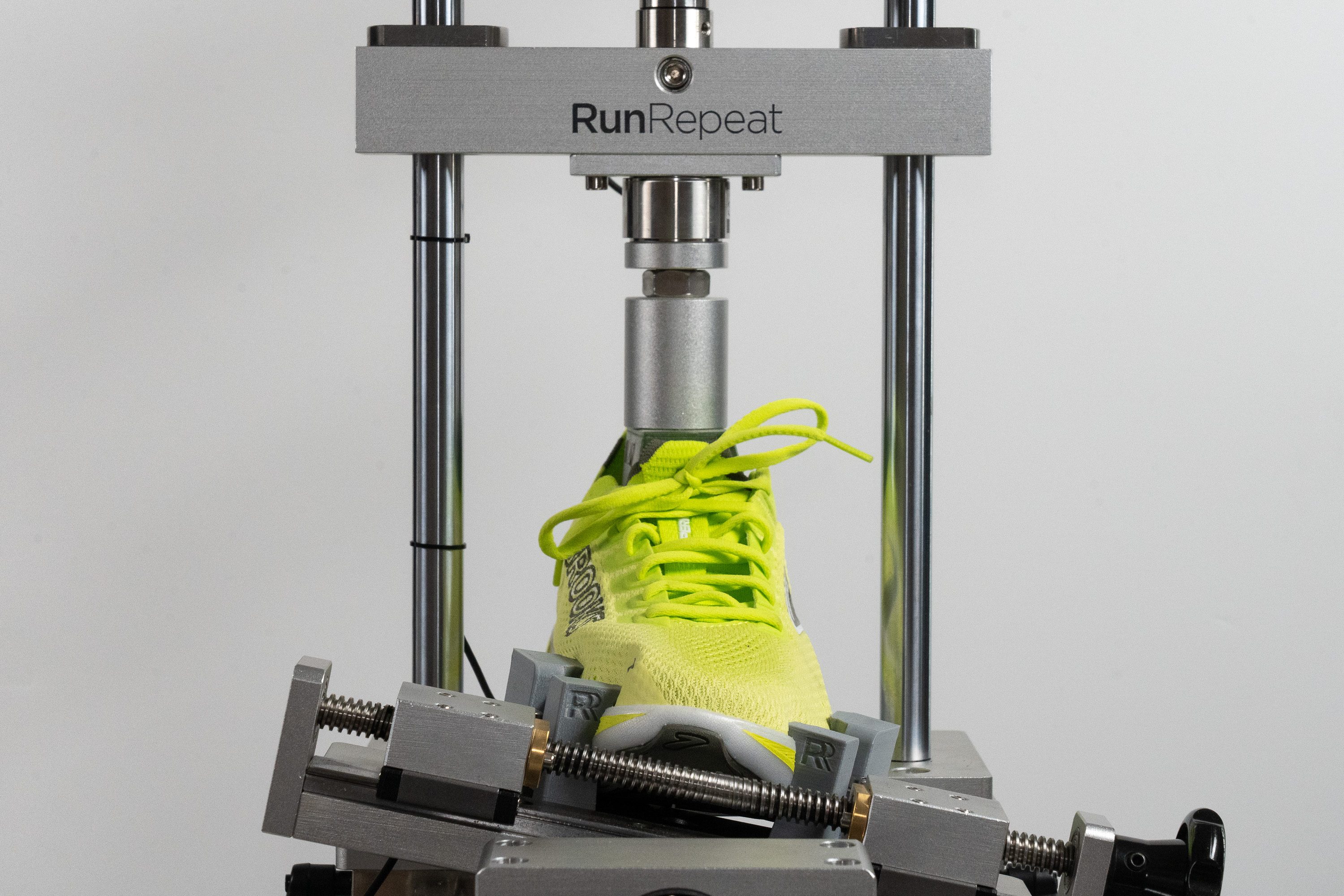
| Hyperion 3 | 13.4 Nm |
| Media | 14.4 Nm |
Rigidez del contrafuerte del talón
El contrafuerte del talón también es más rígido que el de la versión anterior, llevándose un punto más en nuestra escala y alcanzando un 4/5. Eso sí, Brooks les puso más acolchado en el talón para que esa rigidez más alta no sea muy perceptible.
| Hyperion 3 | 4 |
| Media | 3 |
Anchura de la mediasuela - antepié
Las Hyperion 3 han crecido tanto en altura como en anchura, y tanto en el talón como en el antepié. De hecho, la mediasuela es más ancha en la parte delantera, ya que ahora mide 115,0 mm, acercándose más a la media.
Por suerte, Brooks no llevó esto demasiado lejos, así que este modelo se sigue sintiendo más ágil que muchas zapatillas de entrenamiento diario modernas. Incluso así, es claramente diferente del diseño ligero de las dos versiones anteriores.
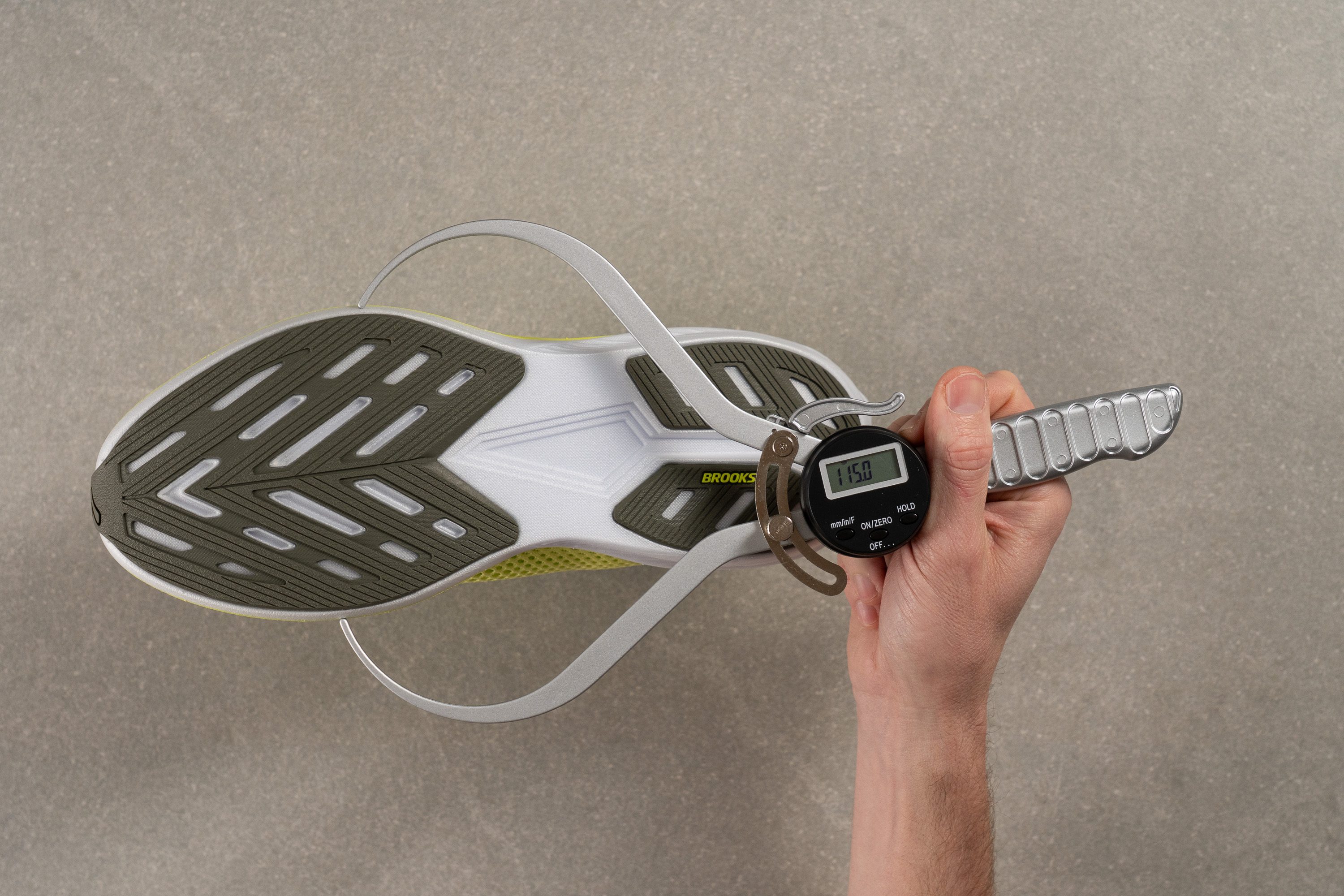
| Hyperion 3 | 115.0 mm |
| Media | 115.1 mm |
Anchura de la mediasuela - talón
El talón sigue la misma actualización que el antepié y ahora mide 88,5 mm. Este cambio probablemente no le guste a todo el mundo, pero los corredores que están buscando un poco más de estabilidad en el talón seguro que están encantados con el espacio que ofrece la versión 3.
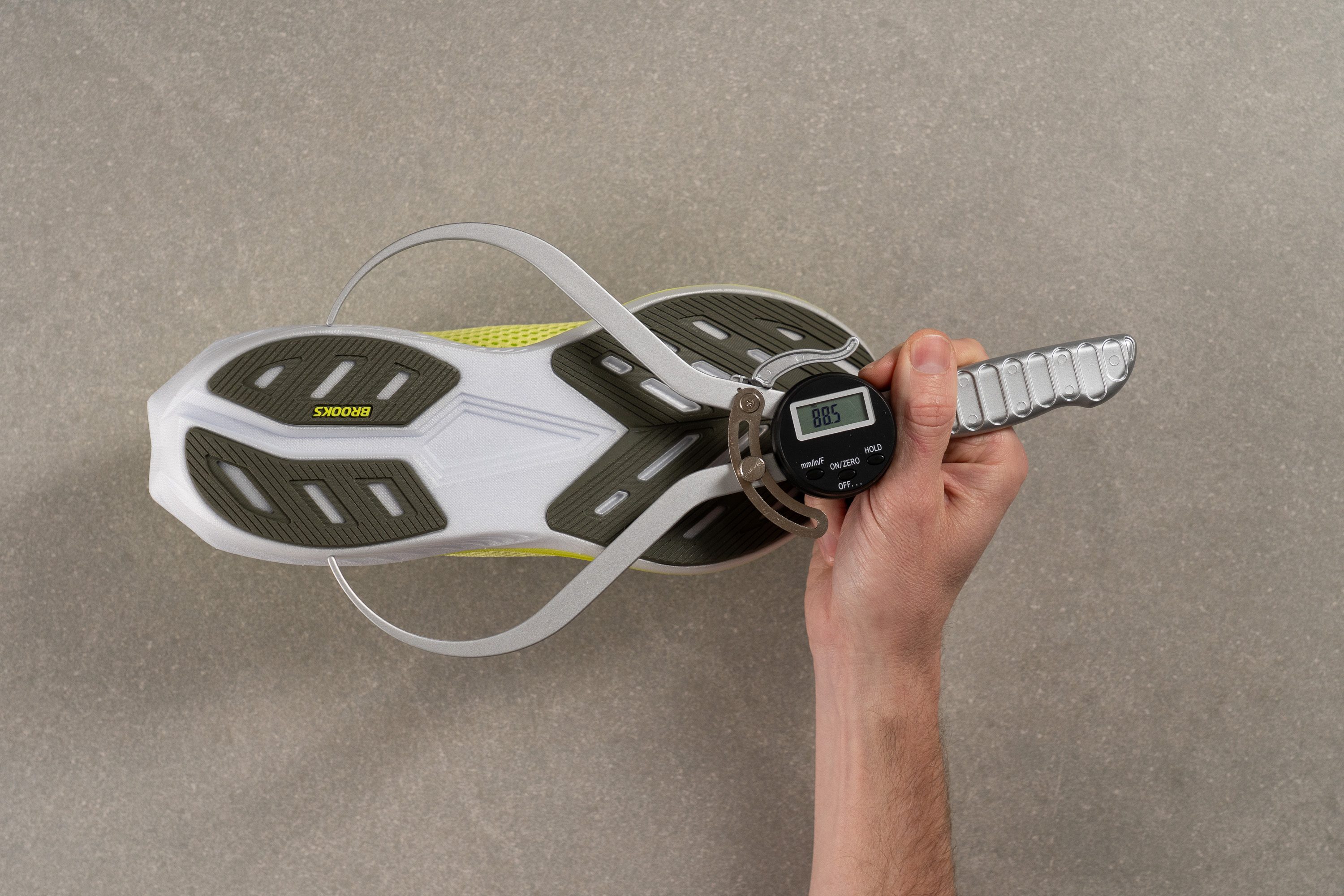
| Hyperion 3 | 88.5 mm |
| Media | 91.1 mm |
Durabilidad
Durabilidad de la parte delantera
Ya demostramos que el upper es una maravilla en muchos sentidos, pero todavía no habíamos analizado su durabilidad. No nos decepcionó, ya que se llevó un sólido 3/5 en nuestra prueba incluso con su diseño agresivo y ligero.
| Hyperion 3 | 3 |
| Media | 2.6 |
Durabilidad del acolchado del talón
El acolchado del talón tiene una buena cantidad de espuma, así que no tuvimos problemas al calzarnos. Lo malo es que esto suele hacer que el Dremel se lo coma con patatas, pero las Hyperion 3 aguantaron sorprendientemente bien, llevándose un sólido 4/5.
| Hyperion 3 | 4 |
| Media | 3.4 |
Durabilidad de la suela
La prueba final de durabilidad le toca a la suela exterior, donde duplicamos la velocidad de la herramienta para adaptarla al caucho, que es más resistente. Las Hyperion 3 consiguieron aguantar el tipo una vez más, con unos daños de solo 0.9 mm.
| Hyperion 3 | 0.9 mm |
| Media | 1.1 mm |
Grosor de la suela
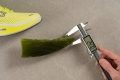
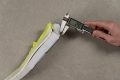
Y el caucho necesita ser duradero, porque solo tiene 2,4 mm de grosor para que las zapatillas sean ligeras; y aunque no consiguen alcanzar ese objetivo del todo, una suela más gruesa las habría hecho incluso más pesadas.
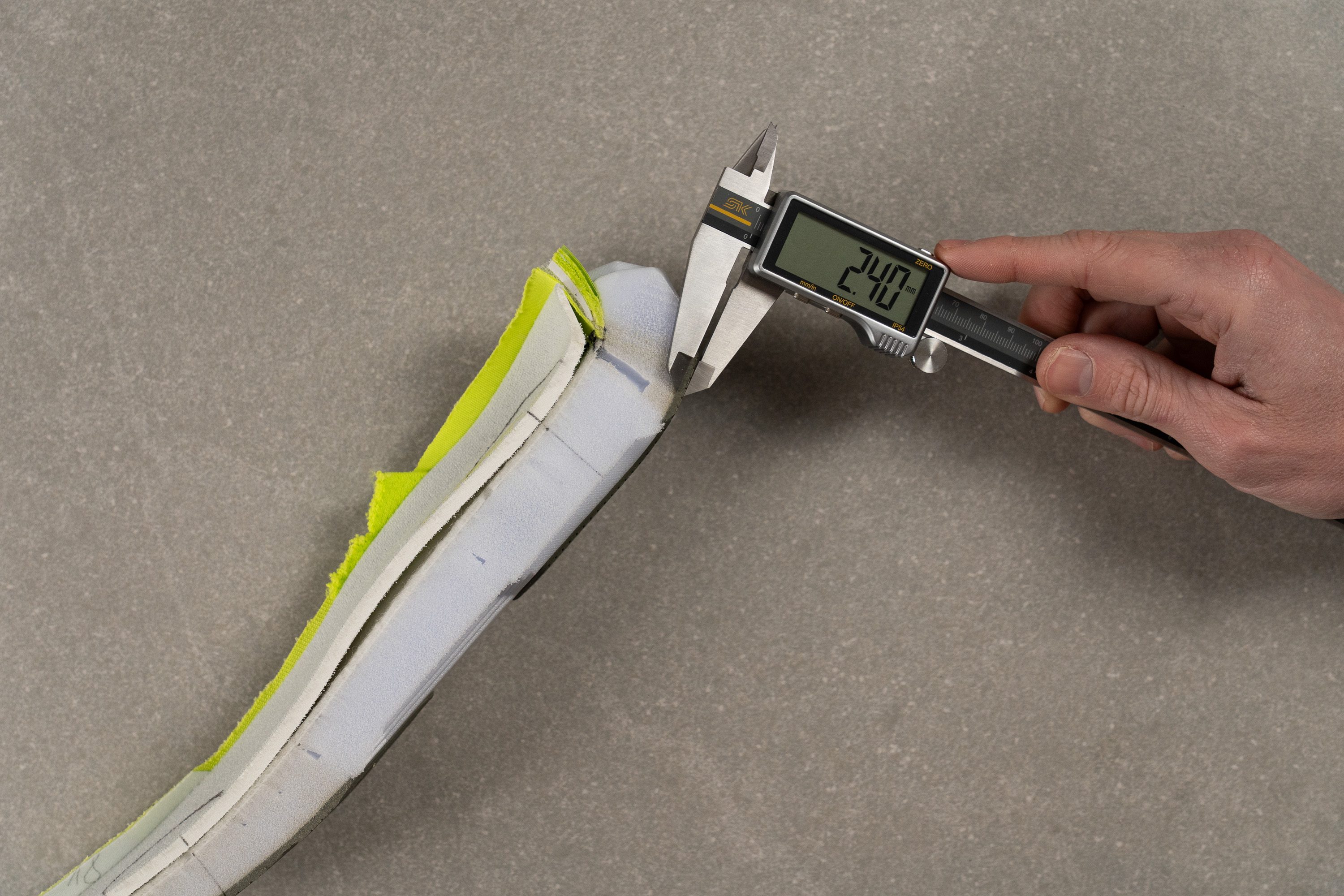
| Hyperion 3 | 2.4 mm |
| Media | 3.1 mm |
Varios
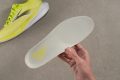
Grosor de la plantilla
Las Hyperion 3 vienen con una plantilla de 4,8 mm, que es algo que solemos ver en la mayoría de las zapatillas.
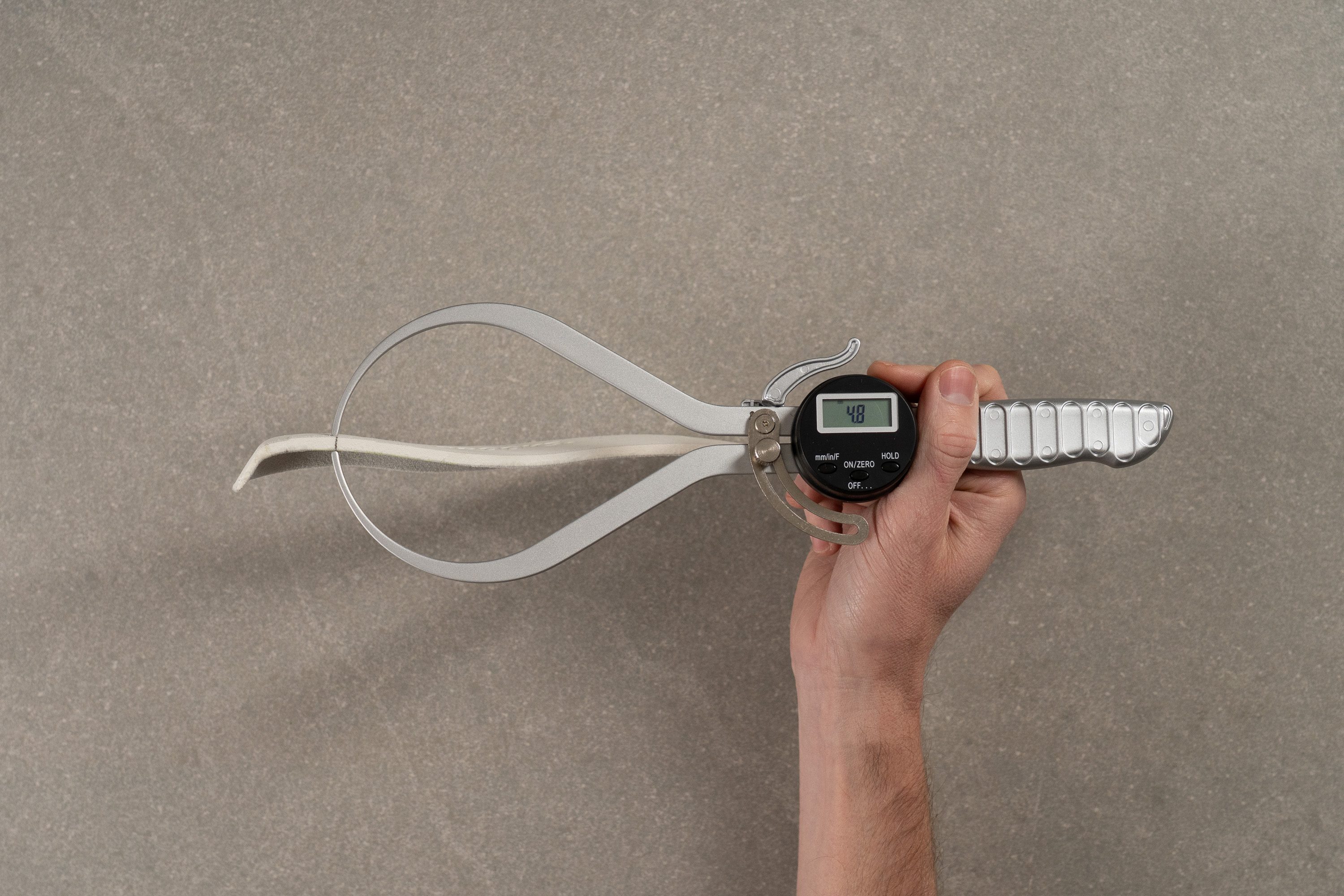
| Hyperion 3 | 4.8 mm |
| Media | 4.4 mm |
Plantilla extraíble
También puedes utilizar tus propias plantillas si lo necesitas, ¡no hay problema!
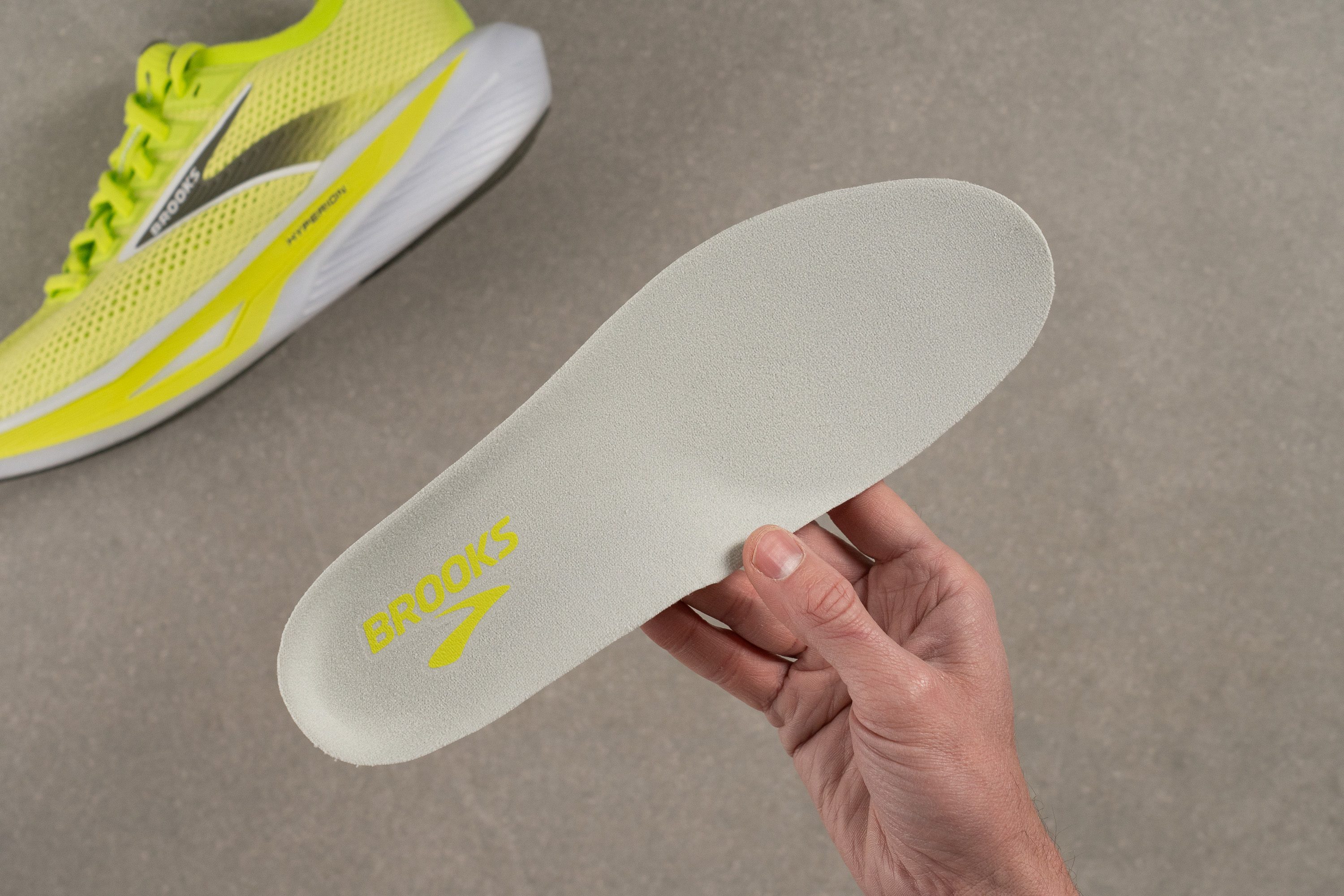
| Hyperion 3 | Sí |
Elementos reflectantes
Hay un pequeño detalle reflectante en forma de triángulo en el talón de las Hyperion 3, así que los coches que se te acerquen por detrás te podrán ver un poquito mejor.
| Hyperion 3 | Sí |
Acolchado de la lengüeta
El sistema de cordones es excelente, y la lengüeta, que es elástica y tiene un lacito que también funciona como ojal, está muy bien lograda, ofreciendo un ajuste perfecto. Es interesante ver cómo a algunas marcas todavía se les atraganta un poco el diseño de la lengüeta, mientras que hay otras que lo clavan sin problema; y la verdad es que creemos que Brooks está en el segundo grupo.
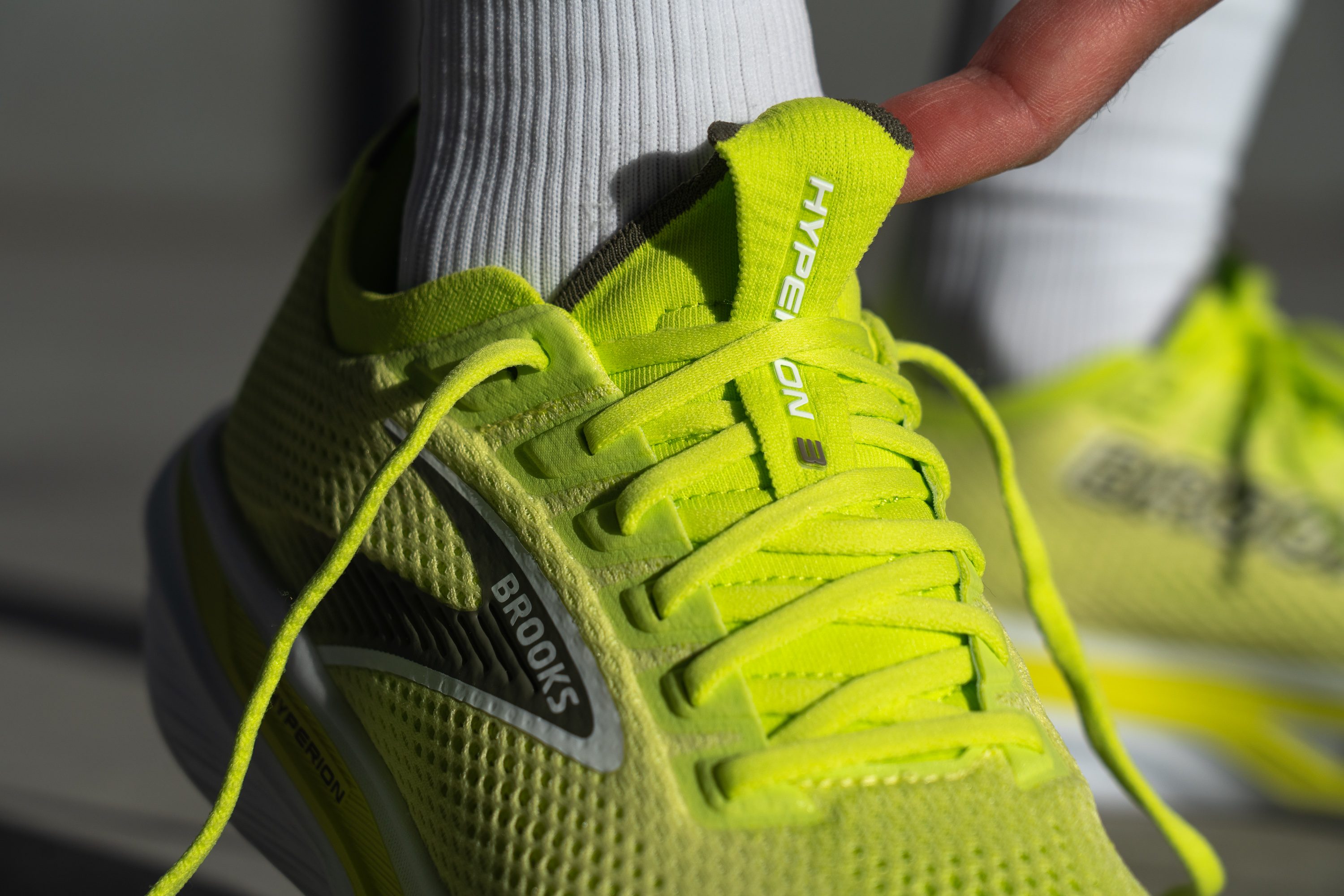
La lengüeta tiene solo 3,1 mm de acolchado en la zona más gruesa, pero cuando nos pusimos las zapatillas, a nosotros nos pareció más que suficiente. Los cordones no nos hicieron daño y, a ver, estas zapatillas tampoco están pensadas para las carreras de 2 o 3 horas.
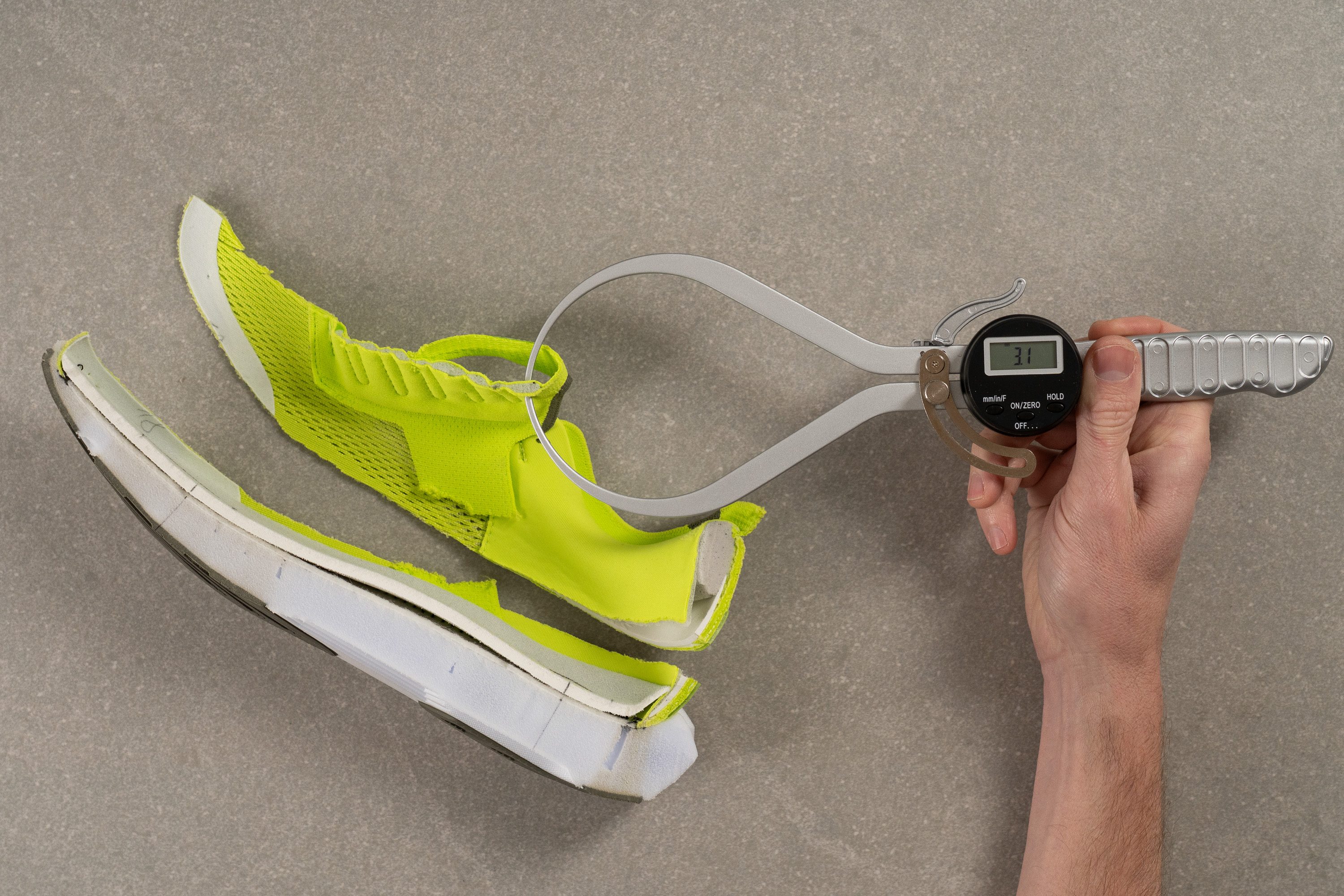
| Hyperion 3 | 3.1 mm |
| Media | 5.8 mm |
Lengüeta: tipo de refuerzo
La lengüeta de las Hyperion 3 es una maravilla, es que no nos cansamos de decirlo, y la podemos comparar con las que solemos ver en los modelos más caros. Su diseño semi reforzado hace que no se mueva de su sitio y ofrece una comodidad excepcional.
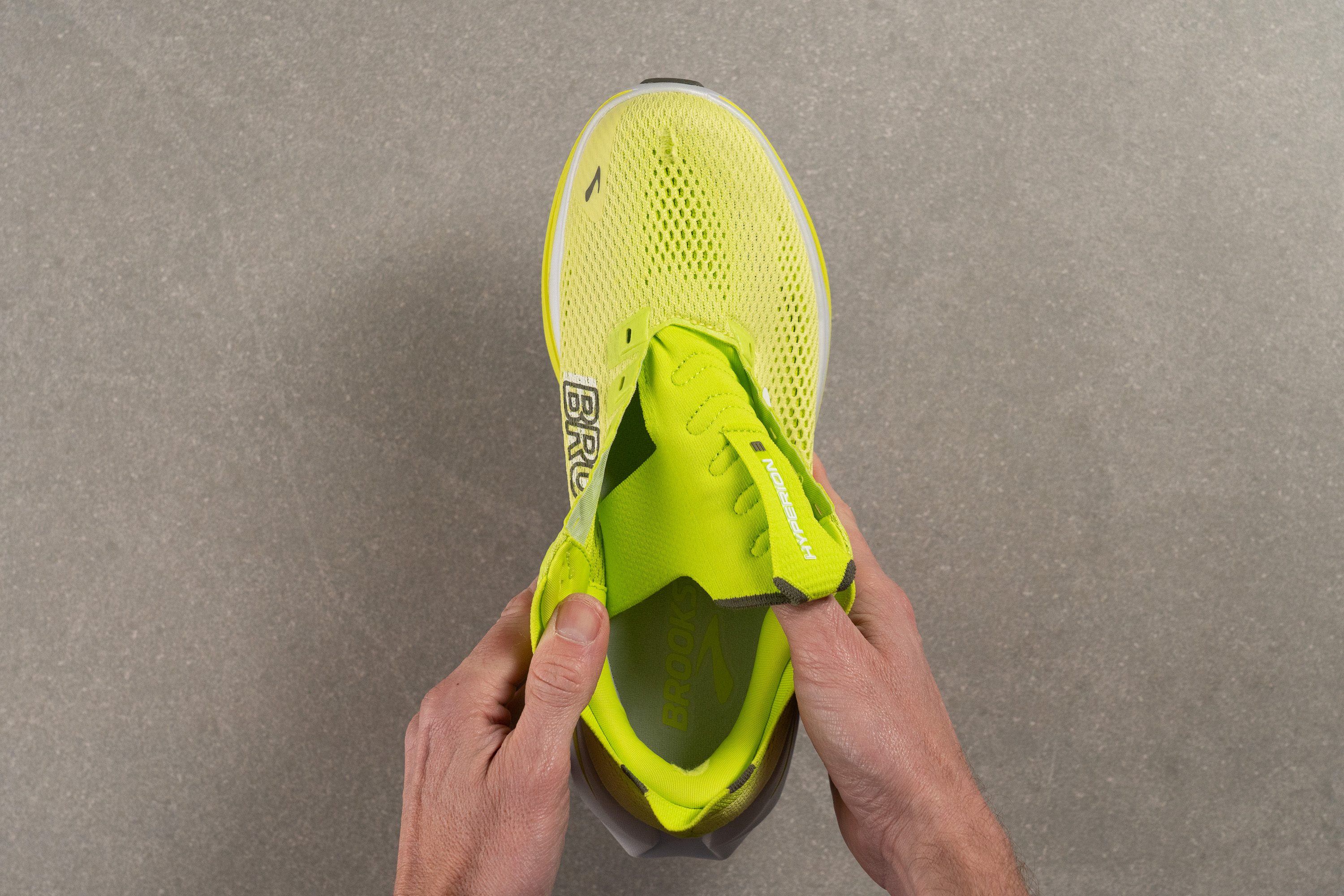
| Hyperion 3 | Ambos lados (semi) |
Tirador del talón
El talón tiene una pequeña extensión que puedes agarrar fácilmente y usarla como si fuese un tirador.
| Hyperion 3 | Tirador estándar |
Precio
En nuestra opinión, las Hyperion 3 tienen un precio justo por lo que ofrecen. Nos encantaría ver una espuma más avanzada en la mediasuela, pero teniendo en cuenta la sólida calidad de su diseño y ese upper tan maravilloso del que presumen, nos parece un coste razonable.
| Hyperion 3 | $140 |