
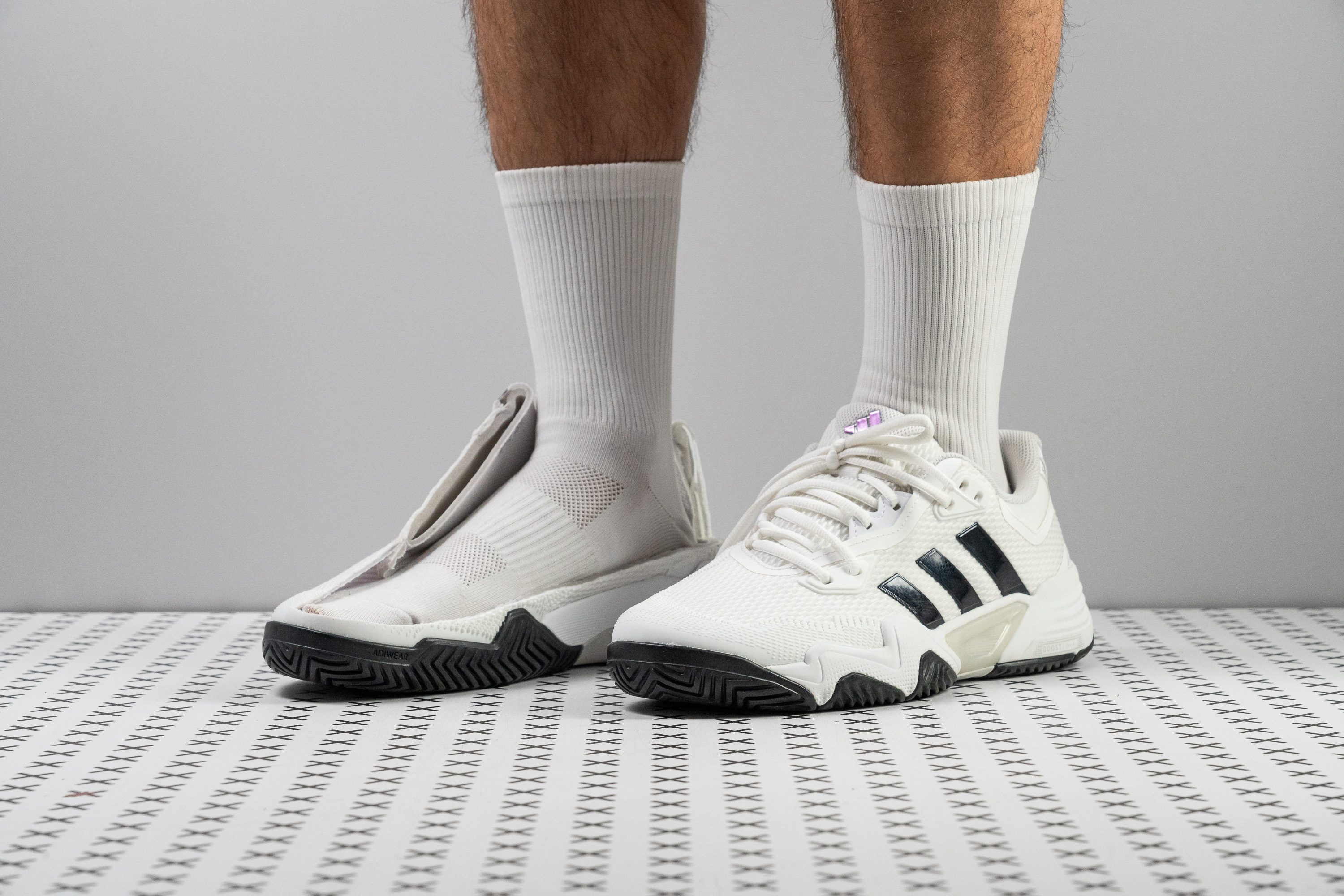
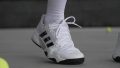
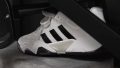
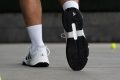

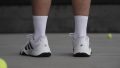
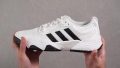
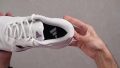
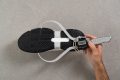
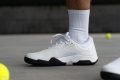
Our verdict
- Speed 66
- Stability 92
- Cushioning 70
Pros
- Barricade-like stability
- Excellent durability
- Sufficient shock absorption
- Balanced outsole grip
- Decent forefoot flexibility
- Spacious medium-width fit
- Comfortable step-in feel
Cons
- Heavier than v1 and the average
- Deceased energy return
- Poor breathability
Awards
- Top pick in best adidas tennis shoes
Comparison
The most similar tennis shoes compared
+ + Add a shoe | |||||
|---|---|---|---|---|---|
| Our score | 84 Good | 85 Great | 87 Great | 92 Superb | |
| Price | $130 | $120 | $170 | $150 | |
| Shoe type | All CourtHard CourtPickleball | All CourtHard CourtPickleball | All CourtHard CourtPickleball | All CourtHard CourtPickleball | |
| Shock absorption | Moderate | High | Low | High | |
| Energy return | Low | Low | Low | Moderate | |
| Traction | Low | Moderate | Low | Low | |
| Construction | Stability | Speed | Speed | Stability | |
| Breathability | Warm | Moderate | Moderate | Moderate | |
| Weight lab | 13.7 oz / 388g | 12.2 oz / 347g | 12.6 oz / 357g | 14.3 oz / 405g | |
| Lightweight | ✗ | ✓ | ✗ | ✗ | |
| Drop lab | 13.0 mm | 11.8 mm | 11.4 mm | 13.1 mm | |
| Width / fit | Wide | Medium | Medium | Medium | |
| Toebox width | Wide | Medium | Medium | Medium | |
| Size | Slightly small | Slightly small | - | Slightly small | |
| Midsole softness | Balanced | Firm | Firm | Balanced | |
| Stiffness | Moderate | Moderate | Stiff | Moderate | |
| Torsional rigidity | Stiff | Moderate | Stiff | Stiff | |
| Heel counter stiffness | Moderate | Moderate | Stiff | Stiff | |
| Midsole width - forefoot | Average | Average | Average | Wide | |
| Midsole width - heel | Very wide | Average | Average | Average | |
| Outsole durability | Good | Good | Good | Decent | |
| Heel padding durability | Decent | Good | Bad | Decent | |
| Heel stack lab | 30.1 mm | 28.8 mm | 30.0 mm | 33.3 mm | |
| Forefoot | 17.1 mm | 17.0 mm | 18.6 mm | 20.2 mm | |
| Insole thickness | Thick | Thick | Thick | Average | |
| Removable insole | ✓ | ✓ | ✓ | ✓ | |
| Heel tab | None | Extended heel collar | None | None | |
| Toebox durability | Good | Good | Good | Good | |
| Outsole hardness | - | Average | - | - | |
| Outsole thickness | Average | Thin | Average | Average | |
| Ranking | #21 Bottom 46% | #17 Top 44% | #10 Top 26% | #2 Top 6% | |
| Popularity | #30 Bottom 23% | #19 Top 49% | #7 Top 18% | #4 Top 11% |
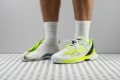
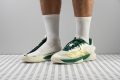
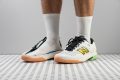
Who should buy
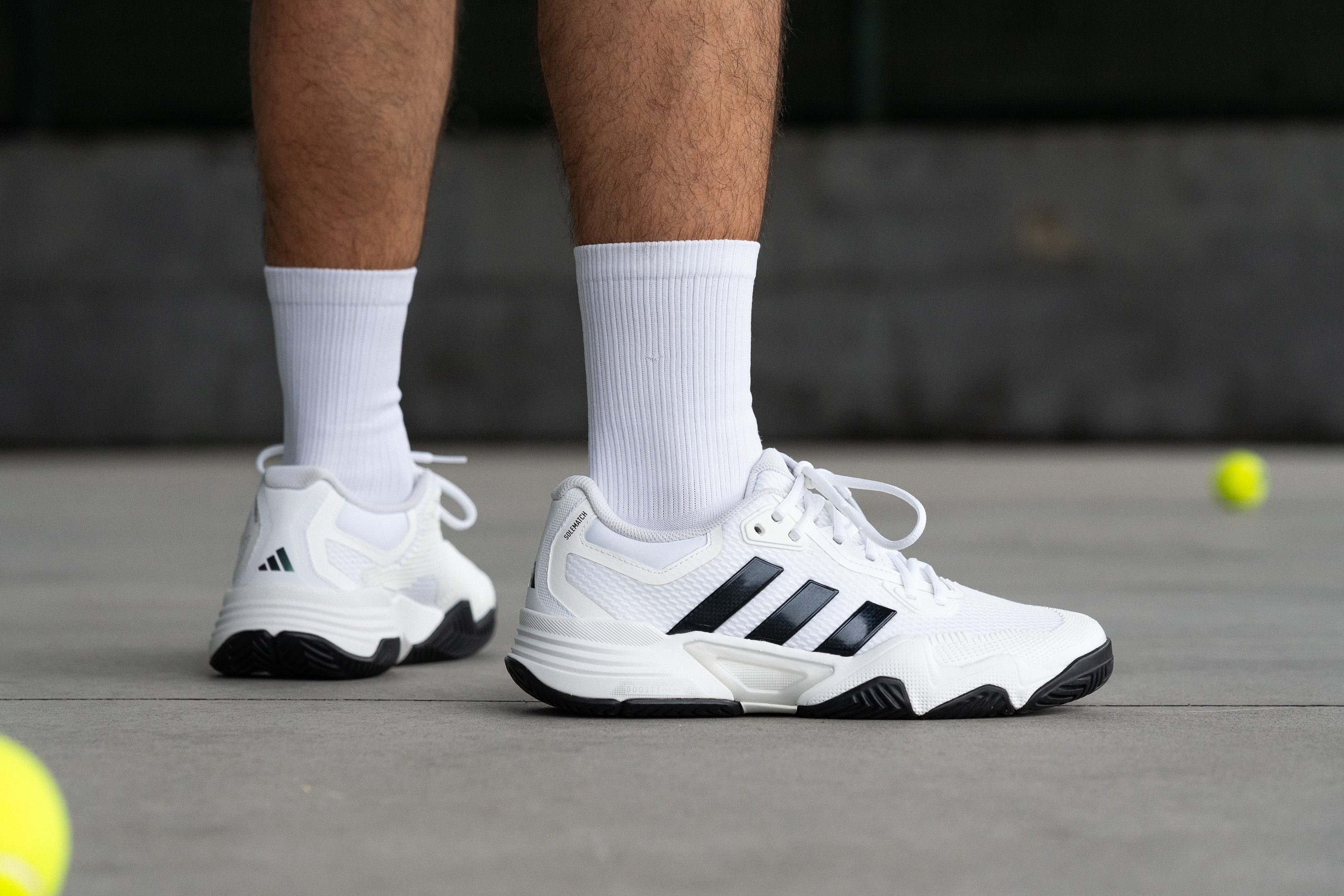
The Solematch Control 2 is a solid option from adidas that can benefit players who:
- want a mid-range tennis shoe with excellent value for money
- prioritize stability and don't mind the extra weight and heel width
- need an accommodating fit in their tennis shoes
Who should NOT buy
This adidas shoe is likely a miss for nimble players seeking a lighter, more streamlined silhouette. We recommend that these folks turn to the adidas Defiant Speed 2 or the more premium adidas Adizero Ubersonic 5 instead.
And if you want an equally stable tennis shoe at the same price point but with better shock absorption, consider the Wilson Rush Pro 4.0 or the Nike GP Challenge Pro.
Cushioning
Shock absorption
Somehow, despite the added Boost foam and the extra millimeters of stack height, the Solematch Control 2 ended up with slightly lower shock absorption measurements than the v1!
Even though we can't complain about a lack of impact protection, the shoe's below-average 96 SA in the heel and 58 SA in the forefoot made it less about cushioning and more about stability and underfoot control.
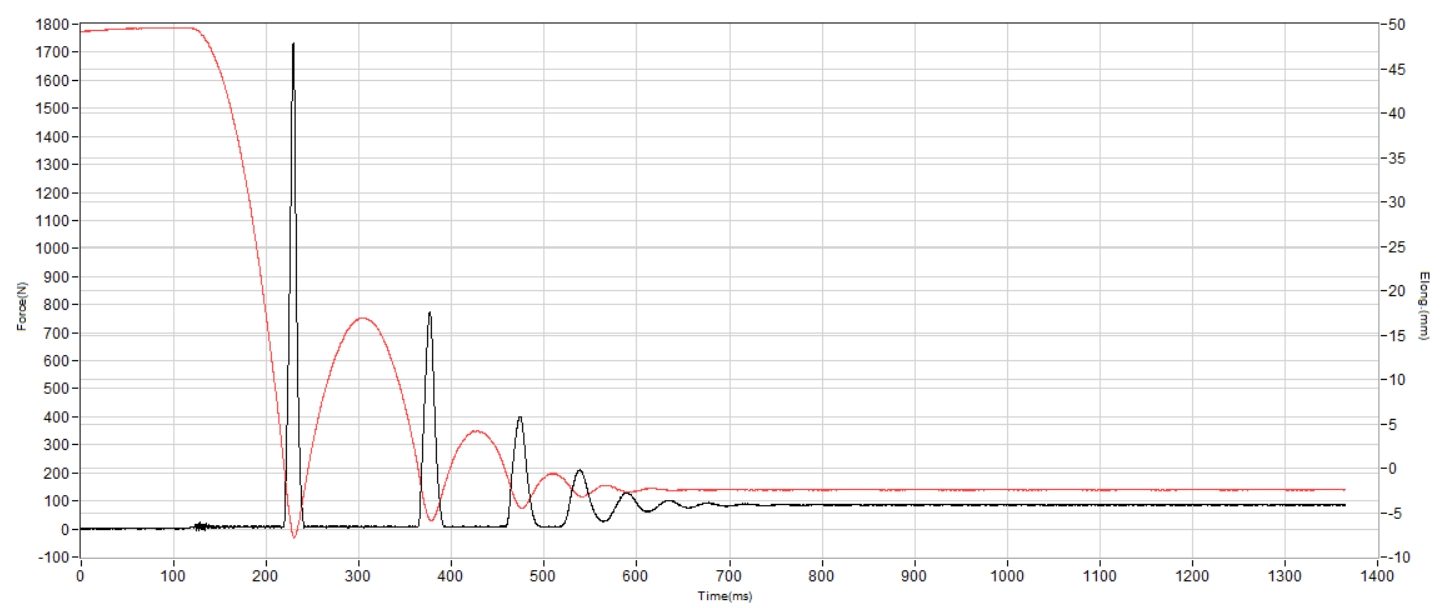
| Solematch Control 2 | 96 SA |
| Average | 99 SA |
Energy return
We are not so sure about 'an extra spring in [our] step' because the energy return of this adidas shoe turned out to be moderate-to-low at 47.7% in the heel and 40.0% in the forefoot.
While it's not completely dull, we can't call the shoe's ride propulsive either. It felt controlled and predictable during our playtests.
| Solematch Control 2 | 40.0% |
| Average | 50.1% |
Heel stack
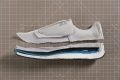
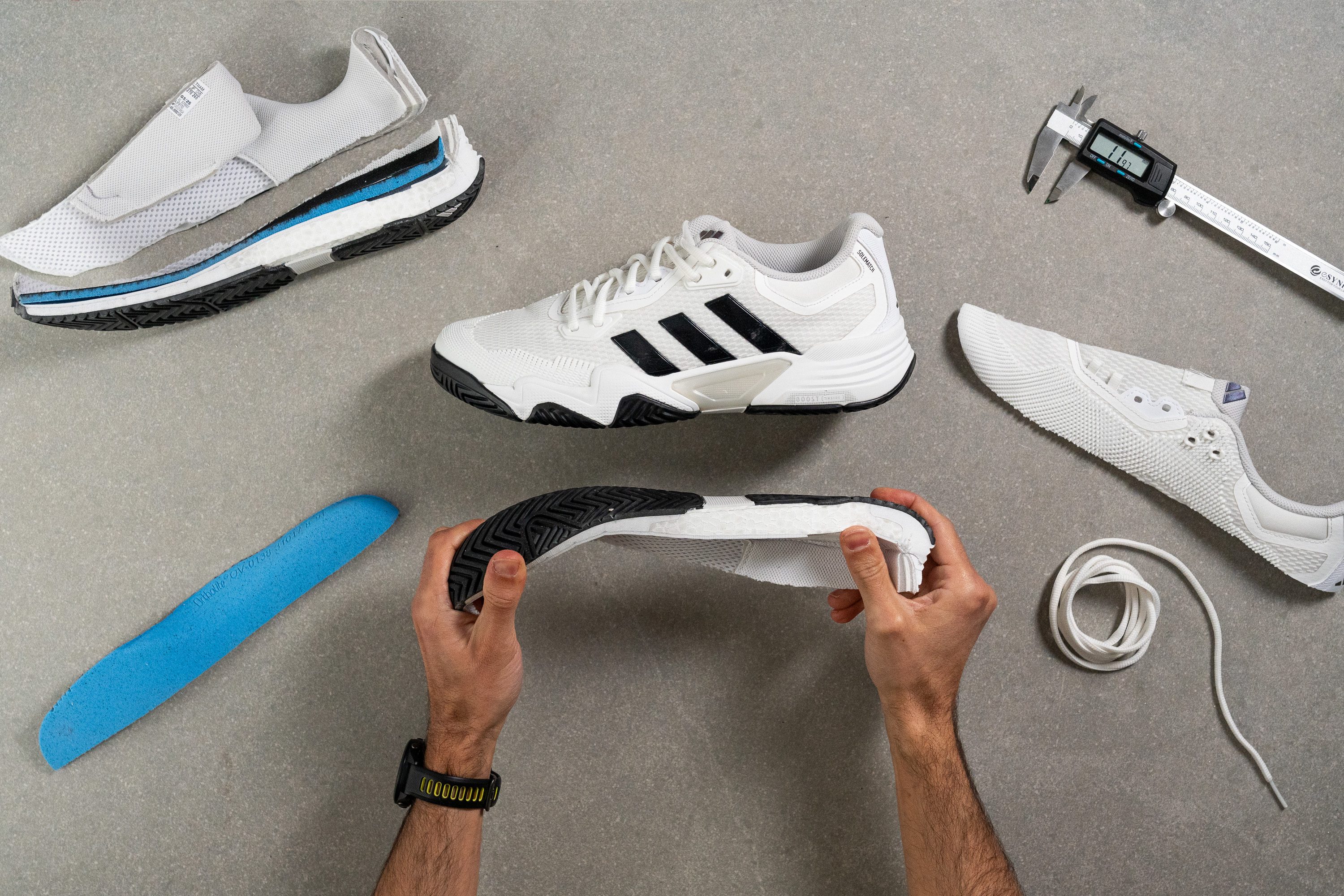
Even though adidas revamped the Solematch Control 2's midsole to include both Boost and standard EVA foam (supposedly Bounce), its heel stack didn't grow taller than average, stopping at a moderate 30.1 mm.
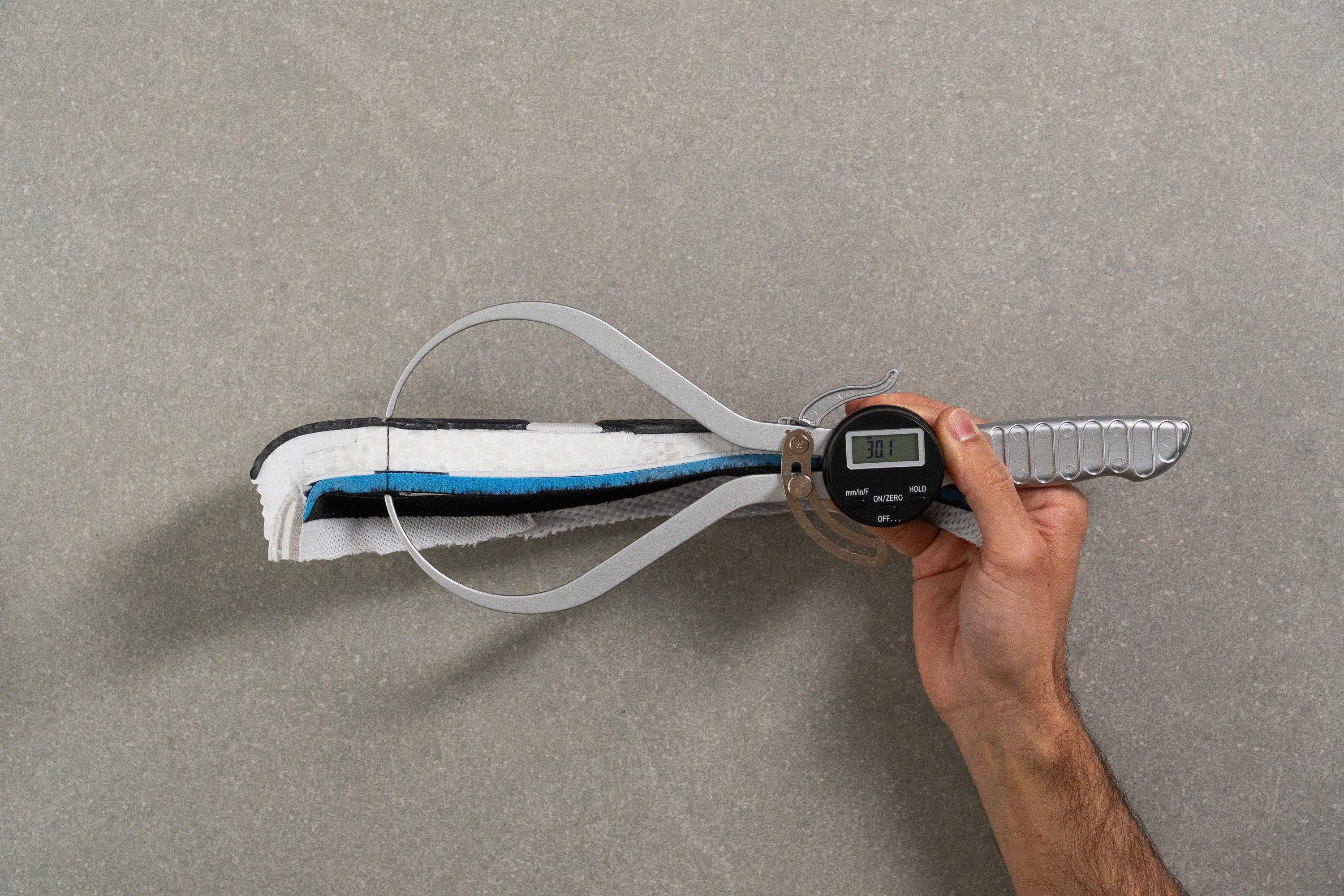
| Solematch Control 2 | 30.1 mm |
| Average | 29.3 mm |
Forefoot stack
The forefoot, on the other hand, felt more grounded with a below-average stack of 17.1 mm. That explains the shoe's lower impact protection in the ball of the foot area.
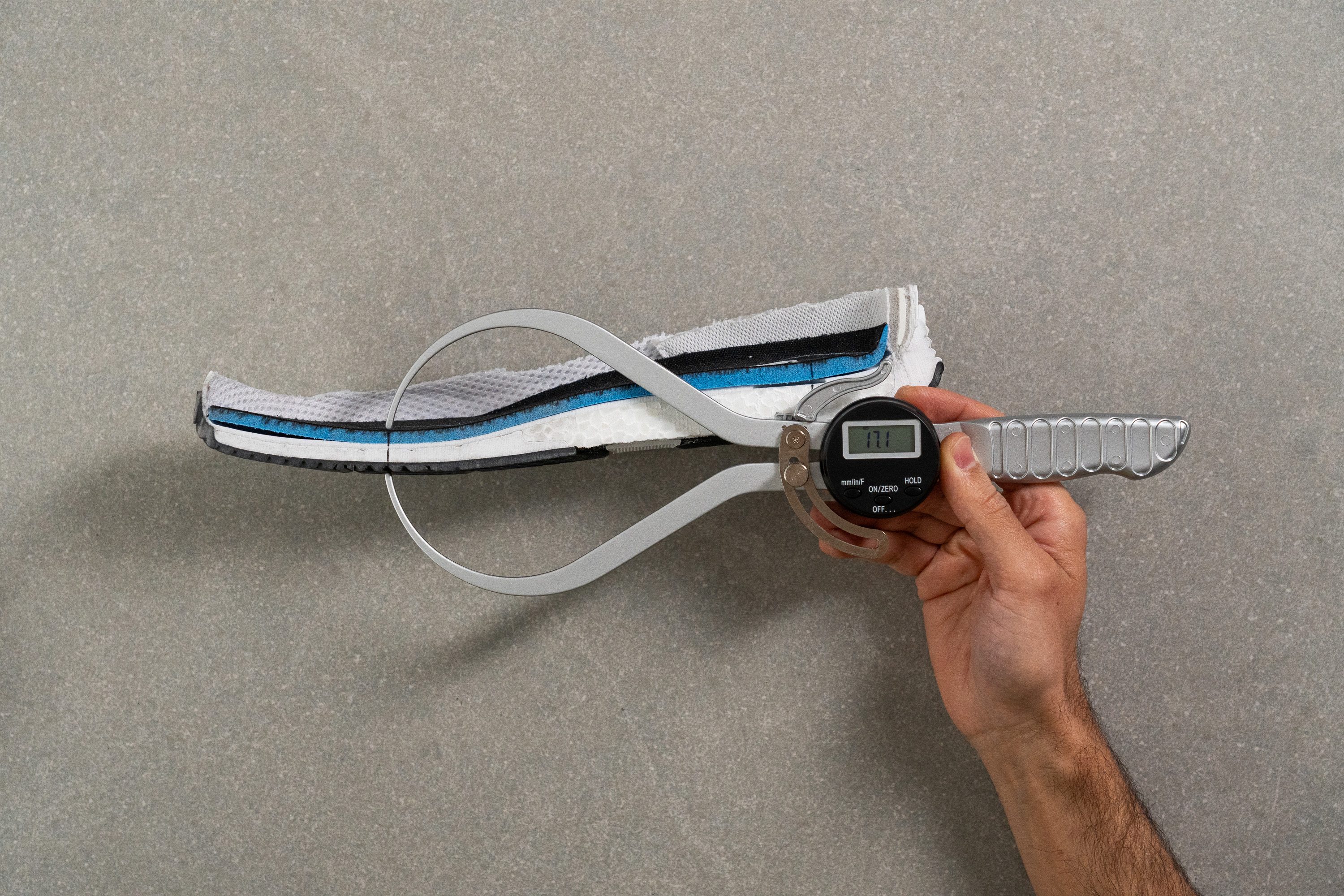
| Solematch Control 2 | 17.1 mm |
| Average | 19.3 mm |
Drop
Based on our stack height measurements above, the shoe's heel-to-toe drop is rather steep at 13.0 mm. Achieveing a proper fit and secure lockdown is therefore important in the Solematch Control 2 to avoid toe jamming.
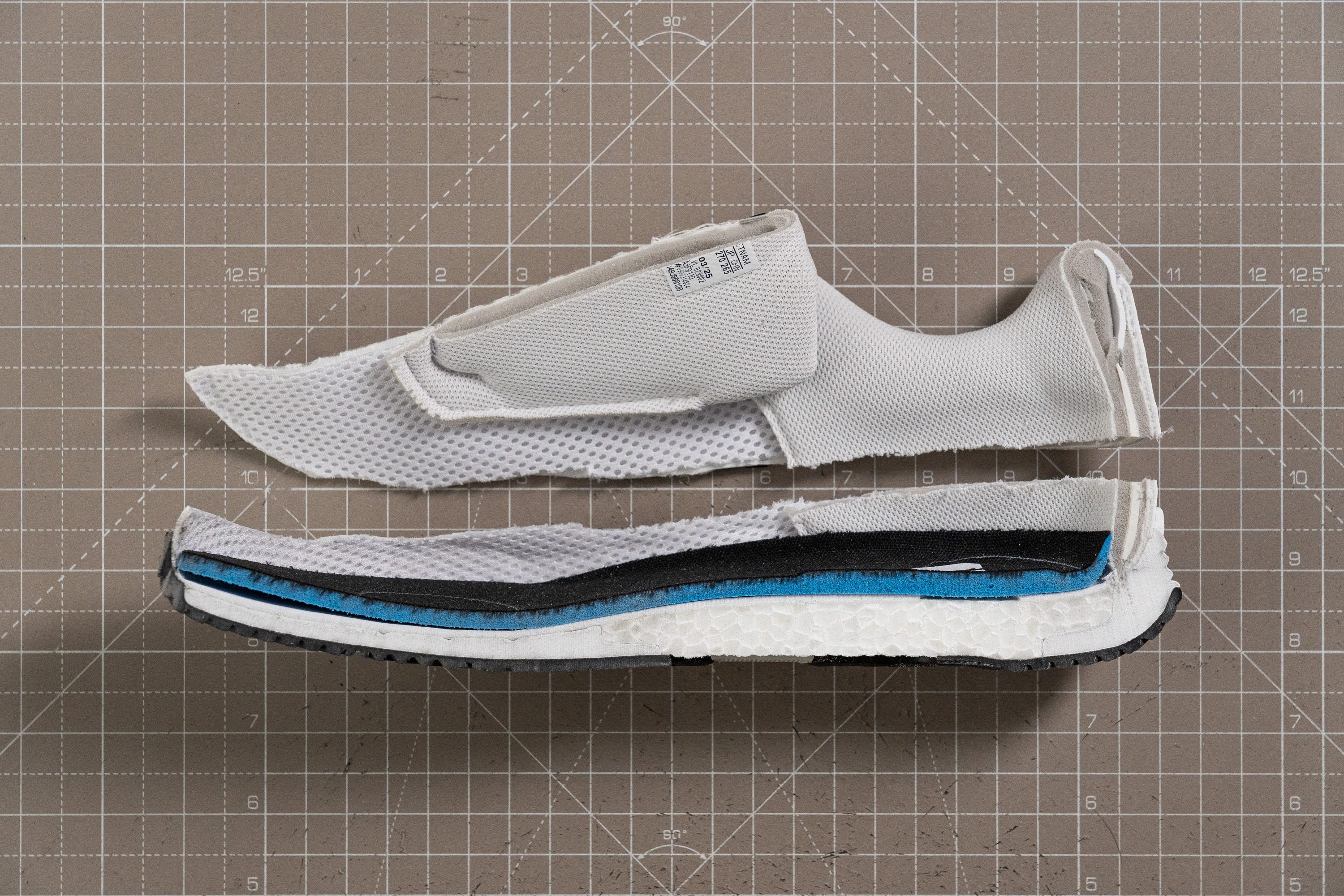
| Solematch Control 2 | 13.0 mm |
| Average | 10.0 mm |
Midsole softness
A thick slab of Boost occupies a large portion of the midsole in the heel and midfoot. Pressing our durometer against it returned a moderately soft reading of 39.5 AC, making it cushier than the average tennis shoe foam.
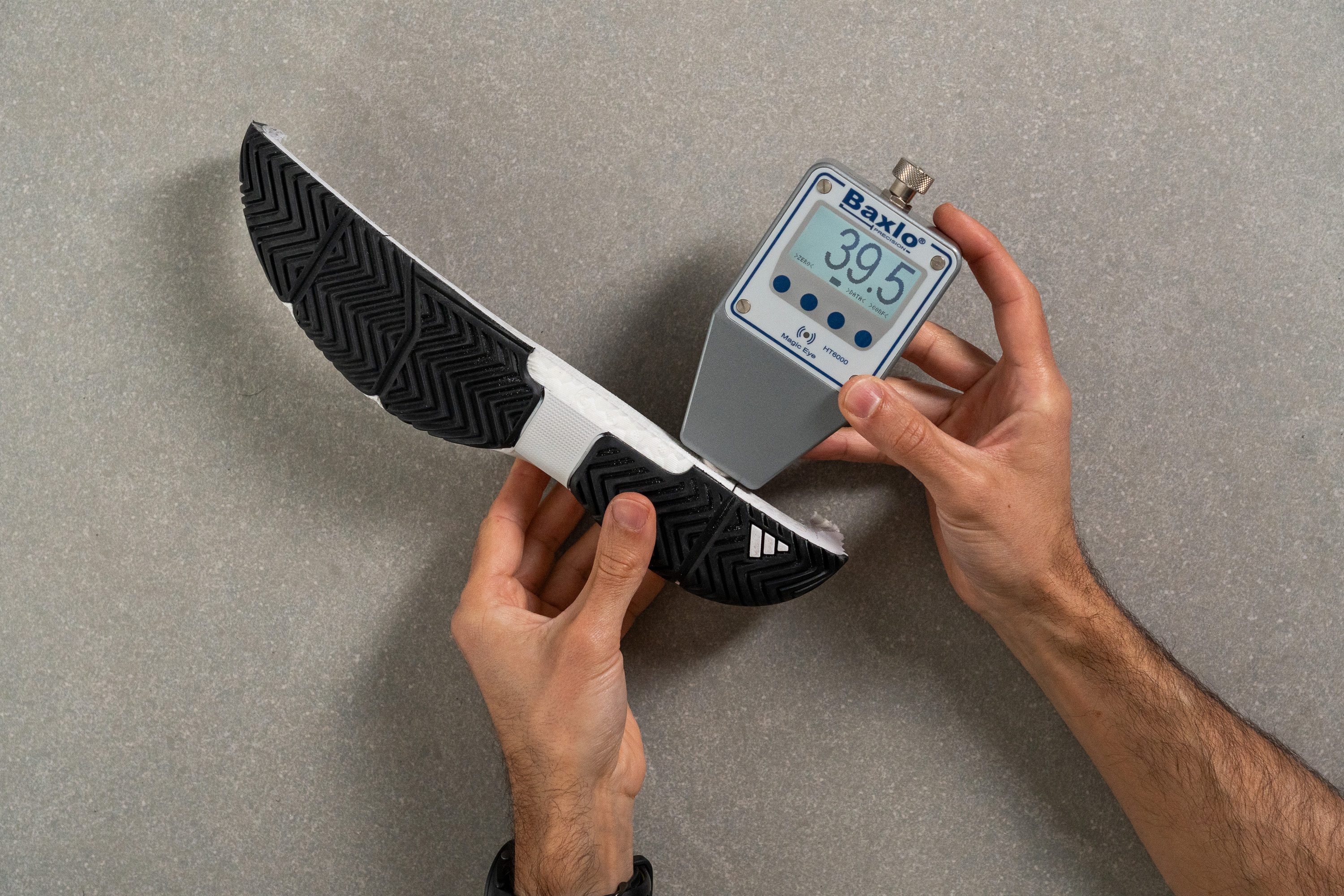
| Solematch Control 2 | 39.5 AC |
| Average | 48.0 AC |
Secondary foam
Meanwhile, the shoe's secondary foam is made of a firm EVA compound to cradle the Boost and keep the ride stable. It showed a notably higher reading of 47.0 AC on our durometer, falling into the firm range.
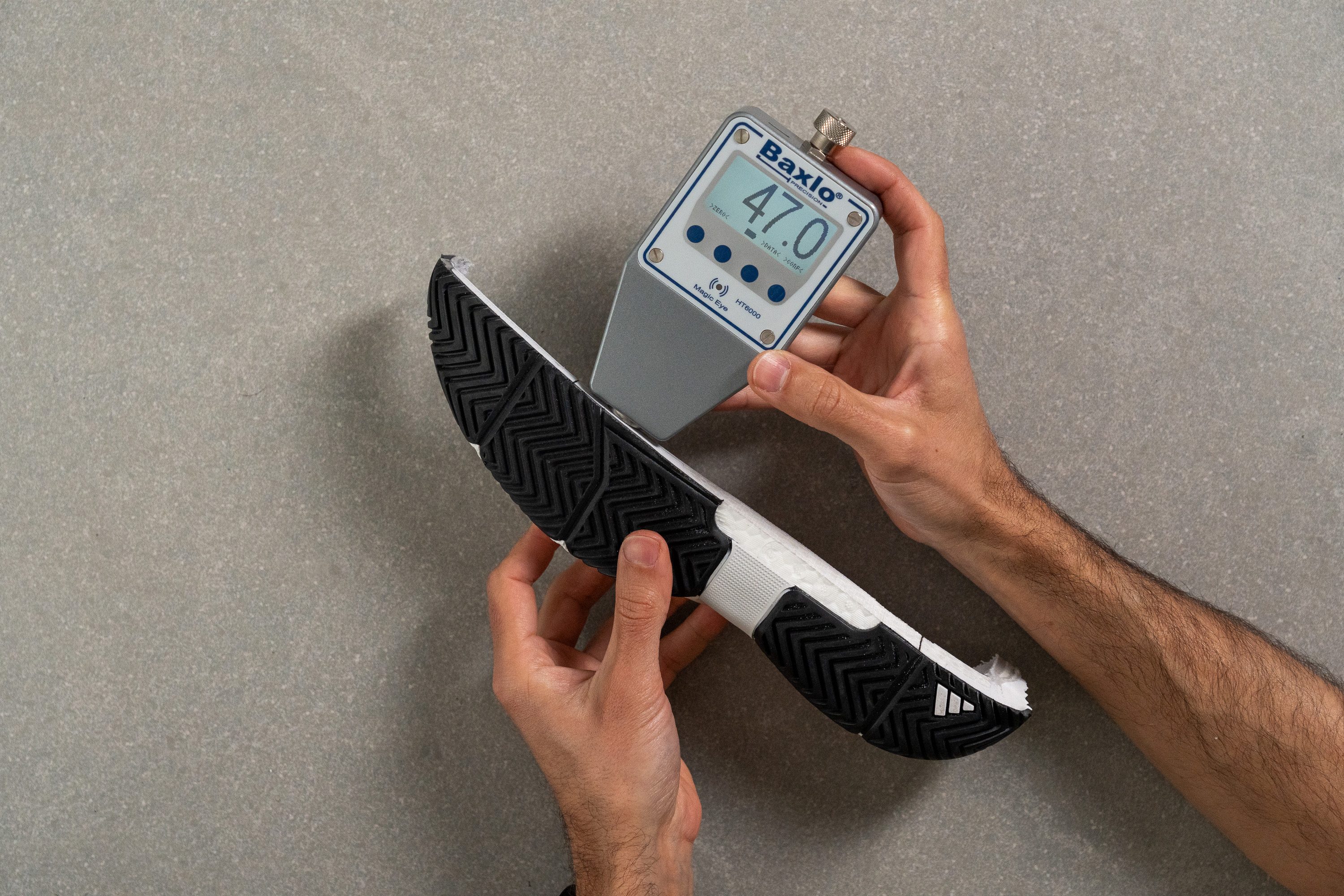
| Solematch Control 2 | 47.0 AC |
| Average | 45.8 AC |
Size and fit
Size
adidas Solematch Control 2 fits slightly small (14 votes).
Internal length
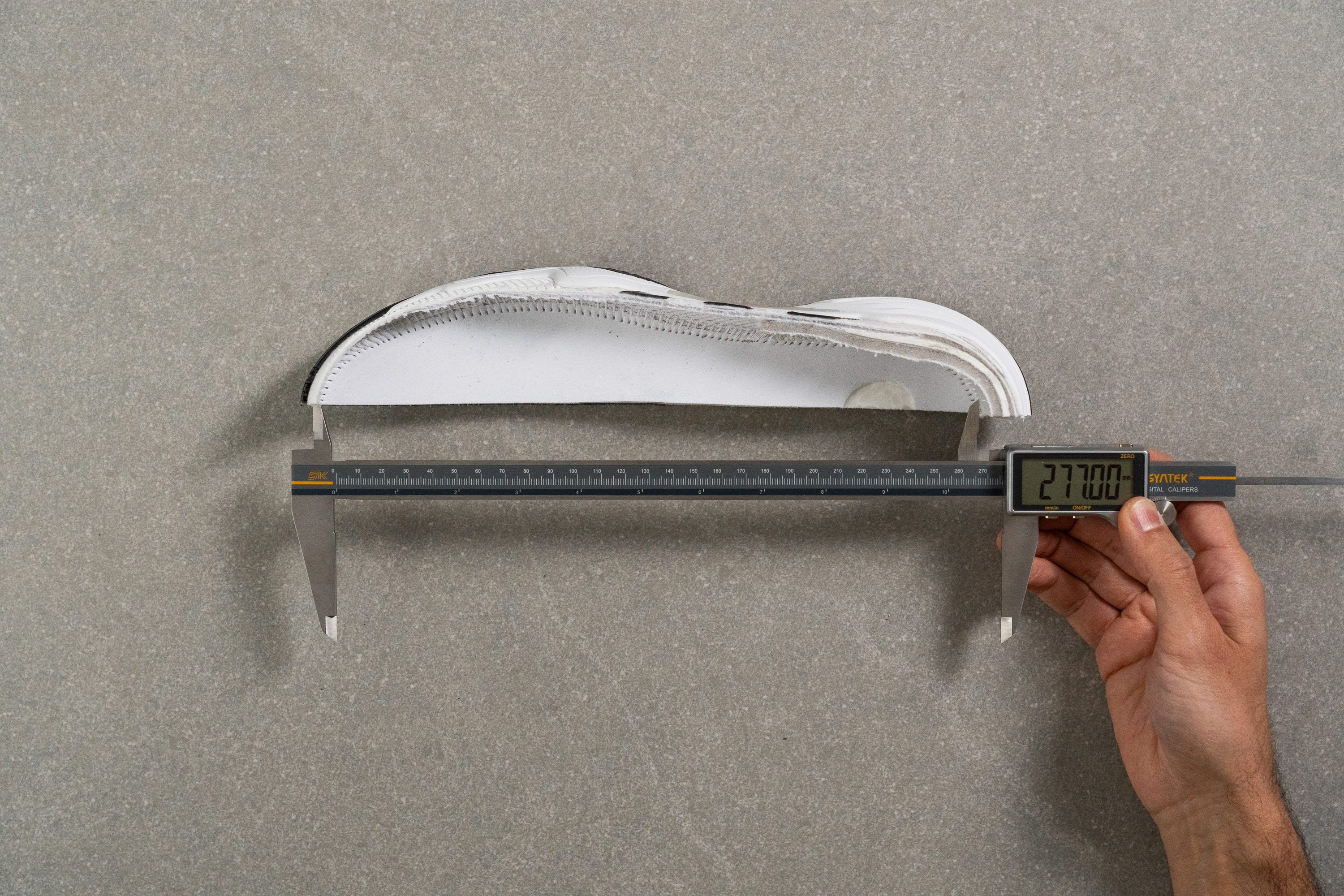
| Solematch Control 2 | 277.0 mm |
| Average | 271.7 mm |
Width / Fit
Even though the brand's product description promises a Regular fit for the adidas Solematch Control 2, we found it quite accommodating for a men's US 9.
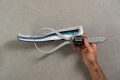
Having created a one-to-one gel mold of the shoe's interiors, we measured its widest area at 96.3 mm, confirming its above-average width.
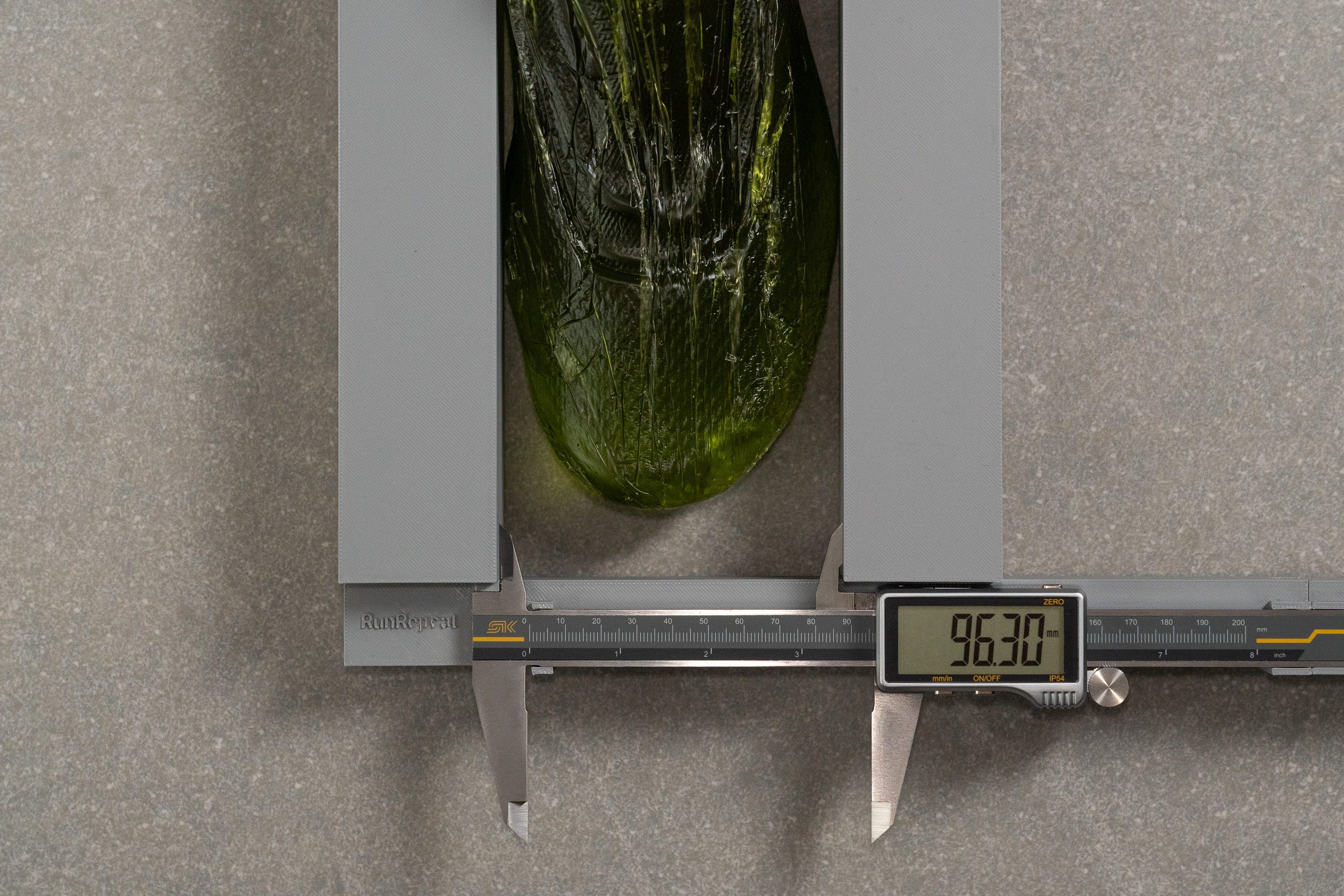
| Solematch Control 2 | 96.3 mm |
| Average | 92.8 mm |
Toebox width
Its toebox shape is also fairly rounded, showing another above-average width of 73.0 mm in the big-toe area.
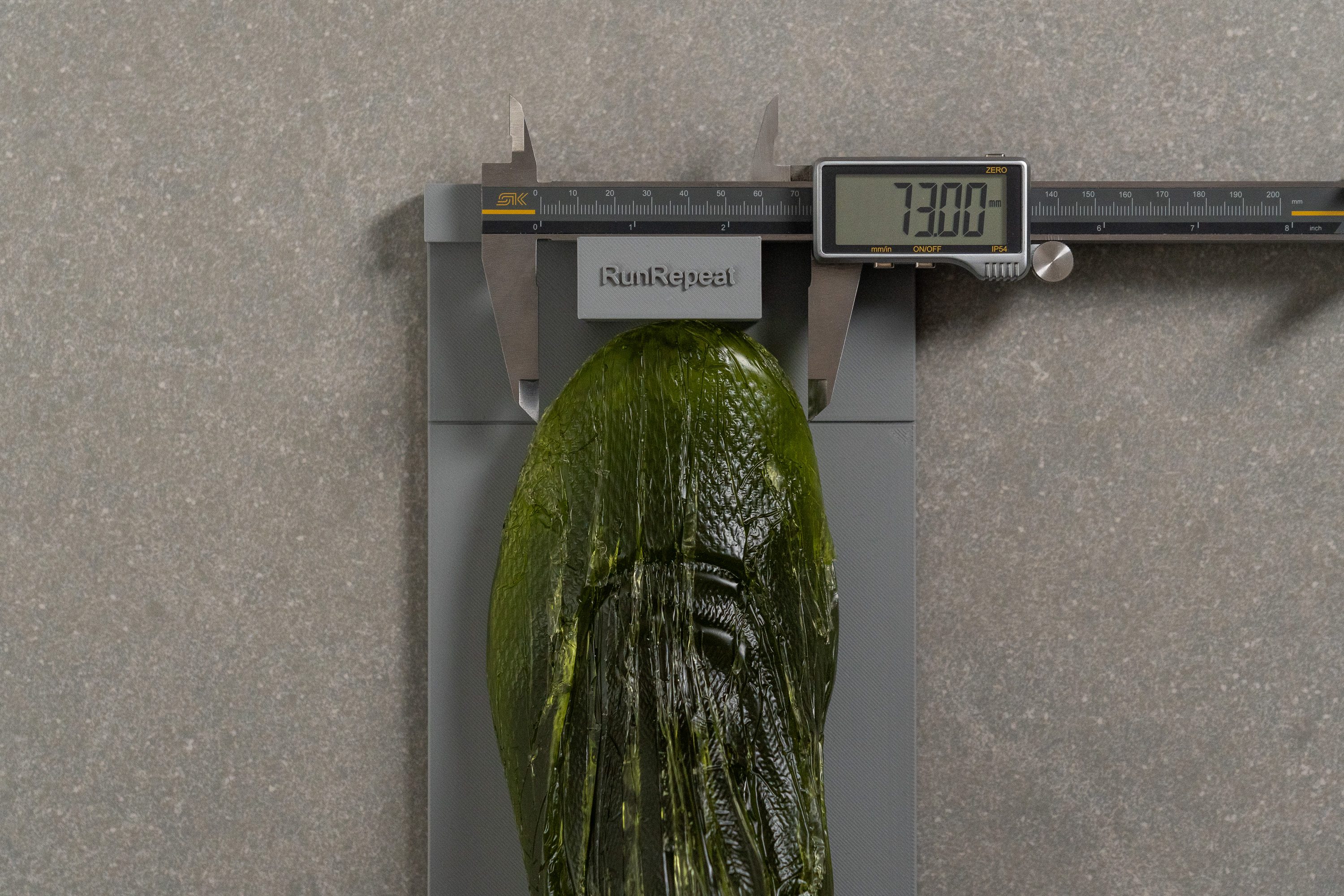
| Solematch Control 2 | 73.0 mm |
| Average | 69.3 mm |
Toebox height
Its toebox height, however, is a smidge lower than average at 23.6 mm.
But it should not be a problem for players without toe deformations or toenail issues.
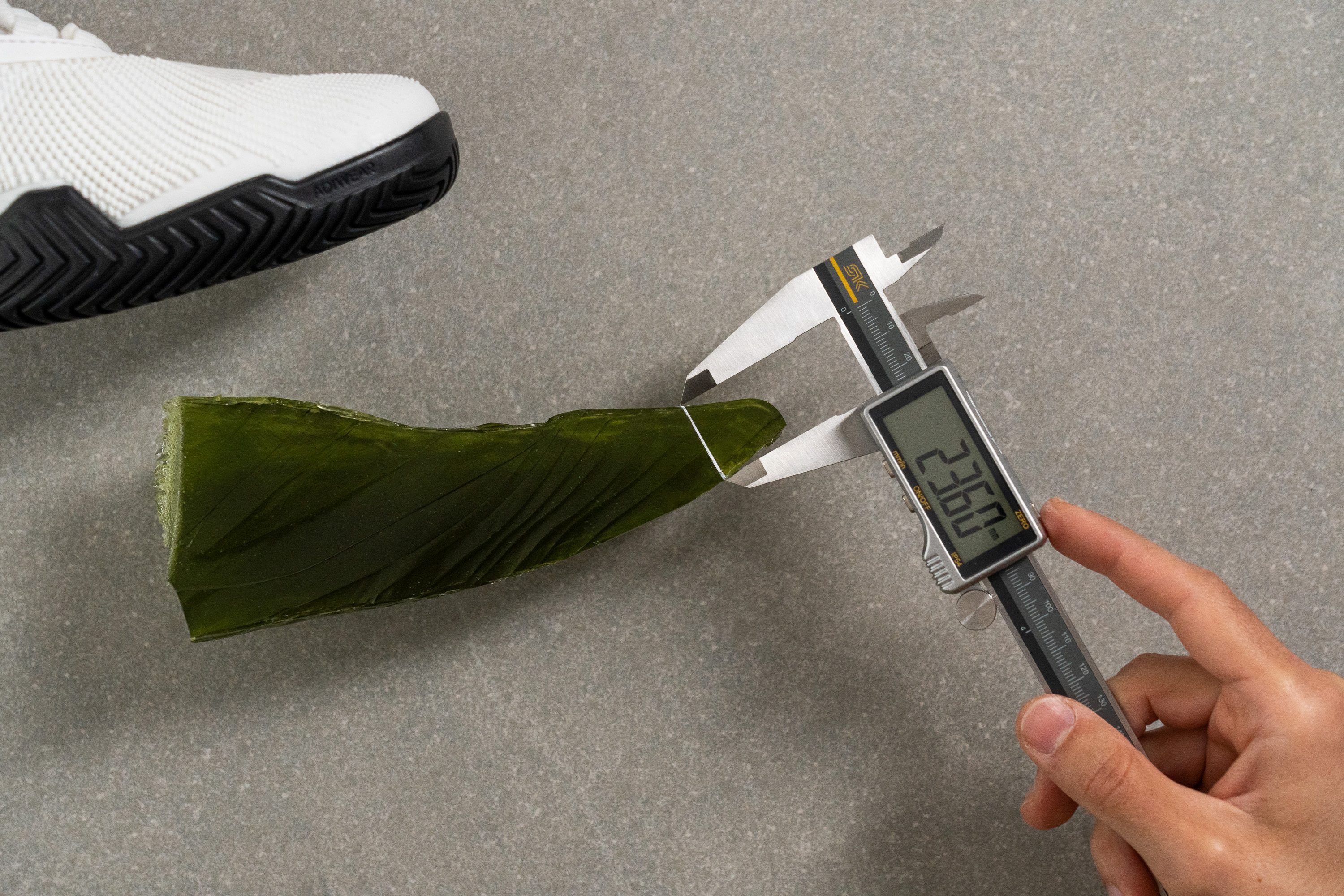
| Solematch Control 2 | 23.6 mm |
| Average | 24.9 mm |
Traction / Grip
Traction test
With a slightly lower friction coefficient of 0.52, the Solematch Control 2 allows for smooth pivots while still feeling quite grippy on hard court.
| Solematch Control 2 | 0.52 |
| Average | 0.76 |
Outsole design
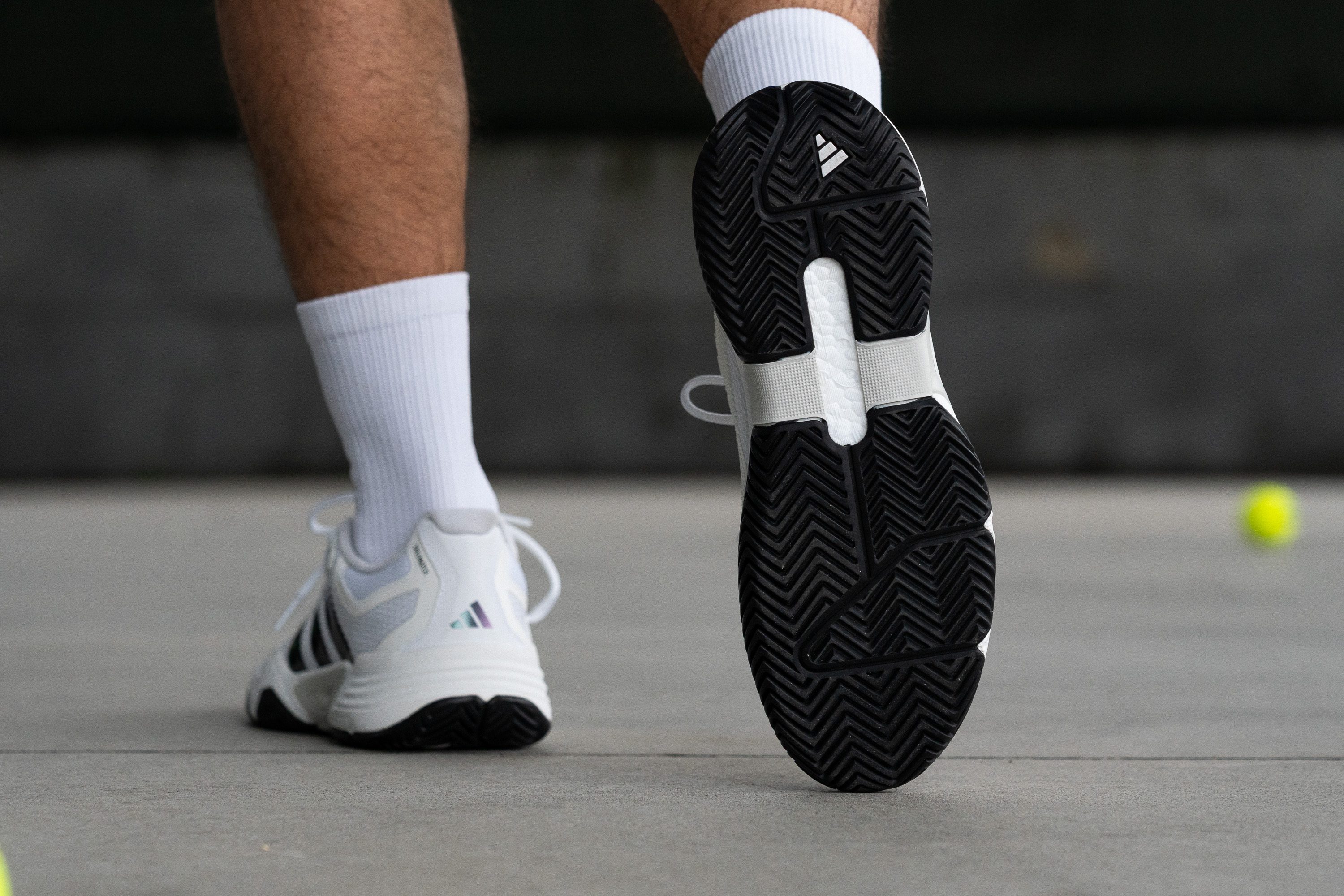
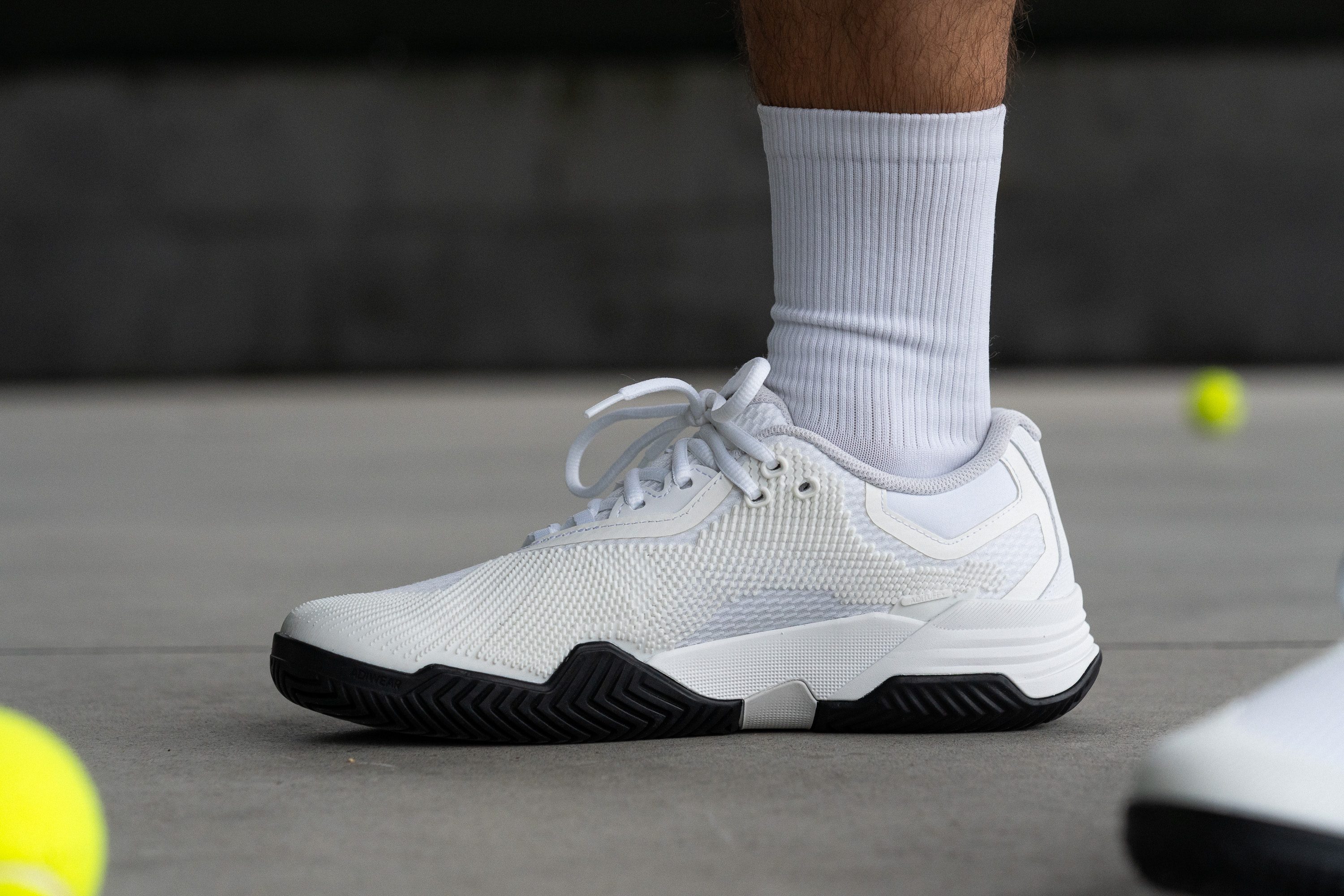
adidas makes a safe choice by opting for a classic herringbone tread pattern on the shoe's outsole, and it simply works. Deep channels in its forefoot and heel areas improve pliability.
A crevice in the shoe's midfoot area helps reduce weight while offering a peek at the Boost foam inside.
Flexibility / Stiffness
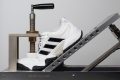
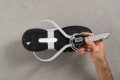
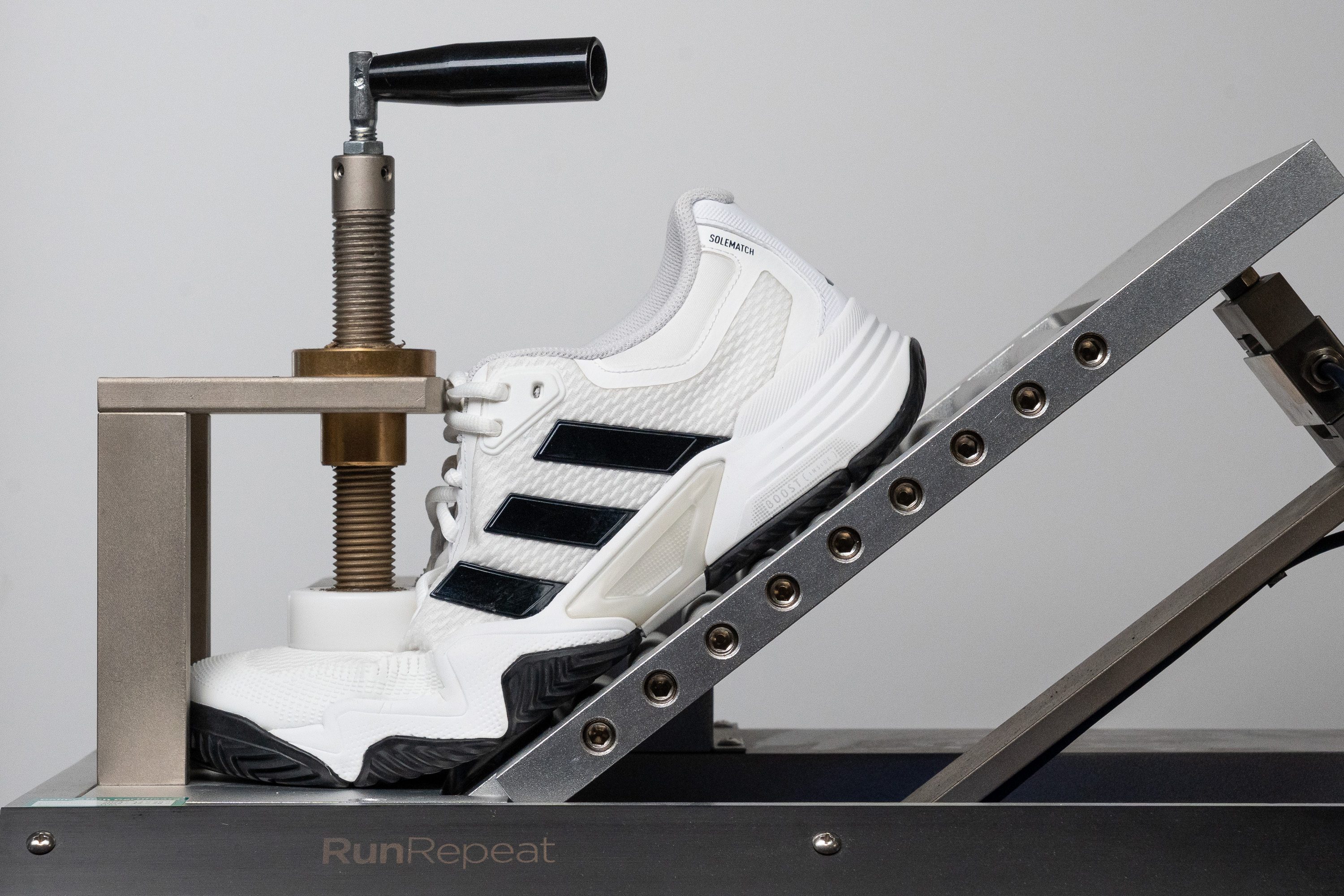
Our stiffness test showed that the Solematch Control 2 requires a moderate force of 15.9N to bend by 30 degrees, which is slightly less than it takes for an average tennis shoe.
The shoe's lower forefoot stack and flex grooves in the outsole certainly help make the platform more pliable.
| Solematch Control 2 | 15.9N |
| Average | 16.4N |
Weight
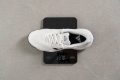
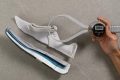
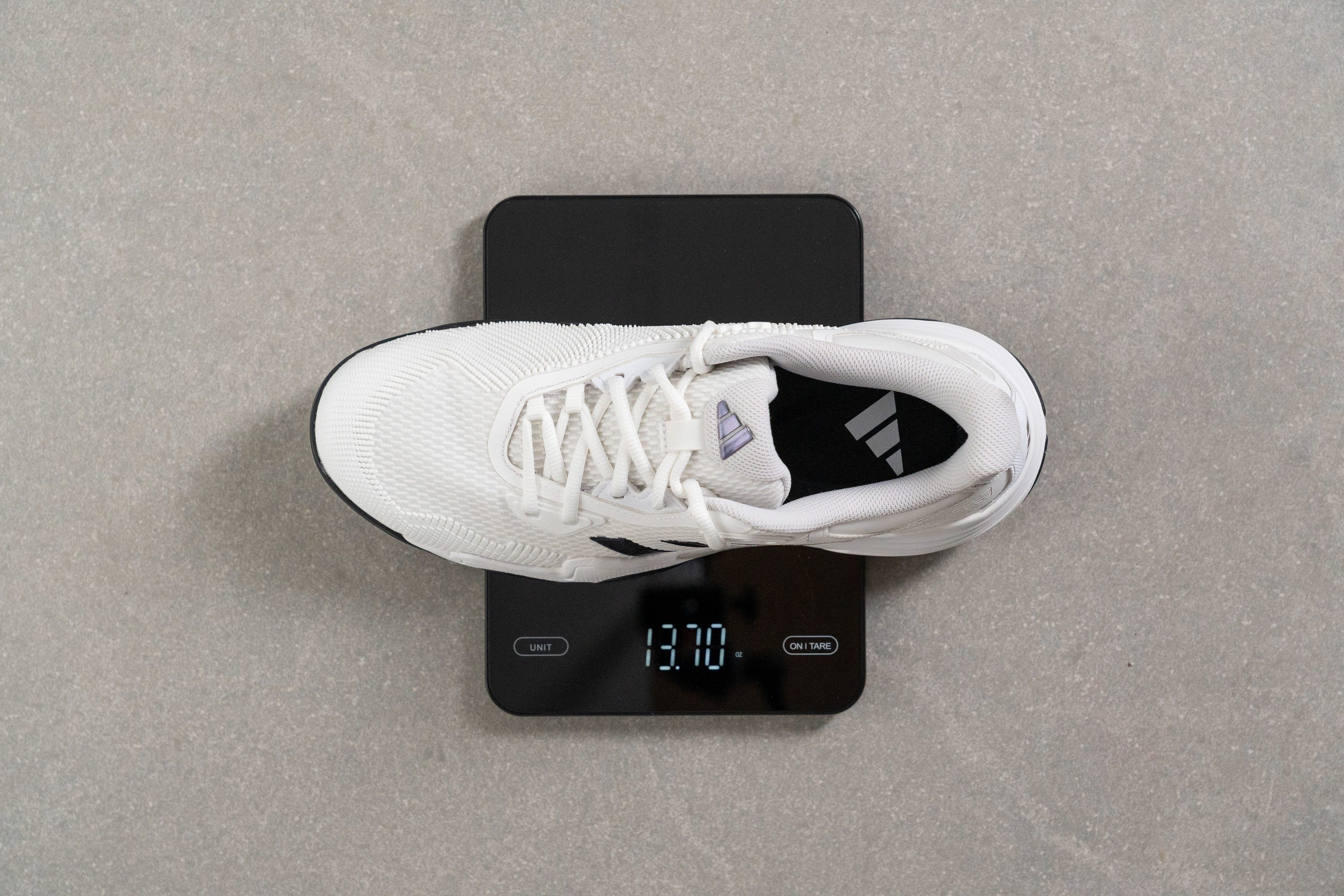
Regrettably, the changes to the Solematch Control 2's overall design increased its weight over the previous iteration. With a scale reading of 13.7 oz (388g), the new version got 1.6 oz heavier and is now nearly on par with the adidas Barricade 13 (13.9 oz/394g).
| Solematch Control 2 | 13.7 oz (388g) |
| Average | 12.8 oz (363g) |
Breathability
Breathability test
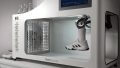
In our lab test, we measure whether a shoe can effectively keep the foot dry by pulling sweat away from the skin. That involves exposing it to artificial sweat on a heated footform in a special chamber for 3 hours.
With a low result of only 58 BR, the adidas Solematch Control 2 proved to be one of the least breathable tennis shoes in our lab. As light and airy as its mesh layer may appear, it doesn’t do enough to prevent moisture buildup inside the shoe.
| Solematch Control 2 | 58 BR |
| Average | 73 BR |
Drying potential
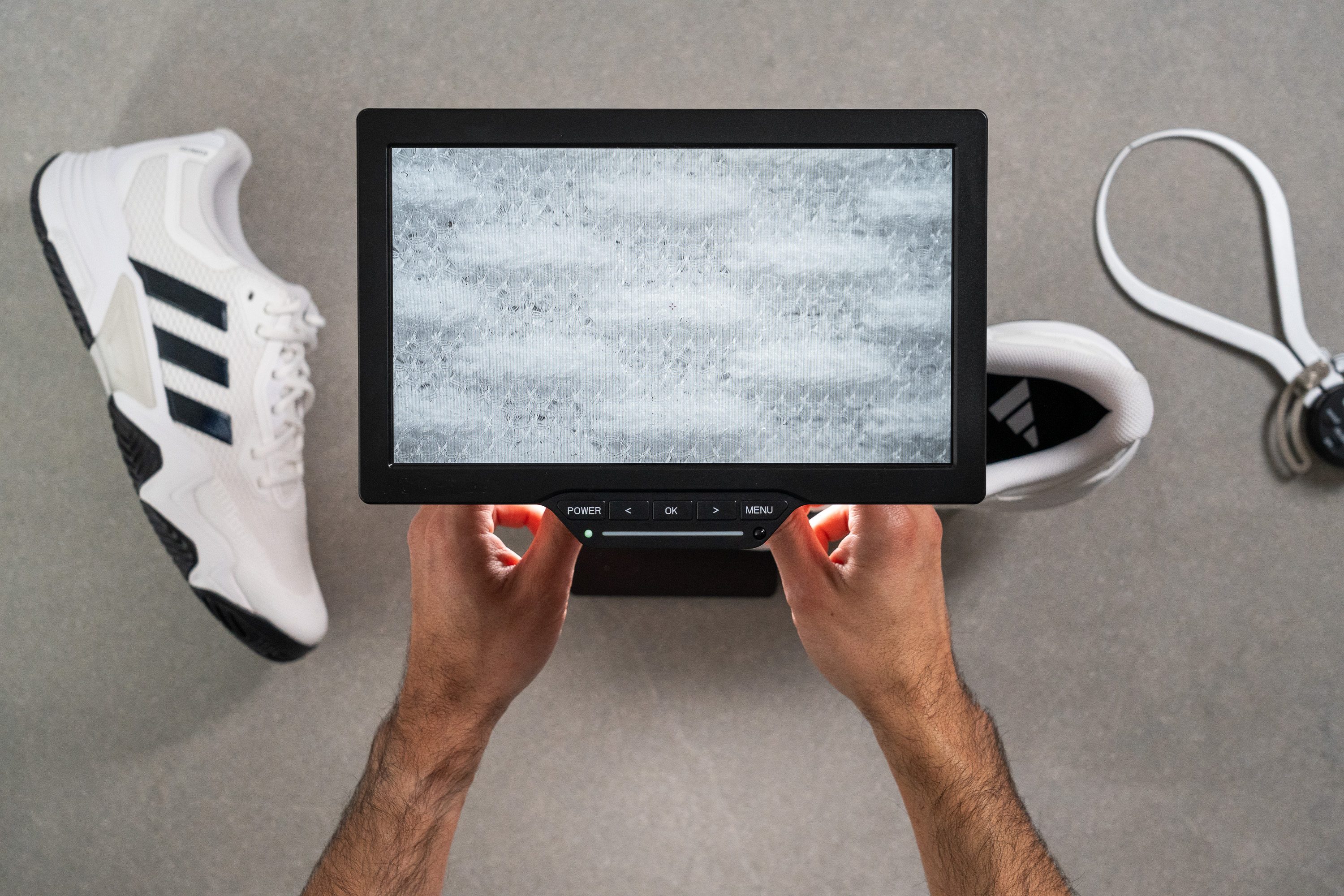
NewUnfortunately, the risk of wet socks and blisters only gets worse during longer, heated sessions. In another 3-hour test, we measured whether the shoe’s materials can effectively release absorbed sweat over time, and the shoe measured a moderate 38%.
While it’s not a bad result per se, it’s just not enough to compensate for its low breathability in the first place.
| Solematch Control 2 | 38% |
| Average | 41% |
Stability
Lateral stability test
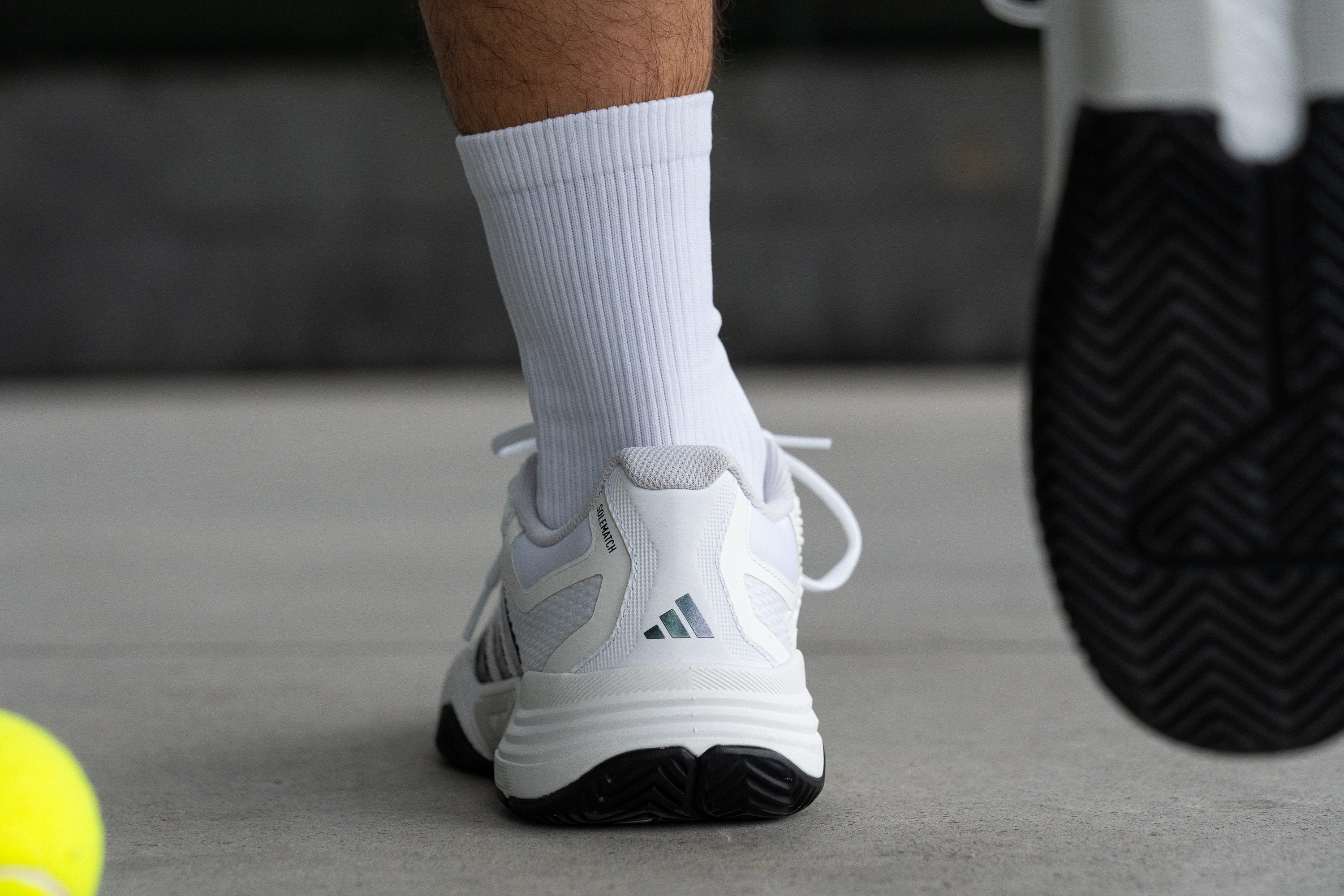
Now is the time to talk about the Solematch Control 2's strongest points. The addition of a more pronounced Torsion System shank in the midfoot of this adidas shoe inspires even more confidence for lateral movements.
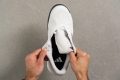
We also noticed that its upper received a new asymmetrical lacing, with more eyelets for a highly customizable lockdown.
Torsional rigidity
The flanges of the shoe's new Torsion System are reminiscent of the support system found on the Barricades 12 and 13, only shorter.
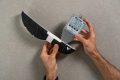
Our manual test confirmed that its torsional rigidity is, in fact, comparable to that of adidas's flagship stability silhouettes! The Solematch Control 2 scored the maximum 5/5!
| Solematch Control 2 | 5 |
| Average | 4.5 |
Heel counter stiffness
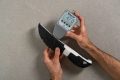
The rearfoot portion of this adidas shoe also boasts a sturdy structure and plenty of internal padding to lock the heel and ankle in without heel slippage. On a 1-5 stiffness scale, we gave it a high 4/5.
| Solematch Control 2 | 4 |
| Average | 4.1 |
Midsole width - forefoot
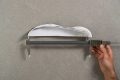
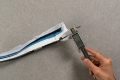
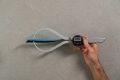
The midsole dimensions of the Solematch Control 2 look nothing like those of the previous version. Measuring the widest part of its forefoot with a caliper, we got a slightly narrower reading of 110.8 mm.
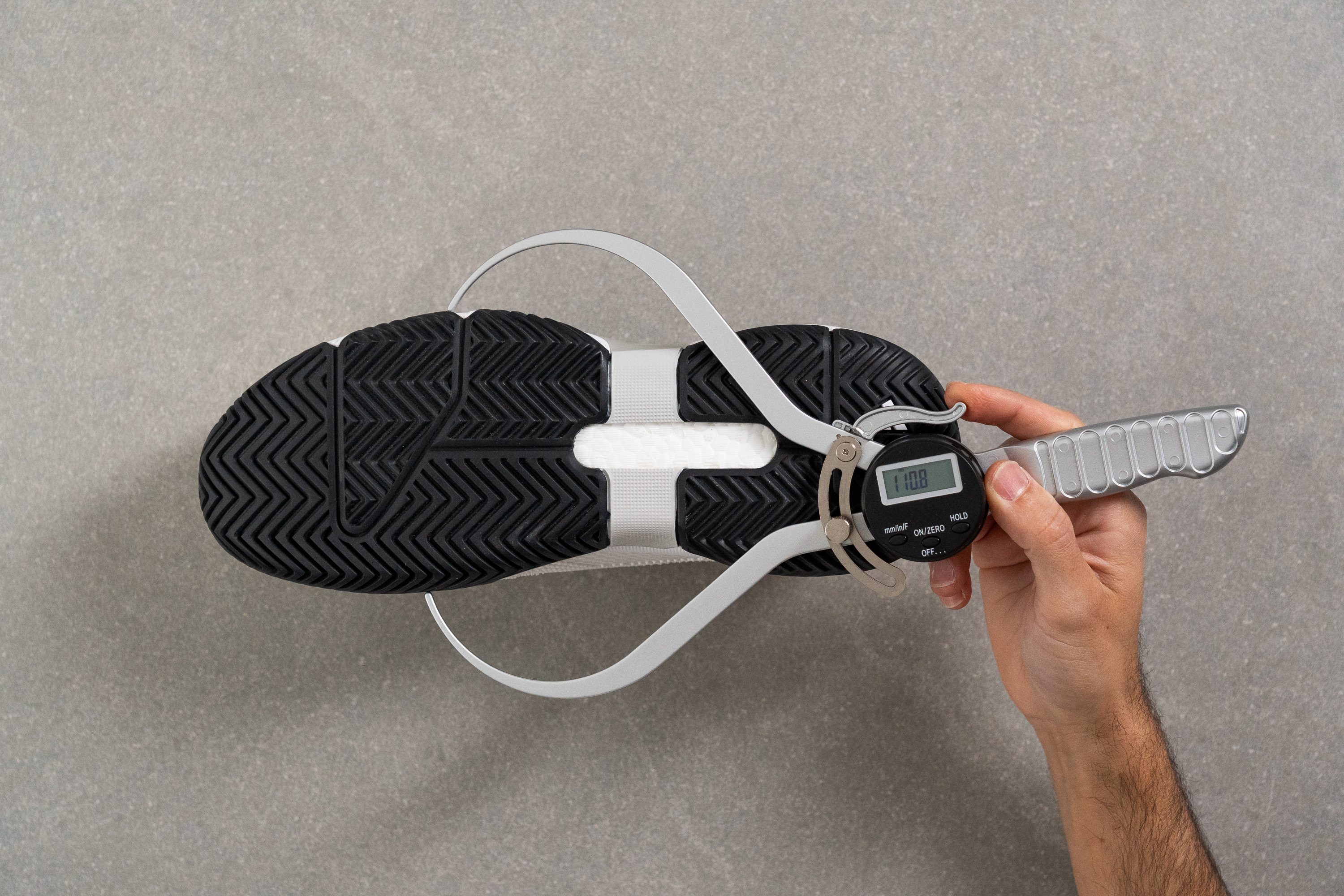
| Solematch Control 2 | 110.8 mm |
| Average | 112.3 mm |
Midsole width - heel
The heel proportions, on the other hand, exploded in v2, reaching a whopping 98.1 mm! That's one of the broadest heels we've seen in a tennis shoe!
It brings stability to the next level but certainly detracts from the shoe's speed and agility.
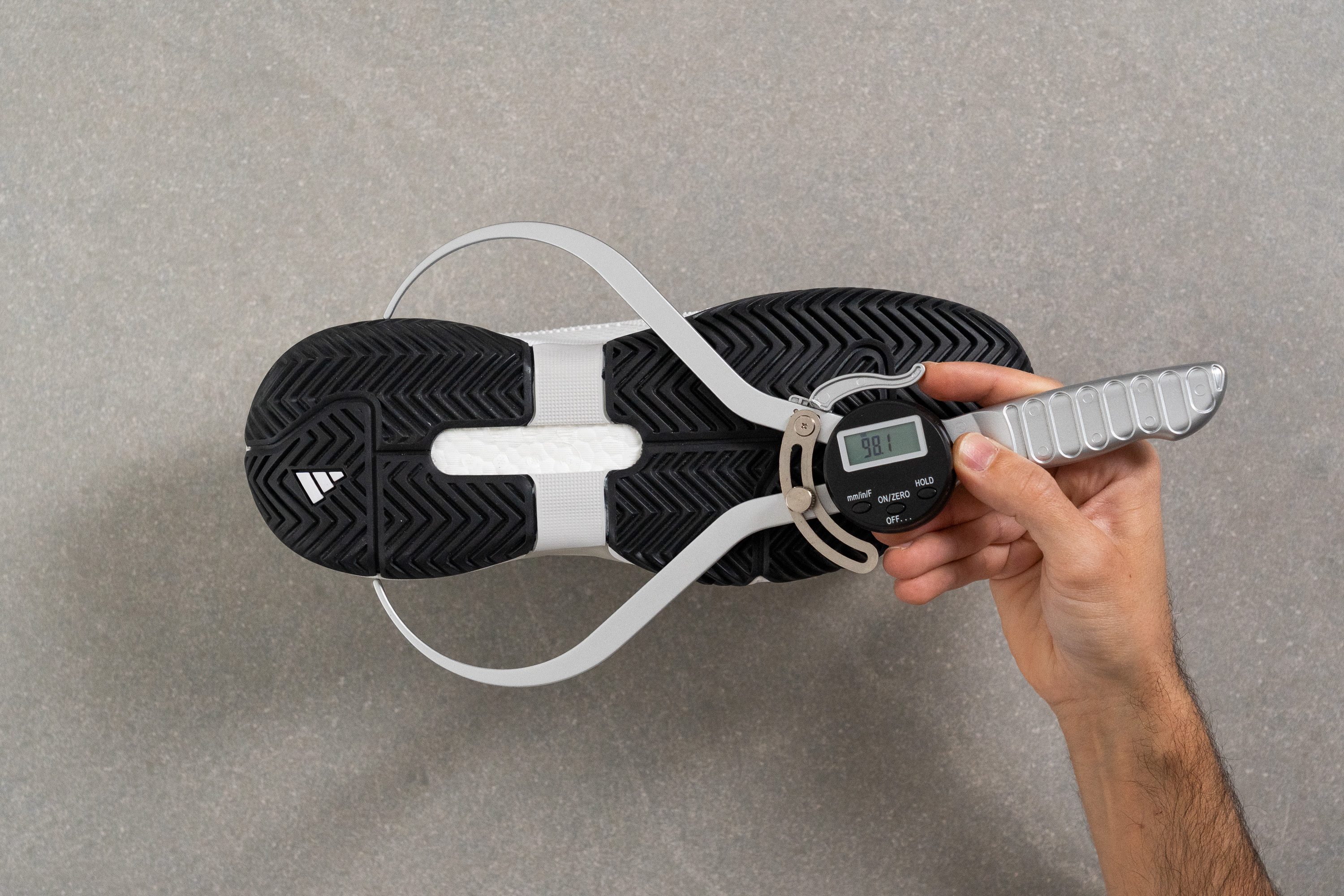
| Solematch Control 2 | 98.1 mm |
| Average | 89.7 mm |
Durability
Toe guard durability
Like most other adidas tennis shoes, the Solematch Control 2 features a protective Adituff overlay for added wear resistance during sliding.
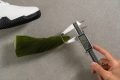
However, it takes a rather unusual shape in this shoe, with a micro-dotted rubber texture on the medial side of the upper.
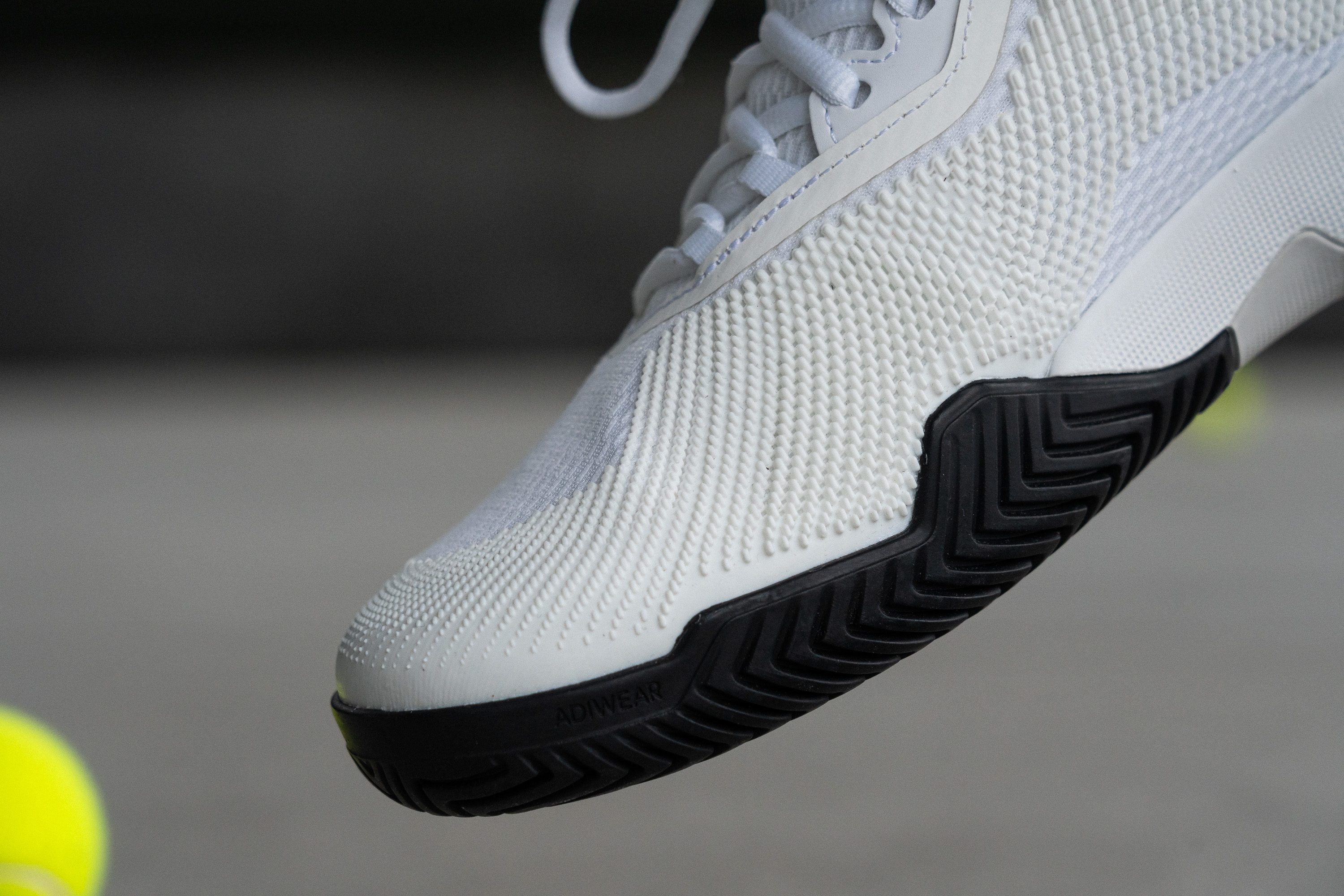
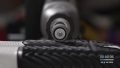
Gladly, these nobs resisted our Dremel test just as effectively as most other toe drag guards. Showing minimal wear, it earned a high durability score of 4/5!
| Solematch Control 2 | 4 |
| Average | 3.5 |
Toebox durability
The Adituff also occupies a large portion of the shoe's toebox, covering the area we typically test for toebox durability.
With no holes or serious damage, the Solematch Control 2 gets a maximum durability score of 5/5 in this part of the upper.
| Solematch Control 2 | 5 |
| Average | 3.7 |
Heel padding durability
The shoe's interior mesh lining proved more susceptible to abrasion. Scuffing up in only 4 seconds, it lowered the heel padding durability score to 3/5.
| Solematch Control 2 | 3 |
| Average | 3.2 |
Outsole durability
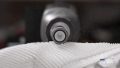
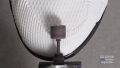
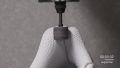
But most importantly, the Adiwear outsole of this adidas shoe did not disappoint. After an 18-second drilling session, the dent in its surface was only 0.6 mm deep. This is an excellent result for a tennis shoe!
| Solematch Control 2 | 0.6 mm |
| Average | 0.8 mm |
Outsole thickness
We expect solid long-term durability from the Solematch Control 2's outsole as it's both wear-resistant and thick (3.8 mm).
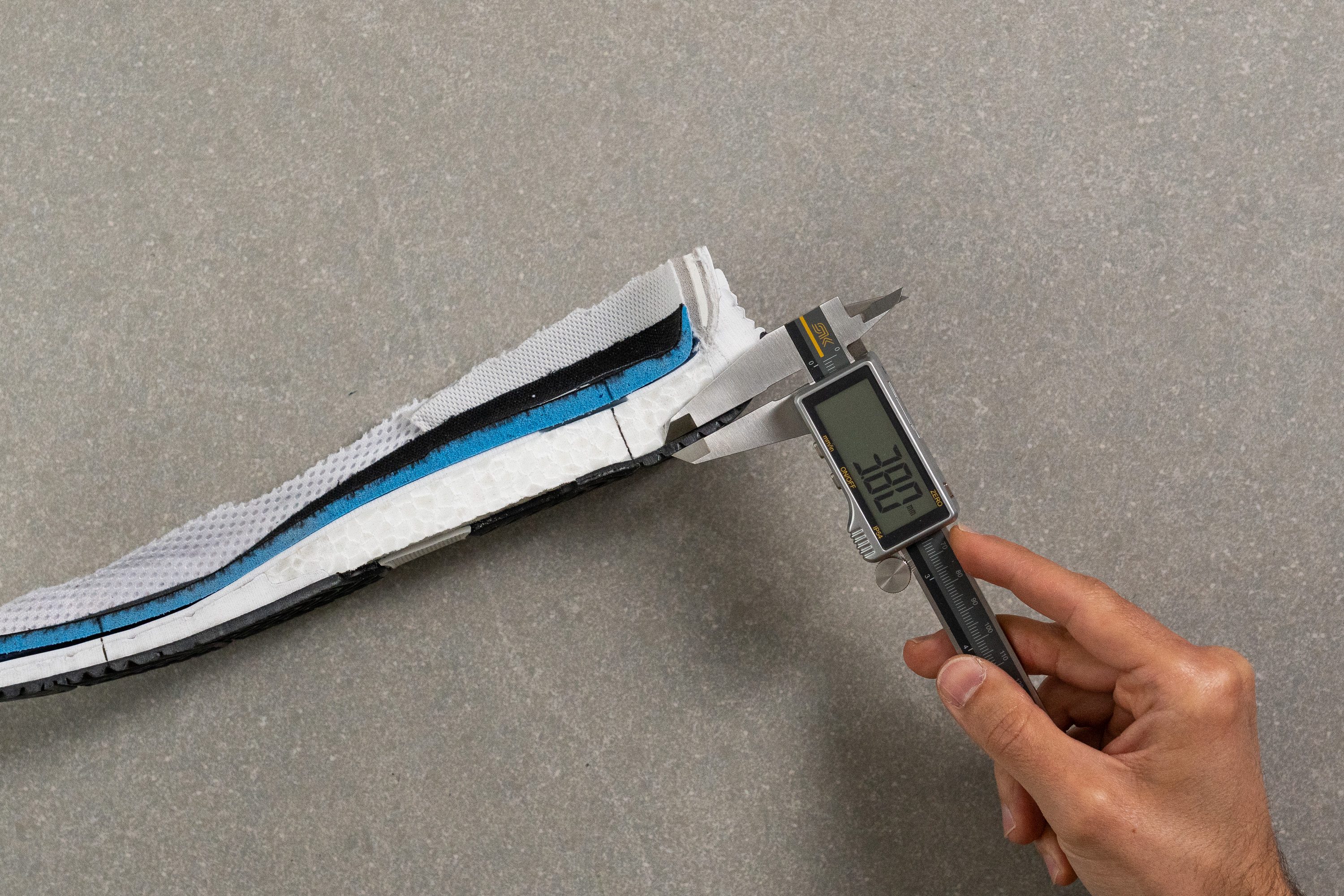
| Solematch Control 2 | 3.8 mm |
| Average | 4.1 mm |
Misc
Insole thickness
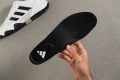
The insole grew thicker in this version of the Solematch, reaching 7.1 mm in the heel area.
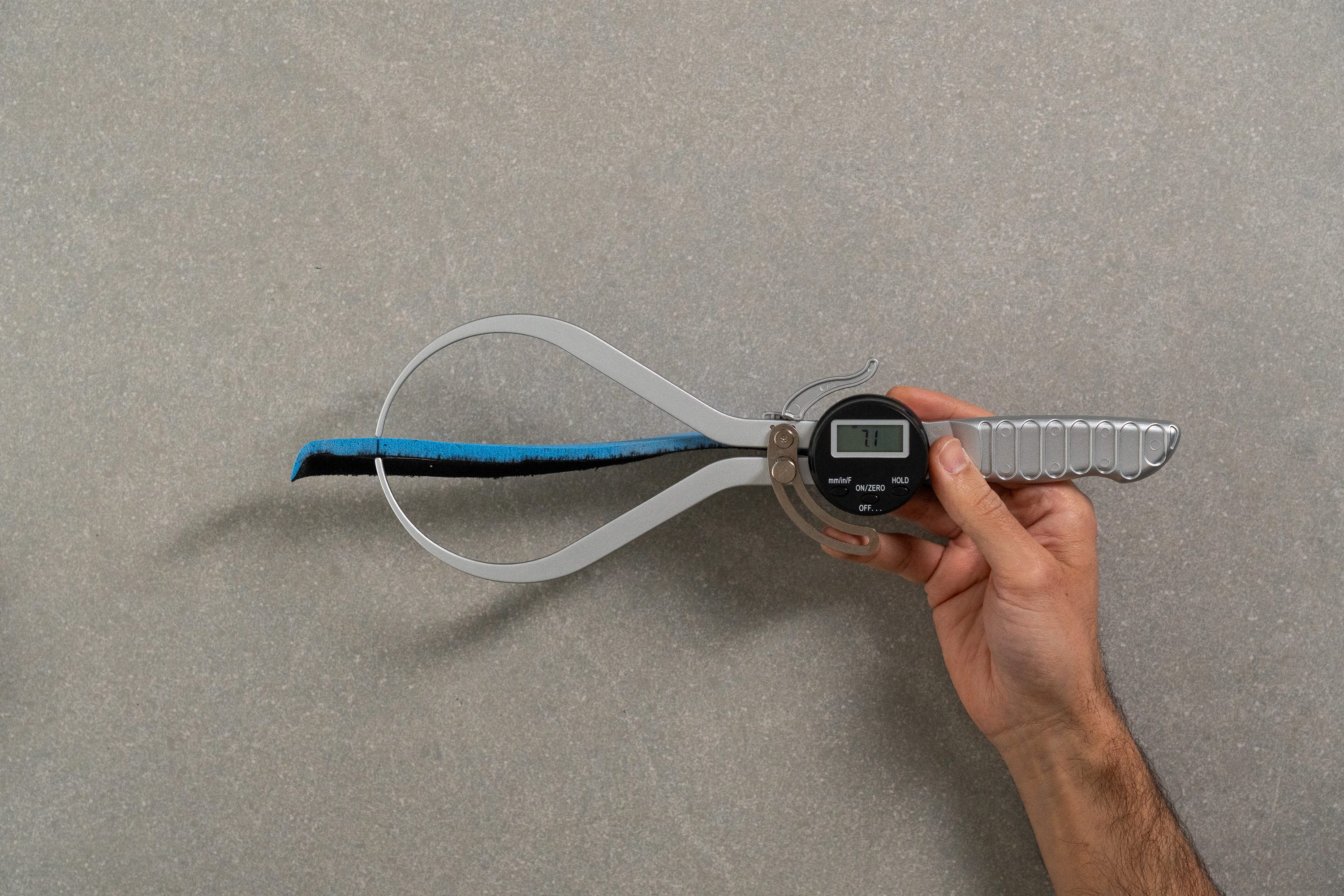
| Solematch Control 2 | 7.1 mm |
| Average | 5.2 mm |
Removable insole
The insole is not glued to the midsole, so you have the option to replace it with a custom orthotic if needed.
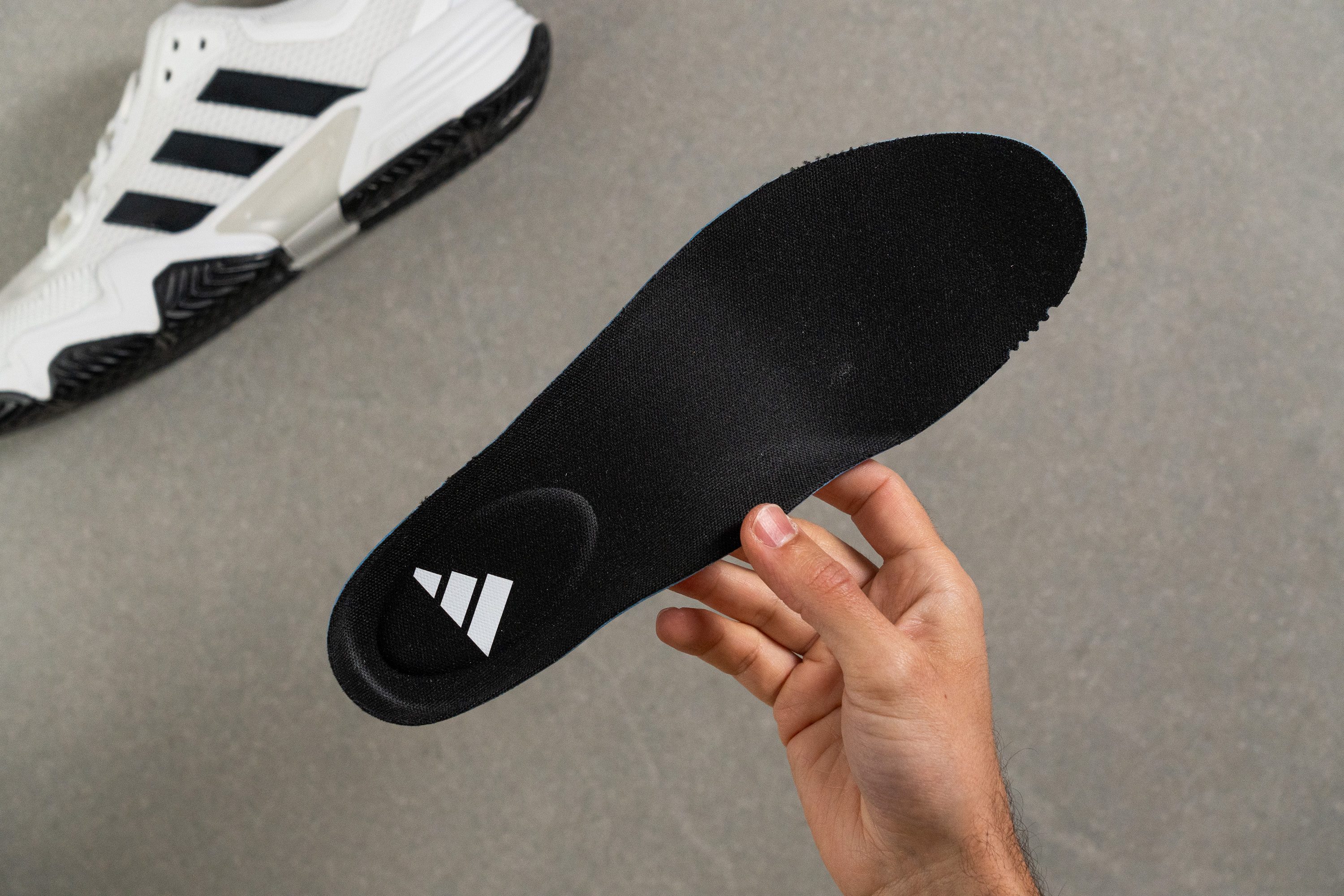
| Solematch Control 2 | Yes |
Tongue padding
adidas didn't skimp on padding in this iteration of the Solematch Control, as its tongue thickness increased from 3.1 mm in v1 to as much as 9.6 mm in v2! There is way more in-shoe comfort in the newer version.
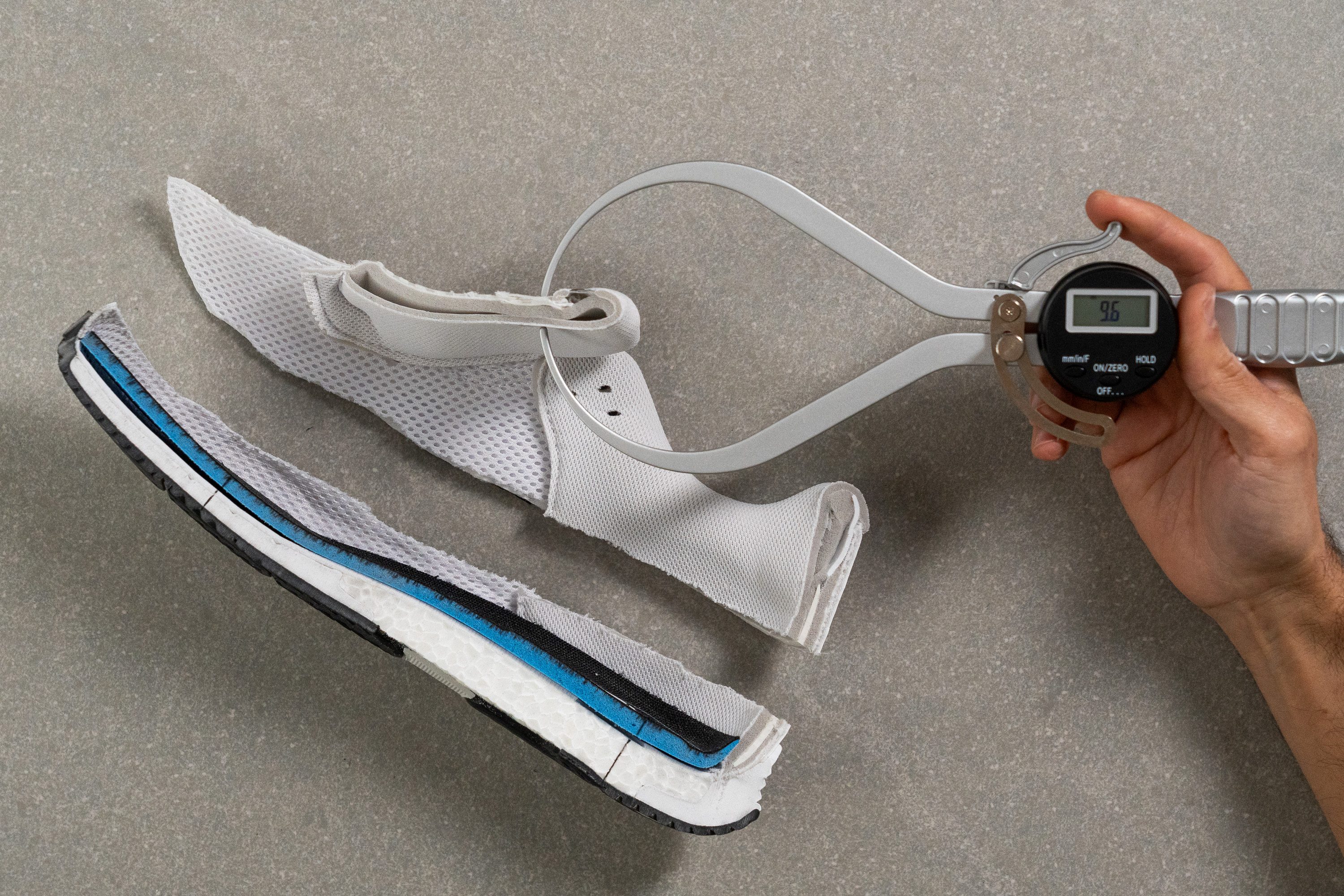
| Solematch Control 2 | 9.6 mm |
| Average | 8.5 mm |
Tongue: gusset type
The tongue is non-gusseted in this shoe, but we didn't experience much impromptu shifting.
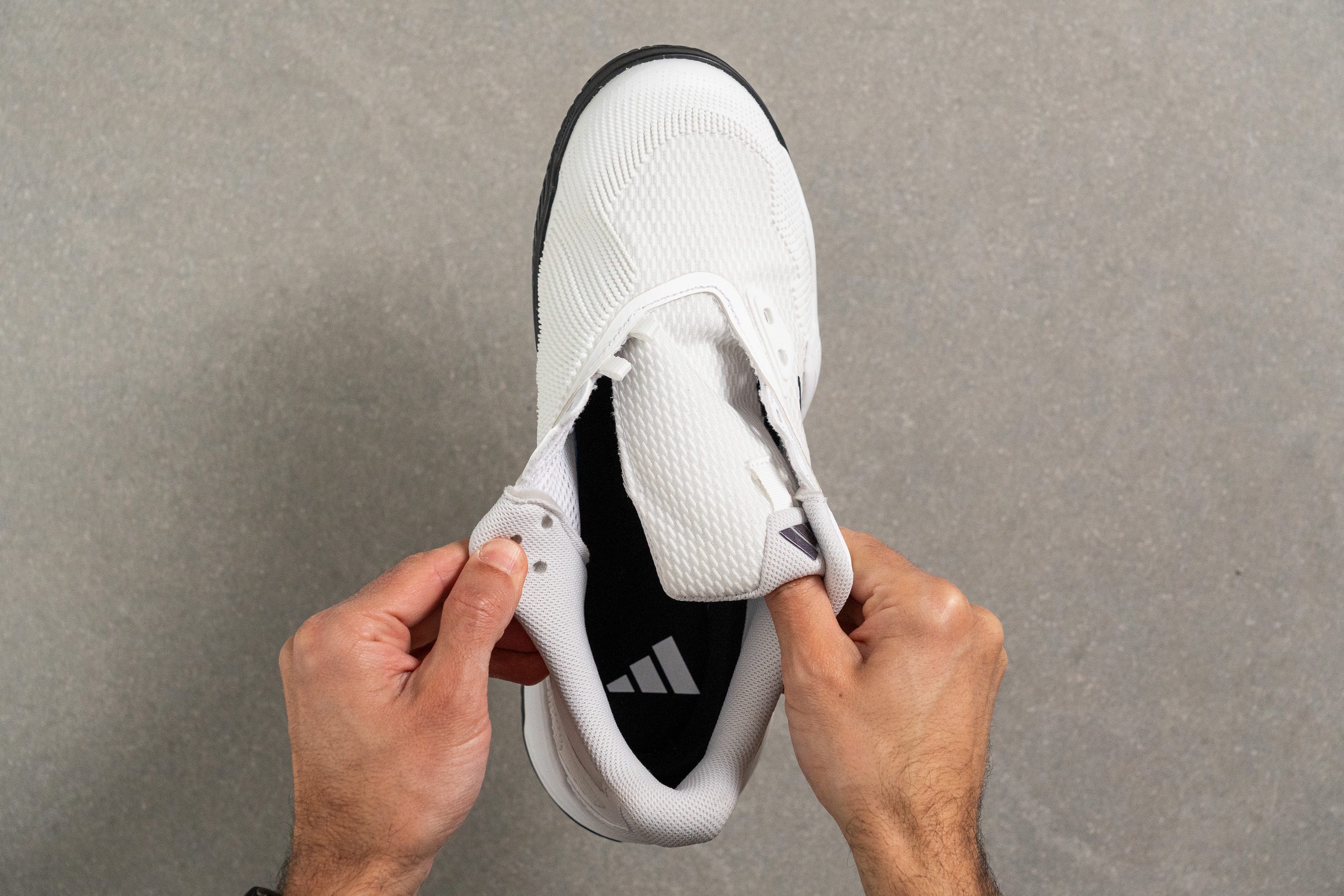
| Solematch Control 2 | None |
Heel tab
This adidas tennis shoe doesn't have any loops or pull tabs.
| Solematch Control 2 | None |
Price
We believe the Solematch Control 2 offers great value for money compared to competitors at the same price point.
| Solematch Control 2 | $130 |
| Average | $133 |