























Our verdict
- Daily running 88
- Tempo 52
- Race 38
- Stability 86
Pros
- Plush cushioning for easy miles
- Protective ride for heel strikers
- Excellent breathability
- Improved flexibility over the previous Clifton
- Durable outsole
- Great choice for everyday comfort
- Stable platform
- Smooth transitions from heel to forefoot
- Build quality has improved
- 360º reflectivity
- Lower weight
Cons
- Very low energy return (again)
- Max-stack design can feel bulky for some
- Narrow, tapered toebox
- Non-gusseted tongue
Awards
- Top pick in best HOKA running shoes
- Top pick in best running shoes for walking
- Top 28% in road running shoes
- Top 30% in HOKA running shoes
- Top 3% most popular running shoes
Comparison
The most similar running shoes compared
+ + Add a shoe | |||||
|---|---|---|---|---|---|
| Our score | 85 Great | 91 Superb | 85 Great | 86 Great | |
| Price | £140 | £130 | £130 | £140 | |
| Pace | Daily running | Daily running | Daily running | Daily running | |
| Shock absorption | High | High | High | High | |
| Energy return | Low | High | High | Moderate | |
| Traction | High | High | High | High | |
| Arch support | Neutral | Neutral | Neutral | Neutral | |
| Weight lab Weight brand | 9.4 oz / 266g 9.1 oz / 258g | 9.2 oz / 261g 9.3 oz / 264g | 9.2 oz / 261g 9.2 oz / 261g | 9.3 oz / 264g 9.7 oz / 275g | |
| Drop lab Drop brand | 11.7 mm 8.0 mm | 11.5 mm 10.0 mm | 9.5 mm 8.0 mm | 10.4 mm 8.0 mm | |
| Strike pattern | Heel | Heel | HeelMid/forefoot | Heel | |
| Size | True to size | True to size | True to size | True to size | |
| Midsole softness | Soft | Soft | Soft | Balanced | |
| Difference in midsole softness in cold | Normal | Small | Big | Small | |
| Toebox durability | Decent | Good | Decent | Bad | |
| Heel padding durability | Good | Decent | Good | Good | |
| Outsole durability | Good | Decent | Decent | Good | |
| Breathability | - | Breathable | Moderate | - | |
| Width / fit | Medium | Medium | Medium | Medium | |
| Toebox width | Narrow | Medium | Medium | Narrow | |
| Stiffness | Moderate | Stiff | Moderate | Moderate | |
| Torsional rigidity | Flexible | Flexible | Flexible | Moderate | |
| Heel counter stiffness | Moderate | Moderate | Moderate | Moderate | |
| Rocker | ✓ | ✗ | ✓ | ✓ | |
| Heel lab Heel brand | 41.4 mm 42.0 mm | 37.4 mm 40.0 mm | 36.9 mm 37.0 mm | 43.2 mm 42.0 mm | |
| Forefoot lab Forefoot brand | 29.7 mm 34.0 mm | 25.9 mm 30.0 mm | 27.4 mm 29.0 mm | 32.8 mm 34.0 mm | |
| Widths available | NormalWideX-Wide | NormalWide | NarrowNormalWideX-Wide | NormalWide | |
| Orthotic friendly | ✓ | ✓ | ✓ | ✓ | |
| Season | - | SummerAll seasons | All seasons | - | |
| Removable insole | ✓ | ✓ | ✓ | ✓ | |
| Ranking | #102 Top 26% | #29 Top 8% | #110 Top 28% | #86 Top 22% | |
| Popularity | #10 Top 3% | #228 Bottom 43% | #42 Top 11% | #56 Top 14% |



Who should buy
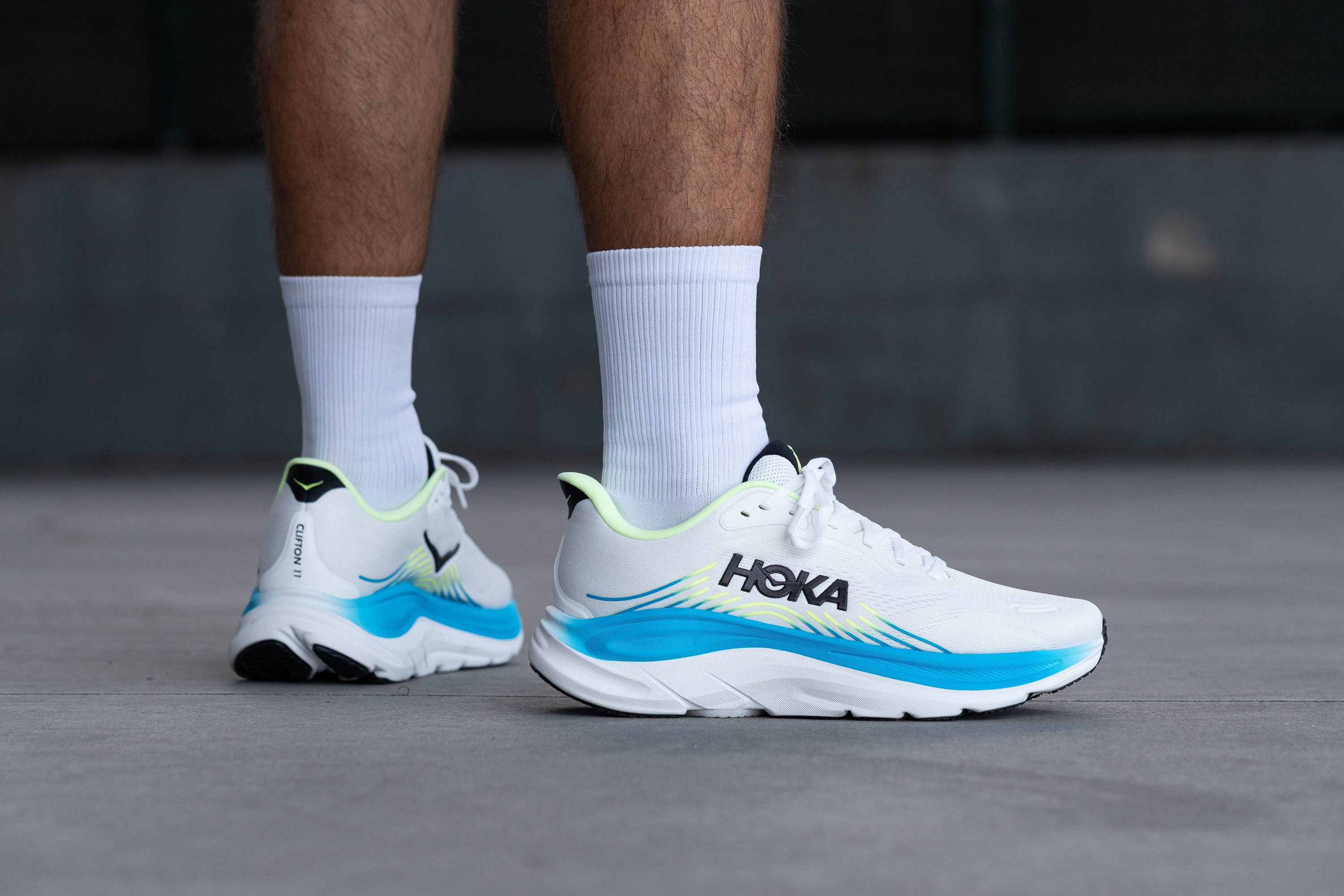
We think that the HOKA Clifton 11 can be a good option for:
- Those who liked version 10 and want minor updates without changing the overall Clifton feel.
- Runners who focus on easy paces and prefer a snug fit with plenty of everyday comfort.
- Heel strikers looking for a stable, protective shoe with a high drop.
Who should NOT buy
HOKA unfortunately sticks with the CMEVA midsole in the Clifton 11, and that means limited bounce, period. If energy return is important to you, we recommend checking out the Saucony Endorphin Azura or adidas Supernova Prima 3 instead.
We also think the high stack of the Clifton 11 won’t suit runners who dislike max-stack shoes. For them, the HOKA Mach 7 is a great alternative that offers more bounce while also being a more versatile option.
Cushioning
Shock absorption
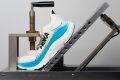
HOKA rebooted the Clifton series last year and moved it into the max-stack category, and they’re showing no signs of turning back. After measuring its shock absorption in our lab, it’s clear to us that the Clifton 11 is now focused on delivering a highly-protective ride, with results of 146 SA at the heel and 117 SA at the forefoot backing this up.
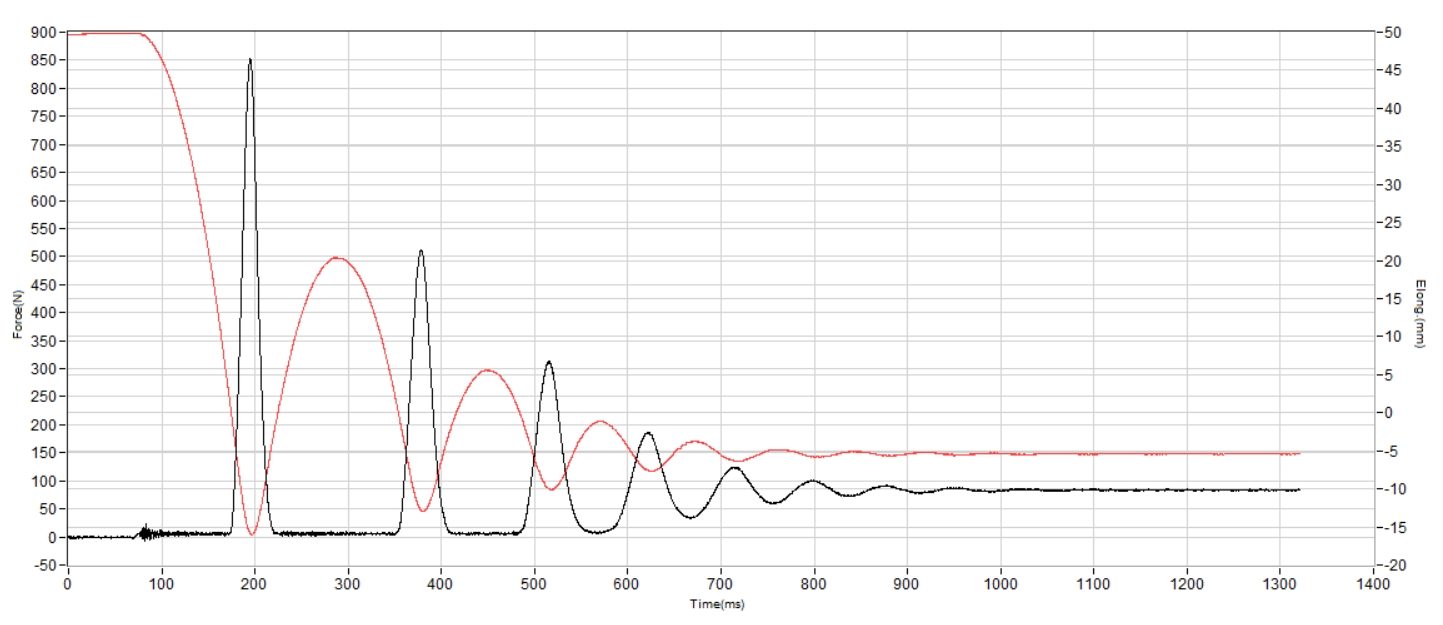
| Clifton 11 | 146 SA |
| Average | 131 SA |
Energy return
The Clifton 11 sticks with compression-moulded EVA foam, and it feels remarkably flat underfoot. Some years ago, this wouldn’t have been a major issue, but the market has moved on. Most daily trainers at this price point now feature supercritical EVA foams or even A-TPU and PEBA-based midsoles, making the Clifton’s foam feel increasingly outdated.
Our lab tests backed up our impressions. With energy return figures of just 46.8% in the heel and 50.1% in the forefoot, this is a missed opportunity for HOKA, especially considering that the brand already has access to more advanced training foams.
| Clifton 11 | 50.1% |
| Average | 61.5% |
Heel stack
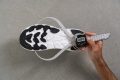
Putting the Clifton 11 on makes you 41.4 mm taller, so runners looking for a shoe with a substantial amount of foam under the heel certainly won’t be disappointed.
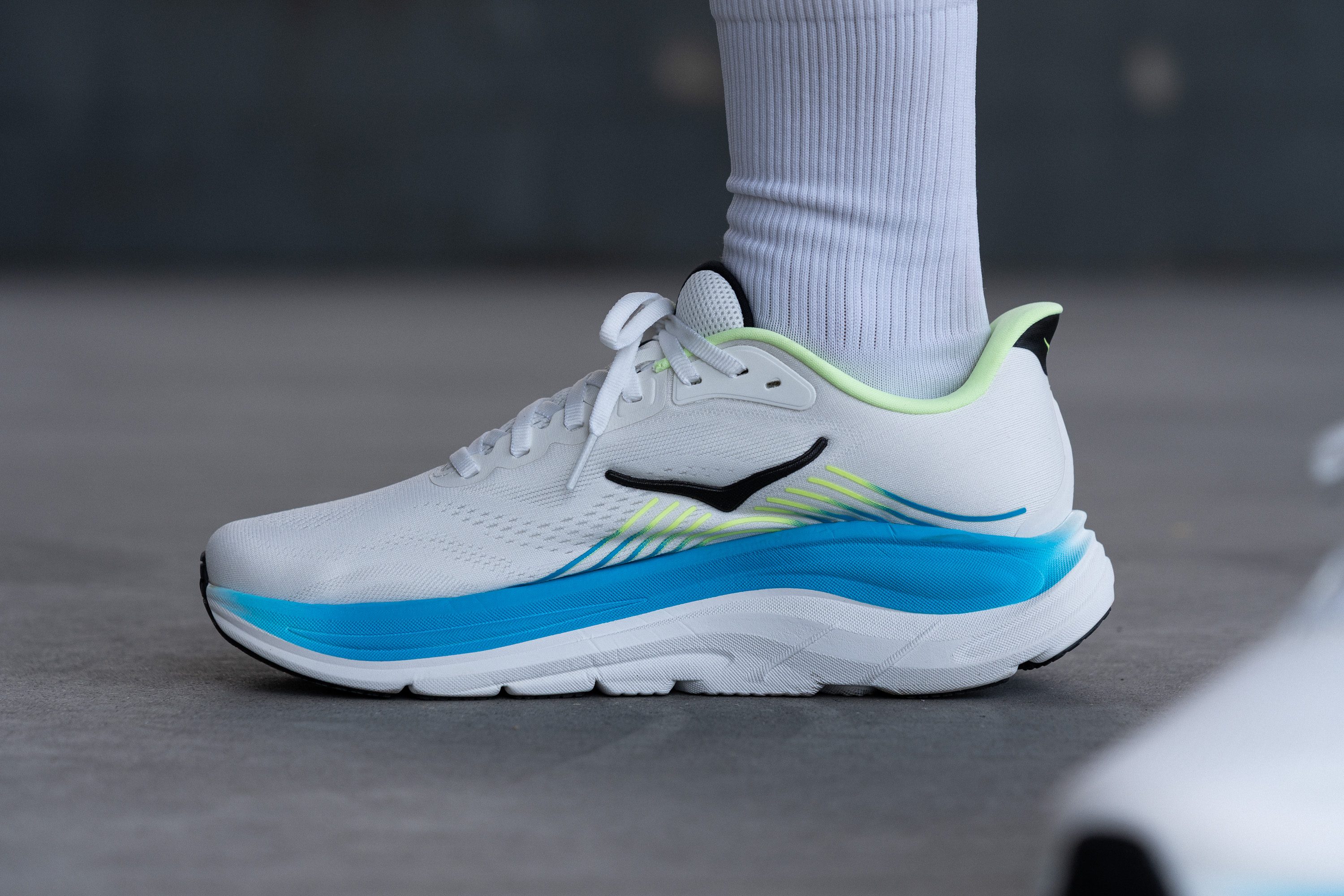
However, if you prefer a less bulky shoe or simply don’t need this much cushioning, we have bad news: it looks like this new path for the Clifton is here to stay...
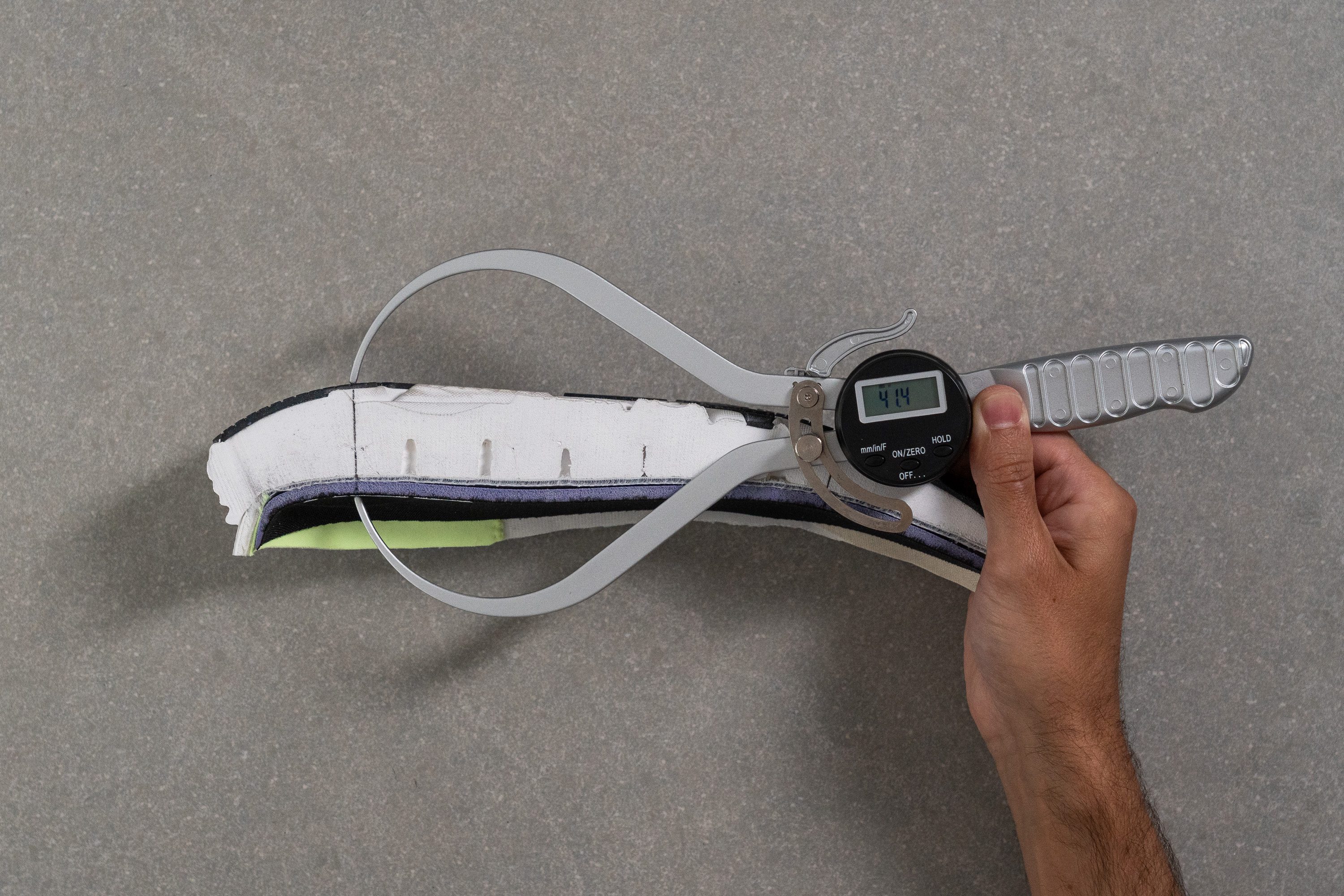
| Clifton 11 | 41.4 mm |
| Average | 35.6 mm |
Forefoot stack
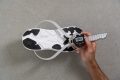
The forefoot is also seriously cushioned at 29.7 mm, although it’s less impressive than the heel and feels considerably less extreme for forefoot strikers.
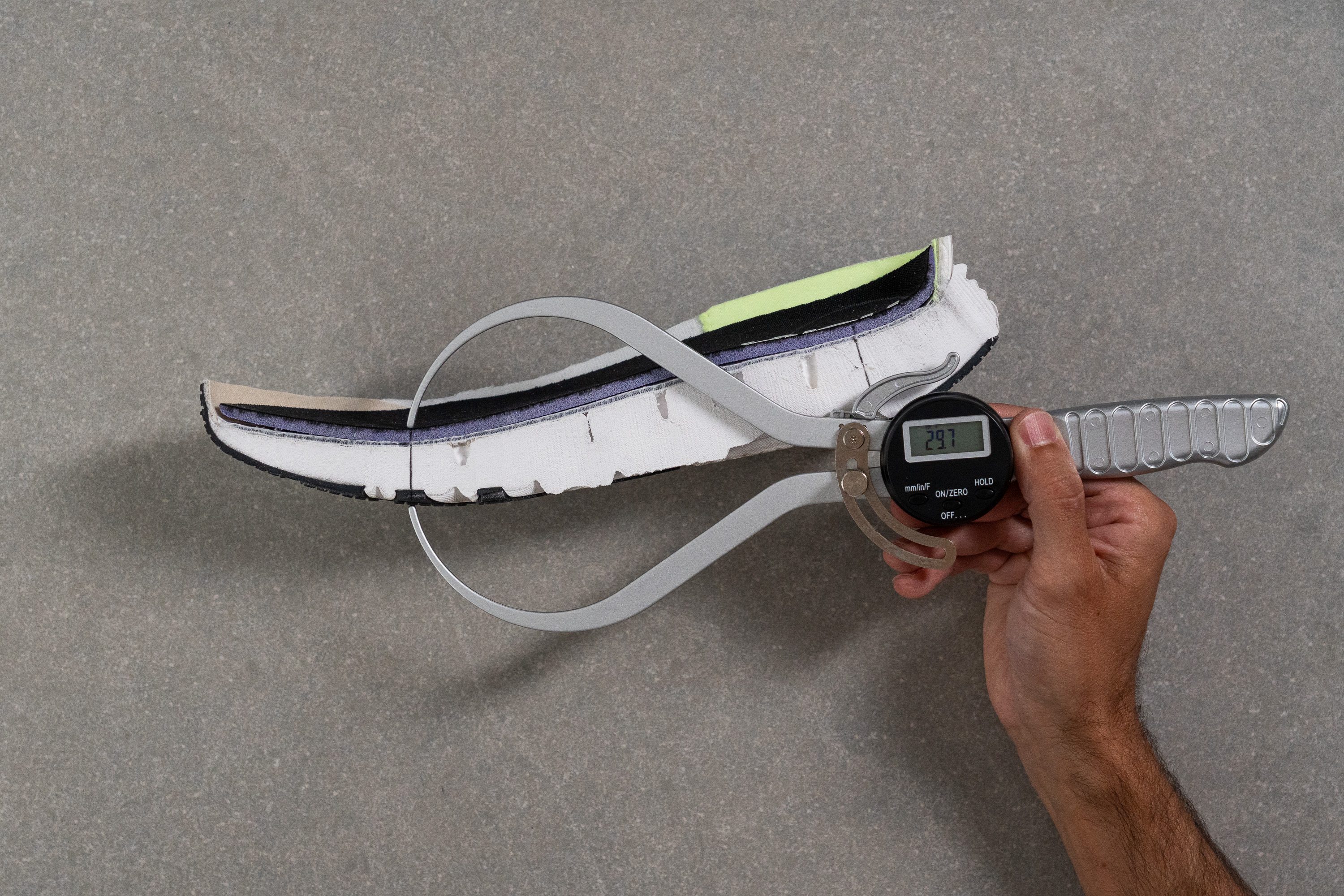
| Clifton 11 | 29.7 mm |
| Average | 27.1 mm |
Drop
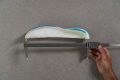
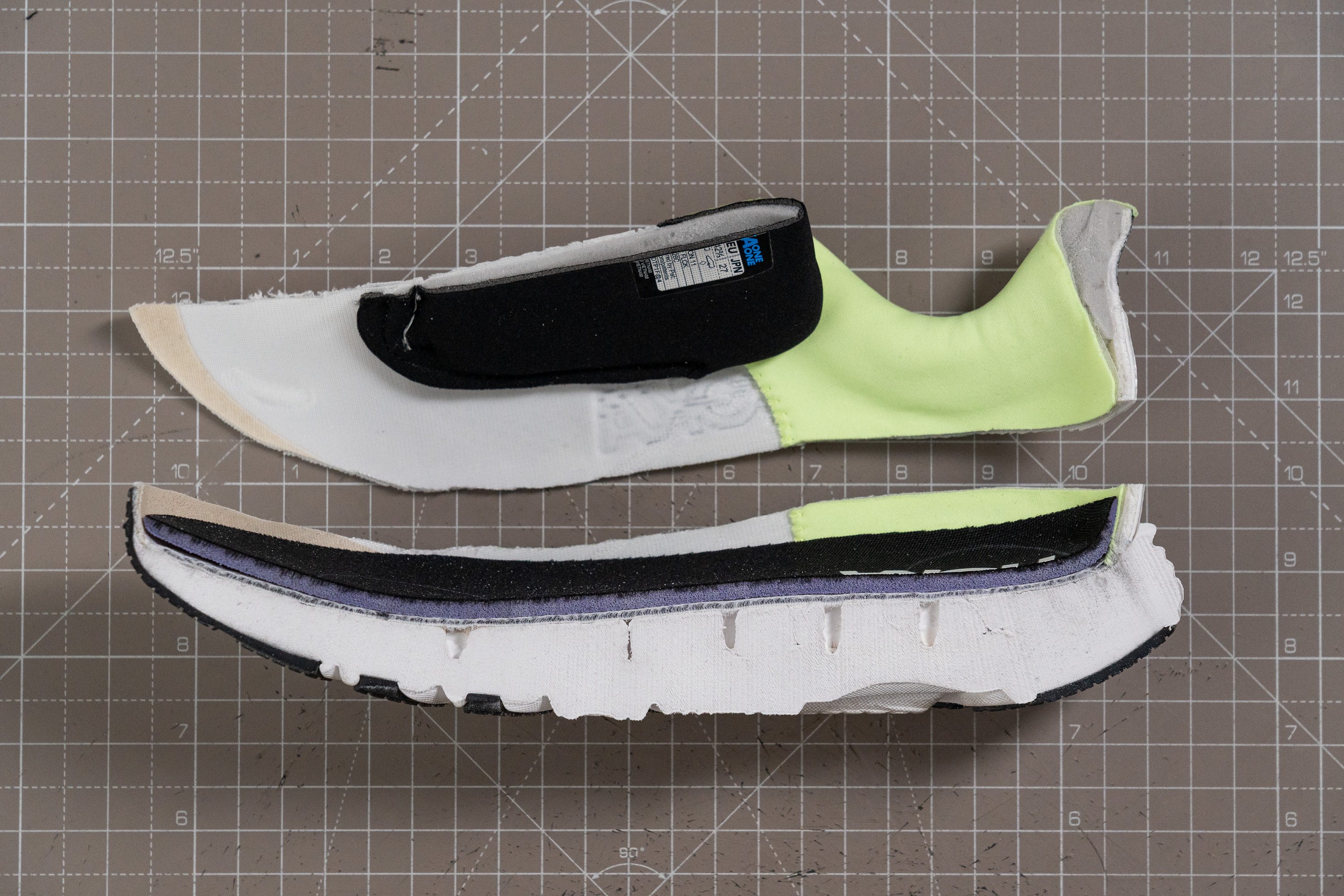
If you’re quick with maths, you’ve probably noticed that HOKA’s claimed 8 mm drop comes up a bit short here. Indeed, we measured 11.7 mm.
This is very common with HOKA, as the brand measures the stack somewhat closer to the midfoot than the method specified by World Athletics, which is the approach we follow for all shoes.
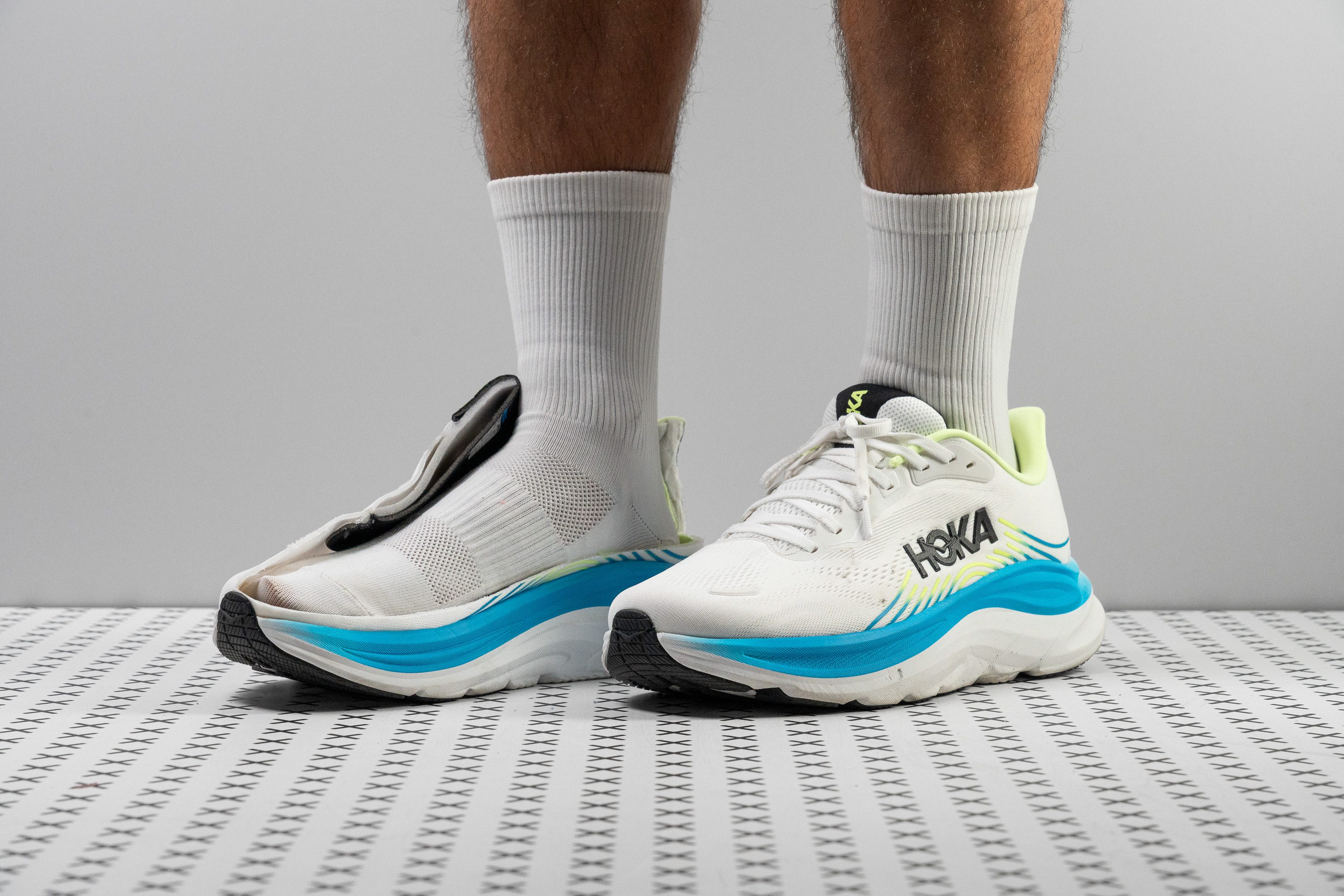
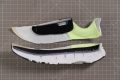
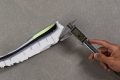
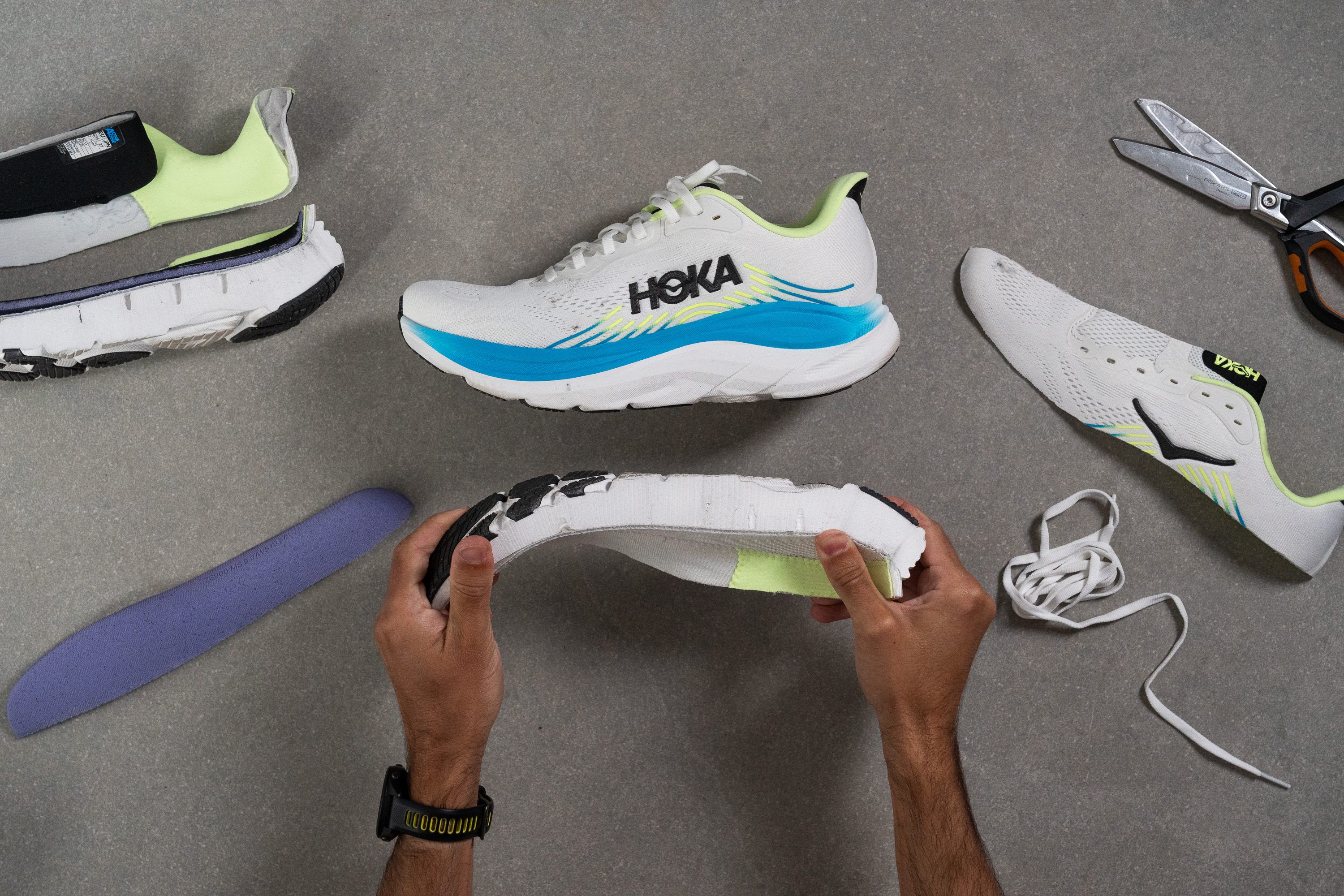
And if you take a look at our photo of the Clifton 11 sliced in half, it’s clear that the difference between the heel and forefoot is substantial. In our view, this makes the shoe particularly well-suited to heel strikers who prefer a pronounced heel-to-toe roll.
| Clifton 11 | 11.7 mm |
| Average | 8.4 mm |
Midsole softness
If you don’t care about energy return and all you’re looking for is a plush ride, the Clifton 11 will work well for you.
The foam is softer than previous Clifton models, measuring just 31.1 AC on our Asker C digital durometer, making every easy-paced run feel comfortable. However, this softness and lack of bounce become a poor match for faster running.
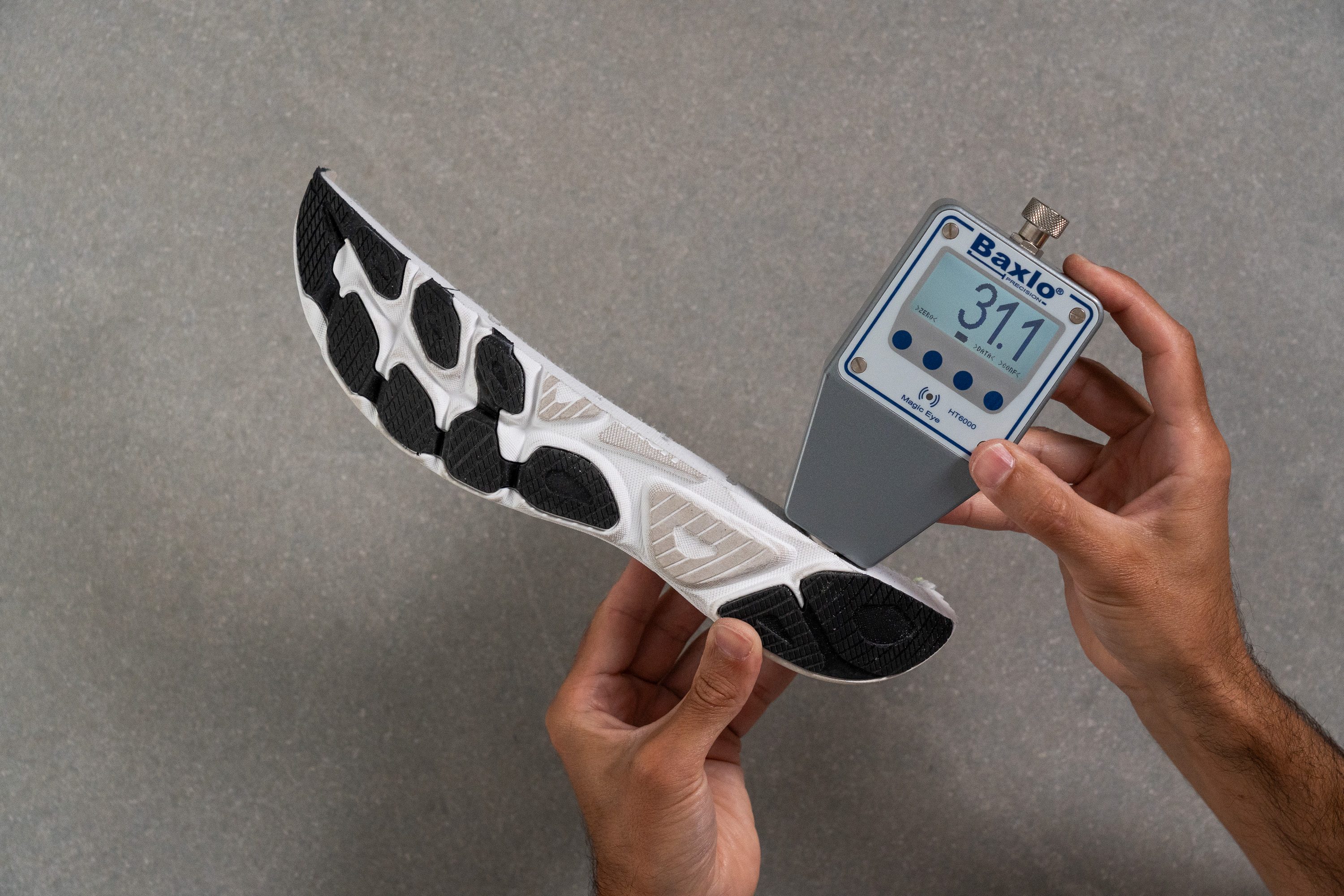
| Clifton 11 | 31.1 AC |
| Average | 35.4 AC |
Rocker
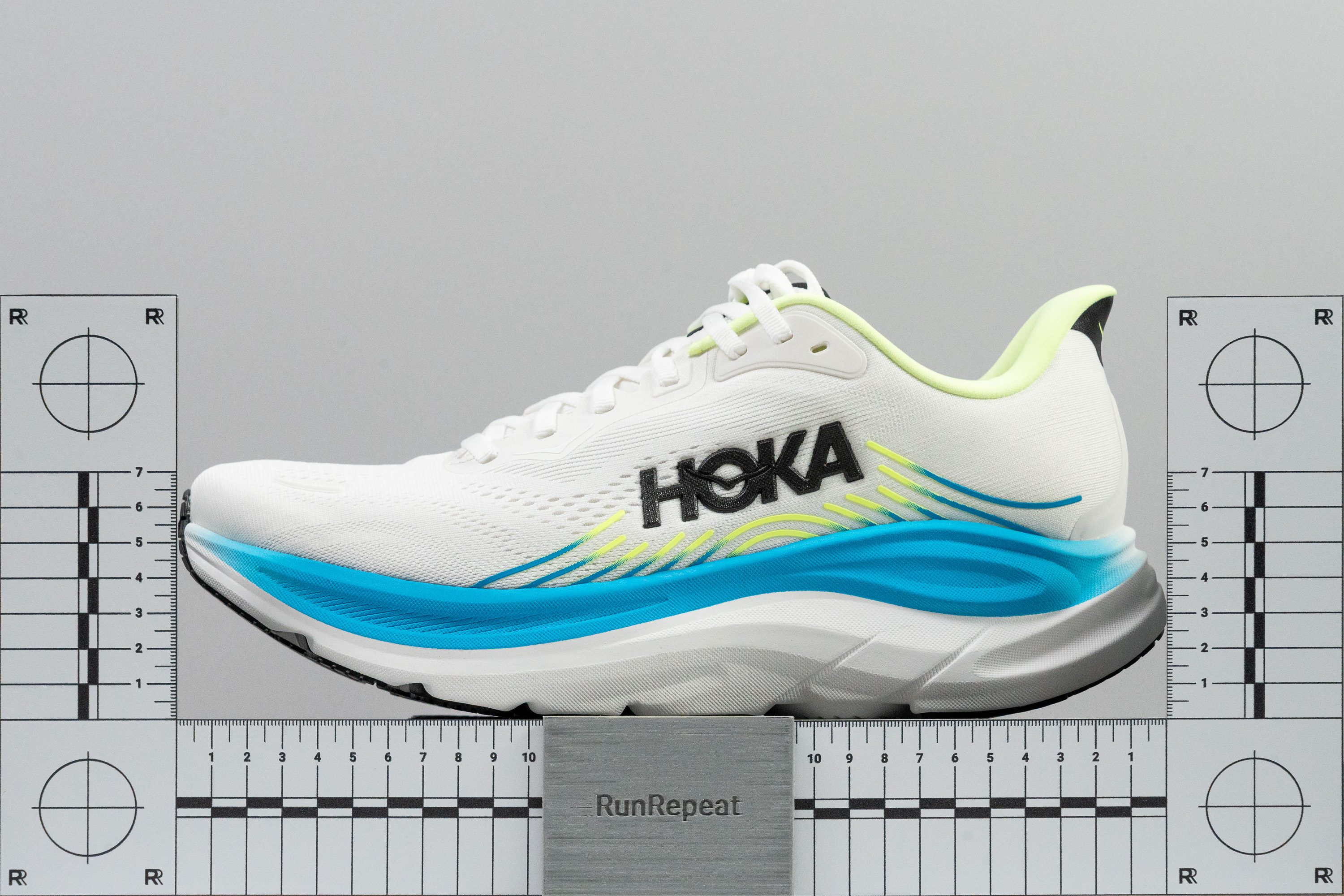
Due to its maximalist stack height, the Clifton 11 features a curved midsole with the front of the shoe rising up to 5 cm. This pronounced toe spring can work particularly well for runners with hallux rigidus.
Size and fit
Size
HOKA Clifton 11 fits true to size (16 votes).
Internal length
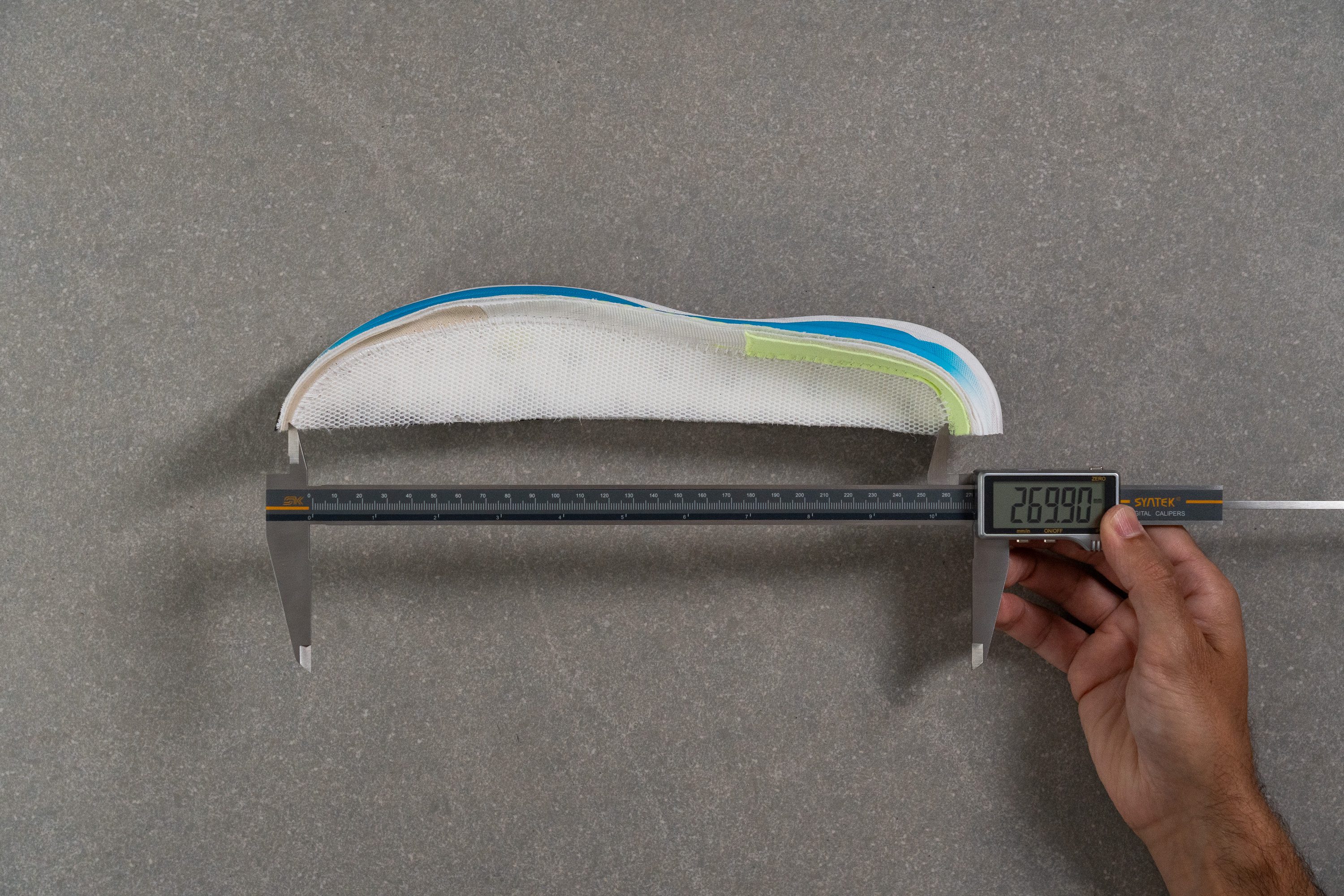
| Clifton 11 | 269.9 mm |
| Average | 269.3 mm |
Width / Fit
First of all, it’s worth noting that the HOKA Clifton 11 is available in three different widths, which is always a welcome addition. However, as usual, not every colorway is offered in Wide and Extra Wide.
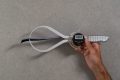
After allowing the ballistic gel to firm up in our freezer, we took our usual three measurements. The first came in at 94.7 mm, putting it very close to the category average.
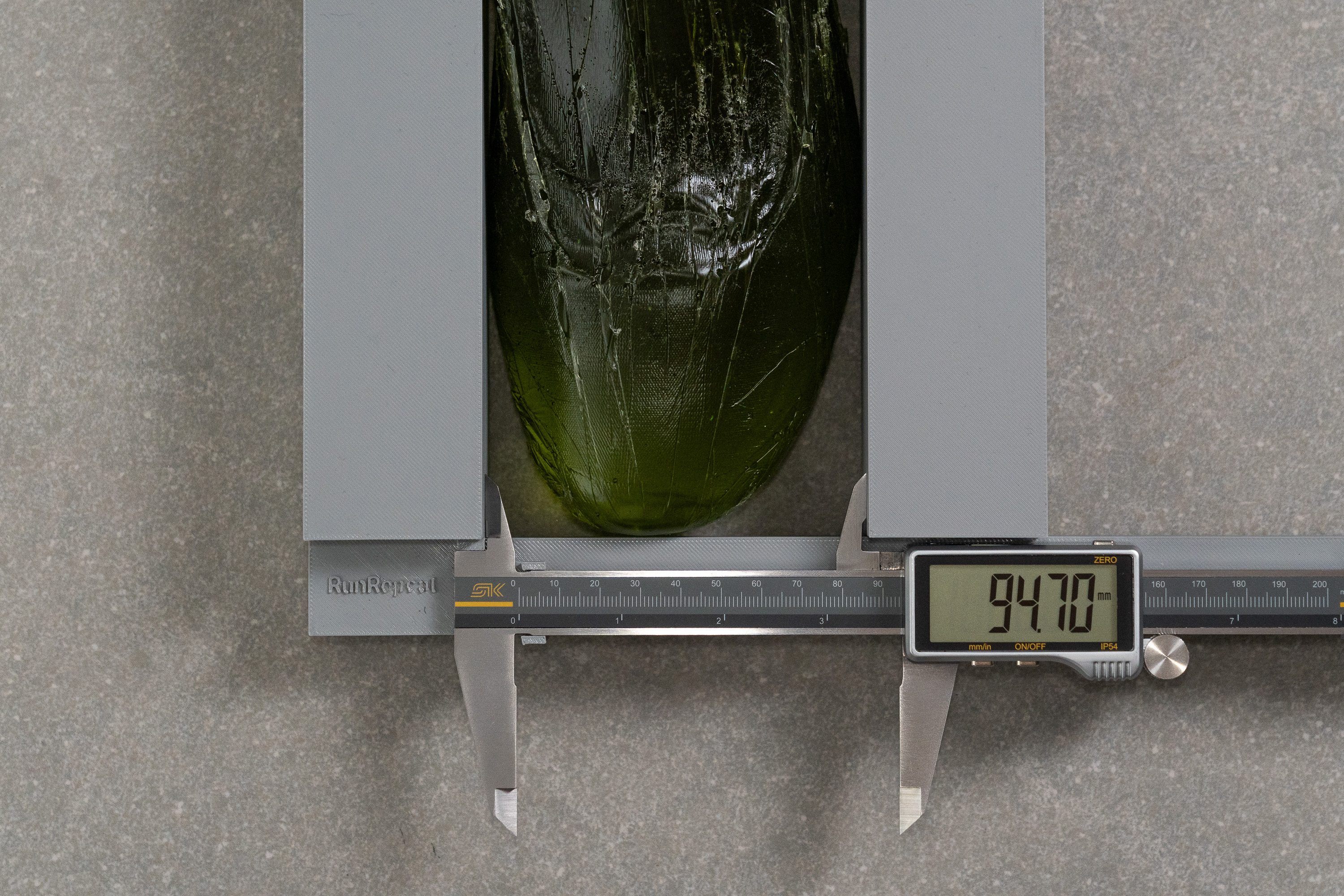
| Clifton 11 | 94.7 mm |
| Average | 95.2 mm |
Toebox width
Those with broad feet better appreciate the few colorways available in a wide size, because at just 70.9 mm, the toebox has a very pointy shape with an aggressive taper. Not surprisingly, this is very much in line with HOKA’s usual approach to toebox design.
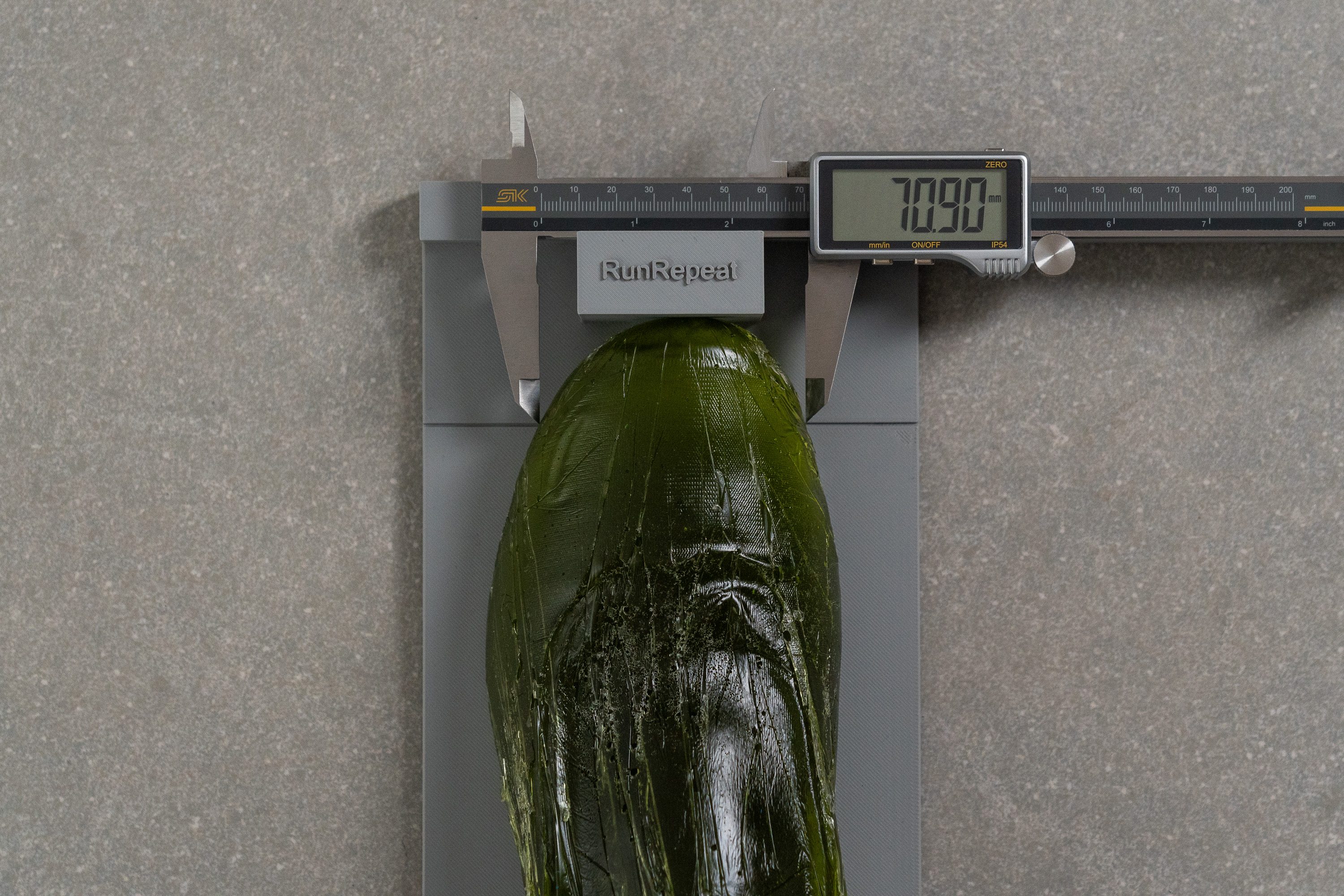
| Clifton 11 | 70.9 mm |
| Average | 73.2 mm |
Toebox height
The 27.4 mm of toebox height provides a comfortable amount of vertical space, and we believe this average result should accommodate most runners without feeling restrictive.
Moreover, the generous clearance can also promote better airflow inside the shoe, adding to the overall comfort of the Clifton 11.
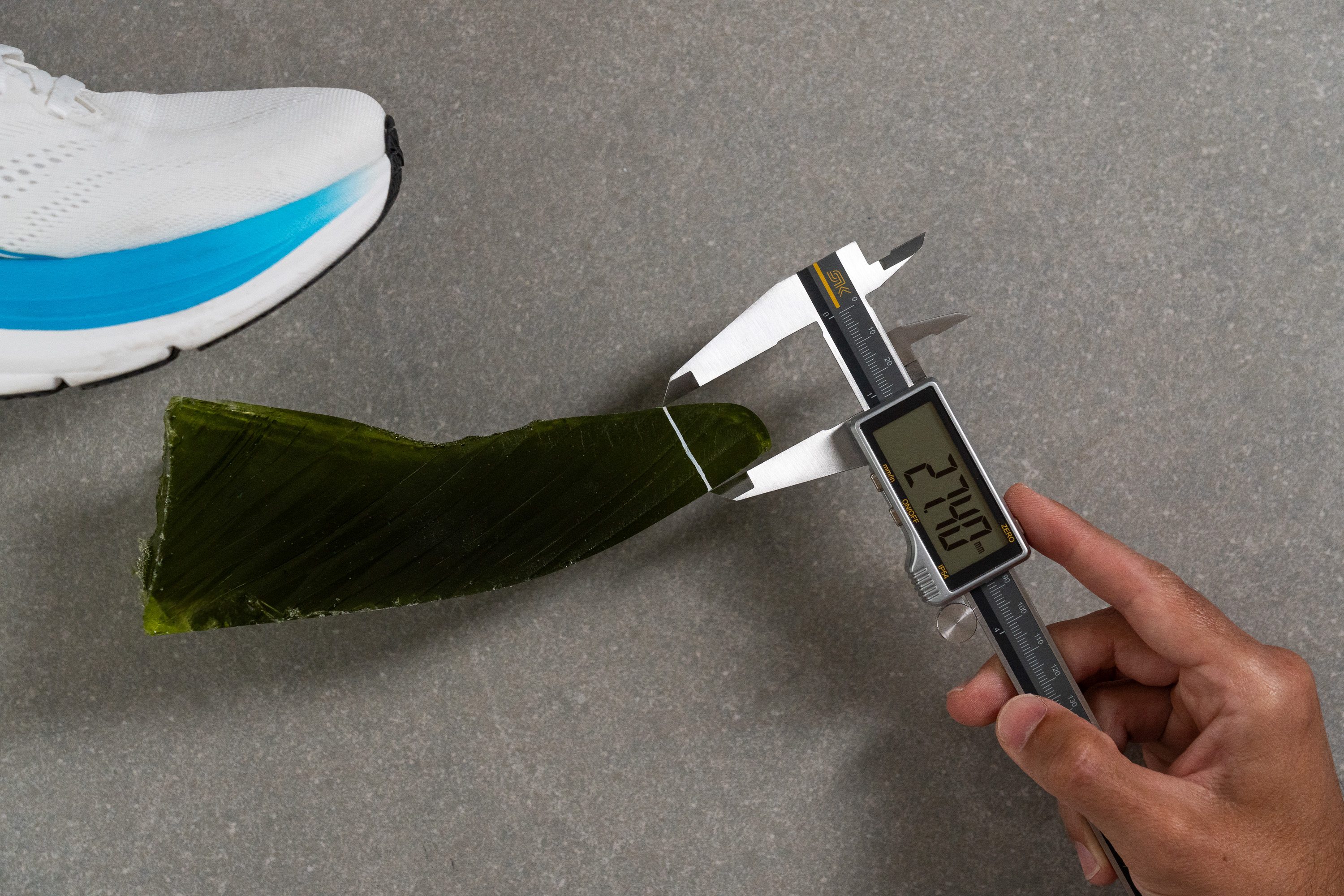
| Clifton 11 | 27.4 mm |
| Average | 27.0 mm |
Traction / Grip
Traction test
Aside from energy return, another area where the Clifton series has consistently lagged behind is traction. HOKA has made only a minor improvement over the v10, increasing the coefficient of friction from 0.49 to 0.52. That’s good enough for everyday running, but in our view, there’s still plenty of room for improvement.
For comparison, a more affordable daily trainer like the adidas Supernova Rise 3 scored 0.94...
| Clifton 11 | 0.52 |
| Average | 0.53 |
Outsole design
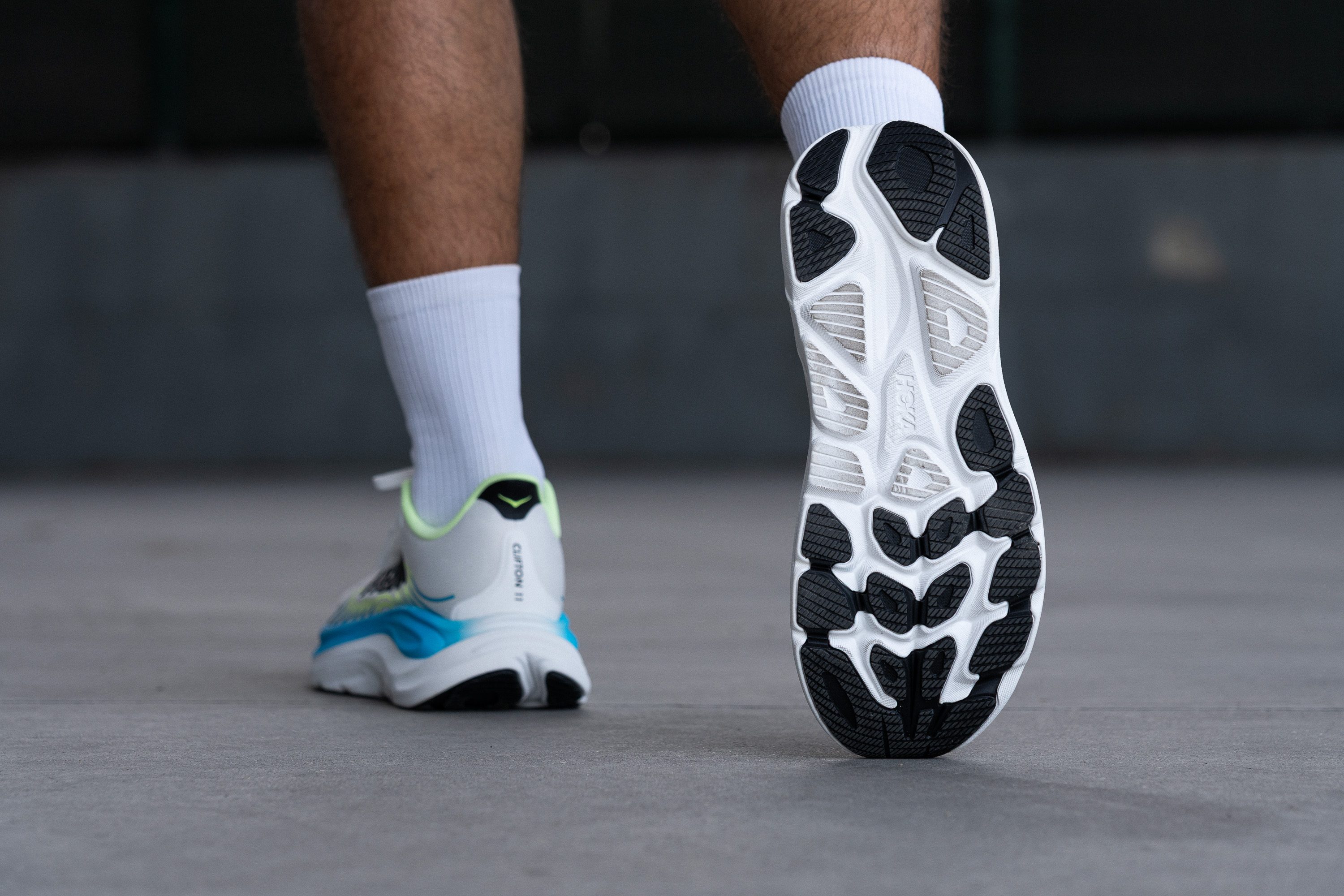
The outsole design is essentially unchanged from its predecessor and follows a classic HOKA layout, with plenty of exposed foam across the midfoot and thick rubber pods in the forefoot and heel.
Flexibility / Stiffness
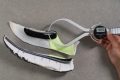
Our testing revealed a well-balanced 13.5N of longitudinal flexibility, keeping the Clifton 11 comfortable and easy to wear beyond running. This is particularly important because many max-stack trainers are excessively stiff, making them less suitable for all-day use.
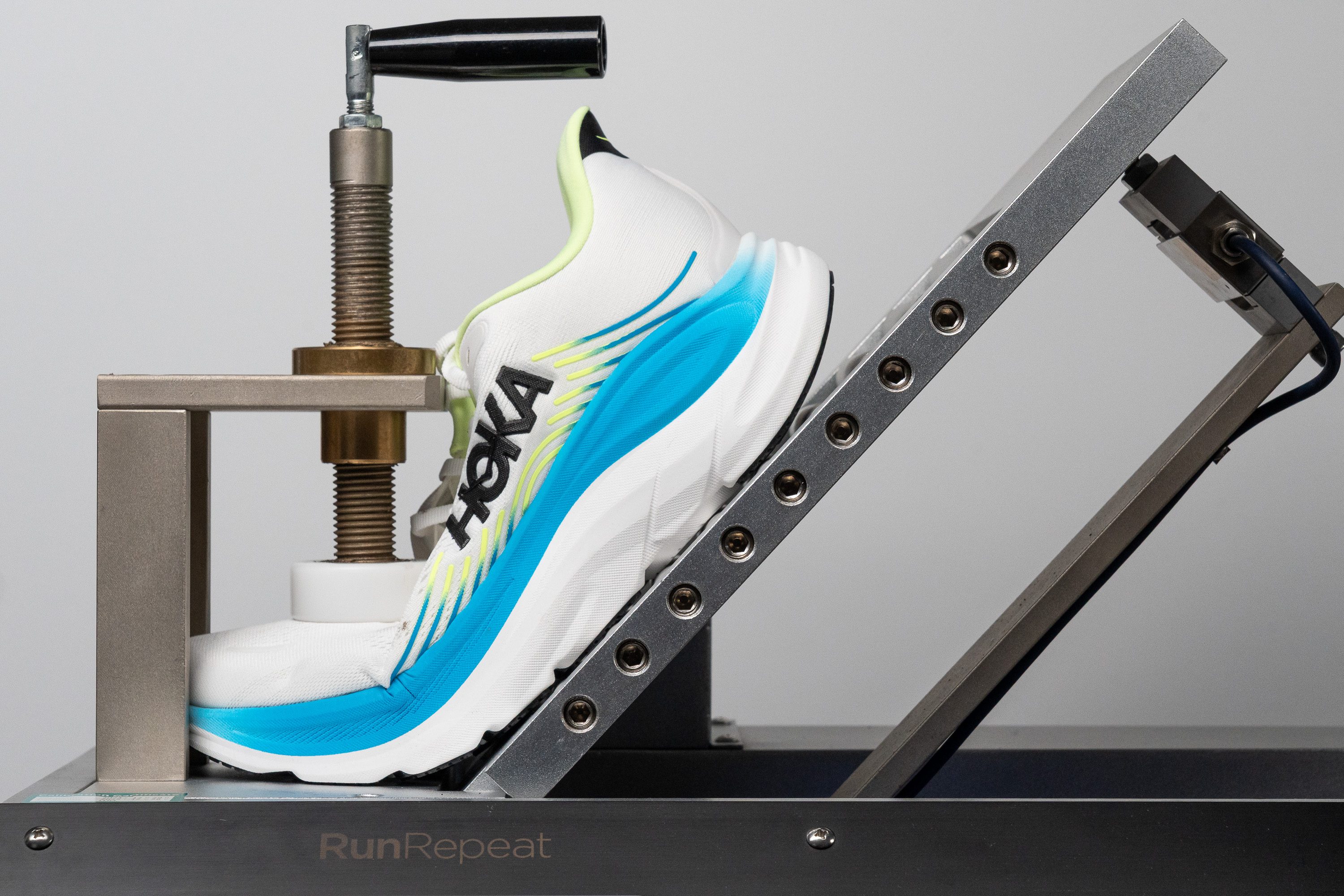
| Clifton 11 | 13.5N |
| Average | 15.5N |
Weight
Kudos to HOKA because it’s not easy to keep the Clifton 11 at just 9.4 oz (266g) when using an outdated CMEVA foam that's heavier than supercritical EVA. Moreover, this is also a solid improvement over the Clifton 10!
However, it also makes us wonder how much more impressive this shoe could be with a lighter foam. We believe it could potentially shave off another 10-15% of the weight while retaining the same overall geometry.
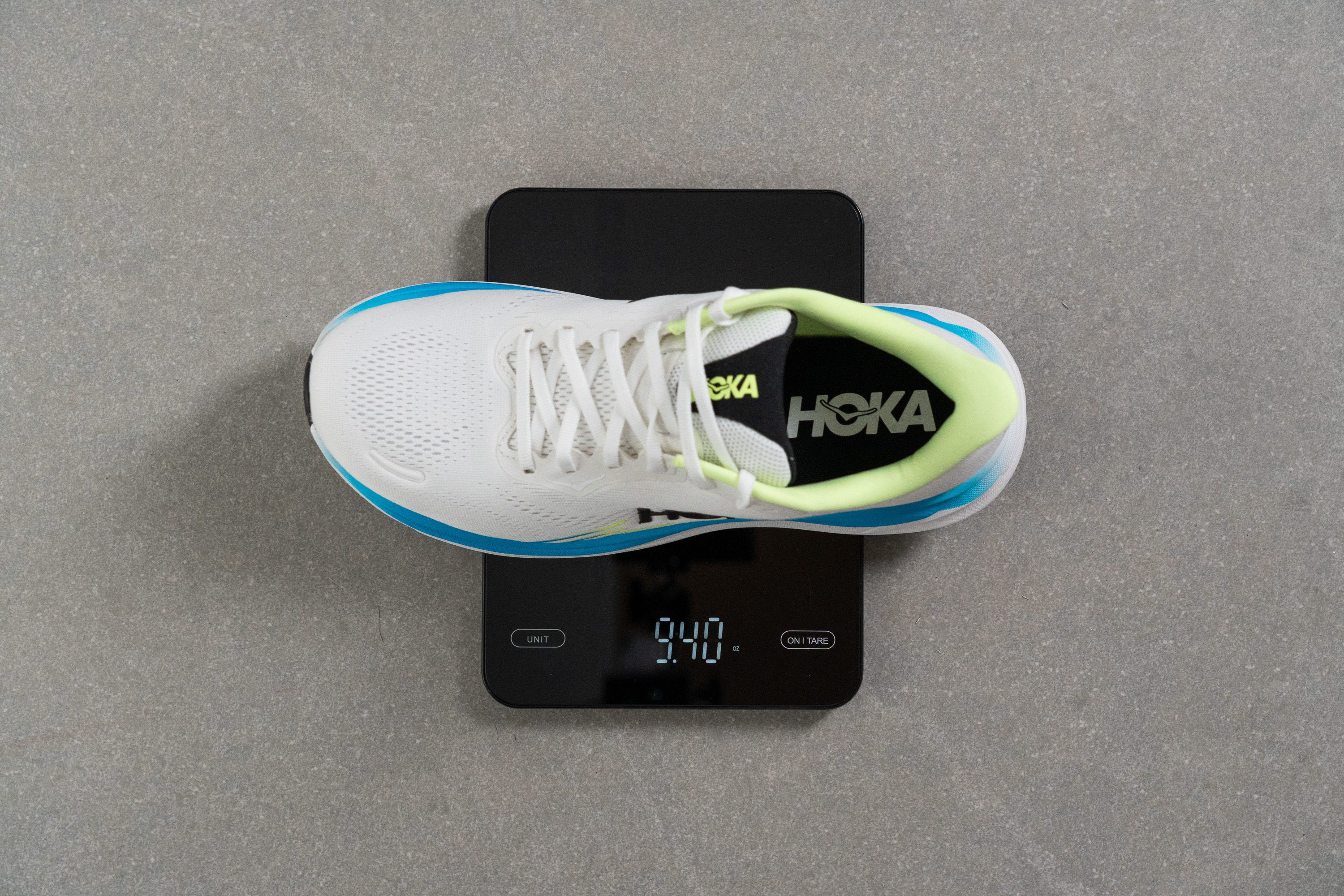
| Clifton 11 | 9.4 oz (266g) |
| Average | 9.2 oz (261g) |
Breathability
Breathability test
We found an excellent breathability score of 93 BR, which is significantly higher than the category average. This places the Clifton 11 well above the average in our database and indicates that the shoe allows moisture vapour to escape particularly effectively during runs.
This level of breathability really helps to reduce sweat accumulation inside the shoe, keeping the feet feeling drier and more comfortable during longer runs, especially in warm conditions.
| Clifton 11 | 93 BR |
| Average | 75 BR |
Drying potential
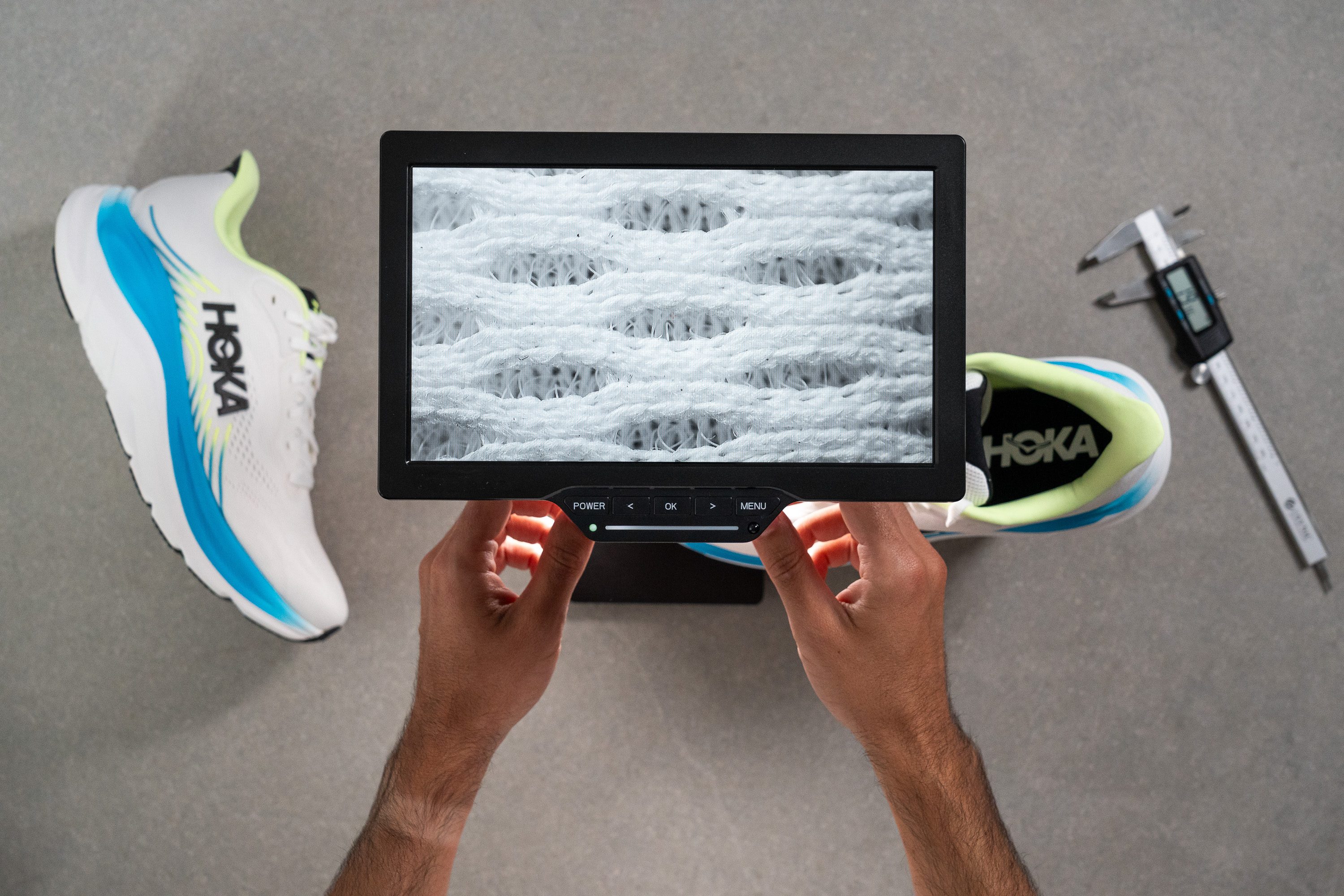
NewWe also found excellent drying potential. During the same 3-hour period, the Clifton 11 released 62% of the moisture accumulated in the upper, insole, and midsole.
In our experience, that’s a highly-impressive result that makes the Clifton 11 an especially interesting option for runners living in hot climates.
| Clifton 11 | 62% |
| Average | 53% |
Stability
Lateral stability test
HOKA positions the Clifton 11 as a highly-stable shoe, and we have to agree that it lives up to that claim. It features the Active Foot Frame design with tall sidewalls, along with the usual extra-wide midfoot and heel platform that has long been a defining characteristic of the Clifton series.
Torsional rigidity
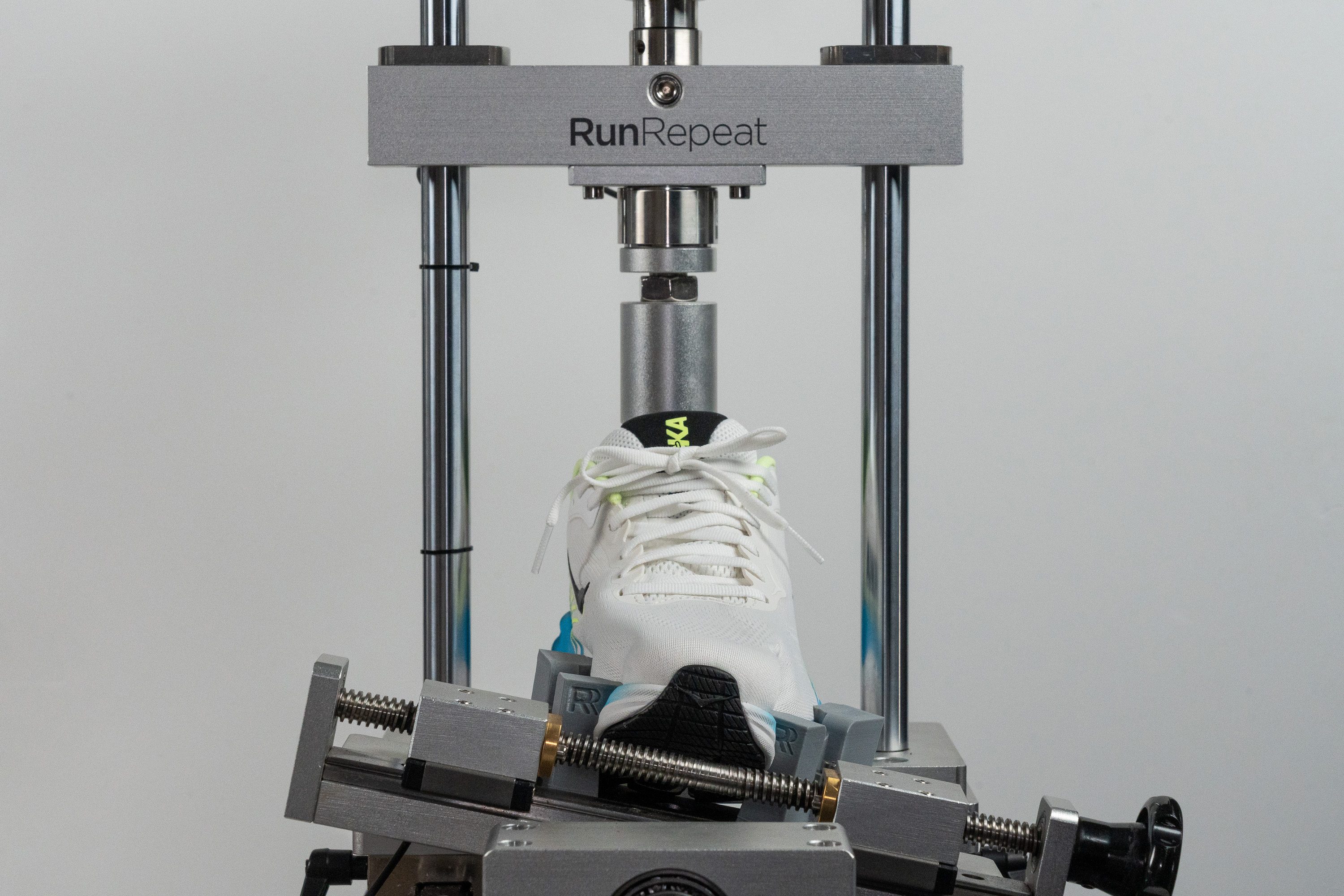
One thing many runners (including us) disliked about the previous Clifton was its excessive rigidity, which made it less comfortable at easy paces and also a less interesting option for all-day wear.
Thankfully, HOKA has addressed this issue, with the Clifton 11 now measuring just 12.1 Nm, well below the category average in our lab.
| Clifton 11 | 12.1 Nm |
| Average | 14.3 Nm |
Heel counter stiffness
With generous padding around the heel, the Clifton 10’s heel counter feels very much in line with what we expect from a dependable and versatile daily trainer. We rated it 3/5, placing it right around the average.
| Clifton 11 | 3 |
| Average | 2.9 |
Midsole width - forefoot
The forefoot measures 113.8 mm, which is a little narrower than we expected, not gonna lie.
The good news is that the shoe never feels unstable, while this moderate width also keeps the forefoot from feeling overly bulky or clunky.
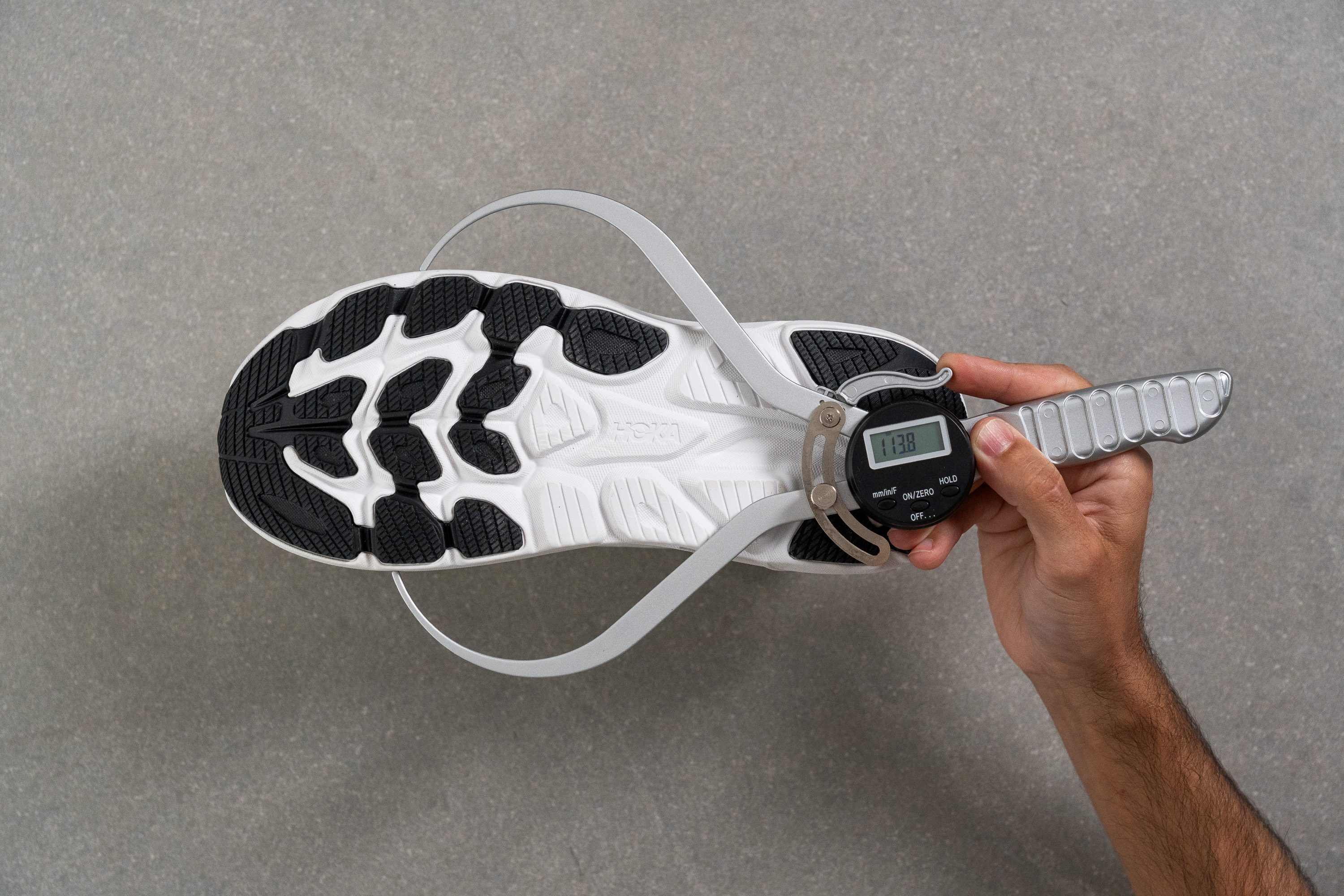
| Clifton 11 | 113.8 mm |
| Average | 115.1 mm |
Midsole width - heel
The Clifton 11 is designed to shift the ride smoothly from the heel and midfoot toward the forefoot, and the rear geometry makes that intention particularly clear.
Measuring 96.2 mm, the heel is exceptionally wide, with very little tapering as it transitions into the midfoot. It's such a boxy design!
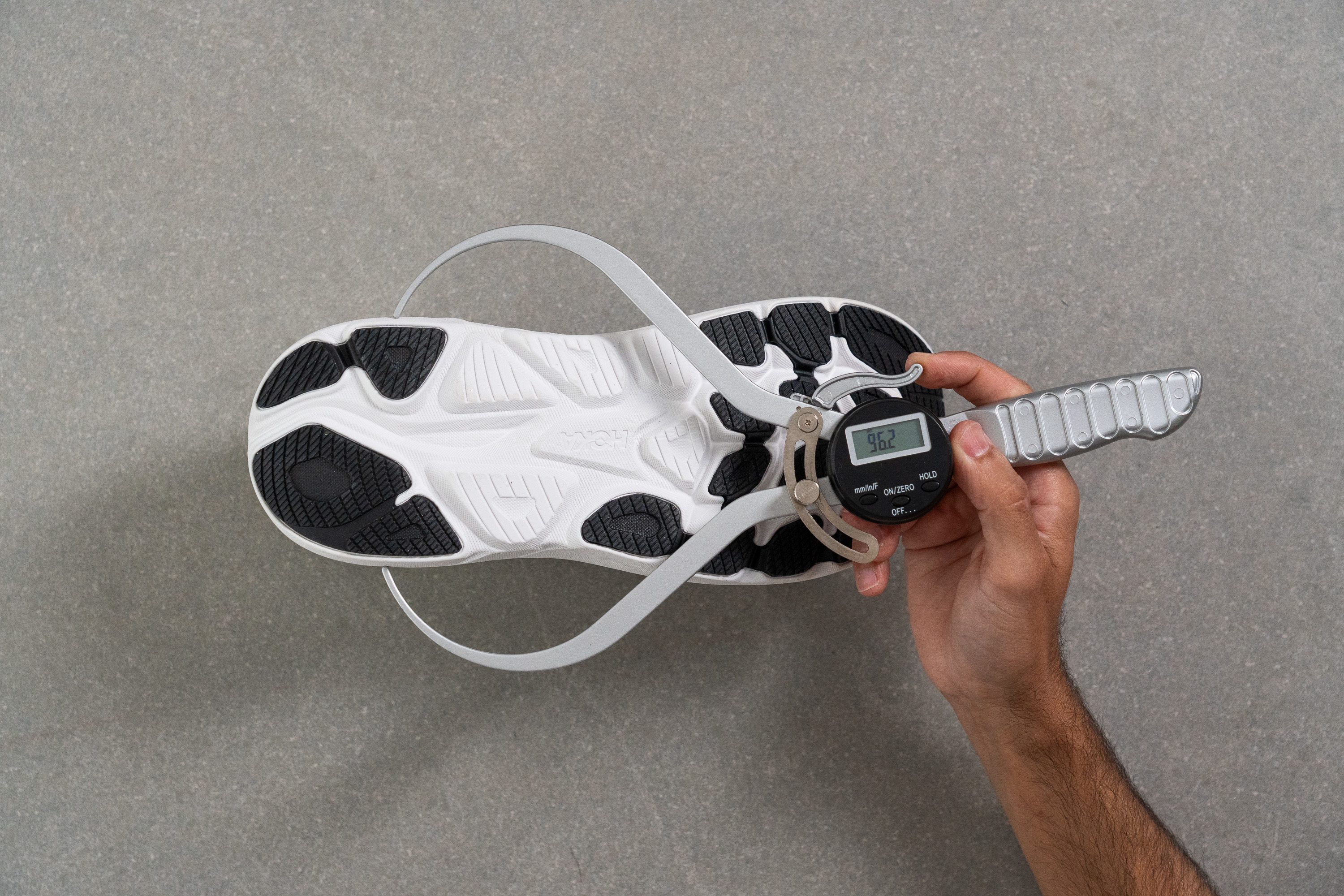
| Clifton 11 | 96.2 mm |
| Average | 91.1 mm |
Durability
Toebox durability
The toebox durability was one of the weaker points in our testing, scoring just 2/5. However, this doesn’t come as a major surprise given the soft-touch feel of the engineered mesh upper and the ventilation holes across the toebox.
| Clifton 11 | 2 |
| Average | 2.6 |
Heel padding durability
We were happy with the heel padding durability, which scored 4/5 in our test, comfortably above the category average across 400+ shoes at the time of this review.
This implies that the Clifton 11’s heel lining should hold up well against the repeated friction and abrasion that typically occur during daily use.
| Clifton 11 | 4 |
| Average | 3.4 |
Outsole durability
We were pleasantly surprised by the outsole durability too, as our Dremel test removed just 0.9 mm of material. This is a solid result that suggests the rubber compound should hold up well against repeated abrasion, and using the shoe for both running and everyday wear should be perfectly fine.
| Clifton 11 | 0.9 mm |
| Average | 1.1 mm |
Outsole thickness
HOKA played it safe here by using a conservative 3.2 mm outsole thickness, which should contribute to the solid lifespan we expect from the outsole.
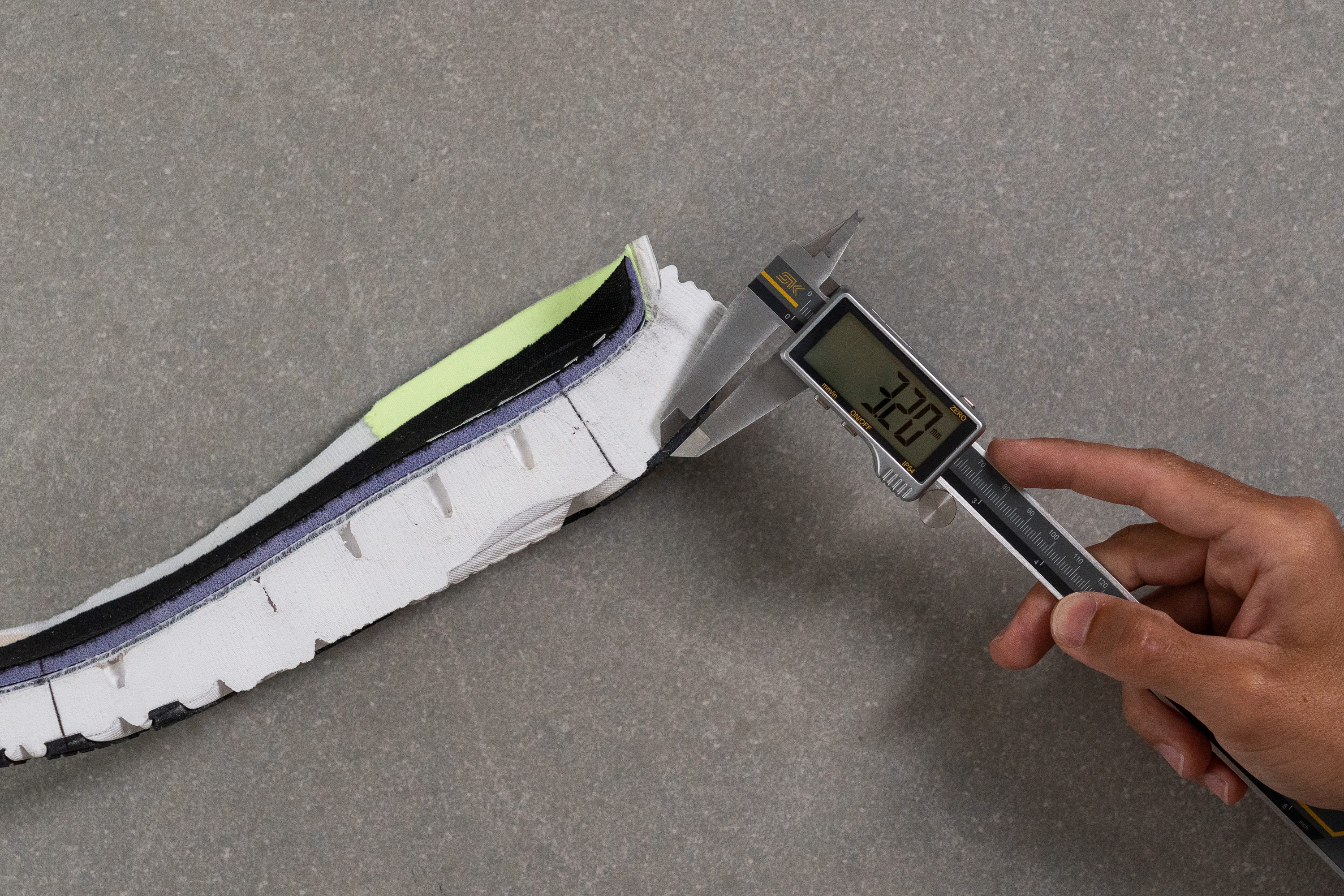
| Clifton 11 | 3.2 mm |
| Average | 3.1 mm |
Misc
Insole thickness
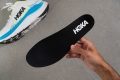
The insole is a new addition to this Clifton update and feels softer underfoot, while retaining an average thickness of 4.4 mm, in line with what we see in most road running shoes.
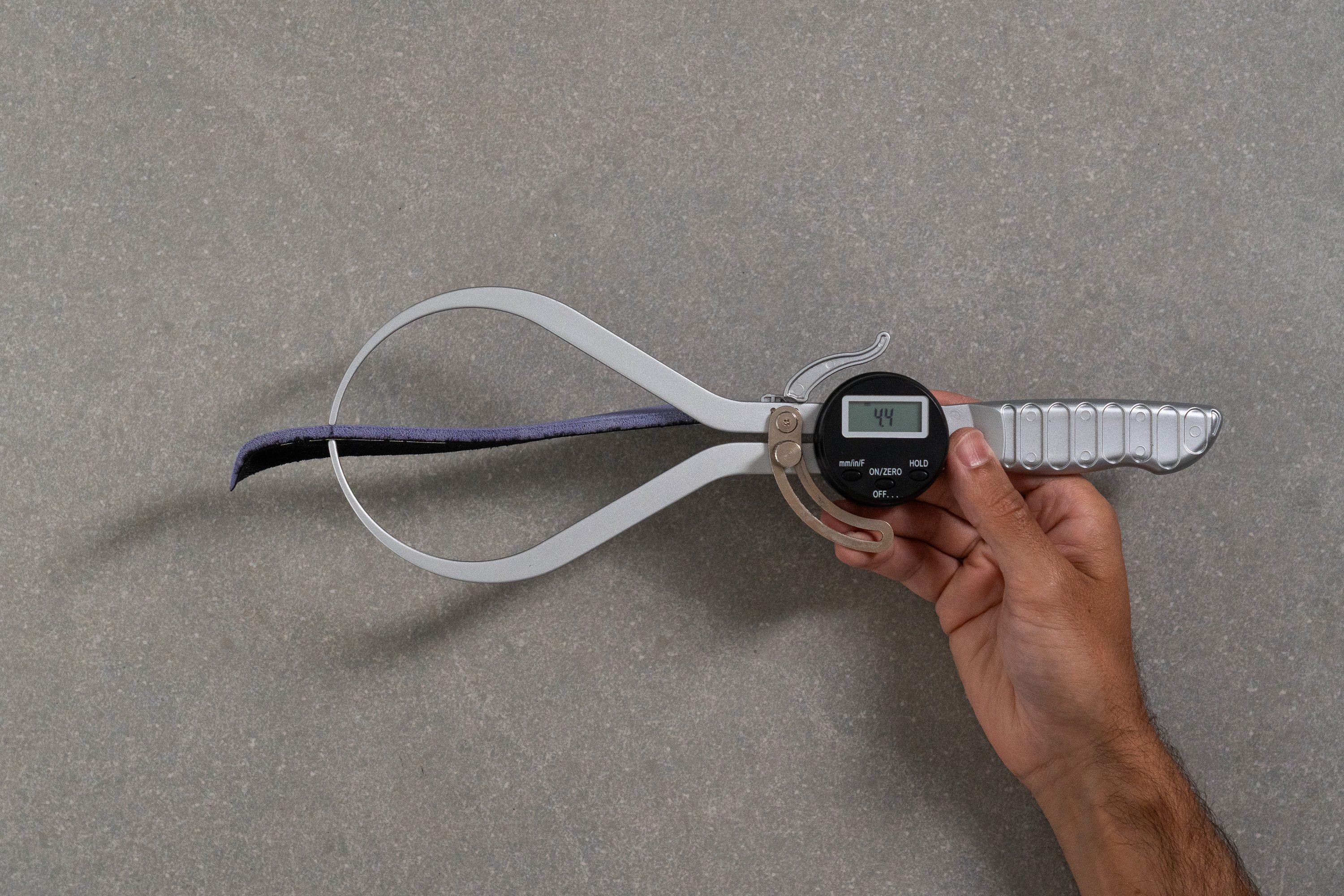
| Clifton 11 | 4.4 mm |
| Average | 4.4 mm |
Removable insole
Replacing the insole is no problem at all, as we found the process easy and straightforward.
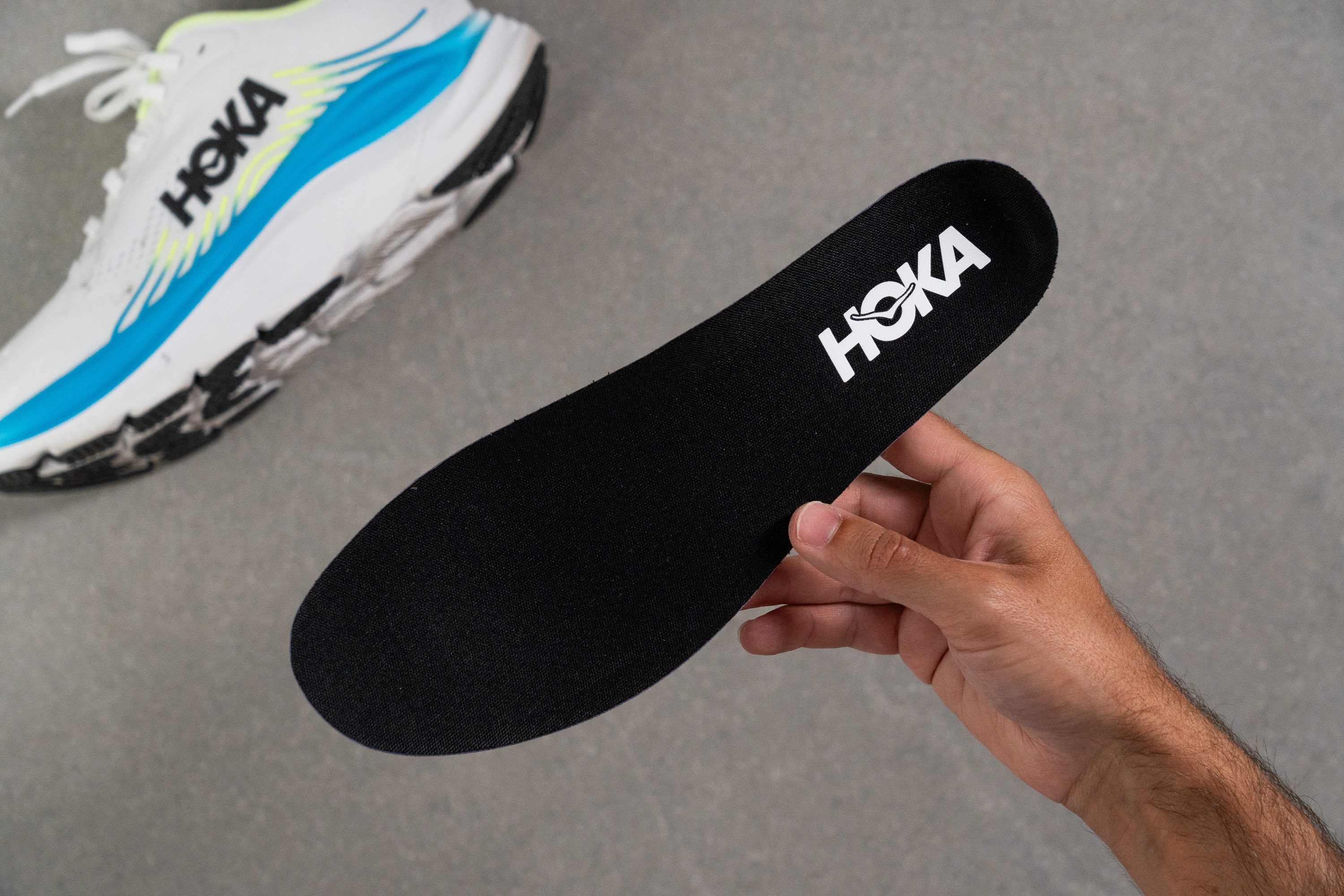
| Clifton 11 | Yes |
Reflective elements
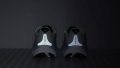
One area where other brands could take notes from HOKA is reflective detailing. The Clifton 11 is a great example, featuring multiple reflective elements that provide 360-degree visibility in low-light conditions.
| Clifton 11 | Yes |
Tongue padding
While the upper has undergone some changes, the lacing system remains largely unchanged from version 10. We liked the flat laces HOKA uses, as well as the double loop on the tongue, which helps prevent it from shifting laterally.
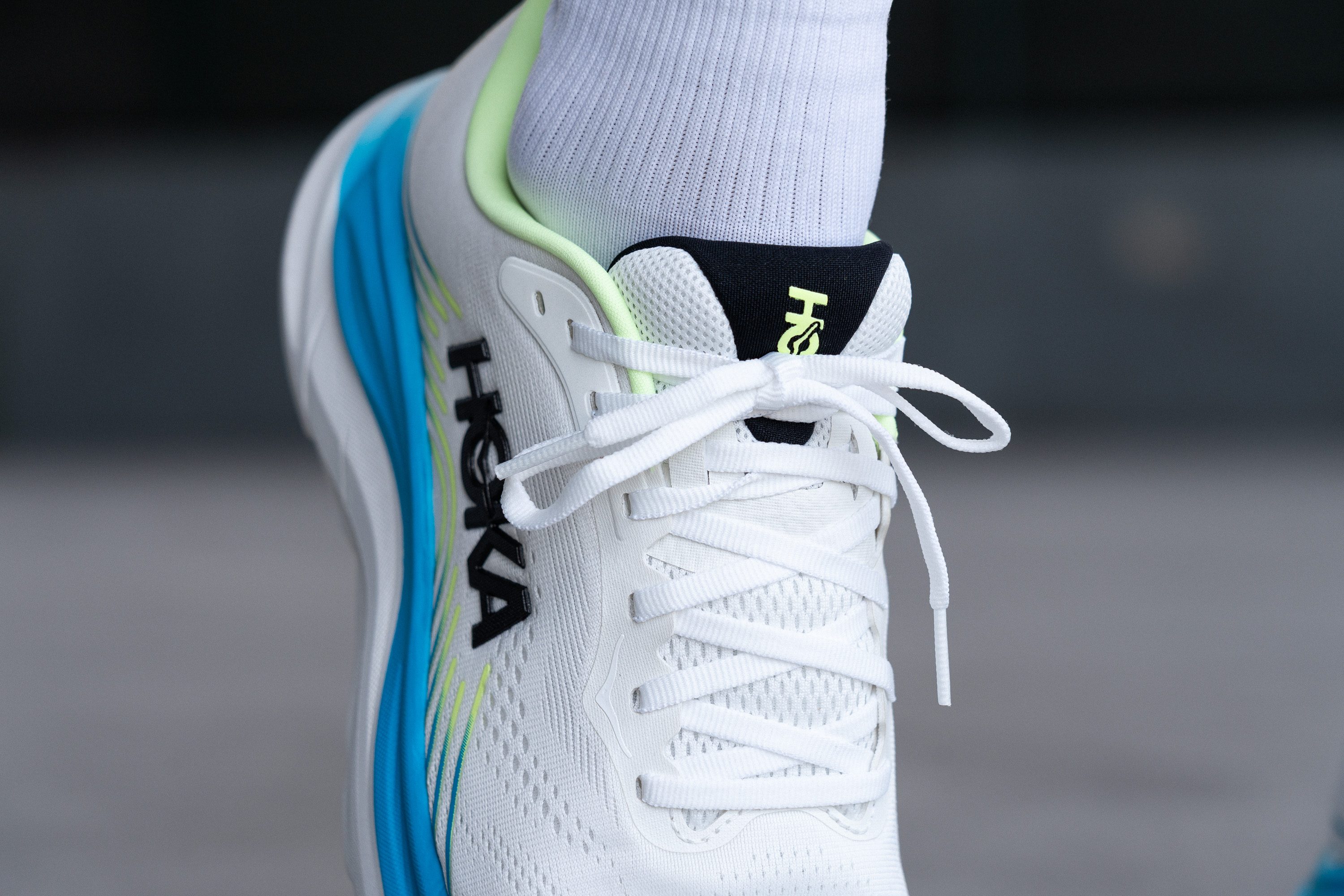
The tongue doesn’t cut any corners when it comes to comfort, either. Measuring 8.1 mm thick throughout its entire length, it provides an exceptionally plush feel and does an excellent job of keeping pressure away from the top of the foot.
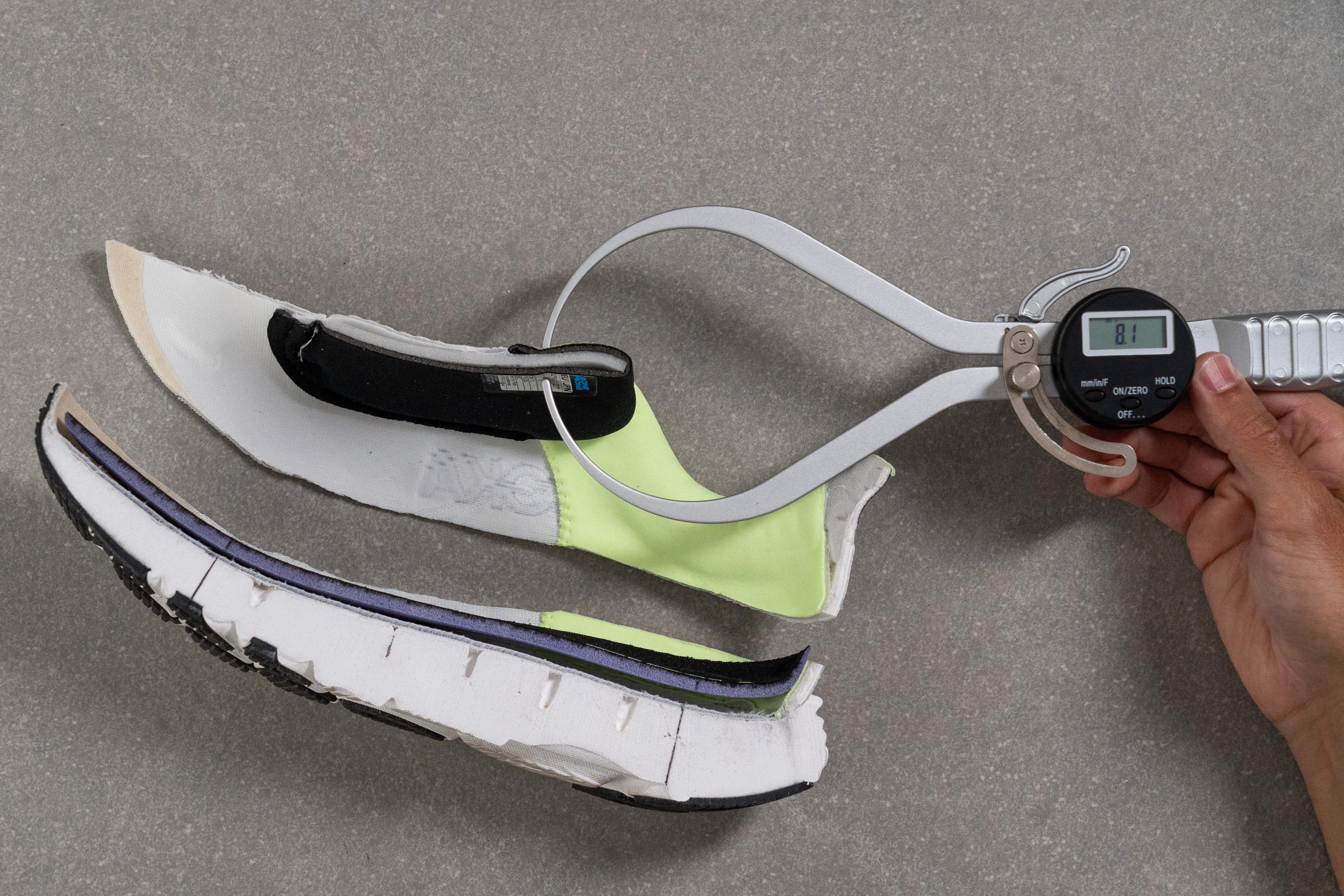
| Clifton 11 | 8.1 mm |
| Average | 5.8 mm |
Tongue: gusset type
As HOKA is once again embracing the same tongue design as Topo, it’s no surprise that they also opted for a non-gusseted tongue. In our experience, a gusseted tongue remains the better combination, even with just one or no lace loops in the tongue area.
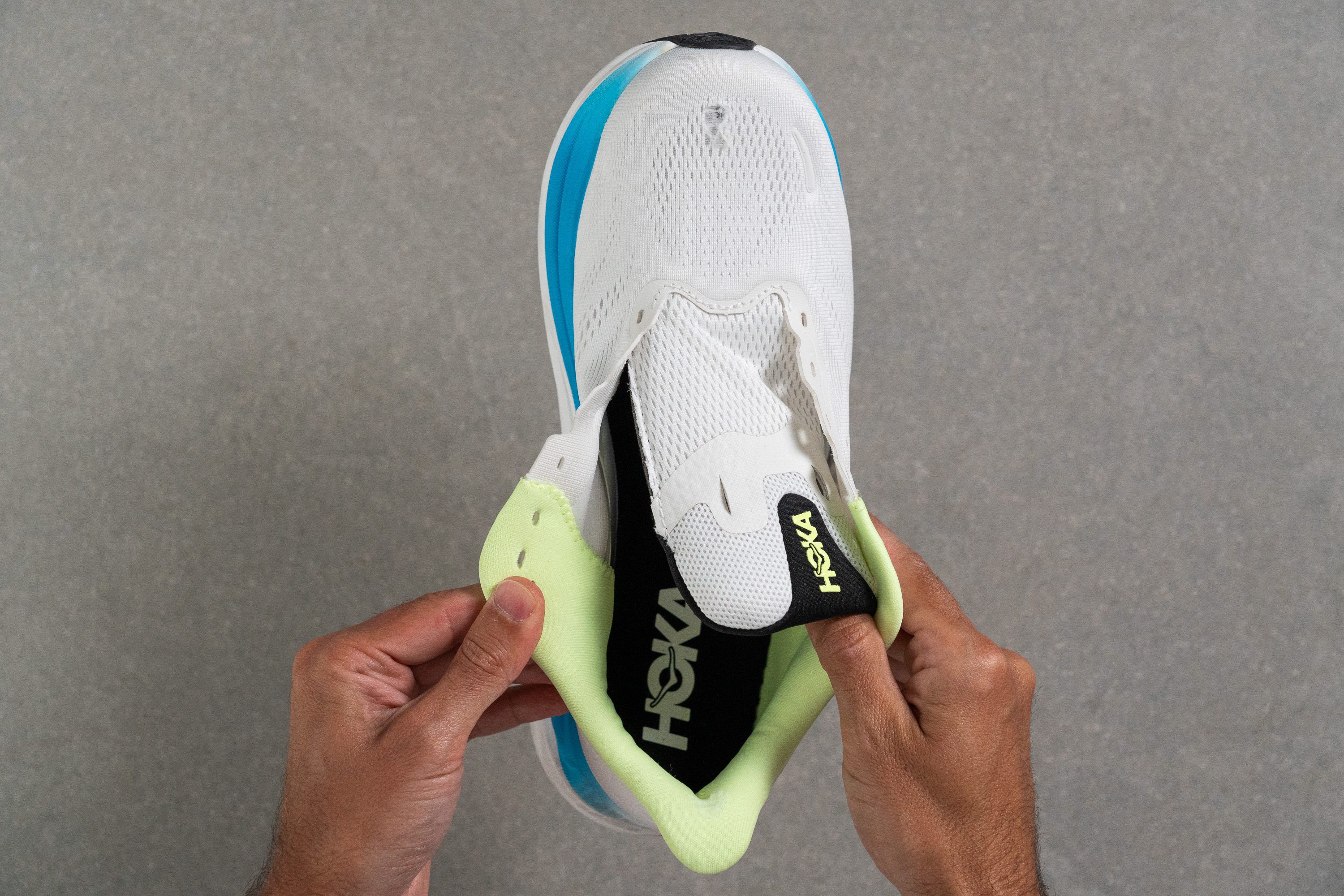
| Clifton 11 | None |
Heel tab
We noticed that the heel features HOKA’s classic extended heel collar design.
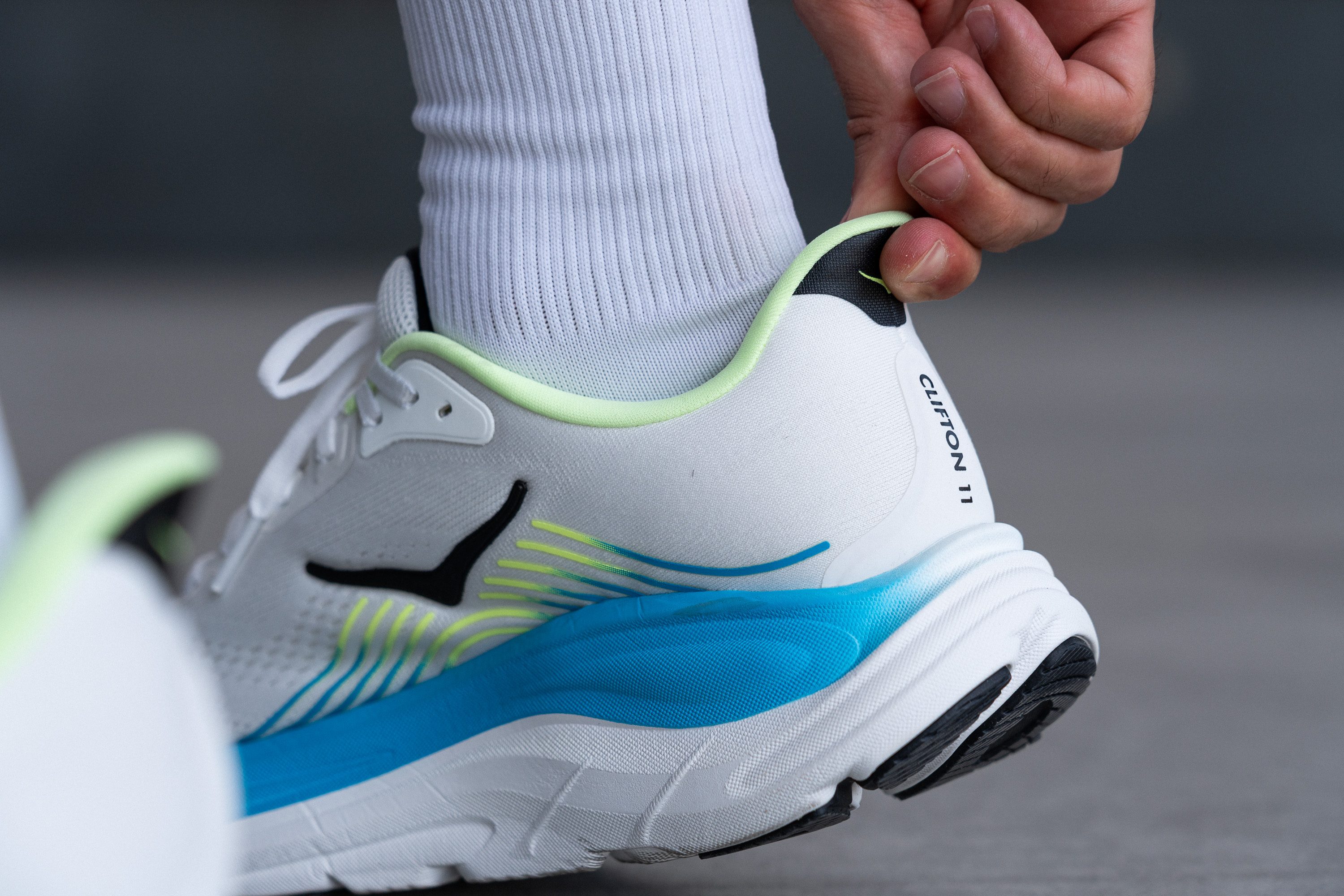
| Clifton 11 | Extended heel collar |
Price
The Clifton 11 keeps the same price as the previous version, but there’s a growing problem: with HOKA sticking to its outdated CMEVA foam again, the Clifton offers less and less value as the competition continues to raise the bar with every update.
In our view, this shoe struggles to justify its price unless you don’t care much about energy return or midsole technology.
| Clifton 11 | $155 |