










Our verdict
- Urban 75
- Speed 73
- Day hiking 82
- Backpacking 54
Pros
- Stable and grounded platform
- Excellent grip on smooth and wet surfaces
- Sturdy foothold and lockdown
- Lighter than average
- Great durability for the price
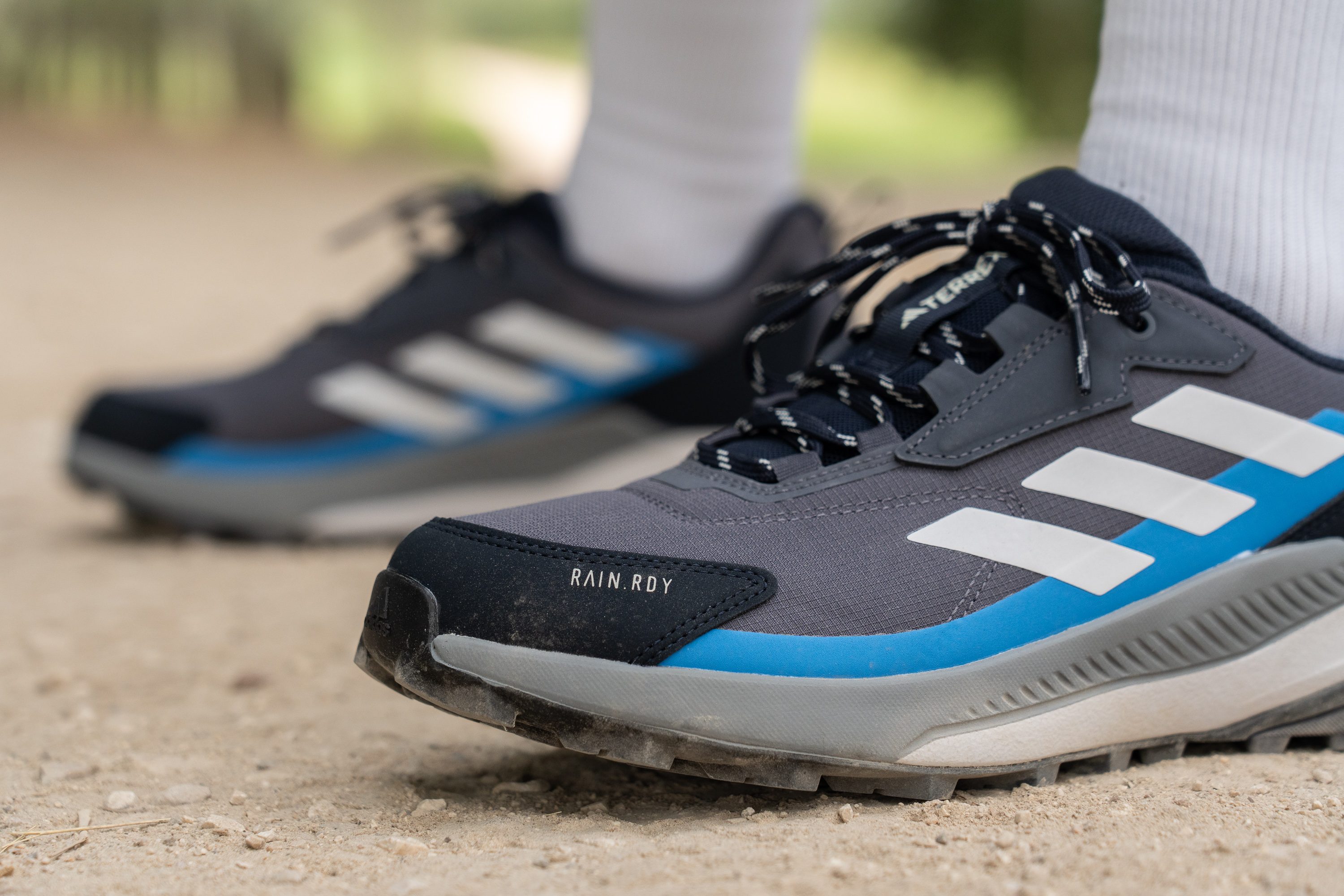
- Effective Rain.Rdy waterproofing
- Warm for transition seasons
Cons
- Tight pointy toebox
- Poor breathability
Awards
- Top pick in best cheap hiking shoes
- Top pick in best adidas hiking shoes
Comparison
The most similar hiking shoes compared
+ + Add a shoe | |||||
|---|---|---|---|---|---|
| Our score | 80 Good | 87 Great | 88 Superb | 75 Good | |
| Price | £65 | £160 | £200 | £180 | |
| Trail terrain | Light terrainVersatile / Moderate terrain | Light terrainVersatile / Moderate terrain | Light terrainVersatile / Moderate terrain | Light terrainVersatile / Moderate terrain | |
| Shock absorption | Low | High | High | High | |
| Energy return heel | Moderate | Moderate | High | Moderate | |
| Traction | Moderate | High | High | High | |
| Weight lab Weight brand | 12.7 oz / 360g | 13.1 oz / 371g | 12.9 oz / 366g | 12.5 oz / 354g | |
| Lightweight | ✓ | ✓ | ✓ | ✓ | |
| Use | Day HikingSpeed HikingUrban hikingBeginners | Day HikingSpeed HikingUrban hiking | Day HikingSpeed HikingUrban hiking | Day HikingUrban hiking | |
| Orthotic friendly | ✓ | ✓ | ✓ | ✓ | |
| Drop lab | 8.7 mm | 14.4 mm | 12.7 mm | 10.0 mm | |
| Size | True to size | True to size | Slightly small | - | |
| Midsole softness | Firm | Balanced | Balanced | Firm | |
| Difference in midsole softness in cold | Small | Normal | Normal | Normal | |
| Torsional rigidity | Stiff | Stiff | Stiff | Stiff | |
| Heel counter stiffness | Stiff | Stiff | Flexible | Stiff | |
| Stiffness | Stiff | Stiff | Stiff | Stiff | |
| Waterproofing | Waterproof | Waterproof | Waterproof | Waterproof | |
| Material | - | Mesh | Mesh | - | |
| Toebox durability | Good | Decent | Decent | Decent | |
| Heel padding durability | Decent | Decent | Good | Decent | |
| Outsole durability | Decent | Good | Good | Good | |
| Width / fit | Wide | Medium | Medium | Medium | |
| Toebox width | Narrow | Medium | Medium | Medium | |
| Lug depth | 3.3 mm | 3.7 mm | 3.9 mm | 3.4 mm | |
| Heel stack lab | 30.2 mm | 41.8 mm | 39.4 mm | 39.9 mm | |
| Forefoot | 21.5 mm | 27.4 mm | 26.7 mm | 29.9 mm | |
| Widths available | NormalWide | Normal | NormalWide | Normal | |
| Technology | - | Gore-Tex | Gore-Tex | - | |
| Heel tab | Finger loop | Finger loop | Finger loop | Finger loop | |
| Removable insole | ✓ | ✓ | ✓ | ✓ | |
| Ranking | #32 Bottom 30% | #10 Top 22% | #6 Top 14% | #41 Bottom 10% | |
| Popularity | #21 Top 46% | #3 Top 7% | #2 Top 5% | #23 Top 50% |


Who should buy
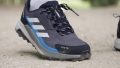
The adidas Terrex Anylander Rain.Rdy can fit the bill if:
- you are after a budget-friendly shoe for light-to-moderate terrain
- you don't mind a firmer shoe in exchange for a stable and grounded platform
- you need a sufficiently warm and waterproof outdoor shoe for the shoulder season
Who should NOT buy
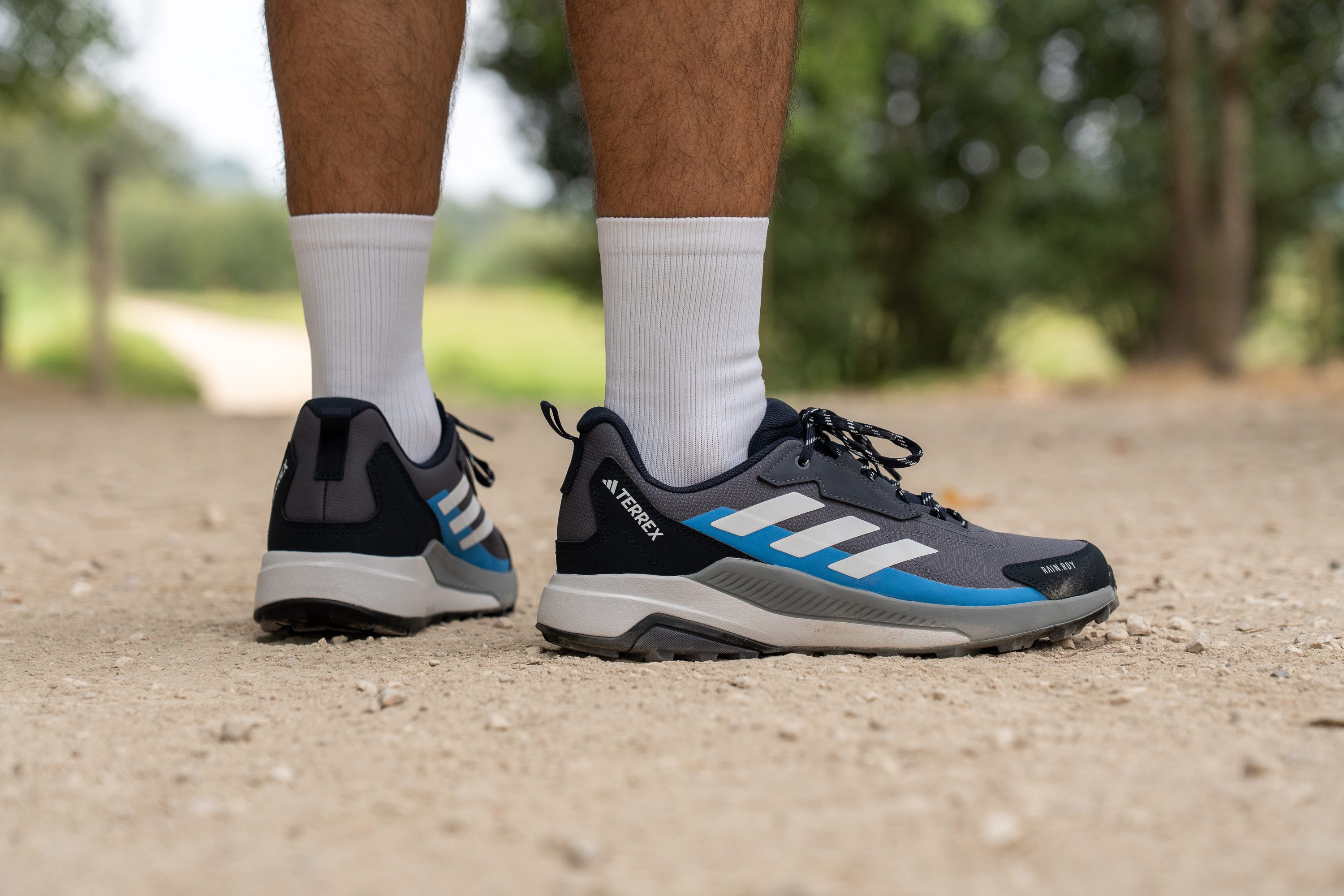
The aggressively tapered toebox shape of this adidas shoe can be a deal-breaker for many people. If you need a more accommodating, true-to-medium-width hiking shoe, try the Merrell Tempo Sol.
Another reason to stay away from the Anylander is if breathability is high up your priority list in an outdoor shoe. In that case, consider the ASICS Gel Venture 11.
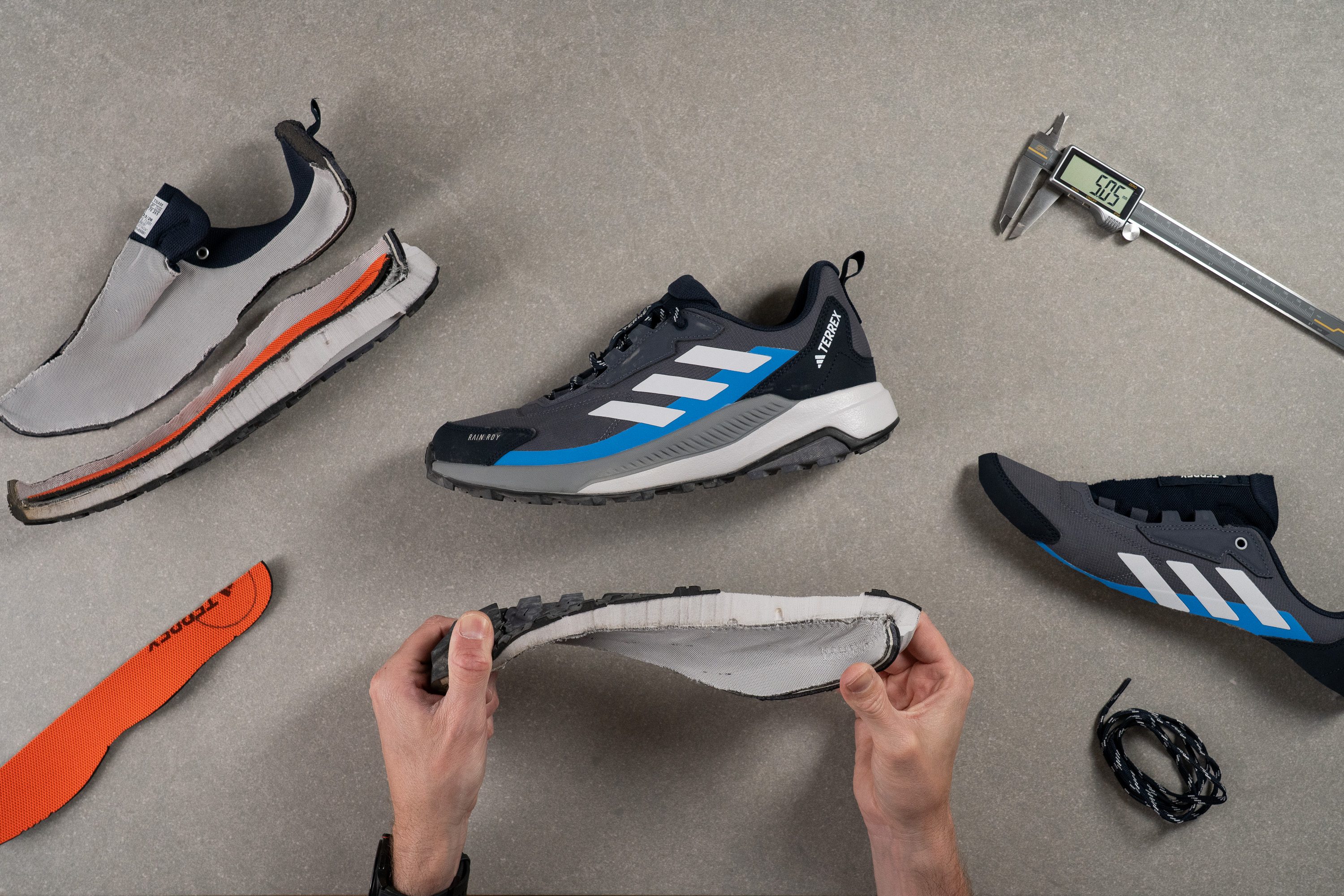
Cushioning
Shock absorption
Built on a firm and grounded platform, the Terrex Anylander Rain.Rdy can only provide a moderate amount of shock absorption. And that's exactly what we got in our lab test, with a modest reading of 100 SA in the heel.
Not too harsh, it offers a good middle ground between cushioning and control even on longer hikes.
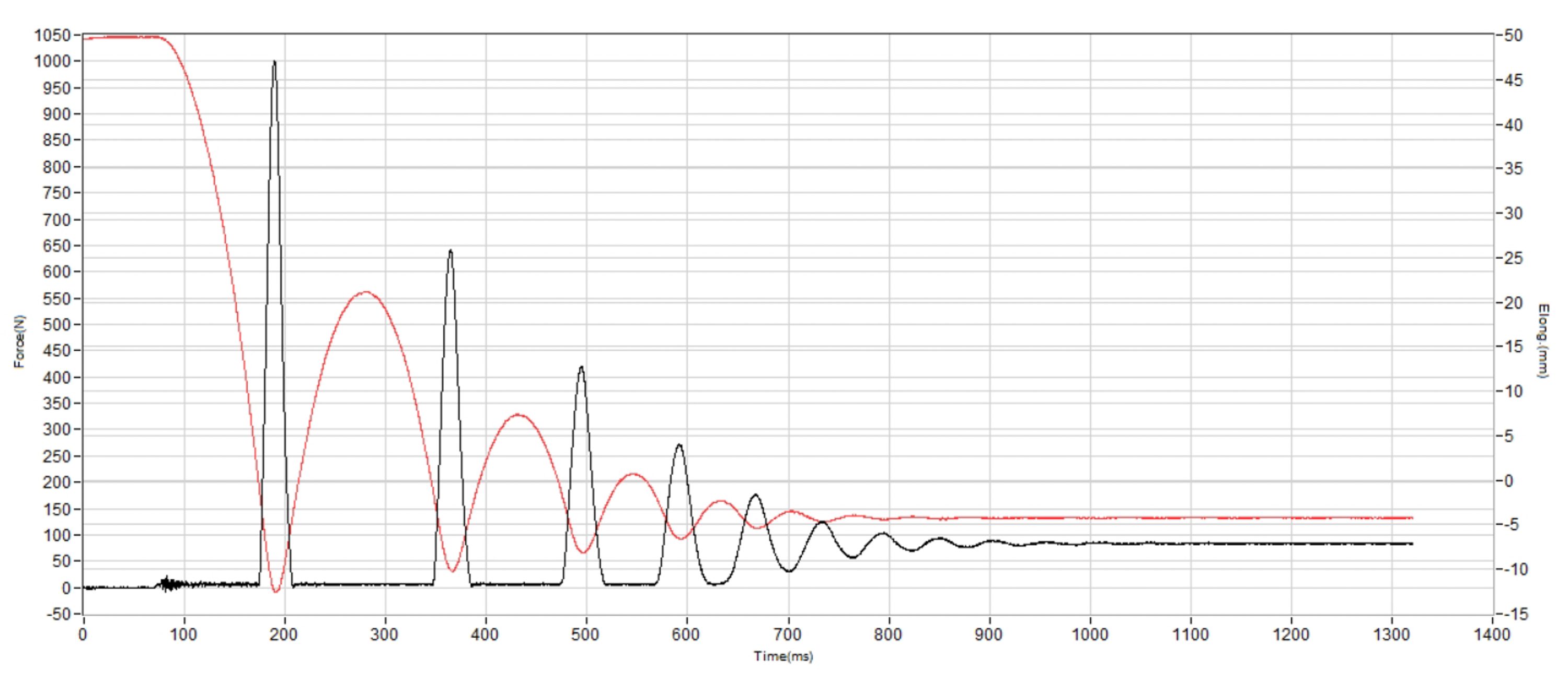
| Terrex Anylander Rain.Rdy | 100 SA |
| Average | 108 SA |
Energy return
Featuring a basic EVA foam, this adidas shoe's ride doesn't feel particularly responsive. But it's not a dead one either, as our lab test measured its energy return at a regular 50.1%.
| Terrex Anylander Rain.Rdy | 50.1% |
| Average | 49.6% |
Heel stack
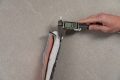
Contrary to the brand's specs, we measured the Anylander's heel stack at 30.2 mm instead of 27 mm. But even with those extra millimetres, it still has a lower profile than the average hiking shoe.
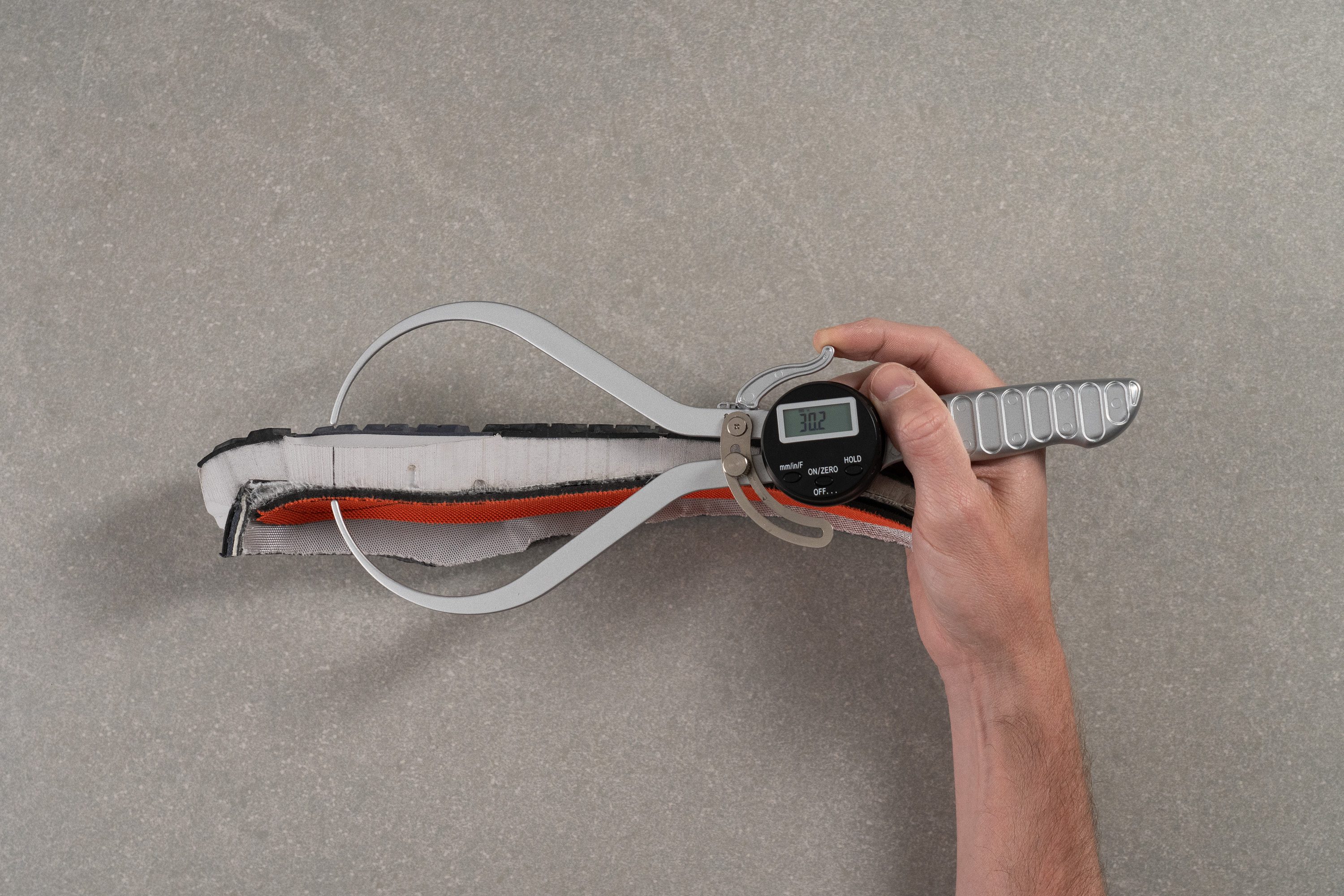
| Terrex Anylander Rain.Rdy | 30.2 mm |
| Average | 34.0 mm |
Forefoot stack
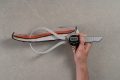
Our calliper also measured the shoe's forefoot stack a few millimetres higher than stated: at 21.5 mm instead of 17 mm.
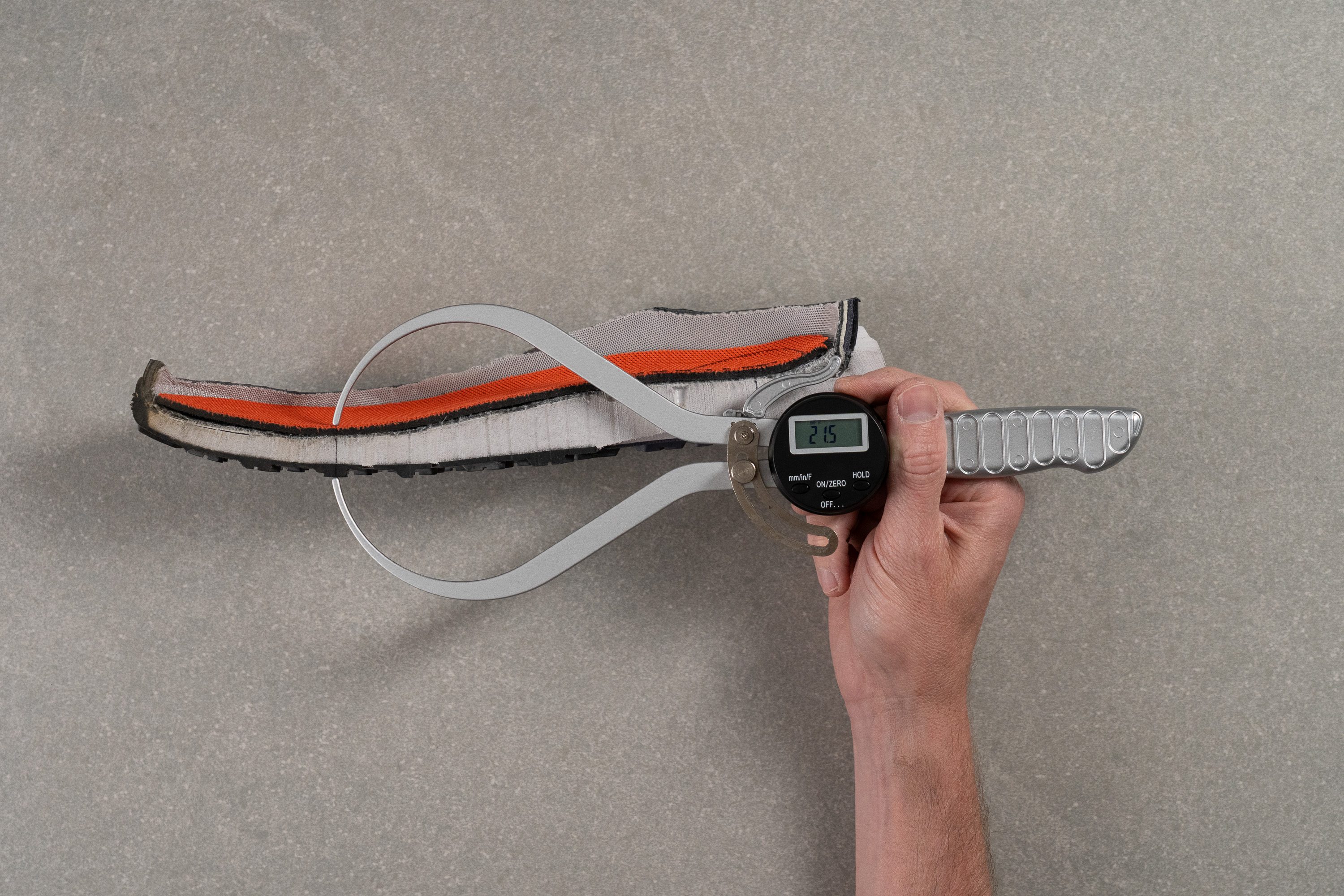
| Terrex Anylander Rain.Rdy | 21.5 mm |
| Average | 22.9 mm |
Drop
That said, the shoe's heel-to-toe drop deviation is minor, at 8.7 mm rather than 10 mm.
Still, both offsets provide a similar experience, as both elevate the heel slightly above the toes to accommodate long hours of heel striking.
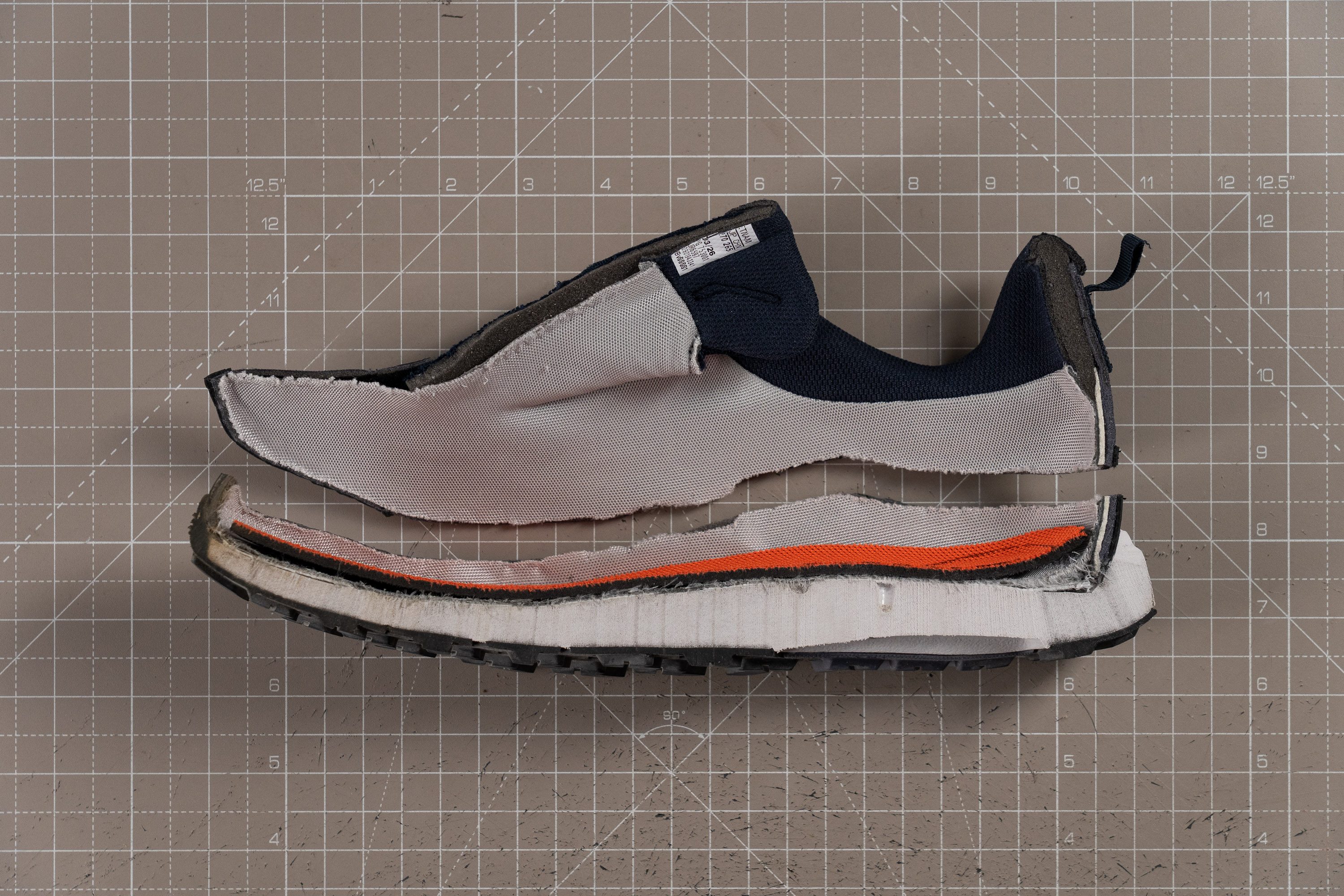
| Terrex Anylander Rain.Rdy | 8.7 mm |
| Average | 11.2 mm |
Midsole softness
The shoe's EVA foam proved to be firmer than average, with a high durometer reading of 49.0 AC.
There is not much cushy comfort to expect from the Anylander, but on the upside, you get a very stable and controlled underfoot experience.
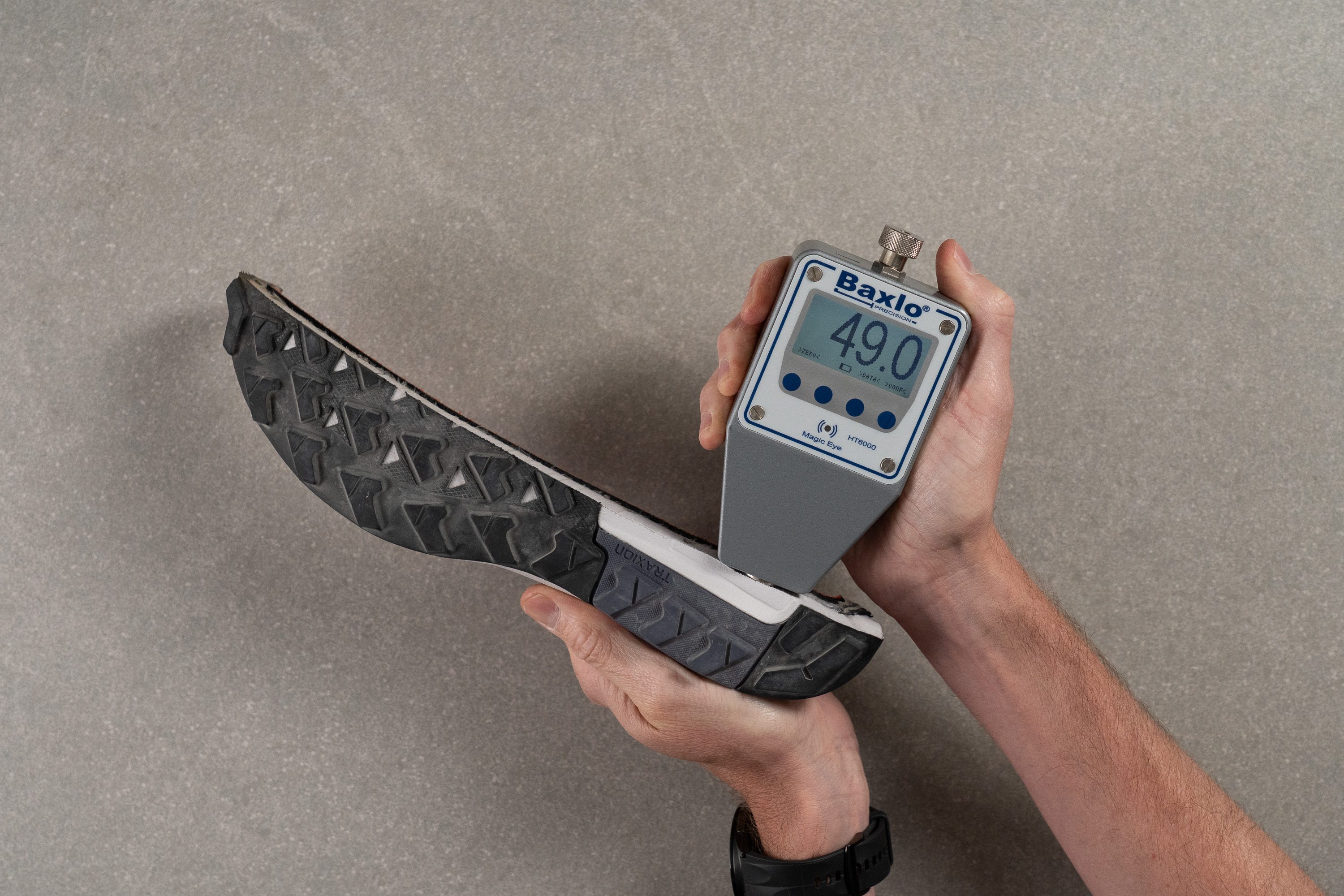
| Terrex Anylander Rain.Rdy | 49.0 AC |
| Average | 43.9 AC |
Size and fit
Size
adidas Terrex Anylander Rain.Rdy fits true to size (12 votes).
Internal length
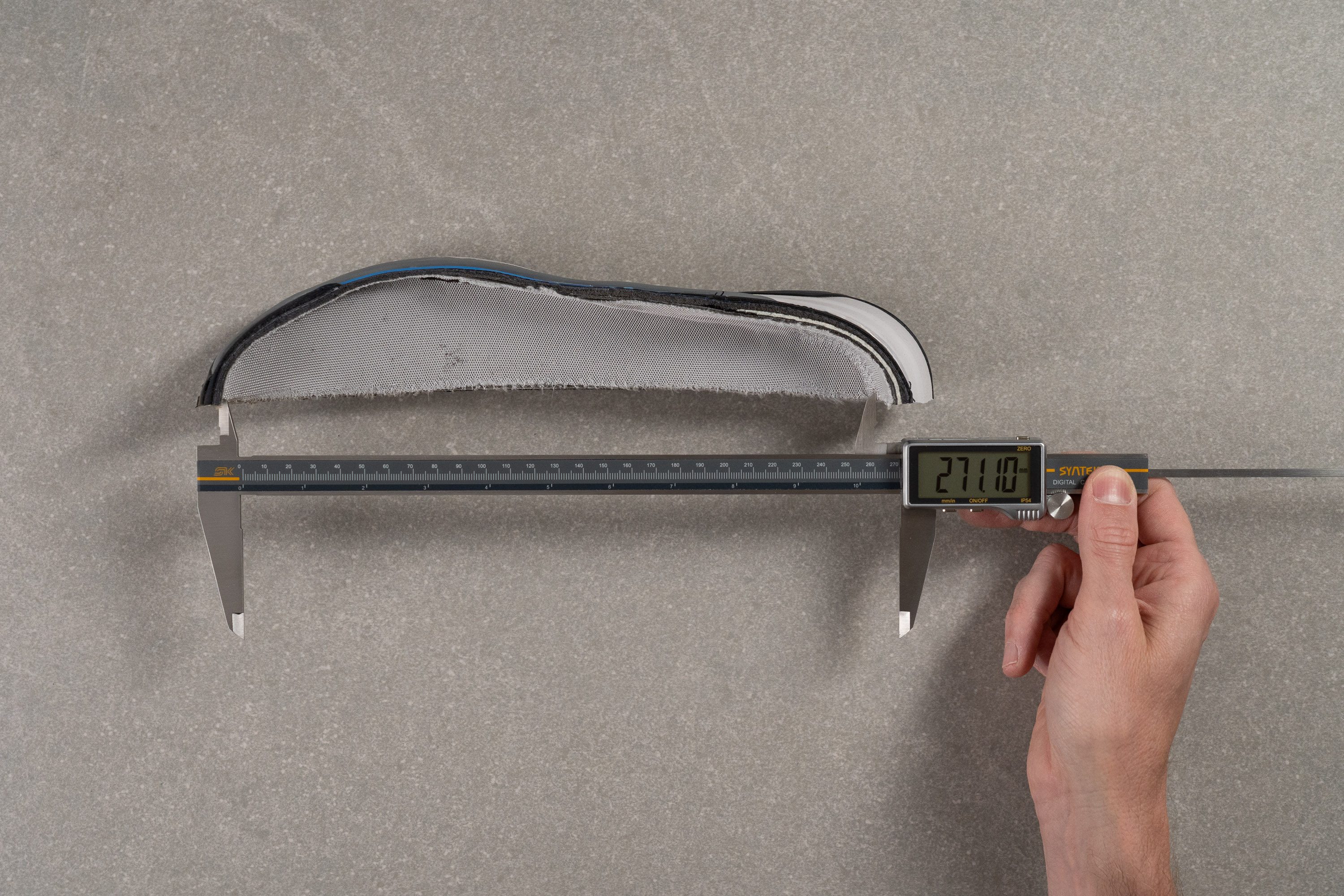
| Terrex Anylander Rain.Rdy | 271.1 mm |
| Average | 268.9 mm |
Width / Fit
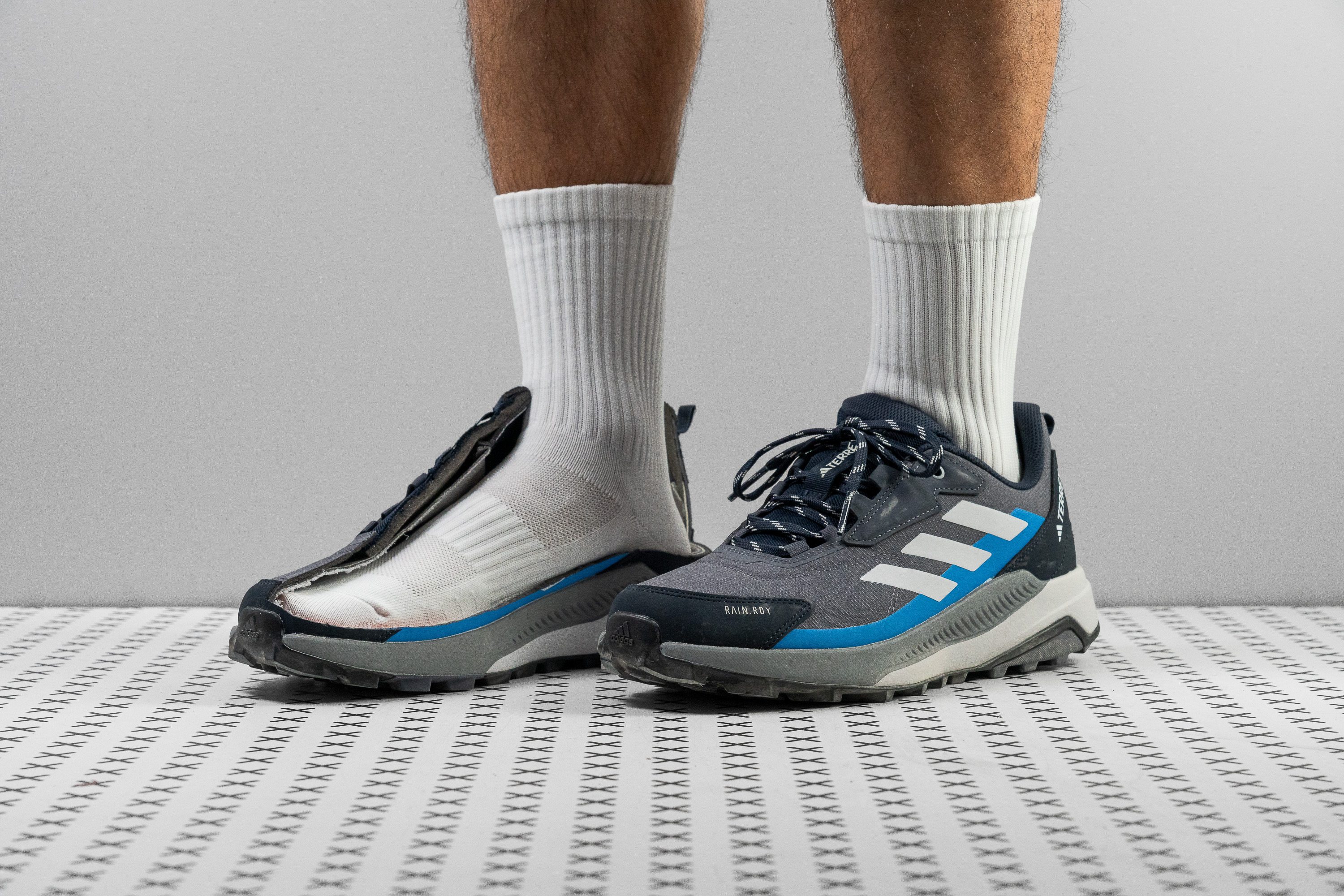
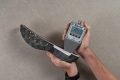
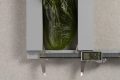
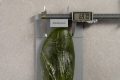
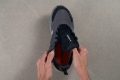
We knew that something was off with the adidas Terrex Anylander Rain.Rdy's fit during the wear test, and when we took the gel cast out of the shoe's interior, the puzzle pieces came together.
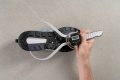
Even though the shoe offers plenty of room in the ball-of-foot area at 98.6 mm in the widest part, there is a problem with its toebox shape...
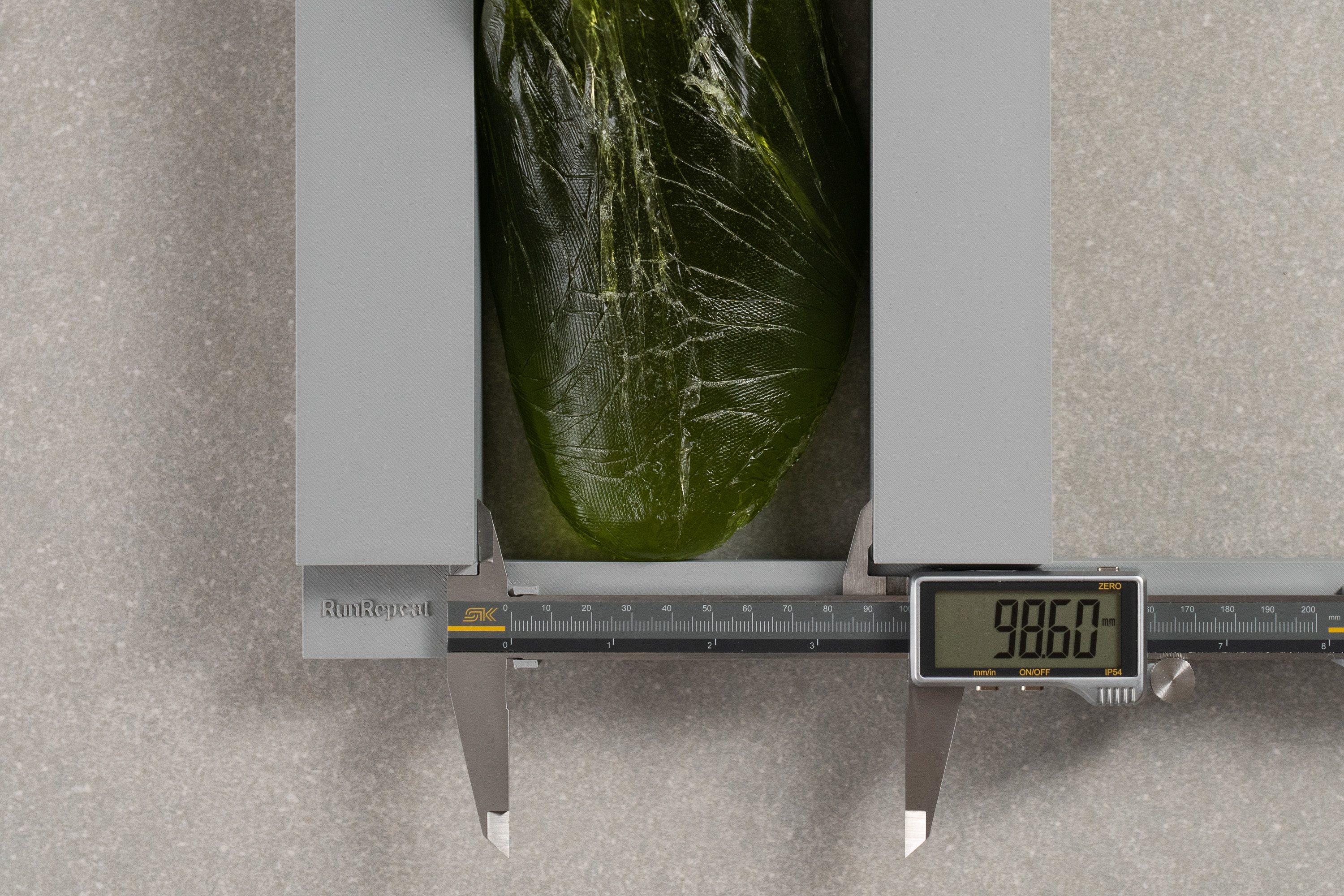
| Terrex Anylander Rain.Rdy | 98.6 mm |
| Average | 94.0 mm |
Toebox width
At only 69.7 mm in the big toe area, it has an extremely aggressive taper angle, going from wide in the forefoot to narrow in the big toe area!
That makes it tight and restrictive not only for wide feet but for medium-width feet too!
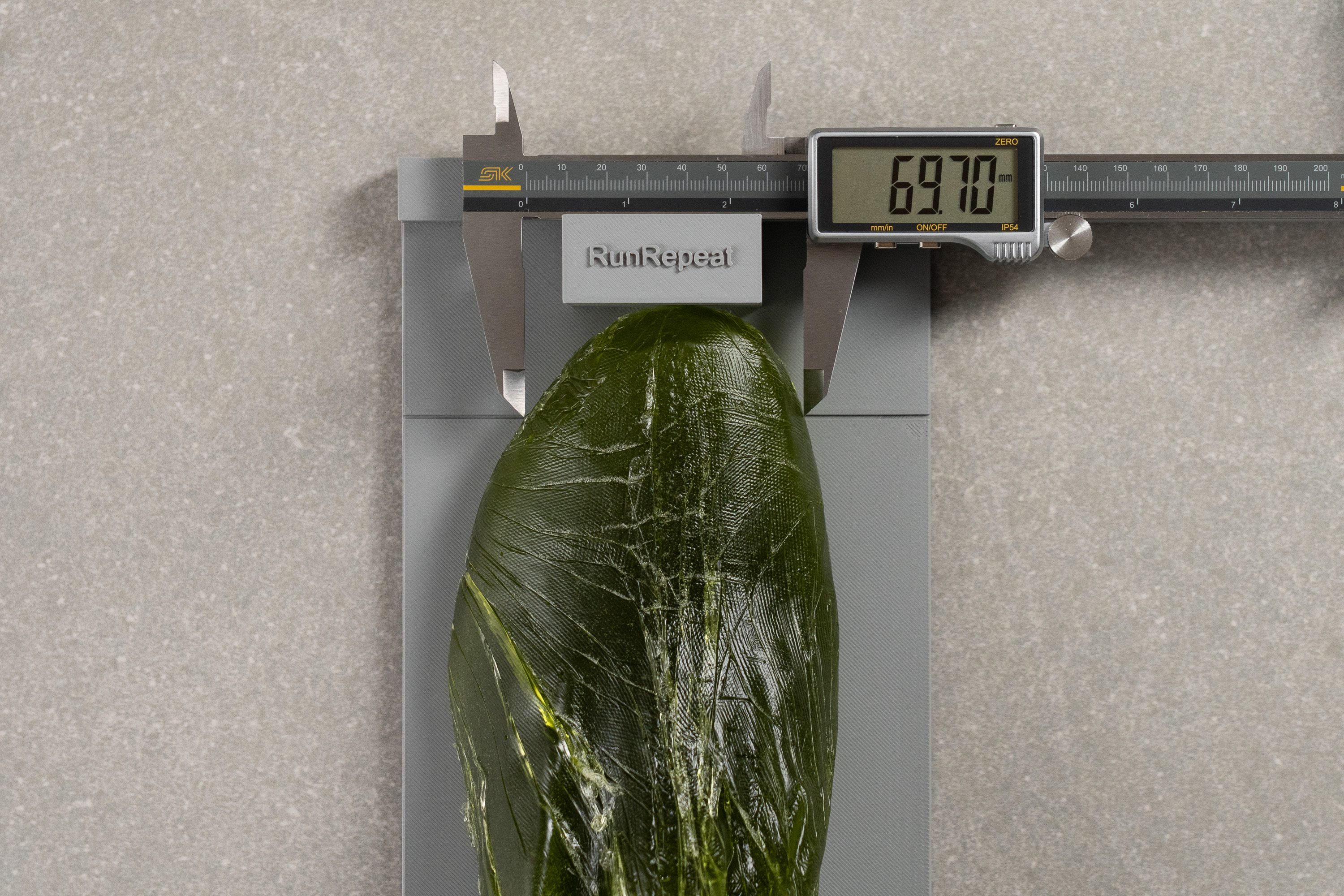
| Terrex Anylander Rain.Rdy | 69.7 mm |
| Average | 71.9 mm |
Toebox height
Vertically, the shoe's toebox also sits pretty low to the toes.
It's not alarmingly low with a toebox height of 25.8 mm, but it can feel a bit limited compared to many other hiking shoes.
Together with its pointy toebox, this adidas shoe's fit is not for everyone.
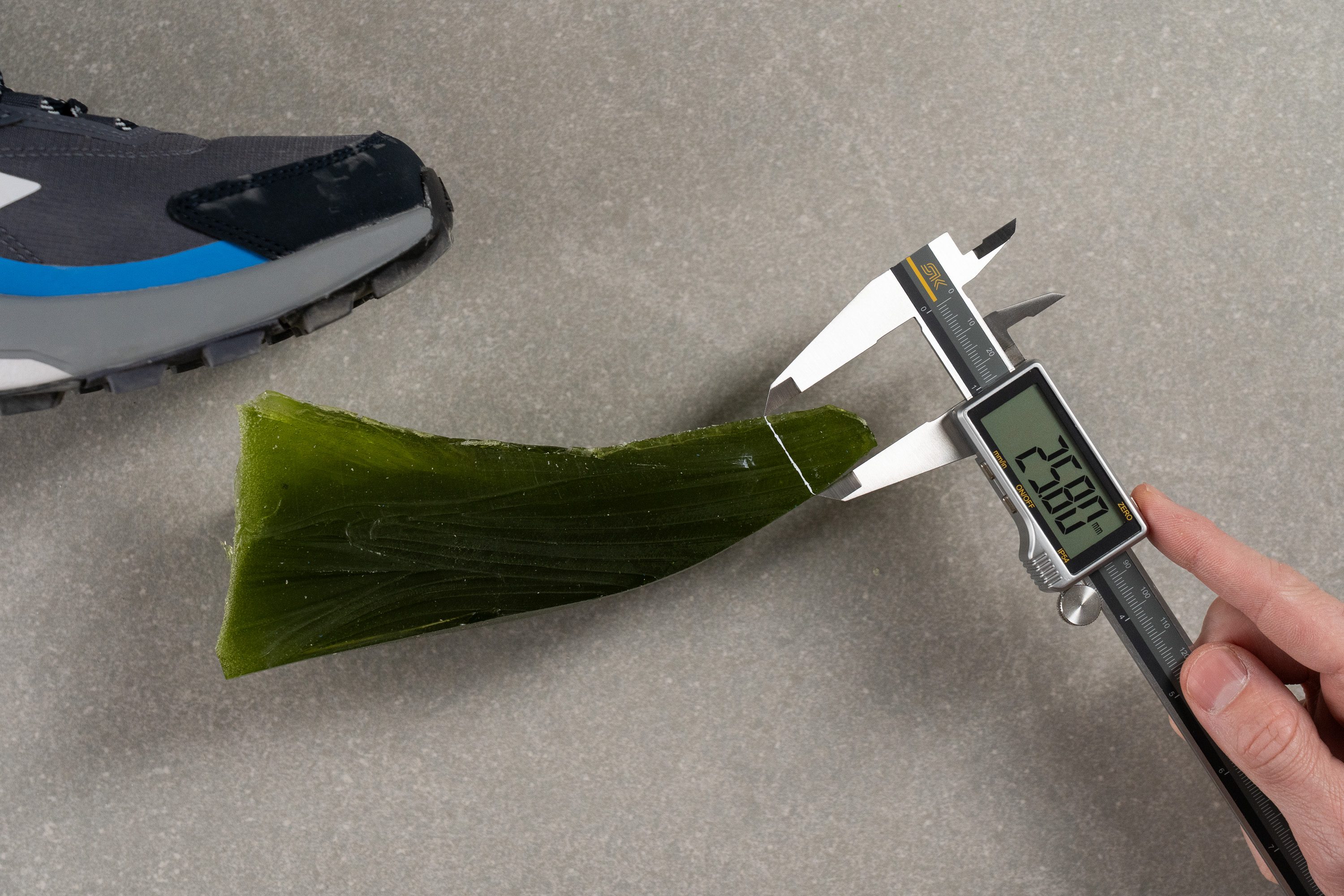
| Terrex Anylander Rain.Rdy | 25.8 mm |
| Average | 27.5 mm |
Traction / Grip
Traction test
Brushing the shoe's Traxion rubber against wet concrete, we recorded a solid friction score of 0.63. Even though it's not the tackiest outsole among hiking shoes, it offers reliable bite on smooth surfaces like concrete, stone, rock, and wood, even if they are a little wet.
| Terrex Anylander Rain.Rdy | 0.63 |
| Average | 0.68 |
Lug depth
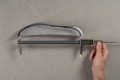
Our calliper measured the Anylander Rain.Rdy's lug depth at a moderate 3.3 mm. This allows the shoe to step onto mixed terrain with some light dirt, occasional rocks, roots, and grass, not nothing too demanding.
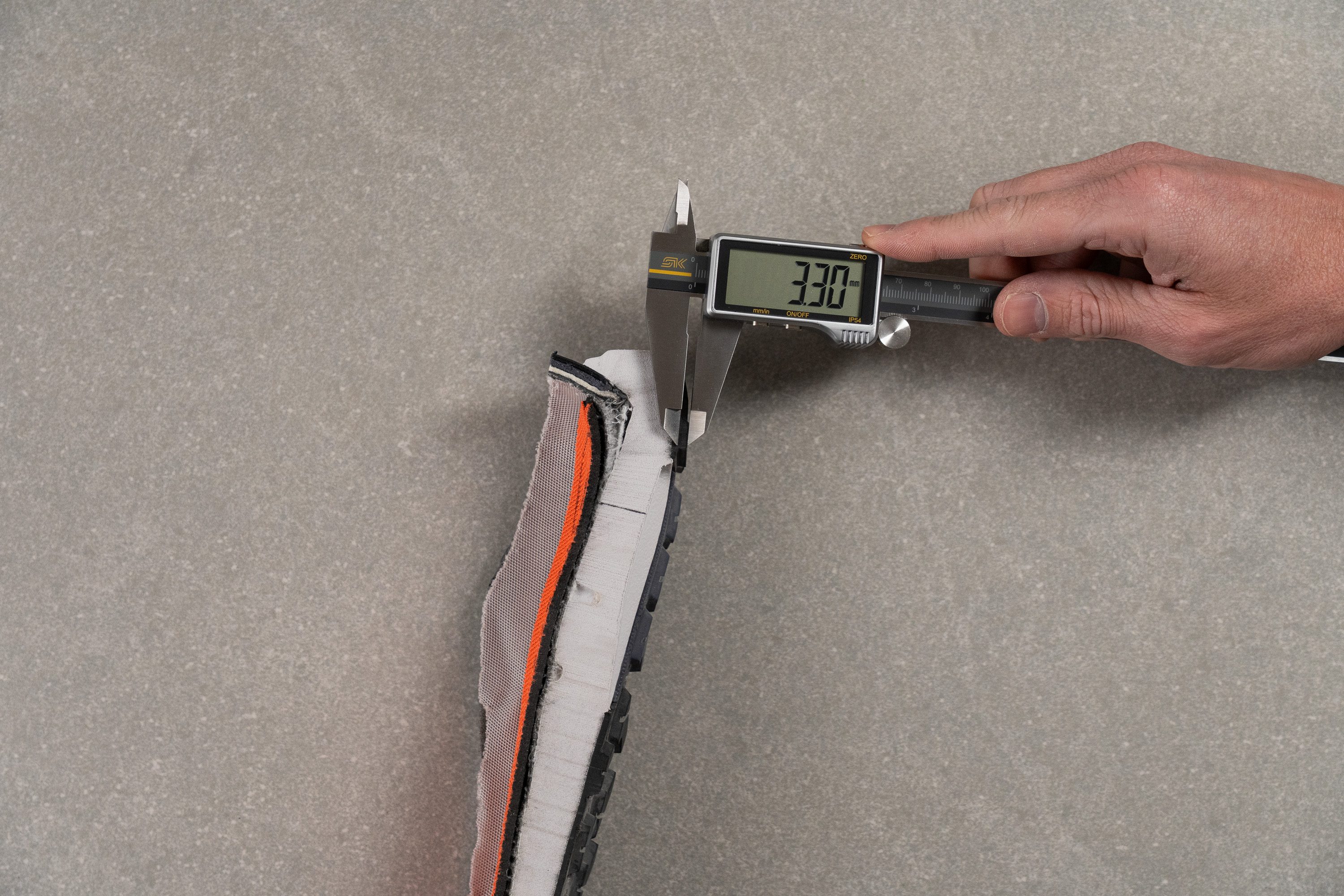
| Terrex Anylander Rain.Rdy | 3.3 mm |
| Average | 3.9 mm |
Outsole design
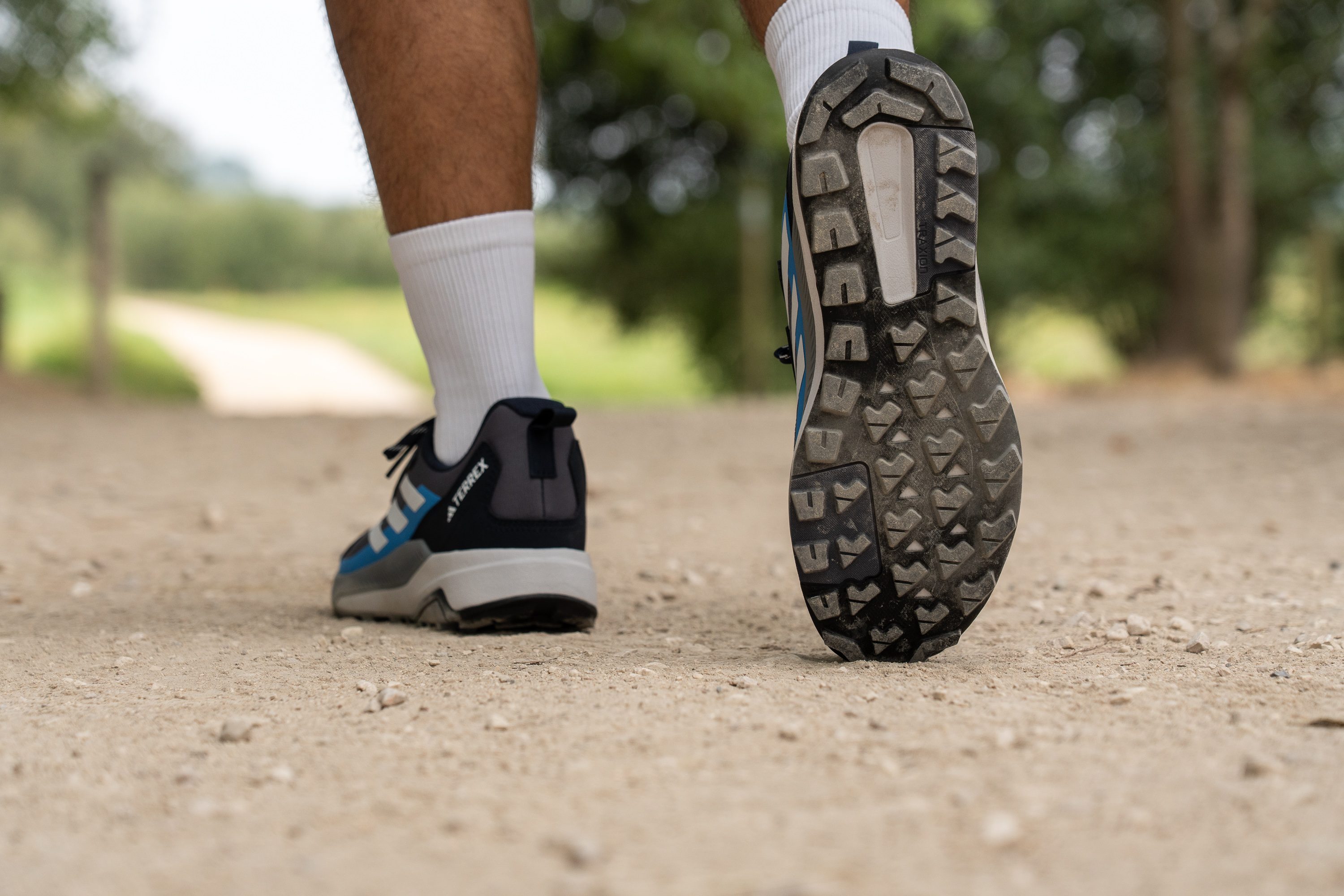
Its blocky tread pattern, with flat, wide lugs, further confirms that this adidas Terrex shoe performs best on hard-packed, predictable trails.
Flexibility / Stiffness
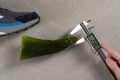
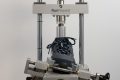
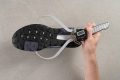
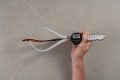
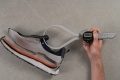
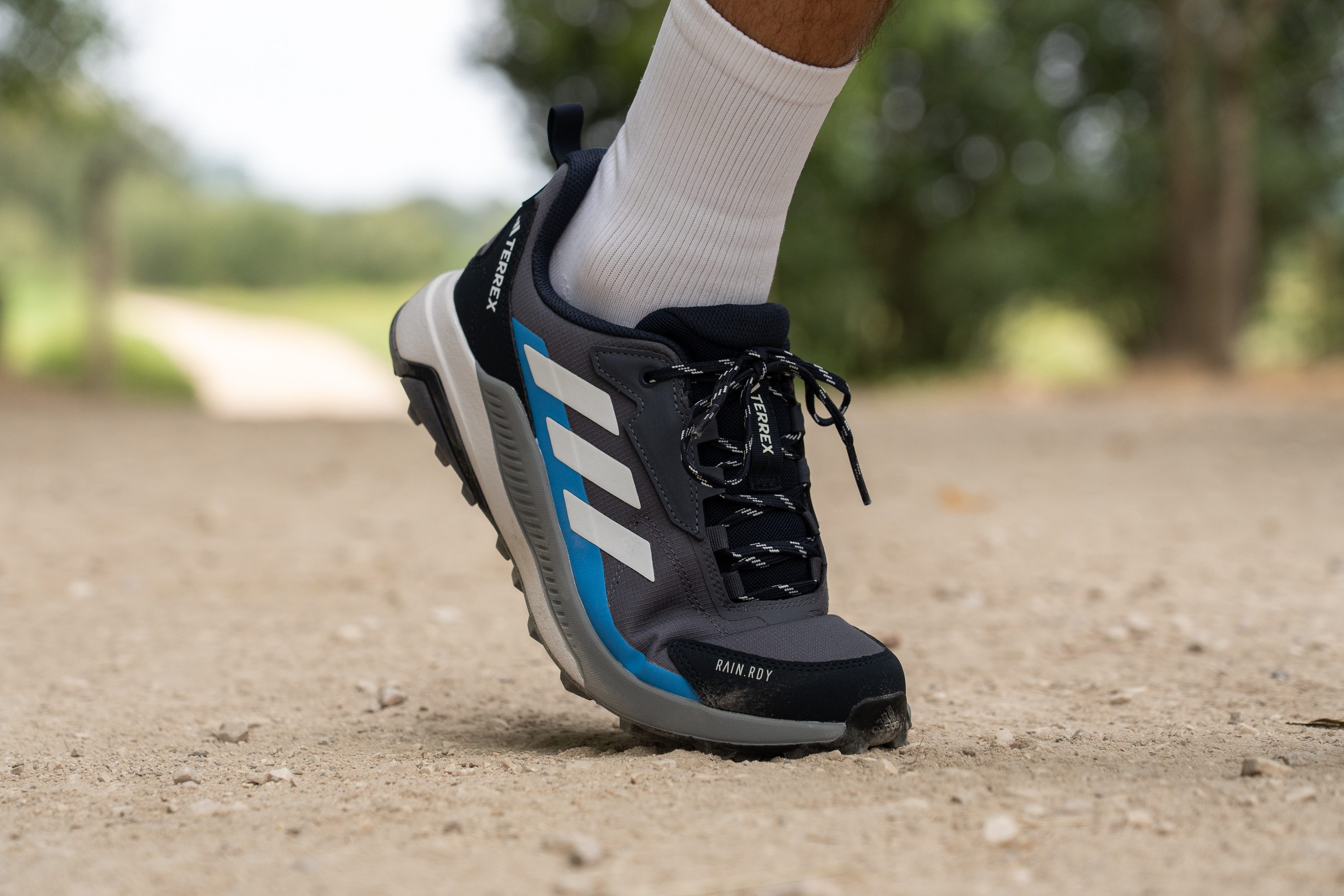
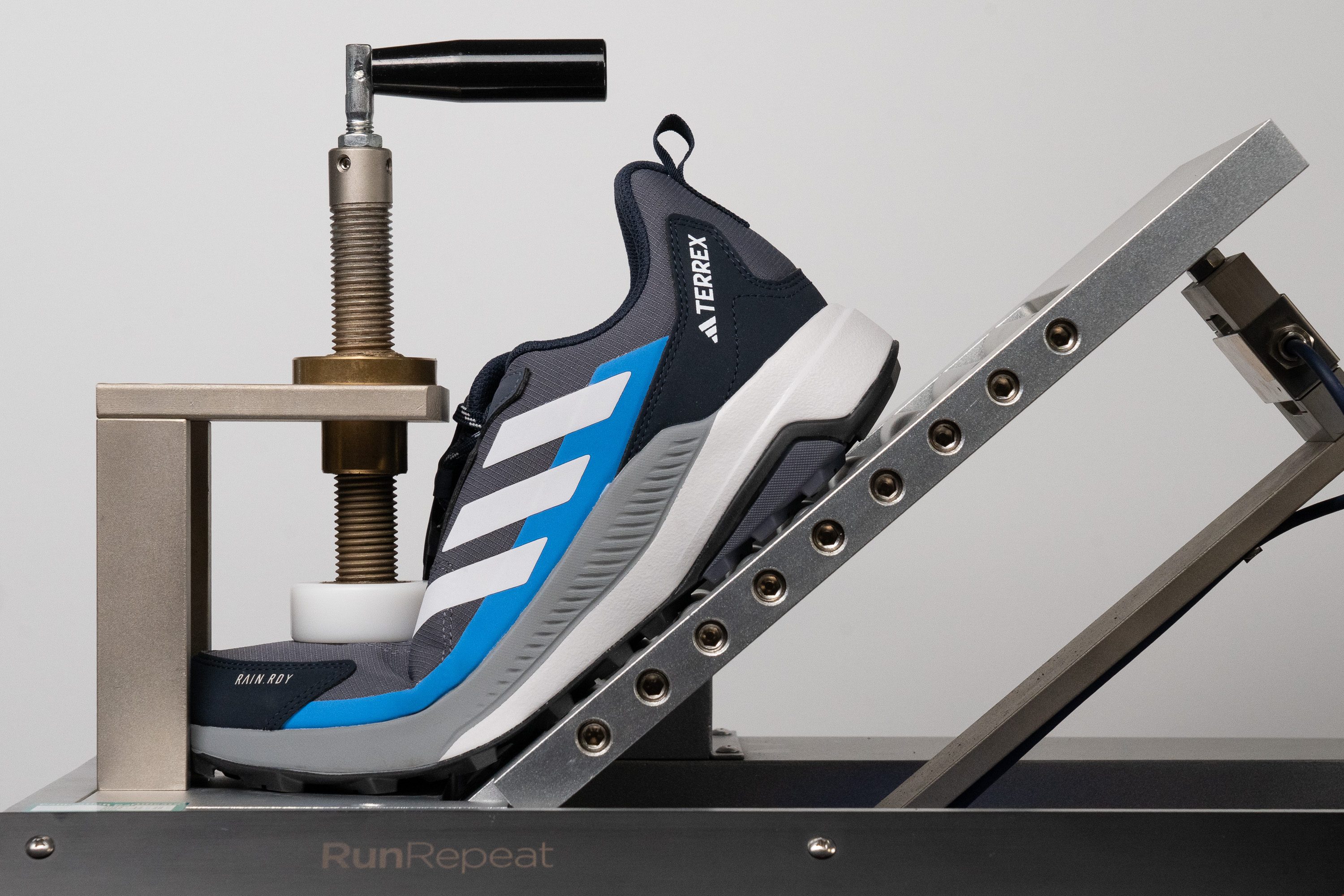
The Anylander Rain.Rdy's firm midsole and robust upper add some noticeable rigidity to its build. As a result, forefoot flex feels moderately limited, but not restricted.
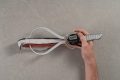
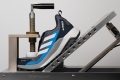
Our shoe-bending machine recorded that it takes a little more force (19.9N) to bend this adidas shoe by 30 degrees than it takes an average hiking shoe.
| Terrex Anylander Rain.Rdy | 19.9N |
| Average | 18.8N |
Weight
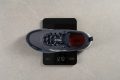
Its simple and unburdened design helps keep the adidas Terrex Anylander Rain.Rdy's weight below the category average at 12.7 oz (360g). It never felt like a drag on foot, allowing us to pick up the pace easily.
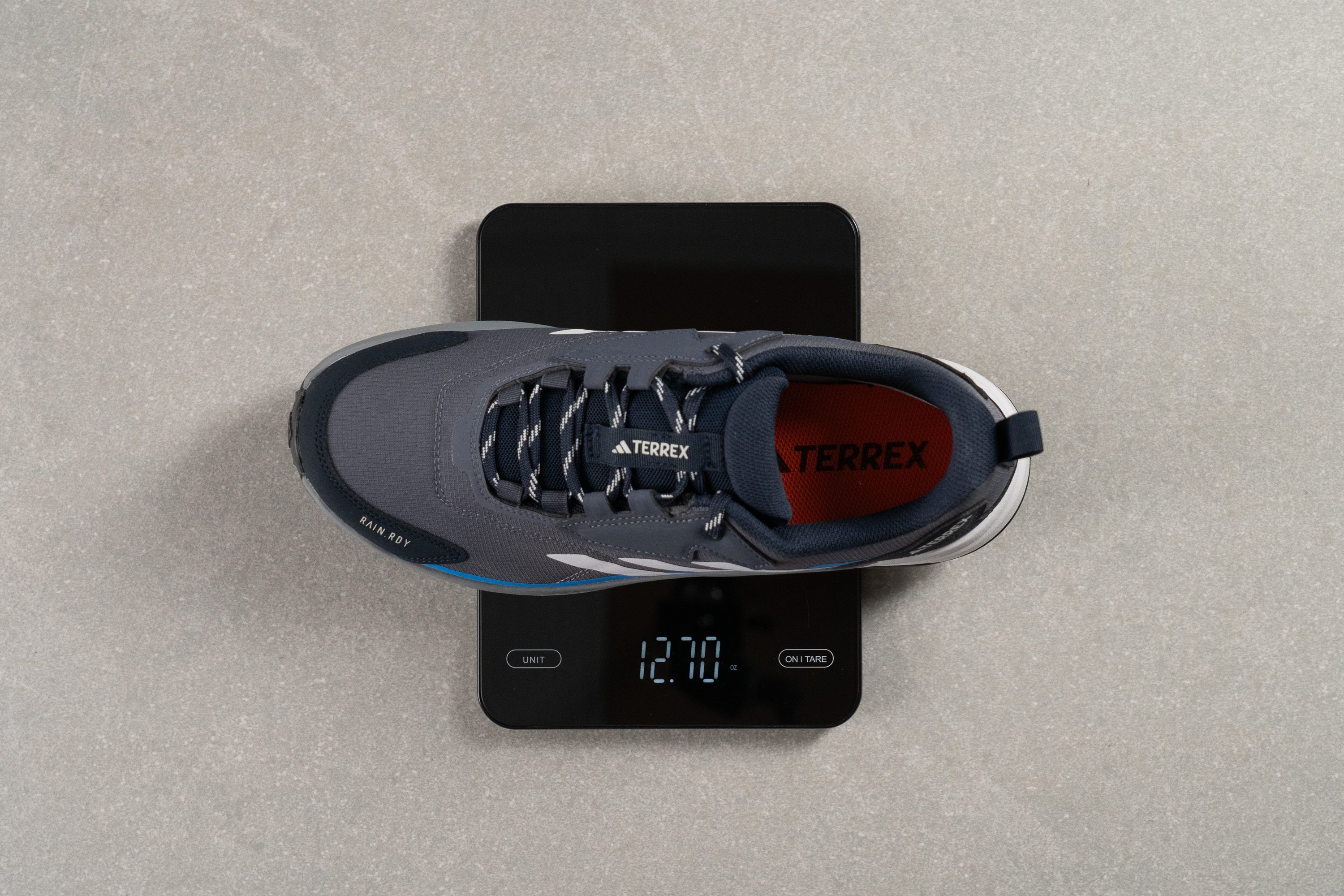
| Terrex Anylander Rain.Rdy | 12.7 oz (360g) |
| Average | 13.2 oz (375g) |
Breathability
Breathability test
UpdatedAs expected from a waterproof shoe, the Anylander's breathability left much to be desired. Equipped with the Rain.Rdy technology, the shoe blocks external water effectively but doesn't pull sweat away from the skin quickly enough to avoid clammy feet and damp socks.
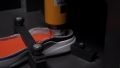
After a 3-hour test inside a climate-controlled chamber, we measured the shoe's breathability as low as 38 BR.
| Terrex Anylander Rain.Rdy | 38 BR |
| Average | 58 BR |
Drying potential
NewThe issue is exacerbated by the shoe's very slow drying time. The same 3-hour test allowed us to measure how much of the artificial sweat we had put into the Anylander evaporated within that period. And at only 22%, it's a poor result, even for a hiking shoe!
Whether the shoe's interior gets wet from sweat or external moisture, it is going to stay wet all throughout the hike and possibly even the day after! Unfortunately, that's a perfect formula for blisters and odour.
| Terrex Anylander Rain.Rdy | 22% |
| Average | 39% |
Insulation
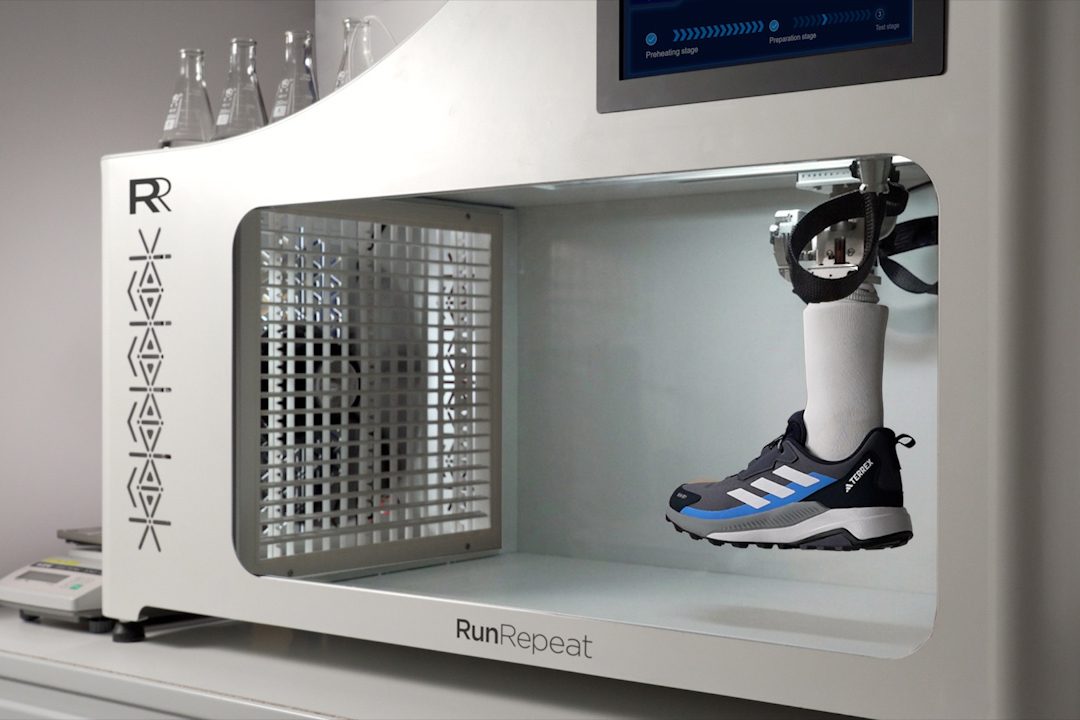
NewBut there is a positive side to the Anylander Rain.Rdy's waterproof construction and that's the shoe's ability to retain warmth. Using a heated footform and enclosed chamber to measured this adidas shoe's insulation at 0.269 m² K/W.
It's not high enough to make the shoe winter-ready, but it confirms its slower heat loss in lower temperatures.
| Terrex Anylander Rain.Rdy | 0.269 |
| Average | 0.263 |
Stability
Lateral stability test
Its low-to-the-ground platform and firm midsole foam make the adidas Terrex Anylander Rain.Rdy an inherently stable shoe even without any shanks or sturdy stabilising elements.
Torsional rigidity
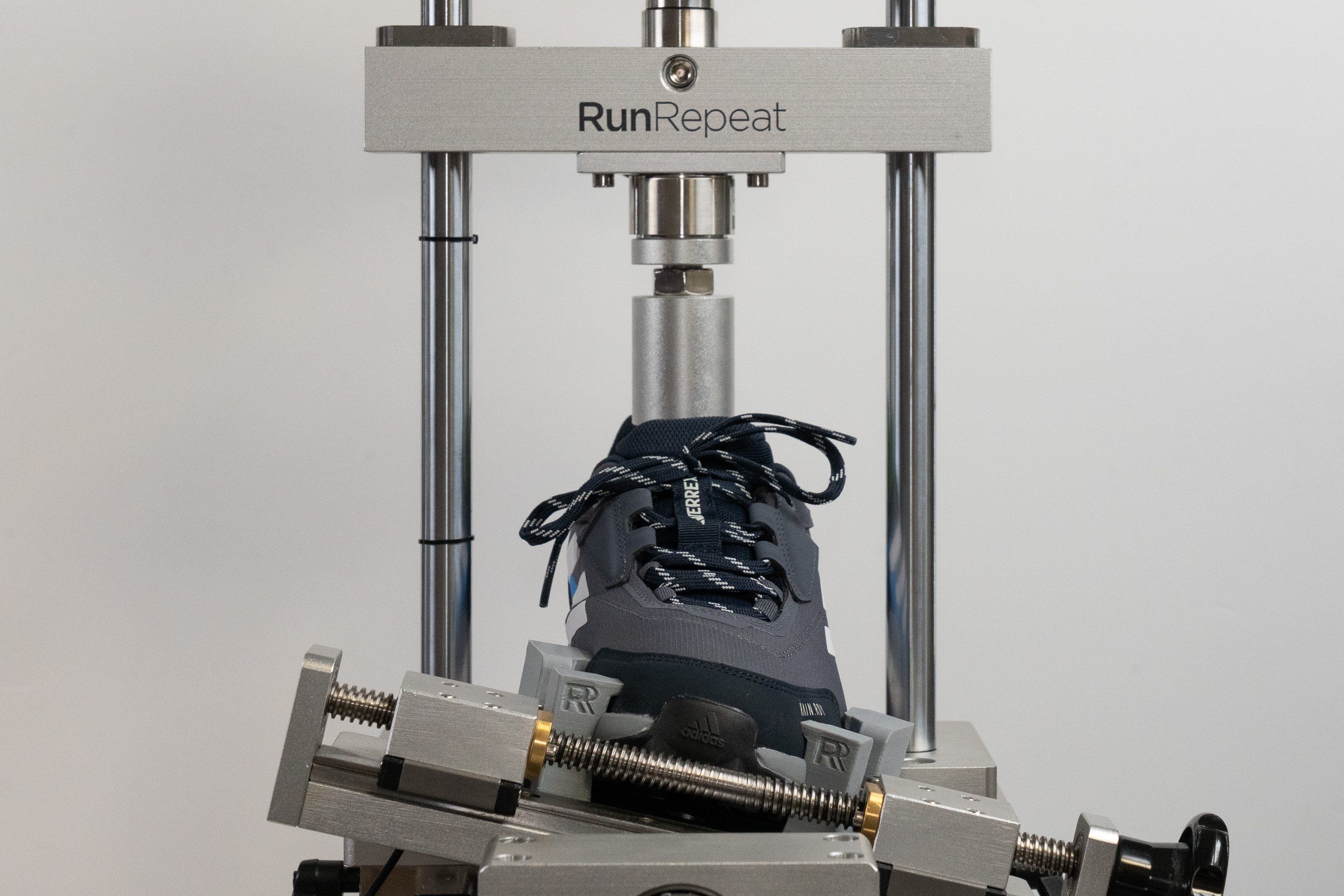
Measuring the torque it takes to twist this adidas shoe by 10 degrees in both directions, we were surprised to get an above-average reading of 19.7 Nm.
This structure keeps the feet better aligned on uneven terrain so that muscles can work less hard to stabilise each step.
| Terrex Anylander Rain.Rdy | 19.7 Nm |
| Average | 19.1 Nm |
Heel counter stiffness
The shoe also surprised us with an exceptionally rigid heel counter, earning a maximum stiffness score of 5 out of 5 in our manual test.
It cups the heel and ankle well, anchoring them firmly inside the shoe to minimise undesirable wobbling.
| Terrex Anylander Rain.Rdy | 5 |
| Average | 3.7 |
Midsole width - forefoot
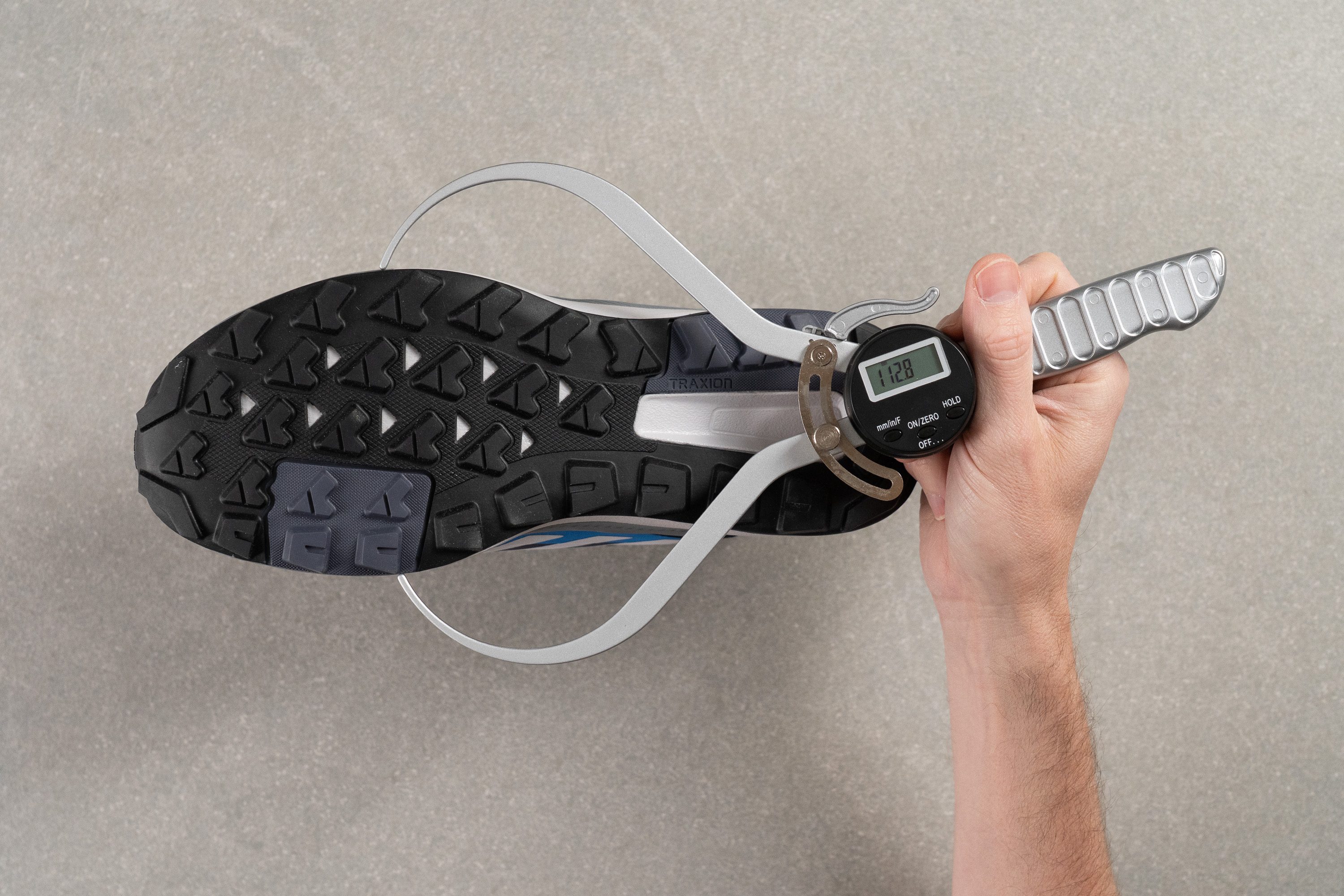
As for the Anylander's midsole dimensions, our calliper showed that they fall squarely in the middle of hiking shoes. The widest part of the shoe's forefoot measured 112.8 mm.
| Terrex Anylander Rain.Rdy | 112.8 mm |
| Average | 112.6 mm |
Midsole width - heel
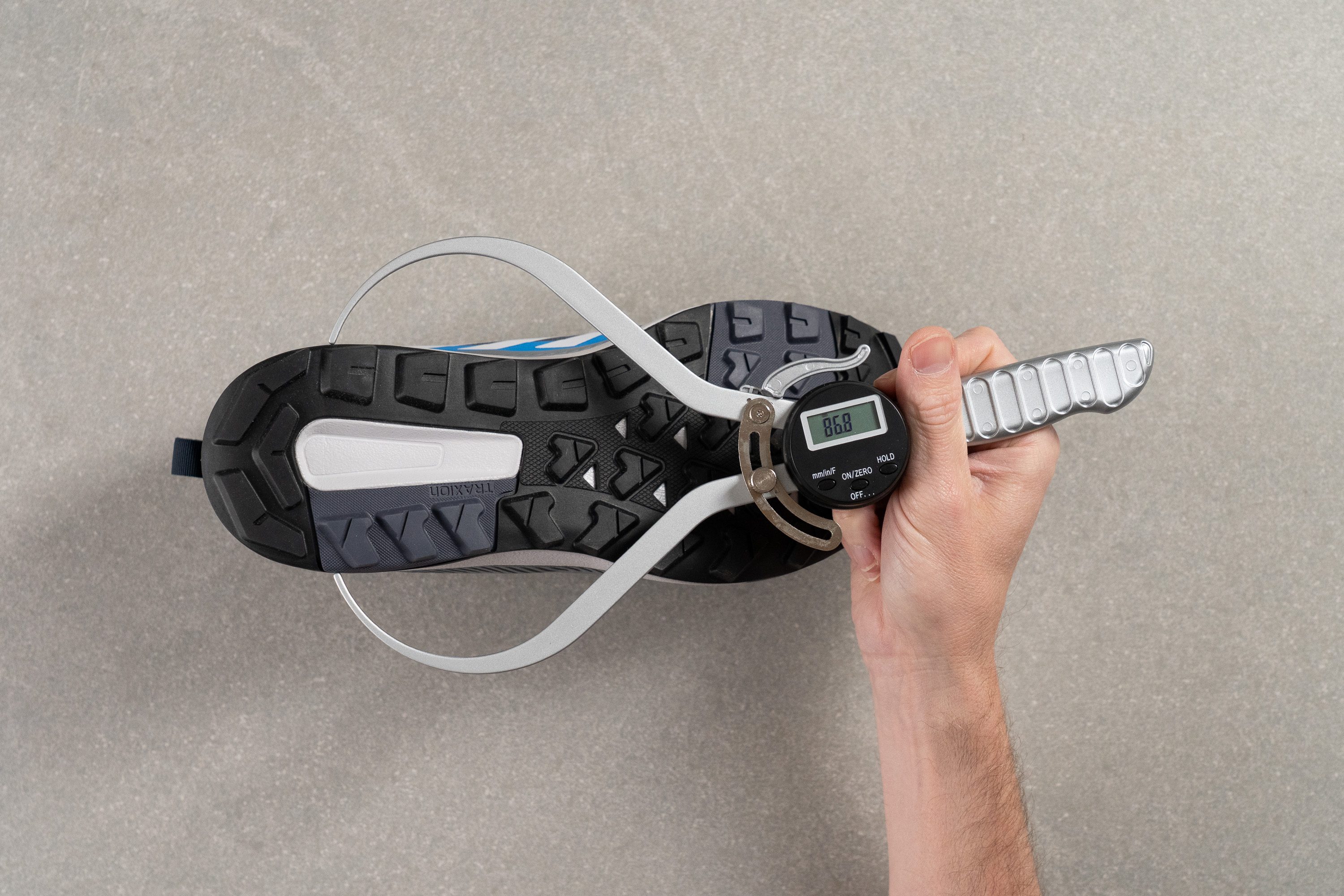
The heel also proved to be on par with the average, with a regular width of 86.8 mm between the most extended contact points.
| Terrex Anylander Rain.Rdy | 86.8 mm |
| Average | 88.6 mm |
Durability
Toebox durability
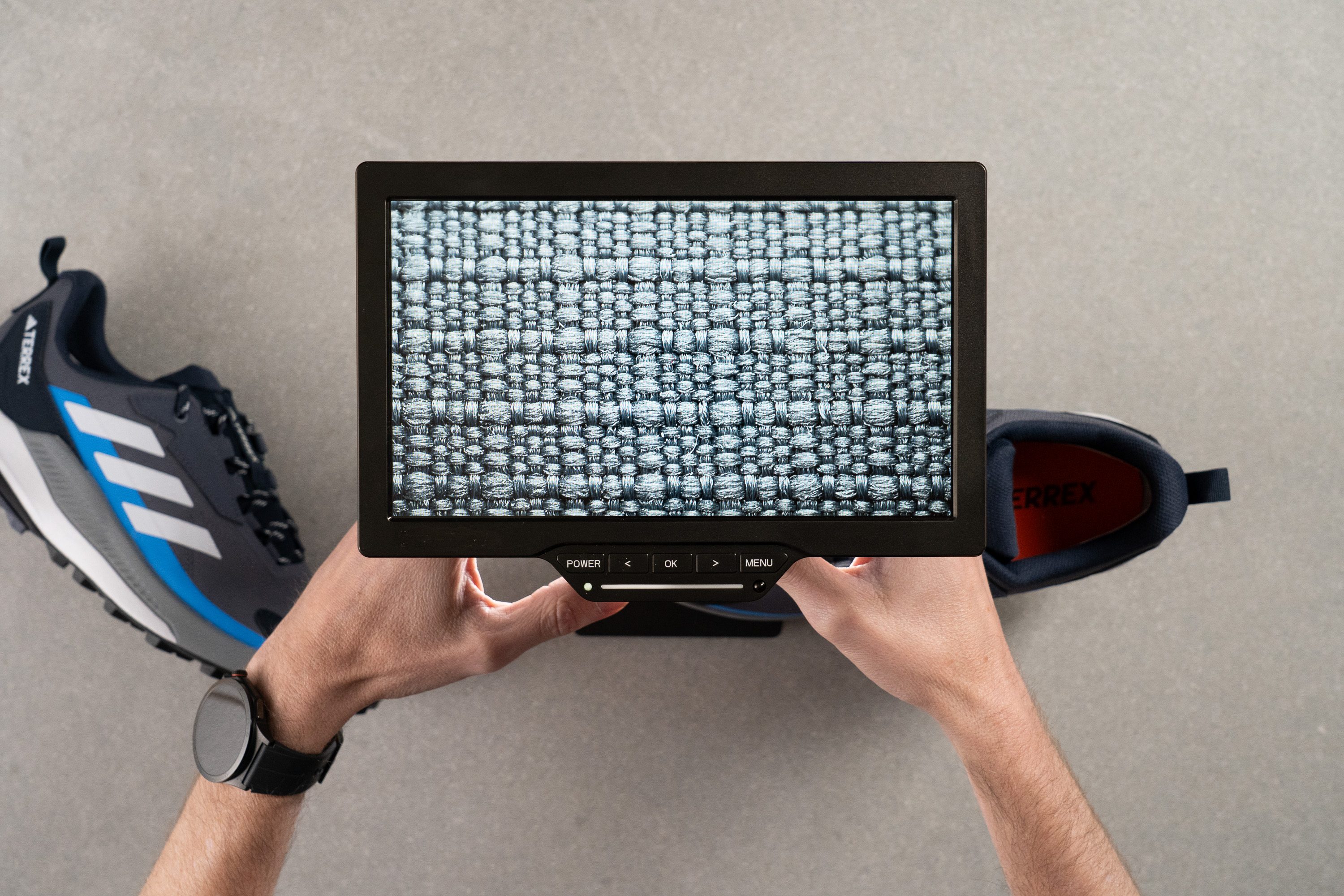
The textile used for the Anylander Rain.Rdy's upper is highly reminiscent of ripstop, and it proved its wear resistance in our Dremel test.
After applying sandpaper to the top of the shoe's toebox for 12 seconds, the damage ended up merely cosmetic. This raised our durability score to 4 out of 5 for this part of the shoe.
| Terrex Anylander Rain.Rdy | 4 |
| Average | 3.6 |
Heel padding durability
The mesh lining inside the shoe's collar was less reassuring with more severe damage. We reflected its lack of wear resistance in a low heel padding durability score of 2 out of 5.
| Terrex Anylander Rain.Rdy | 2 |
| Average | 3 |
Outsole durability
The outsole rubber, on the other hand, performed rather well for a shoe at this price point. With a shallow dent of 1.1 mm, it promises a solid lifespan.
| Terrex Anylander Rain.Rdy | 1.1 mm |
| Average | 0.9 mm |
Outsole thickness
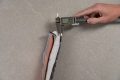
Our calliper measured the shoe's rubber layer at 2.0 mm atop its 3.3 mm lugs, which is a solid outsole thickness for moderate use.
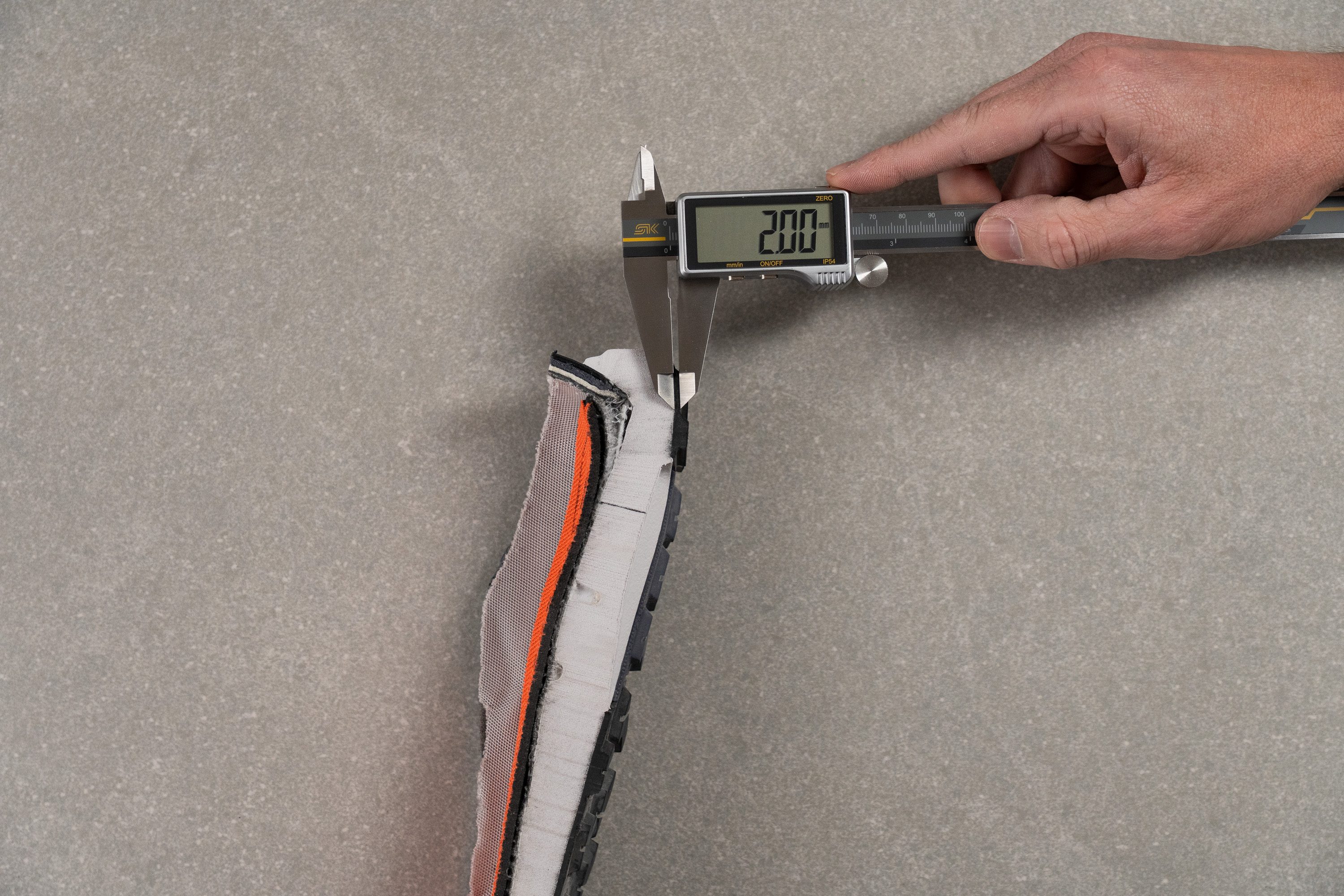
| Terrex Anylander Rain.Rdy | 2.0 mm |
| Average | 2.3 mm |
Misc
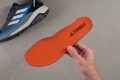
Insole thickness
There isn't much underfoot padding in this adidas shoe, but it offers a decent 3.6 mm layer of foam in the heel.
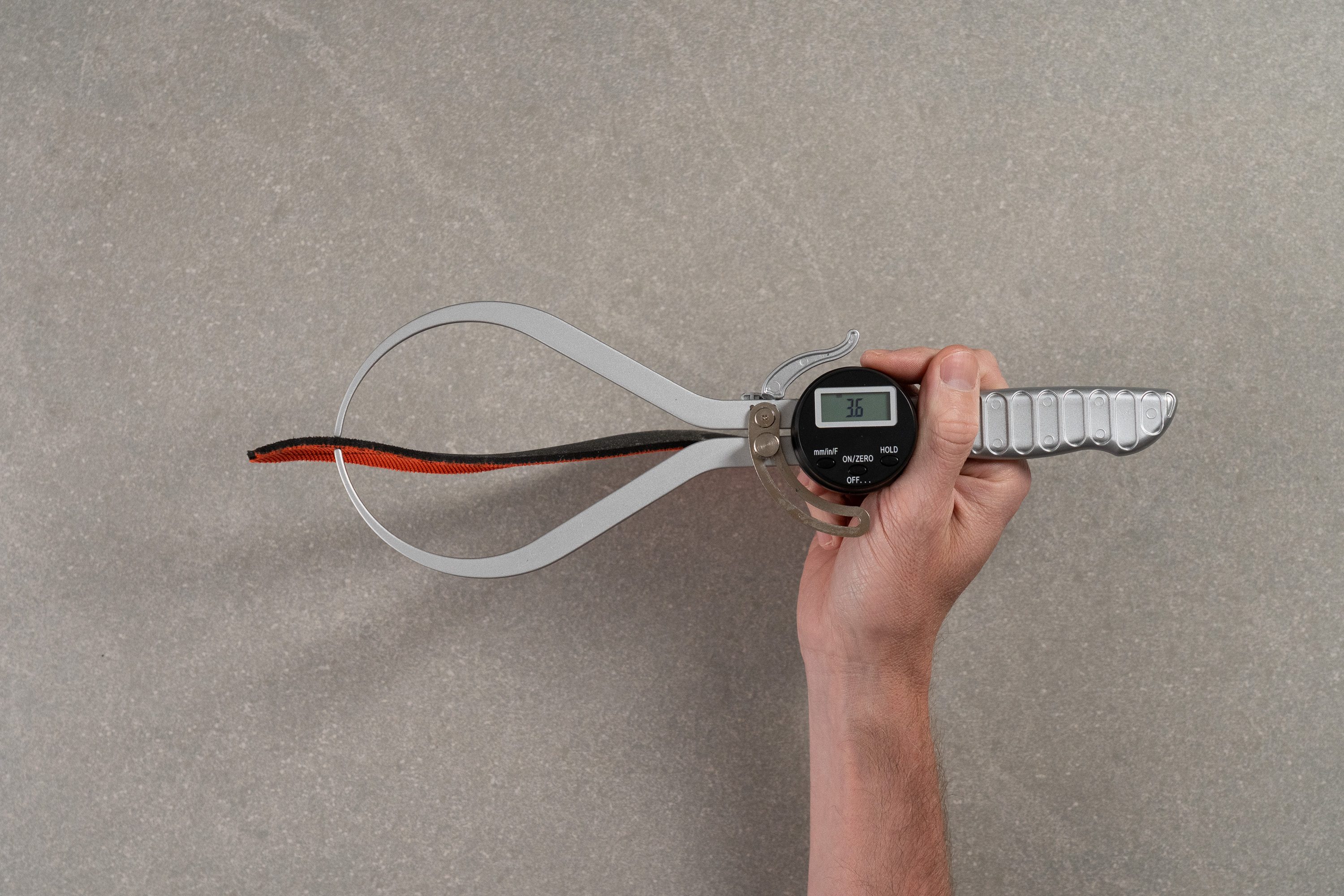
| Terrex Anylander Rain.Rdy | 3.6 mm |
| Average | 5.3 mm |
Removable insole
The insole is easy to remove in case you want to use a custom orthotic.
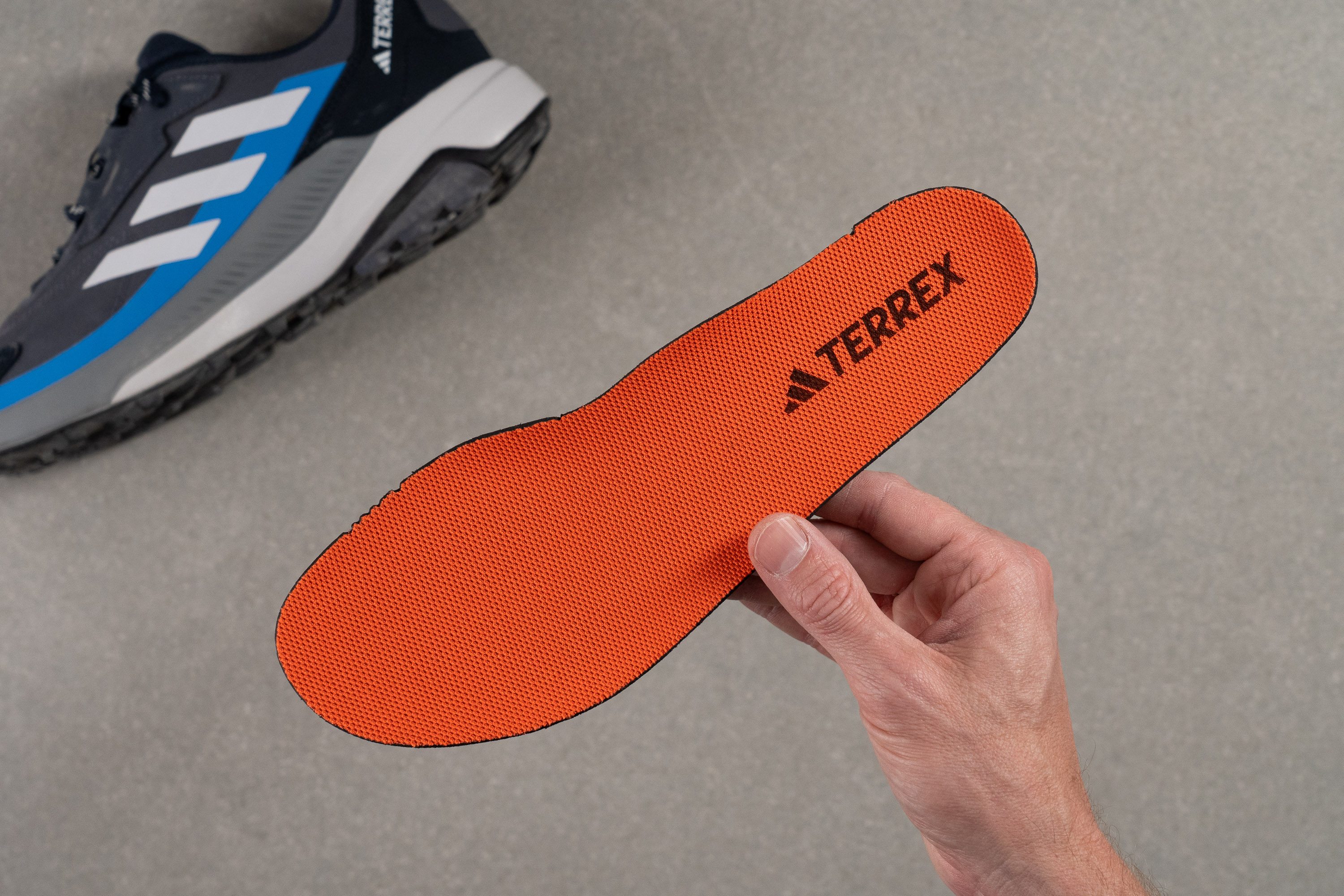
| Terrex Anylander Rain.Rdy | Yes |
Midsole softness in cold (%)
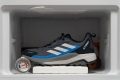
Firm at room temperature, the Anylander Rain.Rdy's midsole foam barely gets any firmer in chilly conditions. According to our durometer, the shoe's foam got only 10% harder after a 20-minute freezer test.
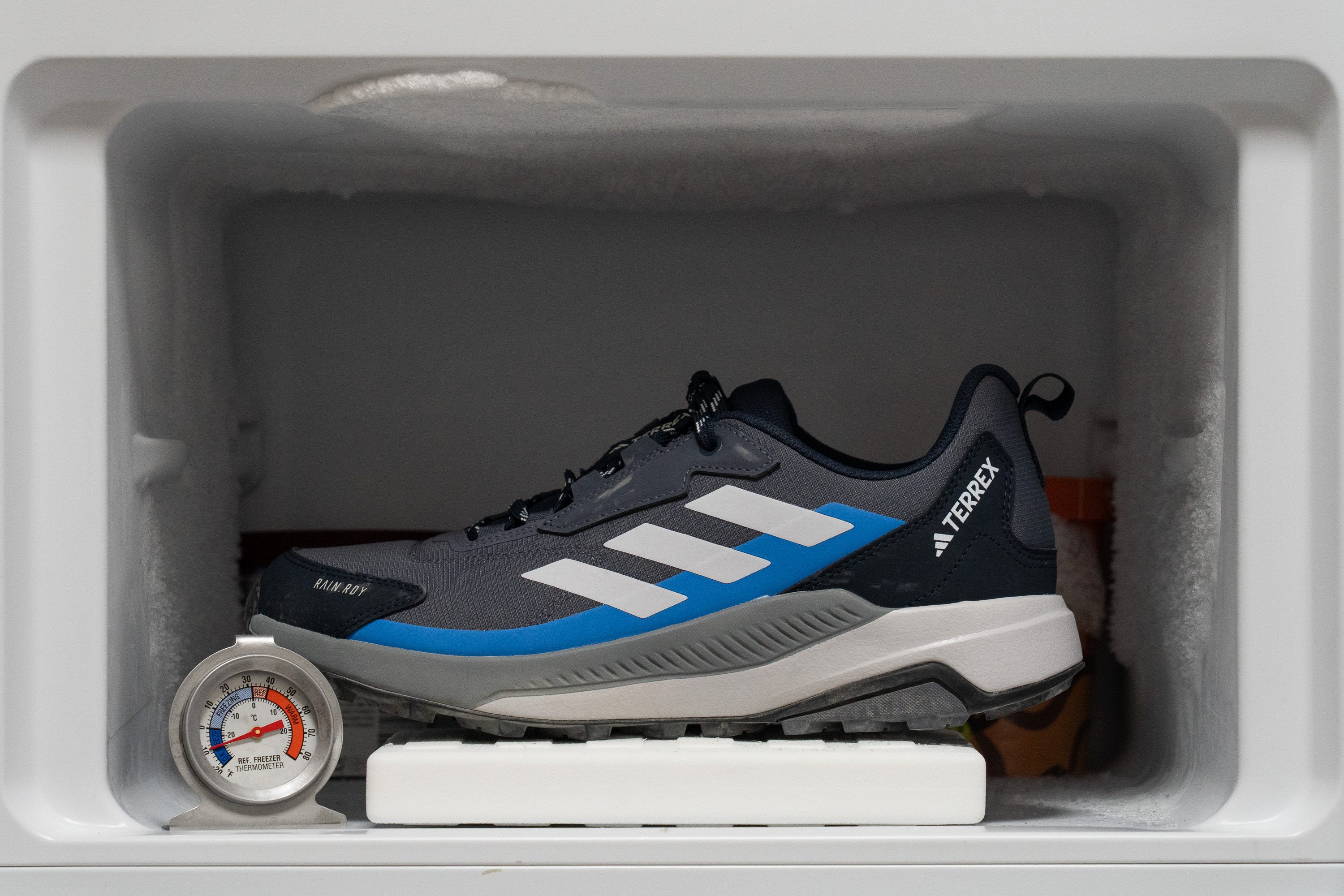
| Terrex Anylander Rain.Rdy | 10% |
| Average | 18% |
Reflective elements
None of the shoe's components reflect light in the dark.
| Terrex Anylander Rain.Rdy | No |
Tongue padding
The tongue and collar padding of this adidas shoe pack enough foam to buffer pressure from the laces and the rigid heel counter.
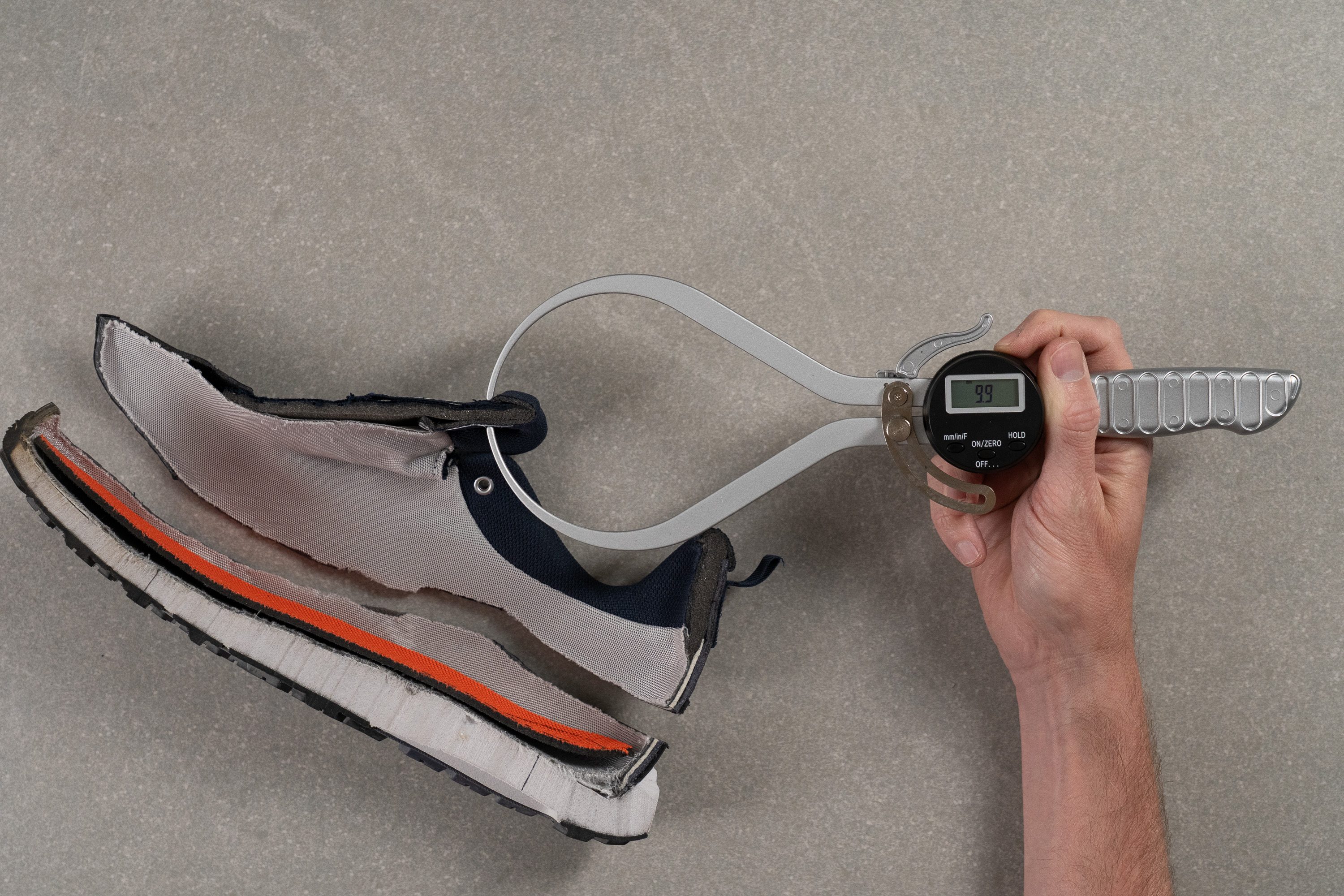
| Terrex Anylander Rain.Rdy | 9.9 mm |
| Average | 9.8 mm |
Tongue: gusset type
As part of its waterproof construction, the adidas Terrex Anylander Rain.Rdy features a fully gusseted tongue to prevent water from seeping inside.
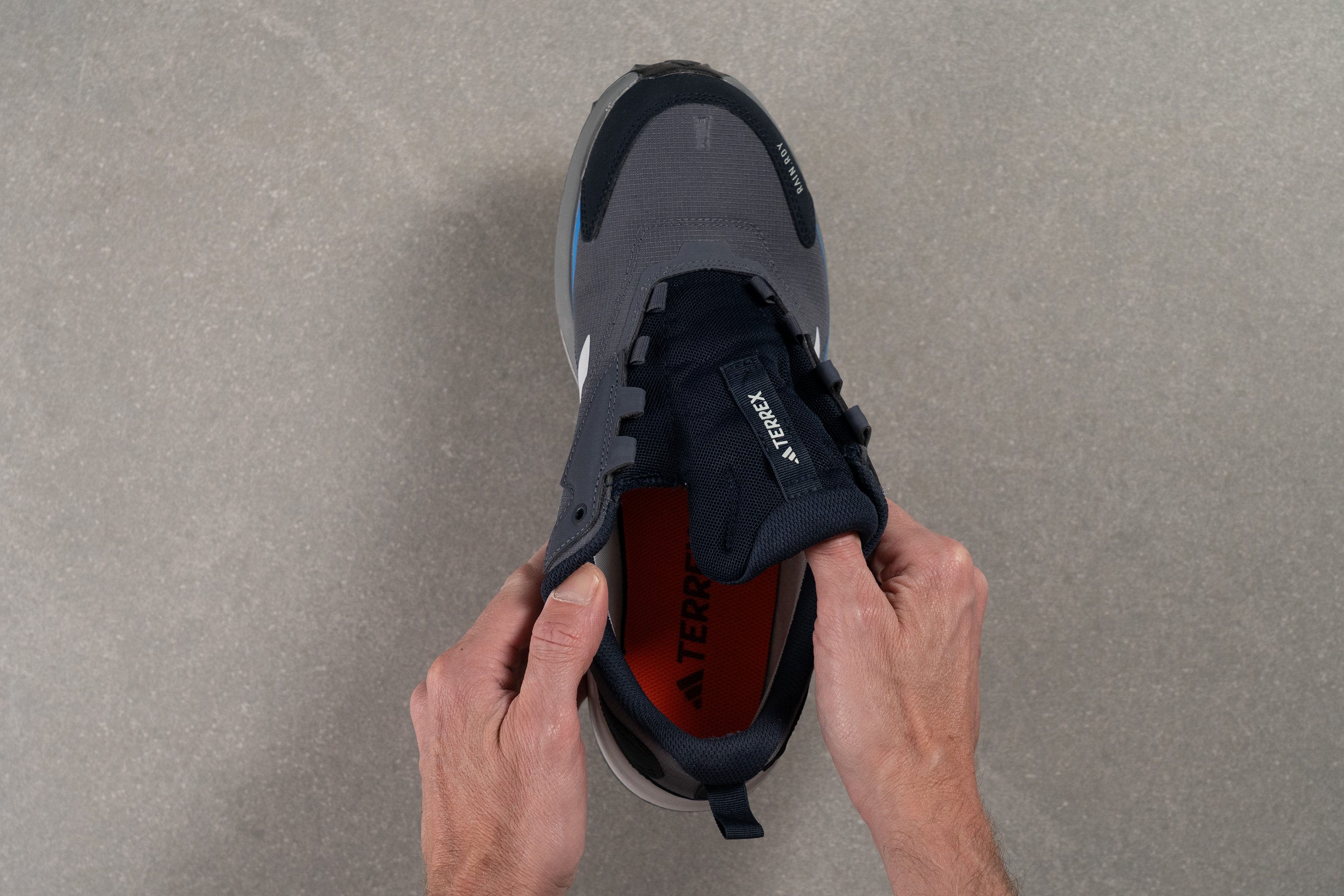
| Terrex Anylander Rain.Rdy | Both sides (full) |
Heel tab
As the tongue gussets limit the shoe's opening, a finger loop ta the back helps the foot slide in more easily.
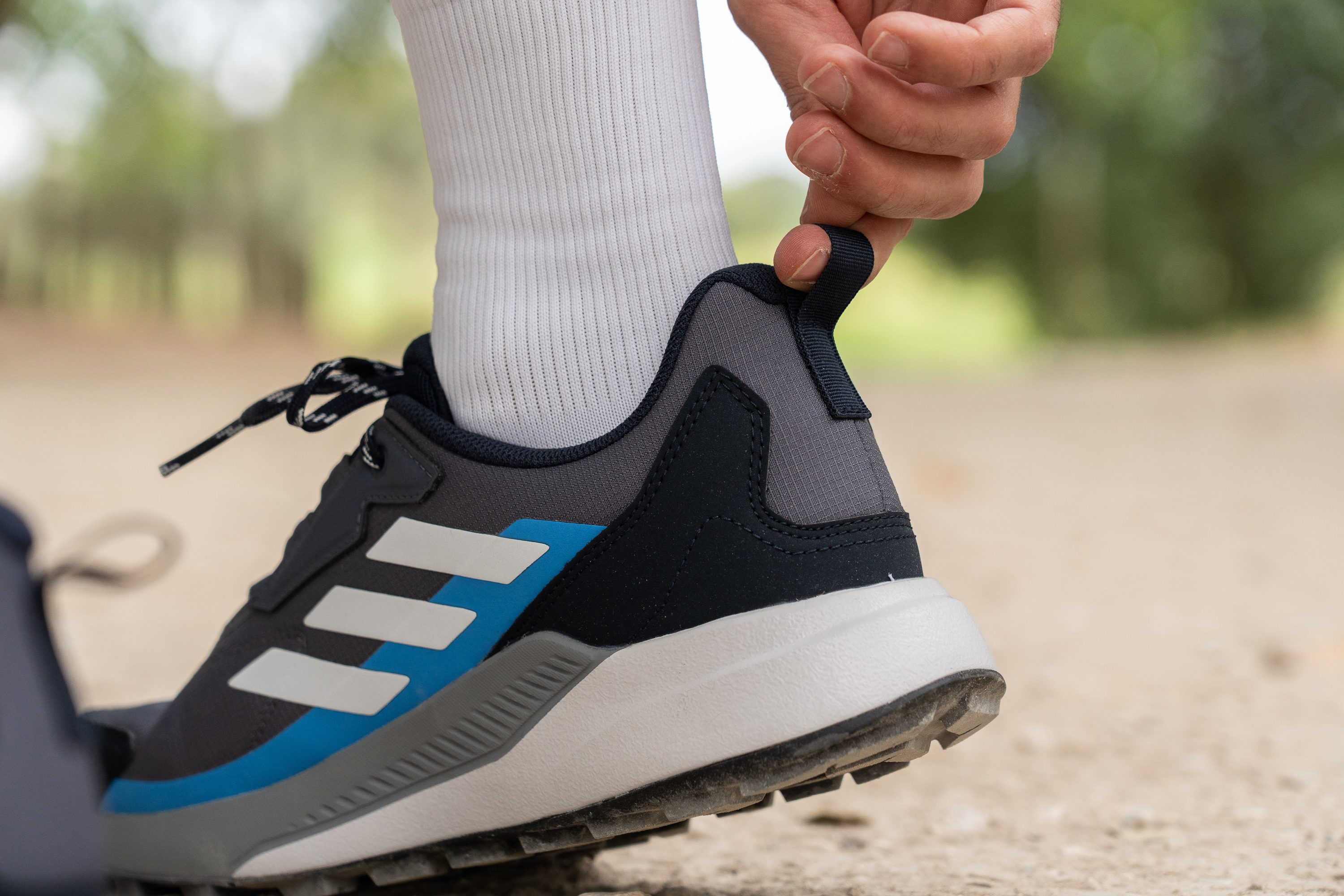
| Terrex Anylander Rain.Rdy | Finger loop |
Price
As one of the cheapest hiking shoes in our catalogue, we can't ask much from the Anylander Rain.Rdy. And yet it delivers in all the essential aspects! It doesn't have any standout features, but there are no obvious deal-breakers either.
| Terrex Anylander Rain.Rdy | $85 |