




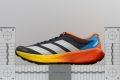











Our verdict
- Gravel 87
- Versatile 63
- Technical 44
Pros
- Solid shock absorption for stack
- Softer LIGHTSTRIKE foam
- Full-length Continental outsole
- Ideal for beginners to trail running
- Stable ride for neutral runners
- Versatile for trail running and hiking
- Fair price
- High-quality laces
- Fantastic as a gravel shoe
Cons
- Energy return is below average
- Disappointing upper durability
- Not breathable at all
- Only for easy trails
Awards
- Top pick in best trail running shoes
Comparison
The most similar running shoes compared
+ + Add a shoe | |||||
|---|---|---|---|---|---|
| Our score | 78 Good | 86 Great | 87 Great | 82 Great | |
| Price | £120 | £150 | £140 | £140 | |
| Trail terrain | Gravel / Road-to-trail | Gravel / Road-to-trail | Gravel / Road-to-trailVersatile / Moderate terrain | Gravel / Road-to-trail | |
| Shock absorption | Moderate | High | Moderate | Moderate | |
| Energy return | Moderate | Moderate | Moderate | Moderate | |
| Traction | High | High | High | - | |
| Arch support | Neutral | Neutral | Neutral | Neutral | |
| Weight lab Weight brand | 10 oz / 283g 9.8 oz / 277g | 8.8 oz / 249g 8.5 oz / 242g | 10 oz / 283g 9.9 oz / 281g | 10.2 oz / 288g 10 oz / 283g | |
| Lightweight | ✗ | ✓ | ✗ | ✗ | |
| Drop lab Drop brand | 9.1 mm 8.0 mm | 8.1 mm 6.0 mm | 6.3 mm 8.0 mm | 7.0 mm 8.0 mm | |
| Strike pattern | HeelMid/forefoot | HeelMid/forefoot | Mid/forefoot | Mid/forefoot | |
| Size | True to size | True to size | True to size | True to size | |
| Midsole softness | Balanced | Balanced | Balanced | Balanced | |
| Difference in midsole softness in cold | Small | Small | Small | Normal | |
| Plate | ✗ | ✗ | Rock plate | Rock plate | |
| Toebox durability | Very bad | Bad | Decent | Good | |
| Heel padding durability | Decent | Good | Good | Good | |
| Outsole durability | Good | Decent | Decent | Good | |
| Breathability | Warm | Moderate | Moderate | Moderate | |
| Width / fit | Medium | Medium | Wide | Medium | |
| Toebox width | Medium | Narrow | Wide | Medium | |
| Stiffness | Moderate | Moderate | Stiff | Stiff | |
| Torsional rigidity | Moderate | Moderate | Flexible | Stiff | |
| Heel counter stiffness | Stiff | Stiff | Stiff | Stiff | |
| Lug depth | 3.1 mm | 1.9 mm | 3.7 mm | 3.3 mm | |
| Heel stack lab Heel stack brand | 32.6 mm 35.0 mm | 34.5 mm 35.0 mm | 32.1 mm 36.0 mm | 33.8 mm 34.0 mm | |
| Forefoot lab Forefoot brand | 23.5 mm 27.0 mm | 26.4 mm 29.0 mm | 25.8 mm 28.0 mm | 26.8 mm 26.0 mm | |
| Widths available | Normal | Normal | Normal | Normal | |
| For heavy runners | ✗ | ✓ | ✗ | ✗ | |
| Season | Winter | All seasons | All seasons | All seasons | |
| Removable insole | ✓ | ✓ | ✓ | ✓ | |
| Orthotic friendly | ✓ | ✓ | ✓ | ✓ | |
| Ranking | #279 Bottom 30% | #89 Top 23% | #69 Top 18% | #186 Top 47% | |
| Popularity | #331 Bottom 17% | #68 Top 17% | #158 Top 40% | #127 Top 32% |

Who should buy
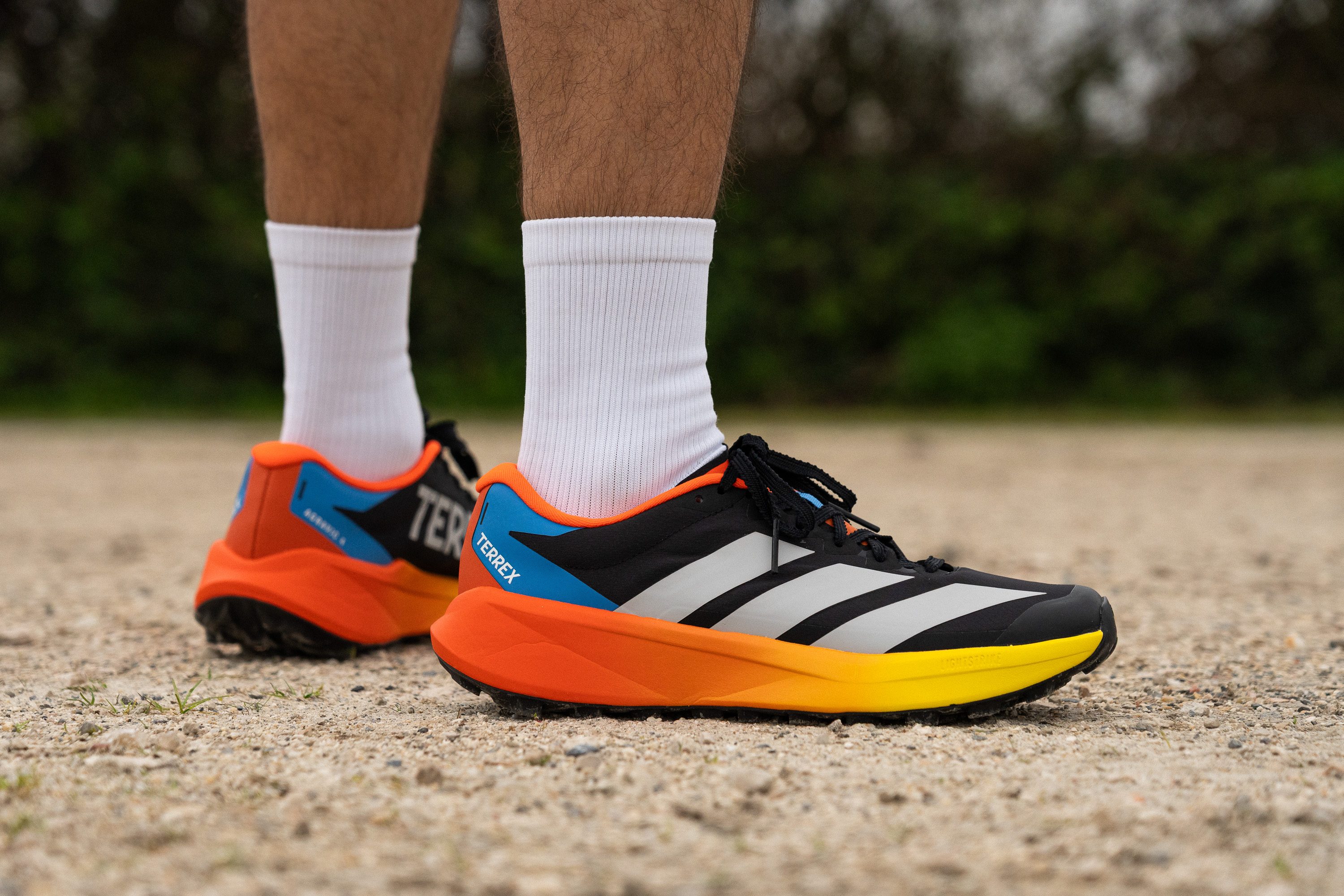
In our opinion, the adidas Terrex Agravic 4 could be an interesting option for:
- Those who prioritise top-tier grip and want the proven reliability of a Continental outsole on varied terrain.
- Beginners in trail running looking for a versatile, easy-to-use shoe for occasional weekend adventures.
- Budget-conscious individuals who want a solid trail option without stepping into premium price ranges.
- Runners who also want a higher-drop setup on the trails.
Who should NOT buy
The biggest room for improvement in the adidas Terrex Agravic 4 is the underwhelming bounce from the LIGHTSTRIKE foam. It lacks energy return, and if that matters to you, we recommend two alternatives: the adidas Adizero EVO SL ATR for very smooth trails or gravel roads, or the ASICS Trabuco 14 for a more comparable, trail-ready option.
We also think the high drop could be a drawback for some runners. If you prefer a lower-drop shoe, the New Balance Fresh Foam X Hierro v9 is a perfect alternative.
Cushioning
Shock absorption
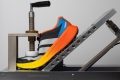
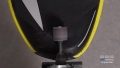
The adidas Terrex Agravic 4 delivers solid shock absorption, posting strong numbers for its stack height. We recorded 122 SA in the heel and 102 SA in the forefoot, providing enough protection for most runs in the mountains.
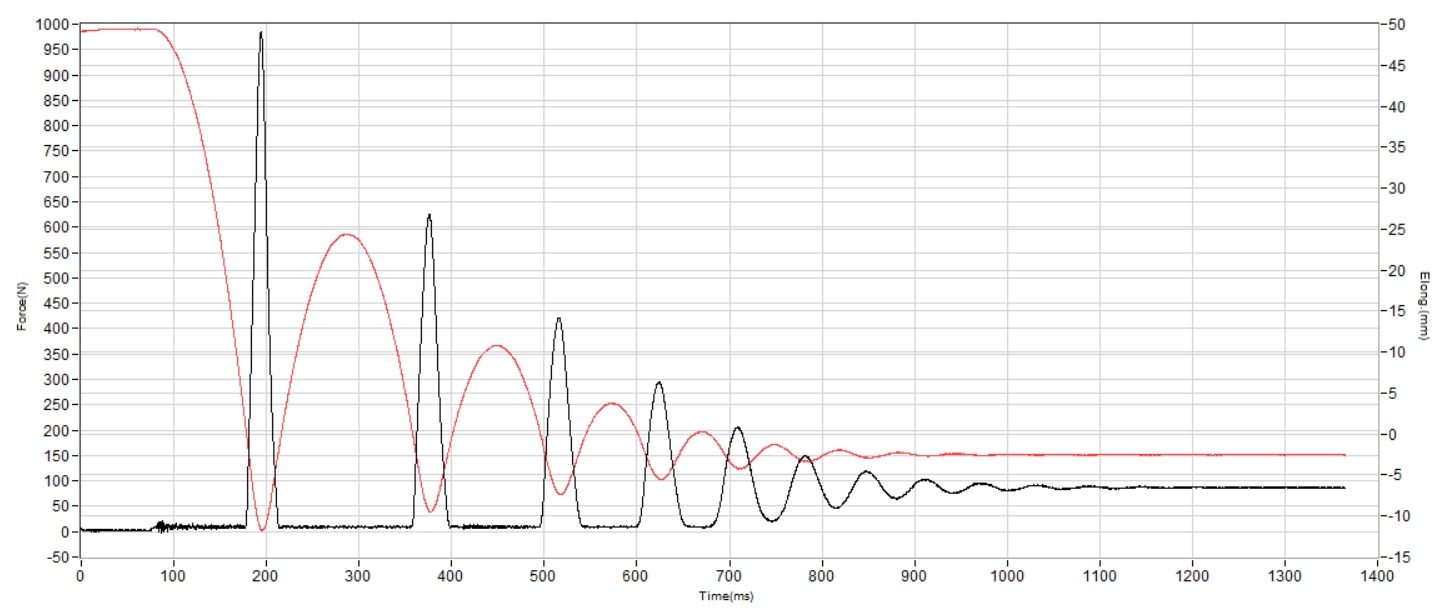
| Terrex Agravic 4 | 122 SA |
| Average | 123 SA |
Energy return
If you came here looking for energy return, the results are not very impressive. We measured 50.3% in the heel and 55.2% in the forefoot, both slightly below the average.
This comes from adidas using LIGHTSTRIKE, a training-focused foam that offers solid durability but does not stand out for energy return—and our testing confirmed it once again. It is also cheaper to produce, which likely helps keep the price of the Agravic 4 reasonable. It’s also important to remember that not every runner needs a highly bouncy foam, especially for trail running.
| Terrex Agravic 4 | 55.2% |
| Average | 59.7% |
Heel stack
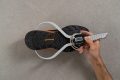
The adidas Terrex Agravic 4 features a moderate heel stack of 32.6 mm, and we think this is a smart approach for a shoe designed to handle multiple uses. It offers a balanced alternative to the current trend of ultra-cushioned trail models.
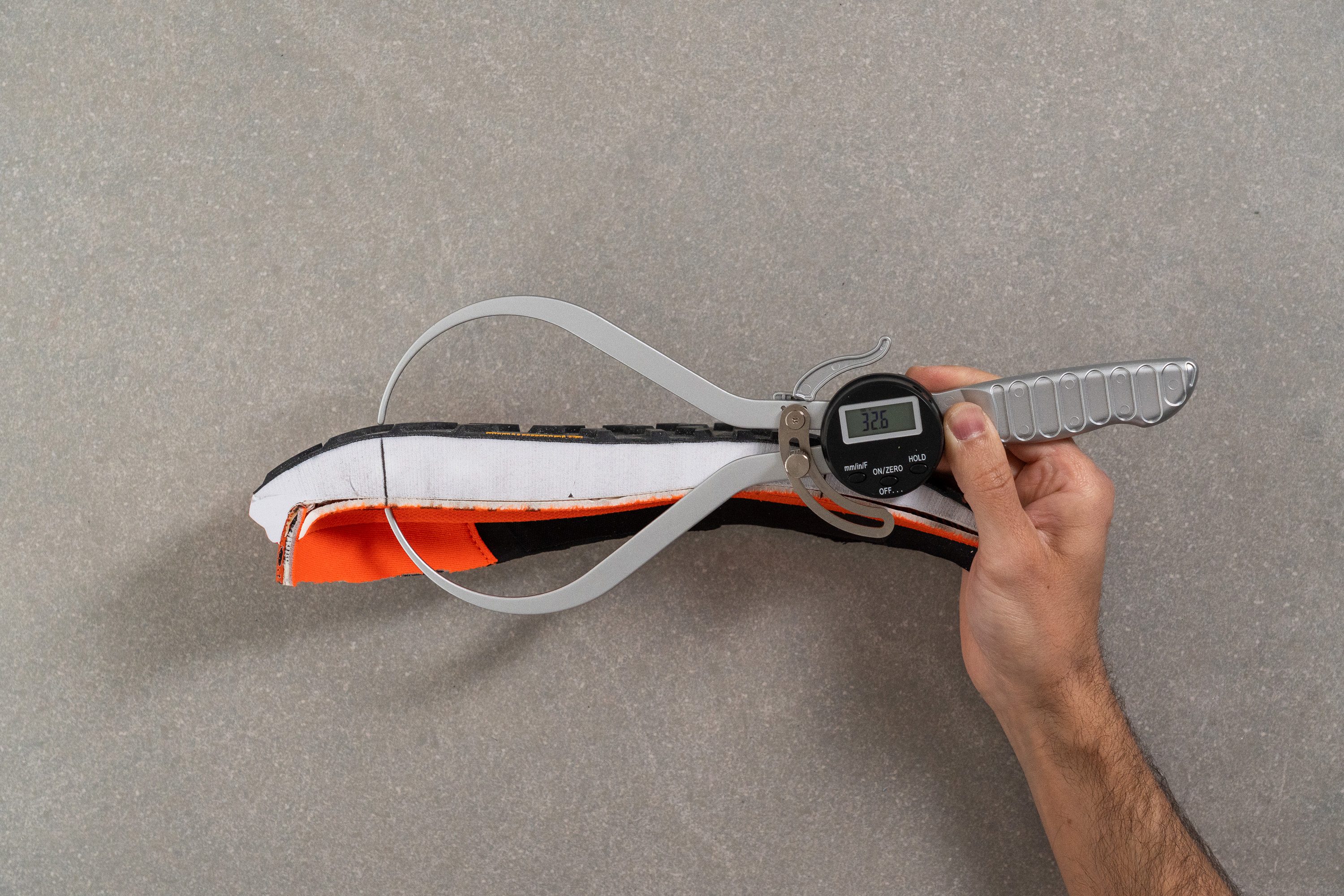
| Terrex Agravic 4 | 32.6 mm |
| Average | 33.1 mm |
Forefoot stack
In fact, the forefoot sits below the lab average, making it a great option for runners who enjoy some ground feel. With just 23.5 mm underfoot, it also works well as a versatile choice that can easily double for hiking too.
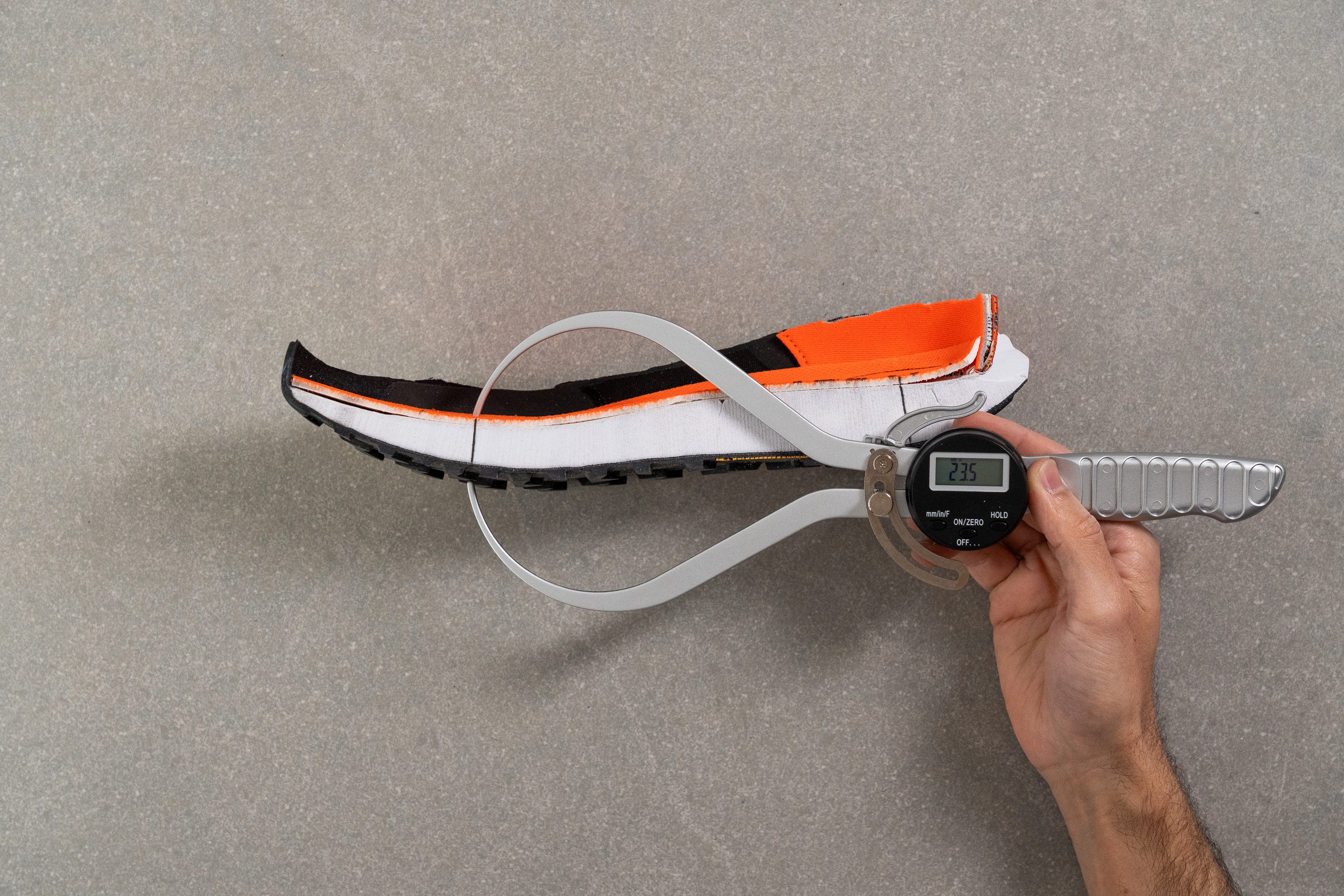
| Terrex Agravic 4 | 23.5 mm |
| Average | 25.8 mm |
Drop
We measured a 9.1 mm drop, very close to the 8 mm claimed by adidas. This shoe works best on easy terrain (as we’ll see later given the shallow lugs) and is not ideal for those who prefer a lower drop on the trails. On the other hand, we think it makes it a strong option for beginners or heel strikers.
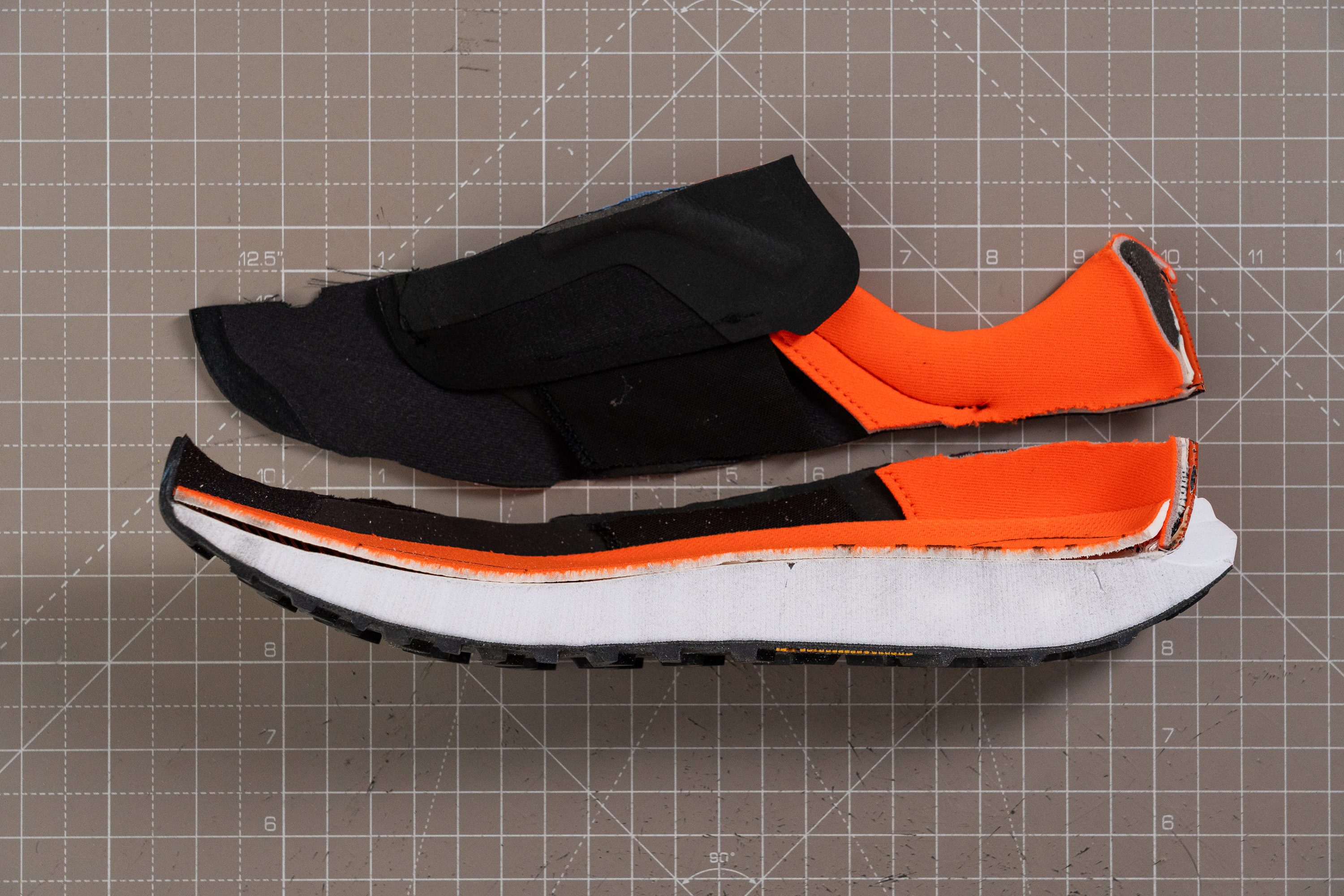
| Terrex Agravic 4 | 9.1 mm |
| Average | 7.3 mm |
Midsole softness
adidas has tweaked the LIGHTSTRIKE formulation for this shoe, delivering a softer feel that we noticed from the first run and later confirmed with a 33.3 AC reading on our Asker C durometer.
It may even feel a bit too soft for trail runners who prefer a firmer underfoot experience, but it’s clear that demand is shifting toward softer foams, and brands are responding accordingly.
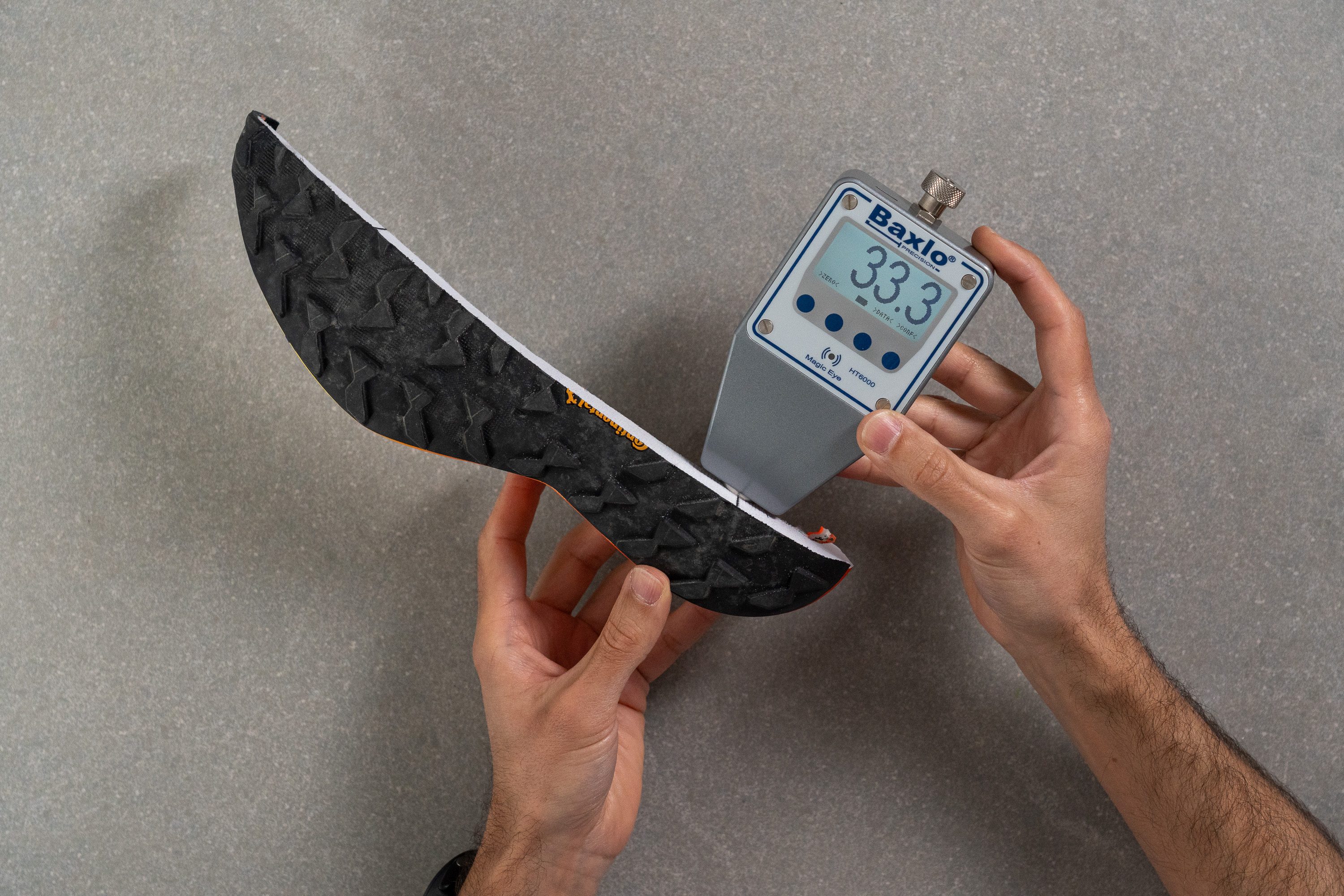
| Terrex Agravic 4 | 33.3 AC |
| Average | 38.3 AC |
Rocker
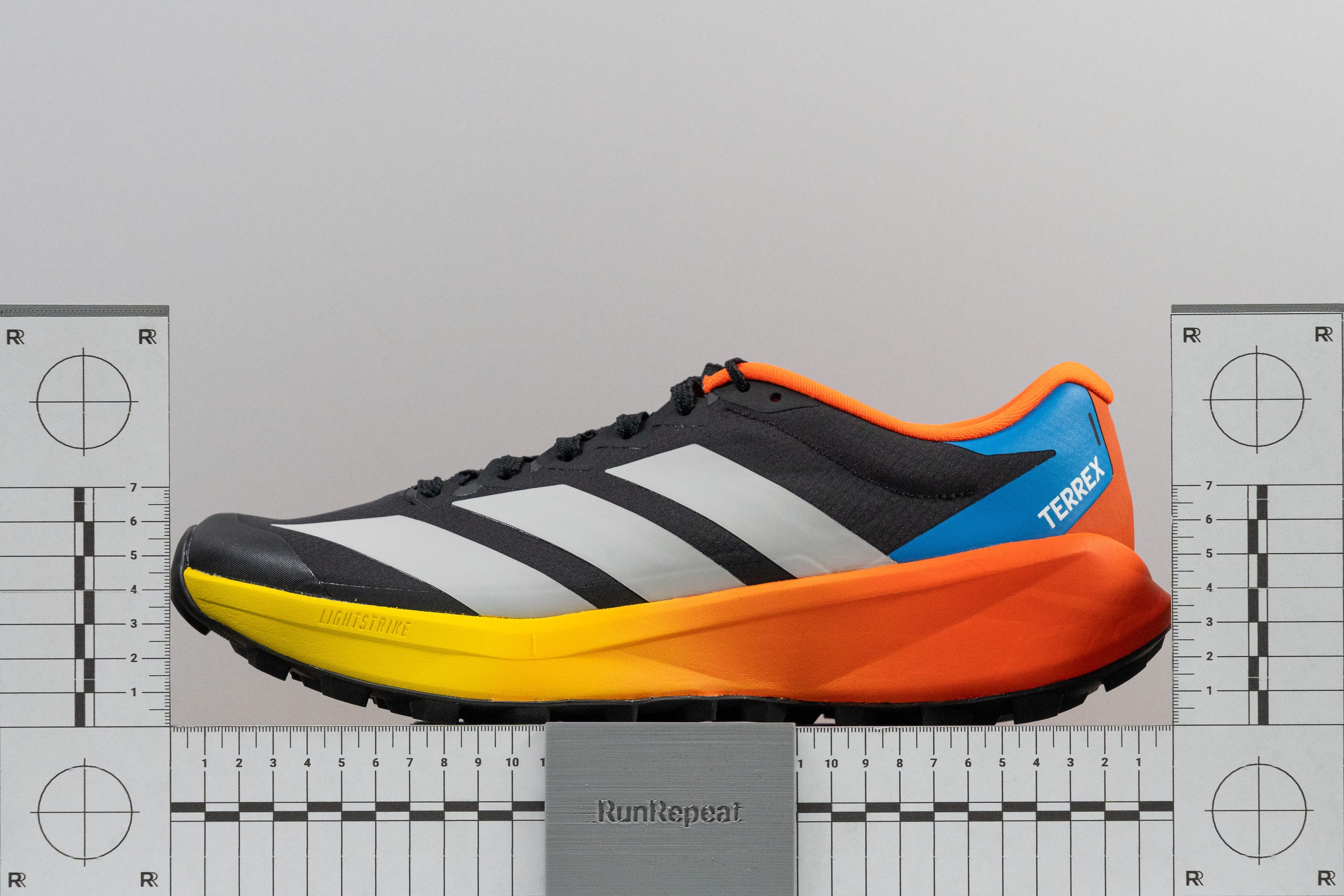
Another design feature that points this shoe toward easier terrain is the rocker. While the toe spring isn’t very pronounced, there’s a clear curvature in both the forefoot and heel, with the latter likely feeling unusual at first for runners coming from flatter trail shoes.
Size and fit
Size
adidas Terrex Agravic 4 fits true to size (11 votes).
Internal length
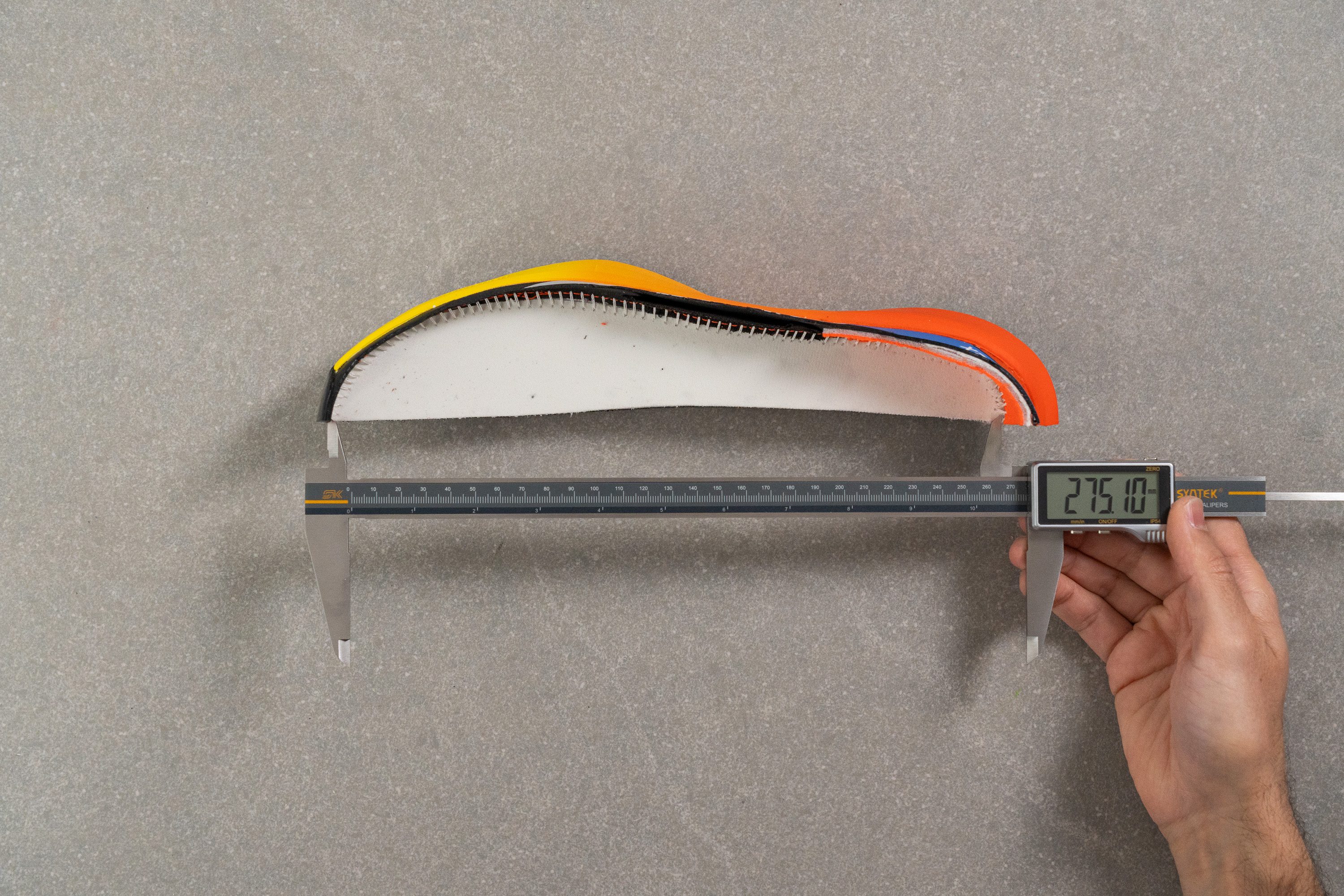
| Terrex Agravic 4 | 275.1 mm |
| Average | 269.2 mm |
Width / Fit
In recent adidas models like the Supernova Solution 2 and Supernova Rise 3, we noticed a more accommodating interior, which is good news for runners with wider feet.
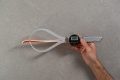
Using our gel method, we confirmed that this updated fit also carries over to the trail lineup, as the Terrex Agravic 4 reached 97.9 mm in our first measurement.
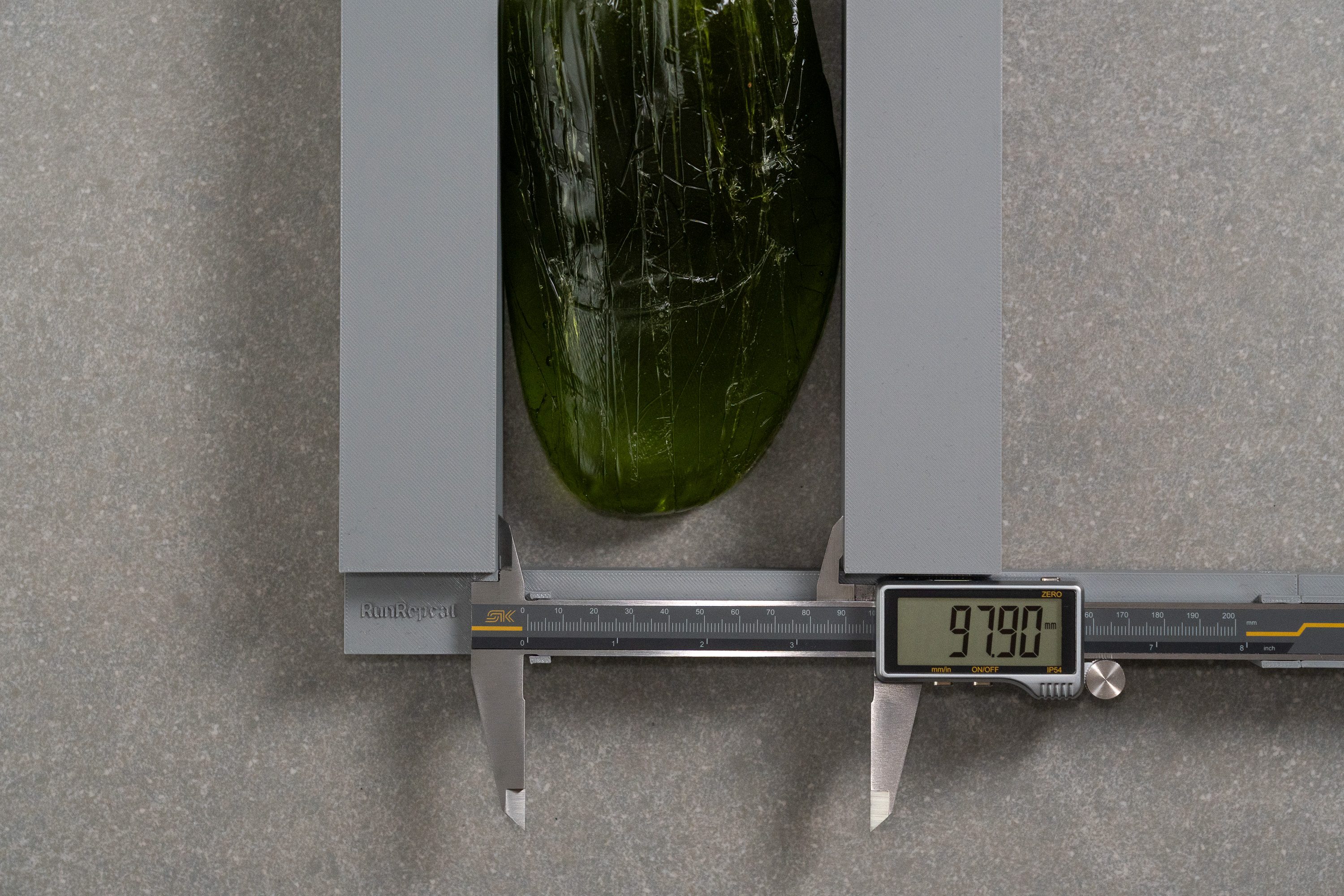
| Terrex Agravic 4 | 97.9 mm |
| Average | 95.7 mm |
Toebox width
Like many other adidas shoes, the toebox follows a tapered design (73.0 mm) that sits close to the average among running shoes.
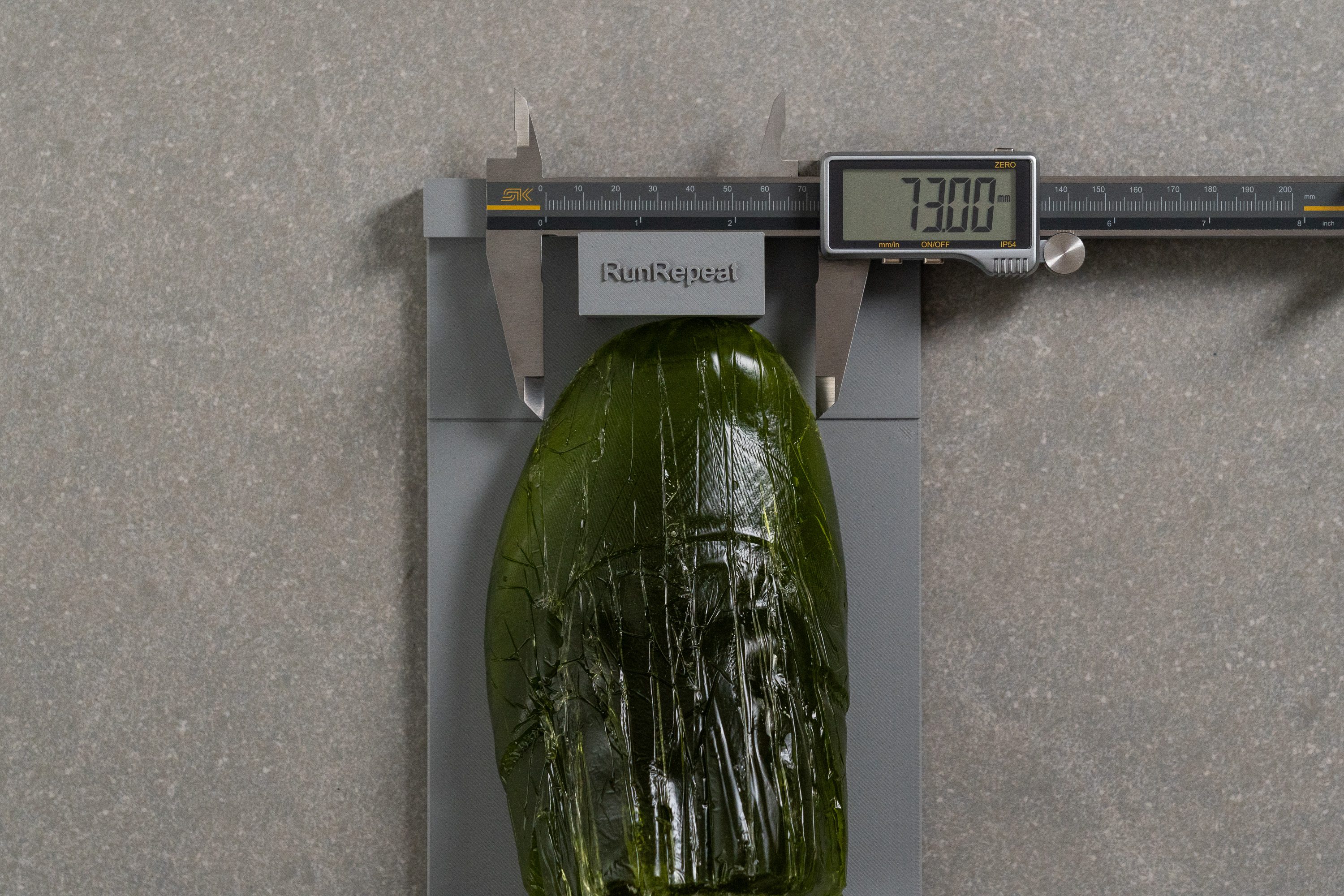
| Terrex Agravic 4 | 73.0 mm |
| Average | 74.3 mm |
Toebox height
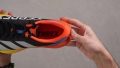
We also measured the toebox height to get a clearer picture of the overall fit, and it came in at 25.9 mm.
This matches what we experienced on the run, as it sits close to the toes without creating excessive pressure. It works well for runners who prefer a more secure, locked-in feel.
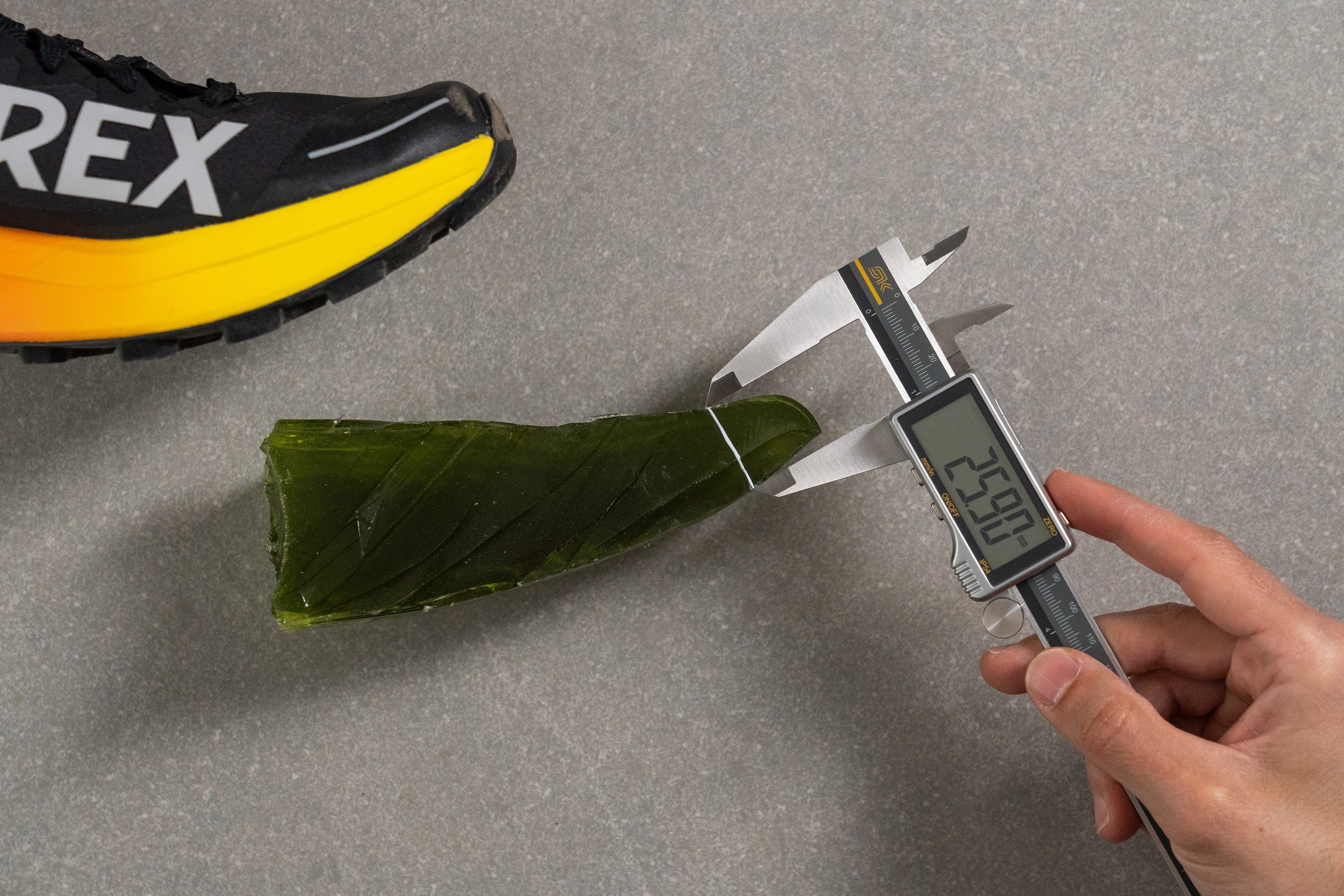
| Terrex Agravic 4 | 25.9 mm |
| Average | 26.9 mm |
Traction / Grip
Traction test
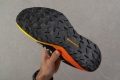
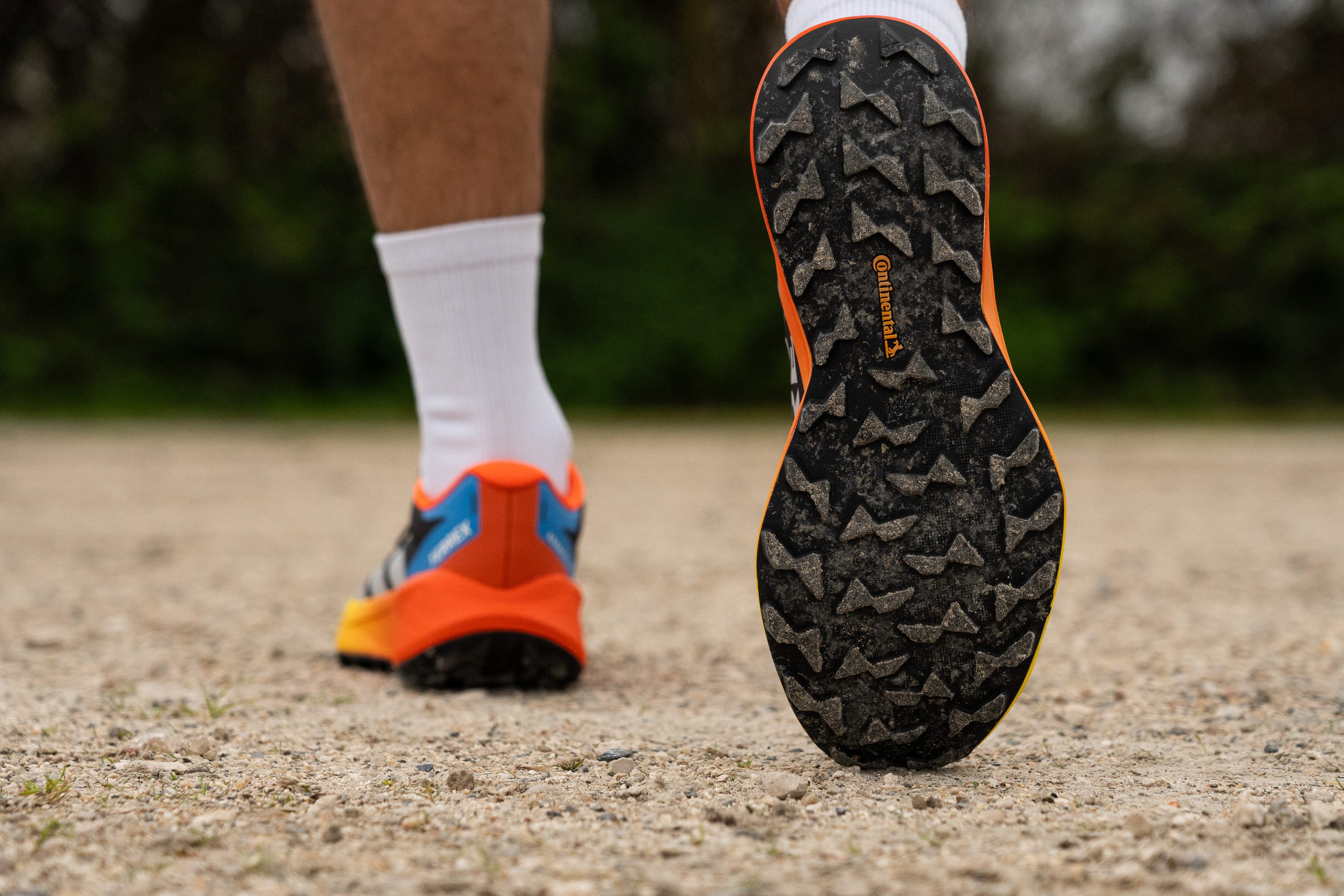
For us, the main selling point of the Agravic 4 is that it keeps Continental rubber. adidas has been phasing it out in lines like the Supernova and even some Adistar models, but thankfully it remains here. As expected, traction is very solid on both dry and wet terrain, reaching 0.70 in our lab test.
| Terrex Agravic 4 | 0.70 |
| Average | 0.68 |
Lug depth
We think the 3.1 mm lug depth of the Terrex Agravic 4 makes it a great option for easy trails. We also think that it can be an amazing gravel shoe thanks to its full-length Continental rubber coverage, which helps protect the midsole from sharp rocks.
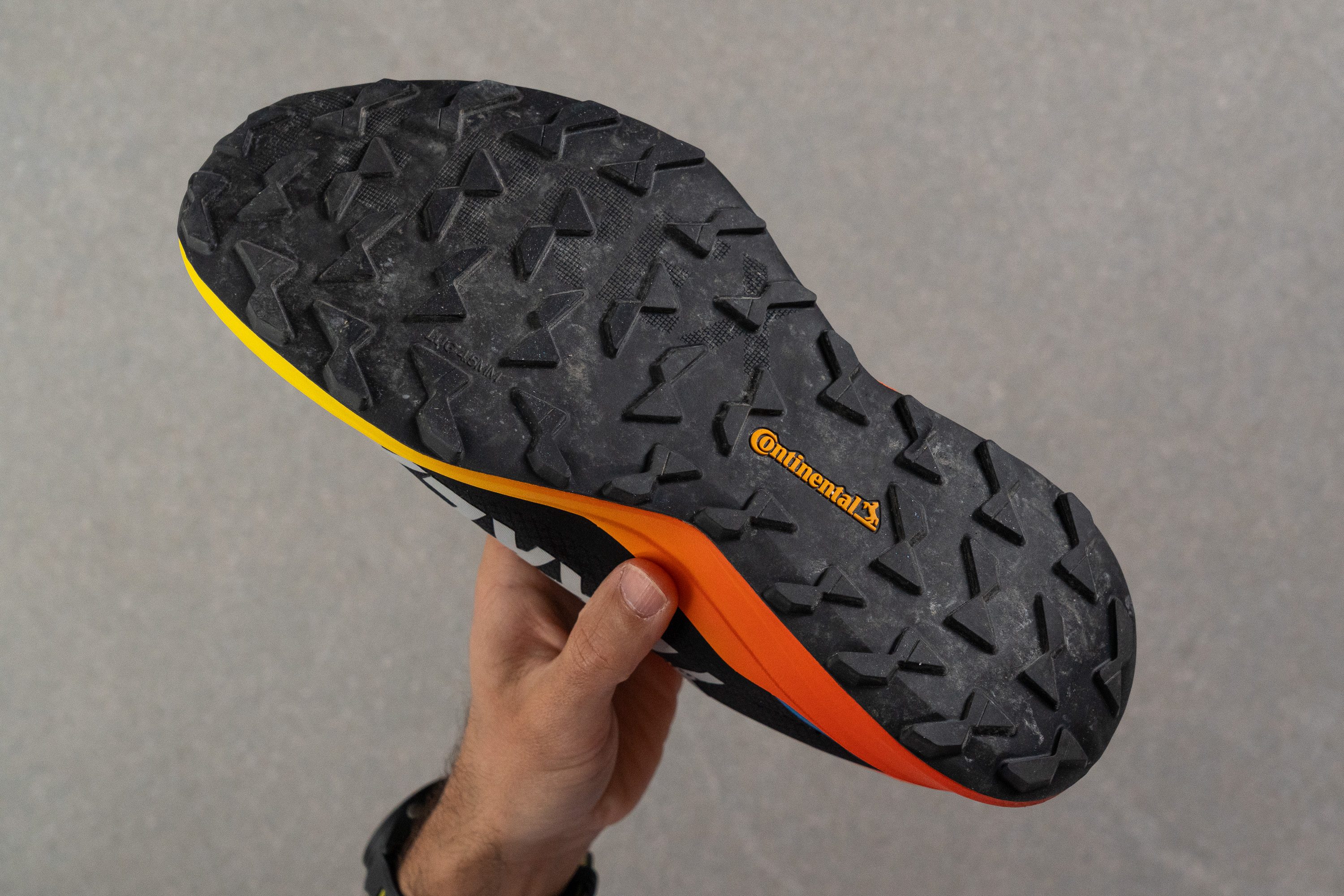
The lug shape is also clearly tuned for less technical terrain. During our runs, it handled turns and faster paces well on smooth, uncomplicated surfaces, reinforcing our view of its strong potential for gravel use.
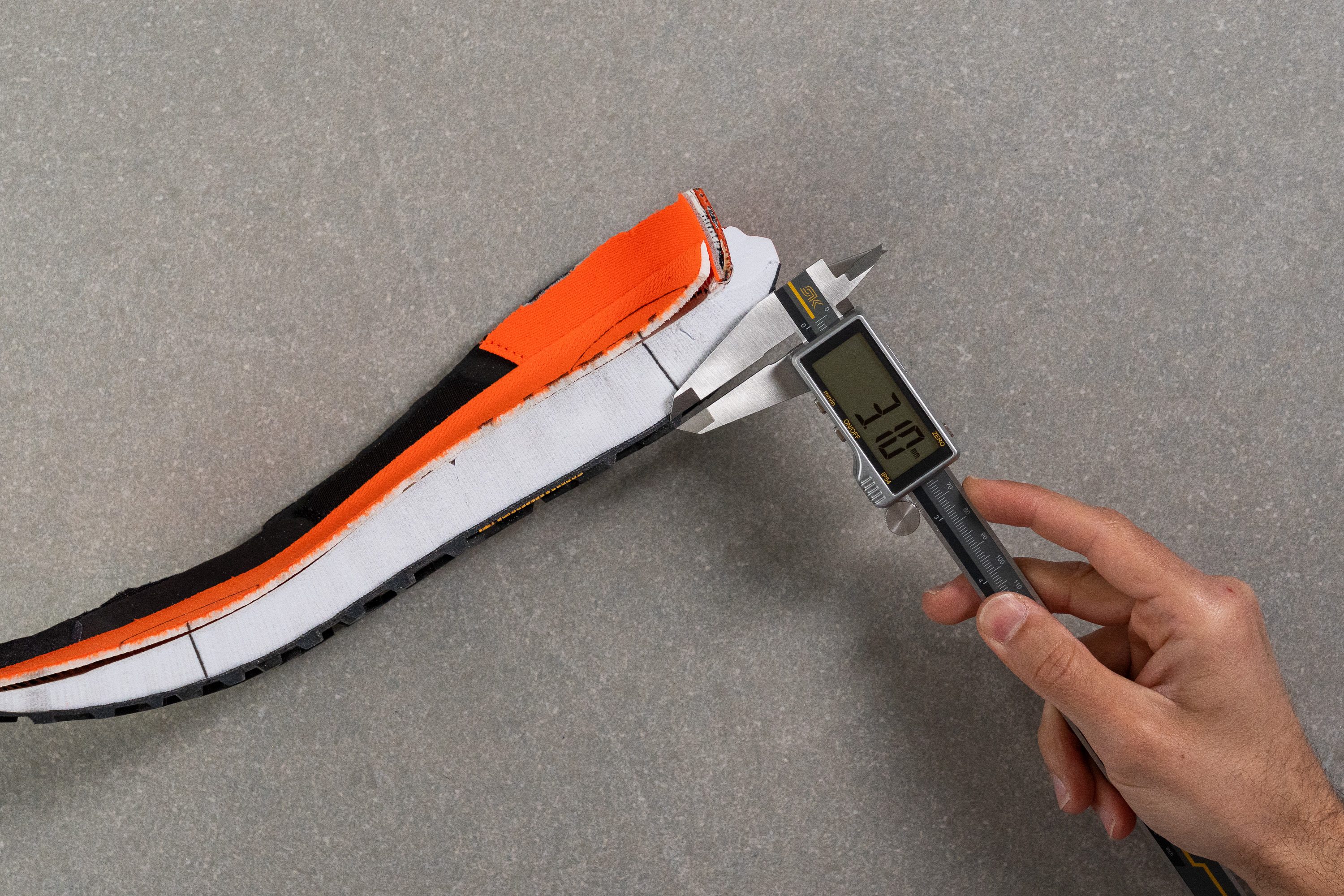
| Terrex Agravic 4 | 3.1 mm |
| Average | 3.5 mm |
Outsole design
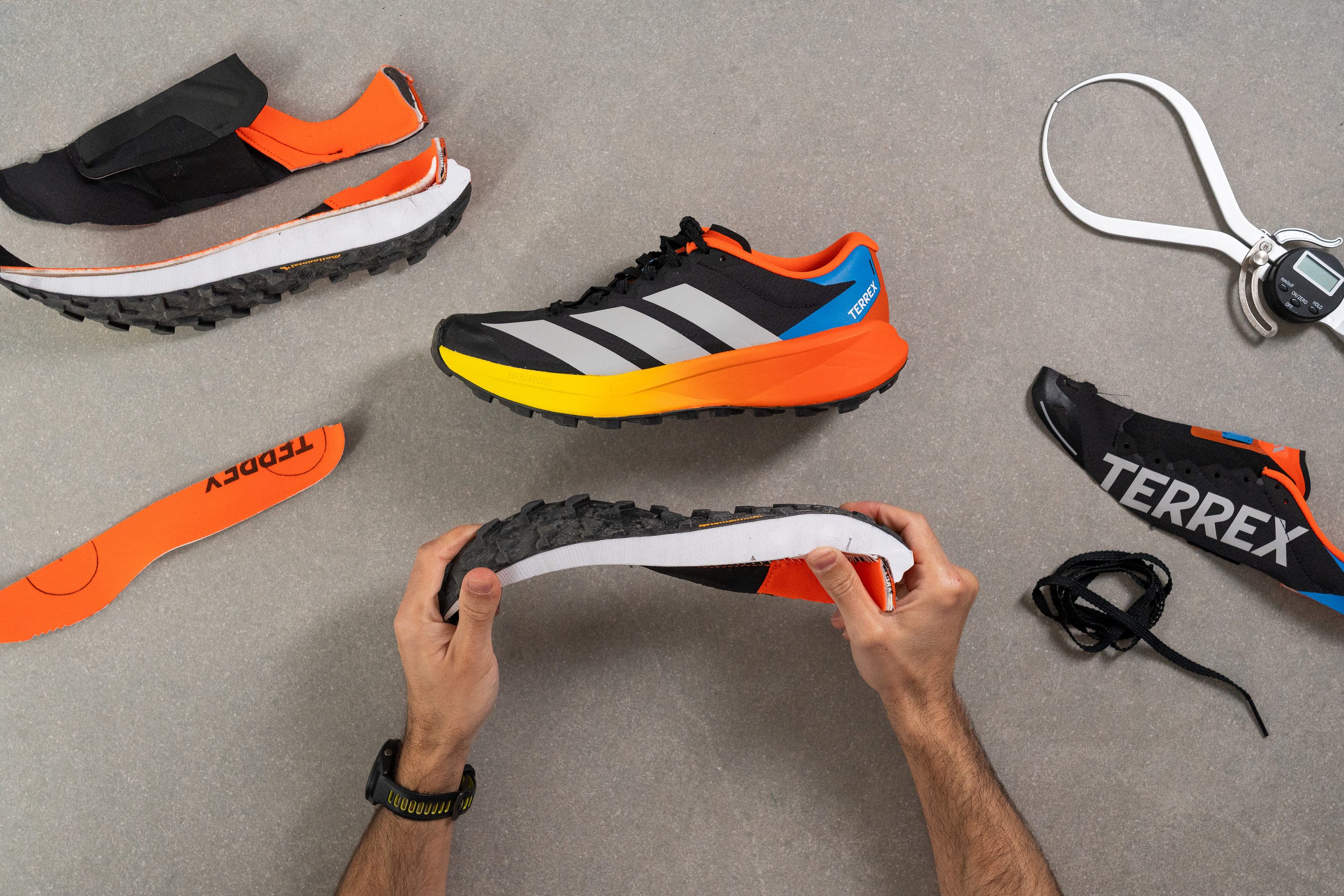
For some trail runners, a full rubber outsole is hard to beat. adidas delivers that with the Agravic 4, protecting the entire midsole with Continental rubber. While it adds some extra weight, we think it’s the right choice for this shoe and it makes this model especially strong in terms of durability.
Flexibility / Stiffness
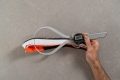
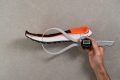
Despite having no cutouts in the outsole and a full layer of Continental rubber, the Terrex Agravic 4 benefits from its moderate stack height to stay close to average in longitudinal stiffness, measuring 15.6N.
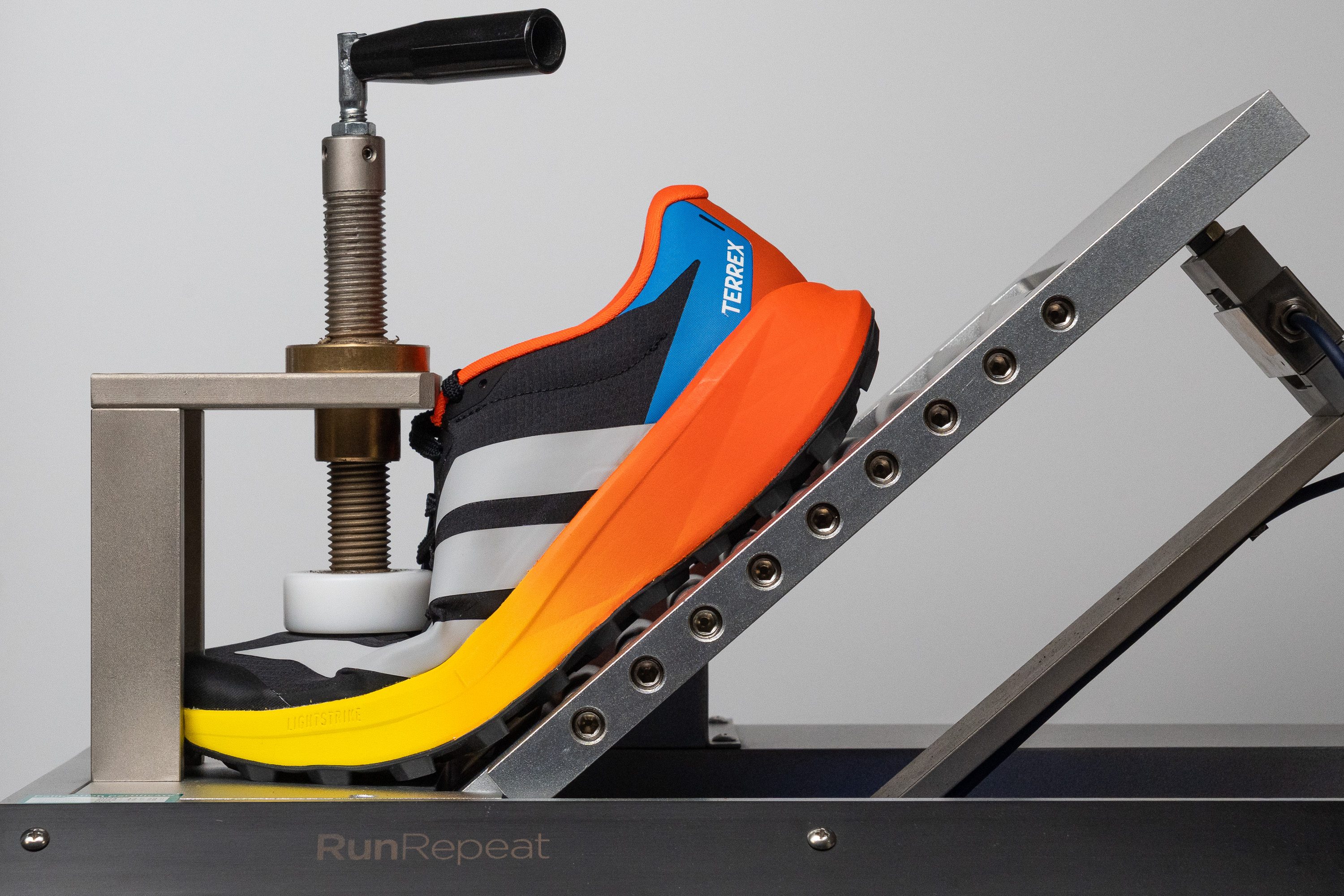
| Terrex Agravic 4 | 15.6N |
| Average | 14.8N |
Weight
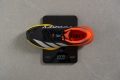
The adidas Terrex Agravic 4 tipped our scale at 10.0 oz or 283g. This is not a lightweight trail shoe, and the reasons are clear: the full-coverage outsole we just discussed and the absence of a more advanced, supercritical foam that could reduce weight by around 10 to 15%.
We are not blaming adidas, as many runners accept a bit of extra weight if that means avoiding a price hike, or adding some durability. It’s simply a matter of trade-offs.
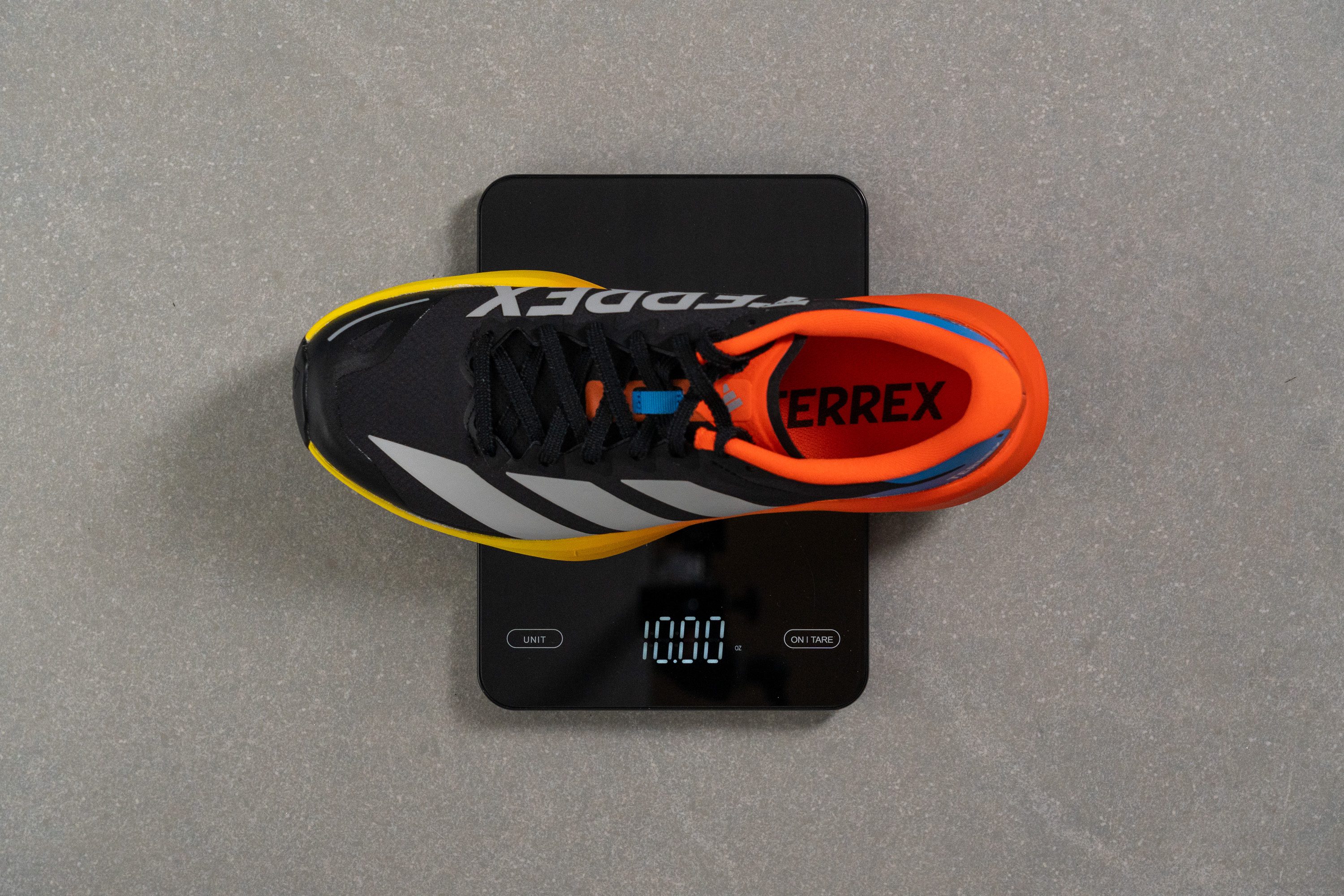
| Terrex Agravic 4 | 10.0 oz (283g) |
| Average | 10.1 oz (285g) |
Breathability
Breathability test
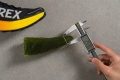
The upper of the Terrex Agravic 4 is not easy to judge at first glance. It doesn’t feel thick, but it also lacks visible ventilation holes, and we’ve seen mixed results with similar designs.
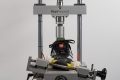
That’s why we rely on lab testing instead of guessing. In this case, airflow is very limited, as the Agravic 4 scored just 1/5 in our breathability test.
There are slightly thinner areas in the toebox and tongue, but they don’t seem to improve ventilation in a meaningful way. Based on this, we think the shoe is better suited for cold or mild climates rather than hot conditions.
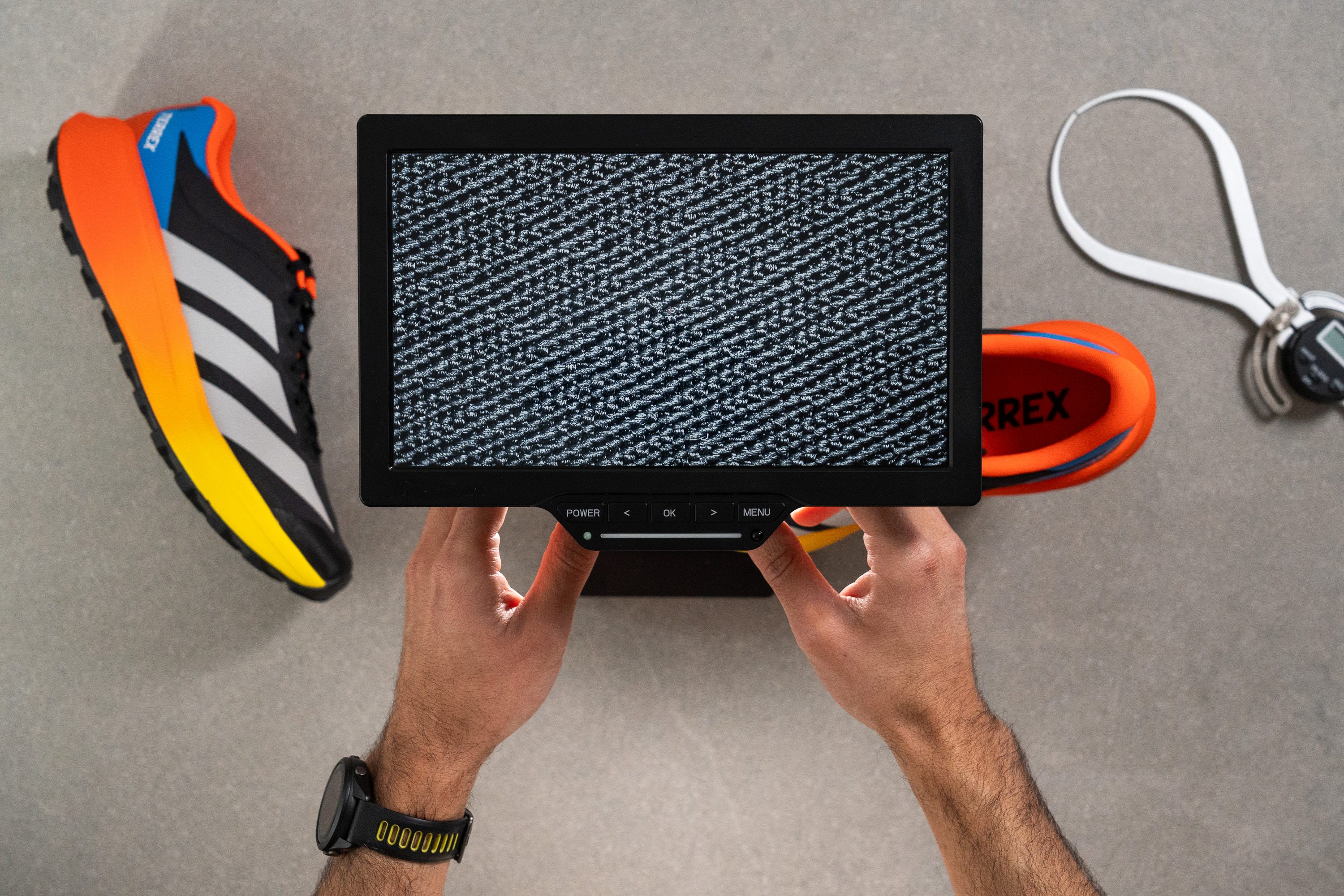
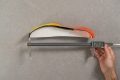
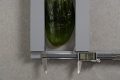
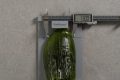
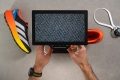
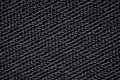
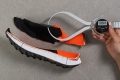
Under the microscope, the mesh clearly showed that air struggles to pass through, confirming the poor ventilation we measured.
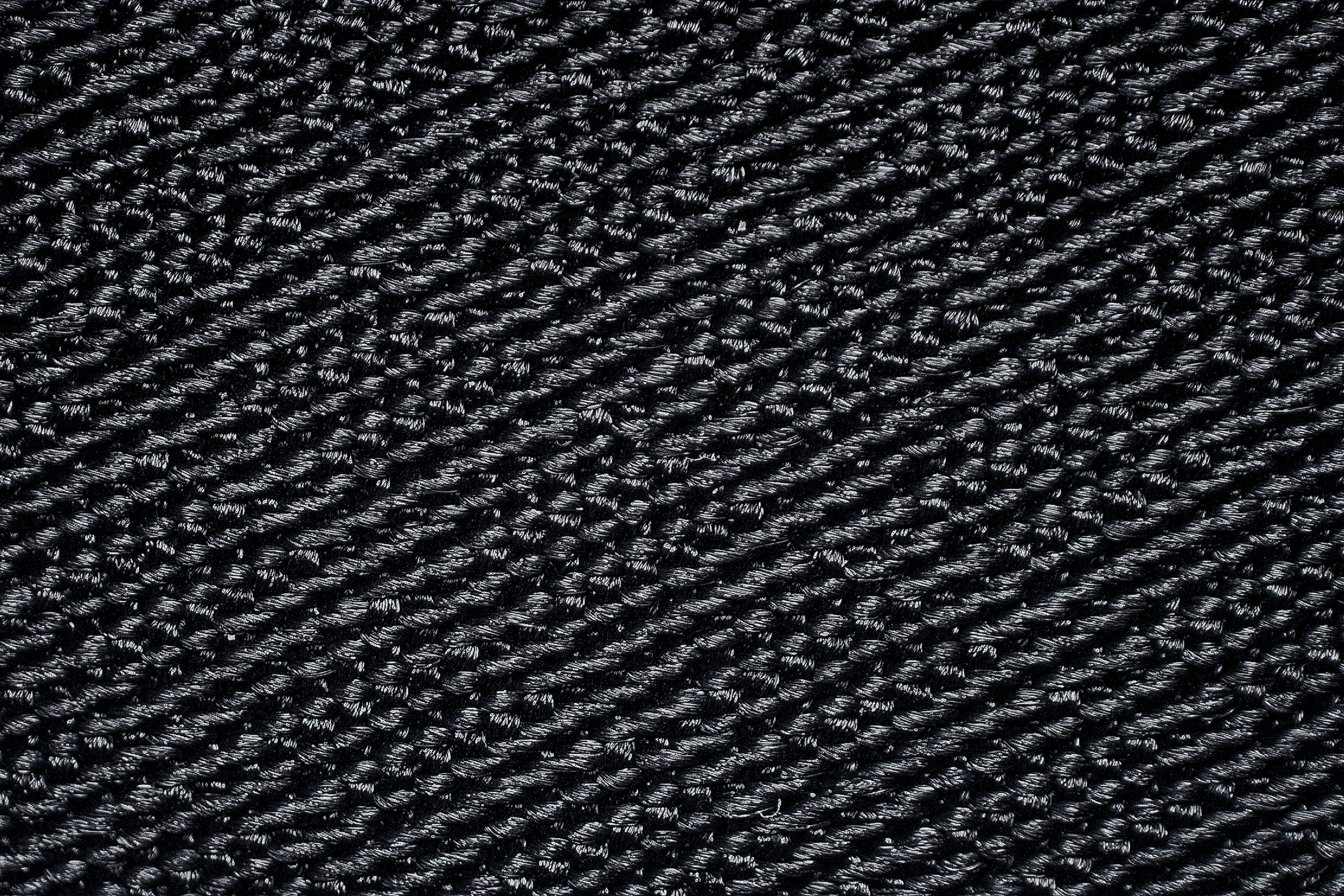
The upper is still well built and comfortable, once again showing that weight was not a priority here. However, if you are looking for a breathable shoe, this is not the right option.
| Terrex Agravic 4 | 1 |
| Average | 3.3 |
Stability
Lateral stability test
adidas refined the geometry and design of the Agravic 4 to deliver a stable ride for neutral runners, and we think they succeeded. We found raised midsole sidewalls that add guidance for heel strikers, while forefoot strikers benefit from the extra-wide platform in the front.
Torsional rigidity
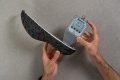
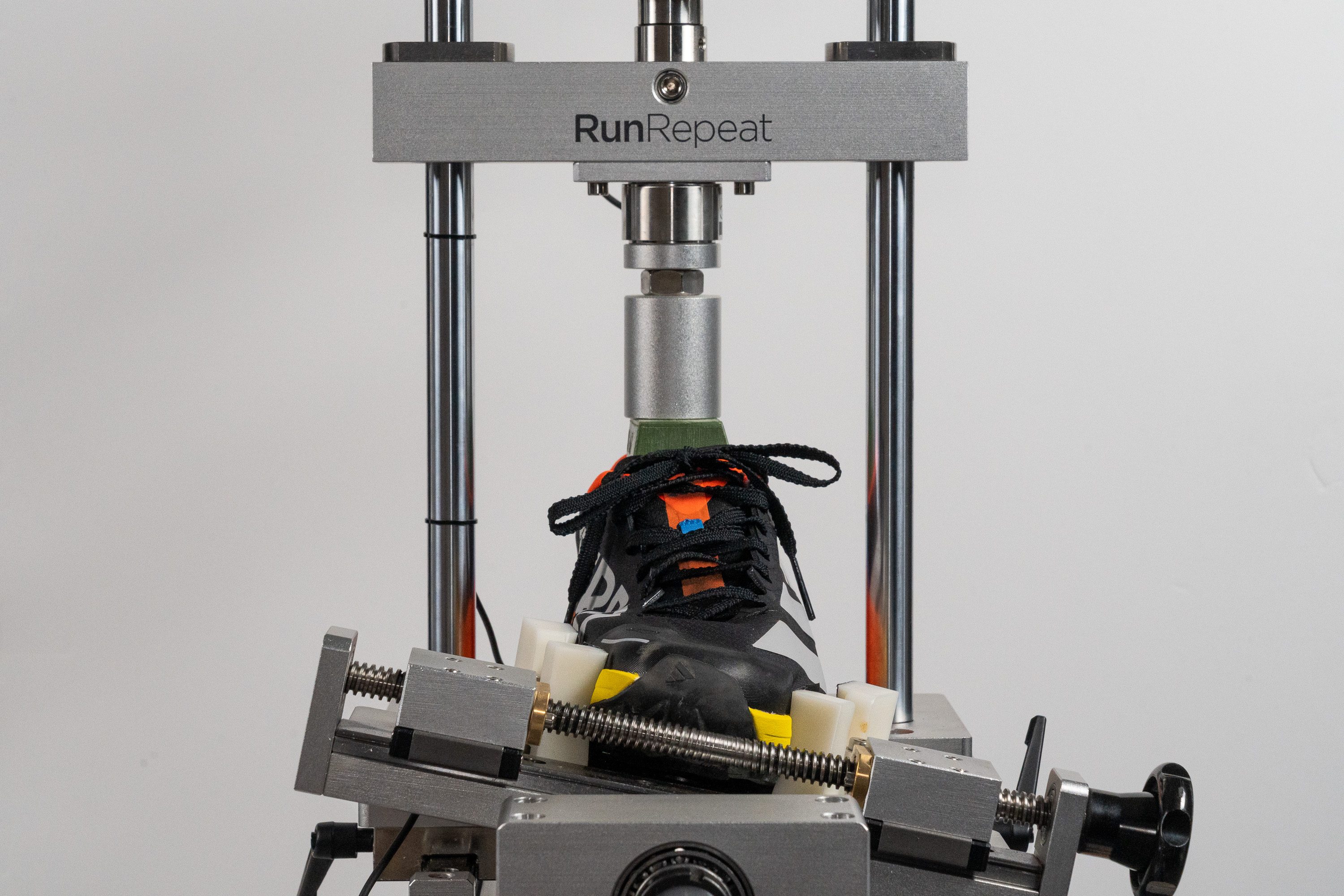
The Agravic 4 delivers balanced flexibility at 14.5 Nm, reinforcing its versatile character and making it a good option for some hiking too.
| Terrex Agravic 4 | 14.5 Nm |
| Average | 15.8 Nm |
Heel counter stiffness
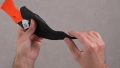
The heel counter is also stiffer than average, supporting our view that adidas aimed to maximise stability for heel strikers while making the shoe appealing for beginners.
| Terrex Agravic 4 | 4 |
| Average | 3 |
Midsole width - forefoot
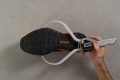
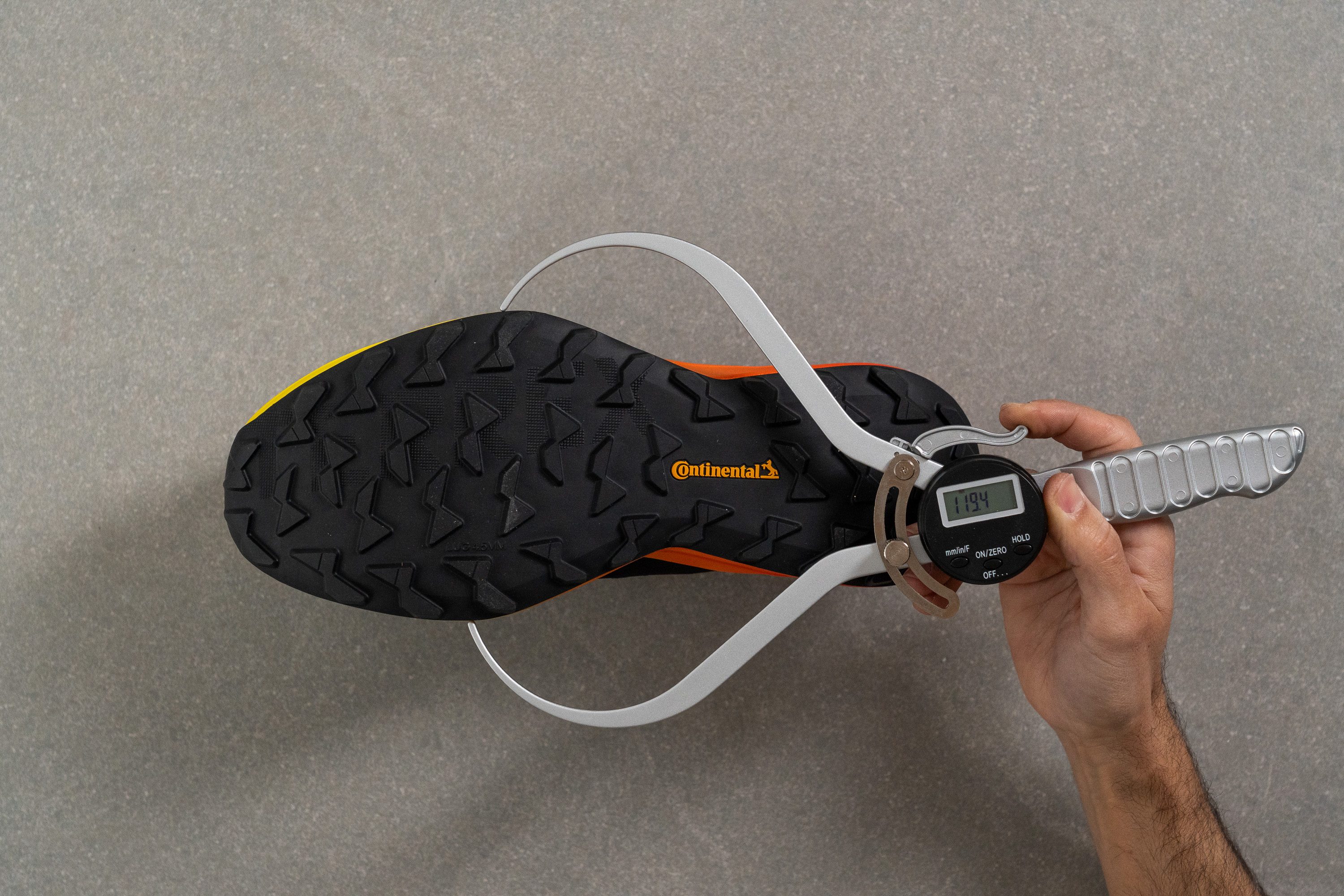
One of the most noticeable design features of the Agravic 4 is its super-wide forefoot, measuring 119.4 mm. It’s clearly felt on every landing and adds a strong sense of confidence, especially when cornering.
This contrasts sharply with the narrower midfoot. It’s a familiar adidas approach, with a shape that closely resembles the premium trail super shoe Terrex Agravic Speed Ultra.
| Terrex Agravic 4 | 119.4 mm |
| Average | 114.3 mm |
Midsole width - heel
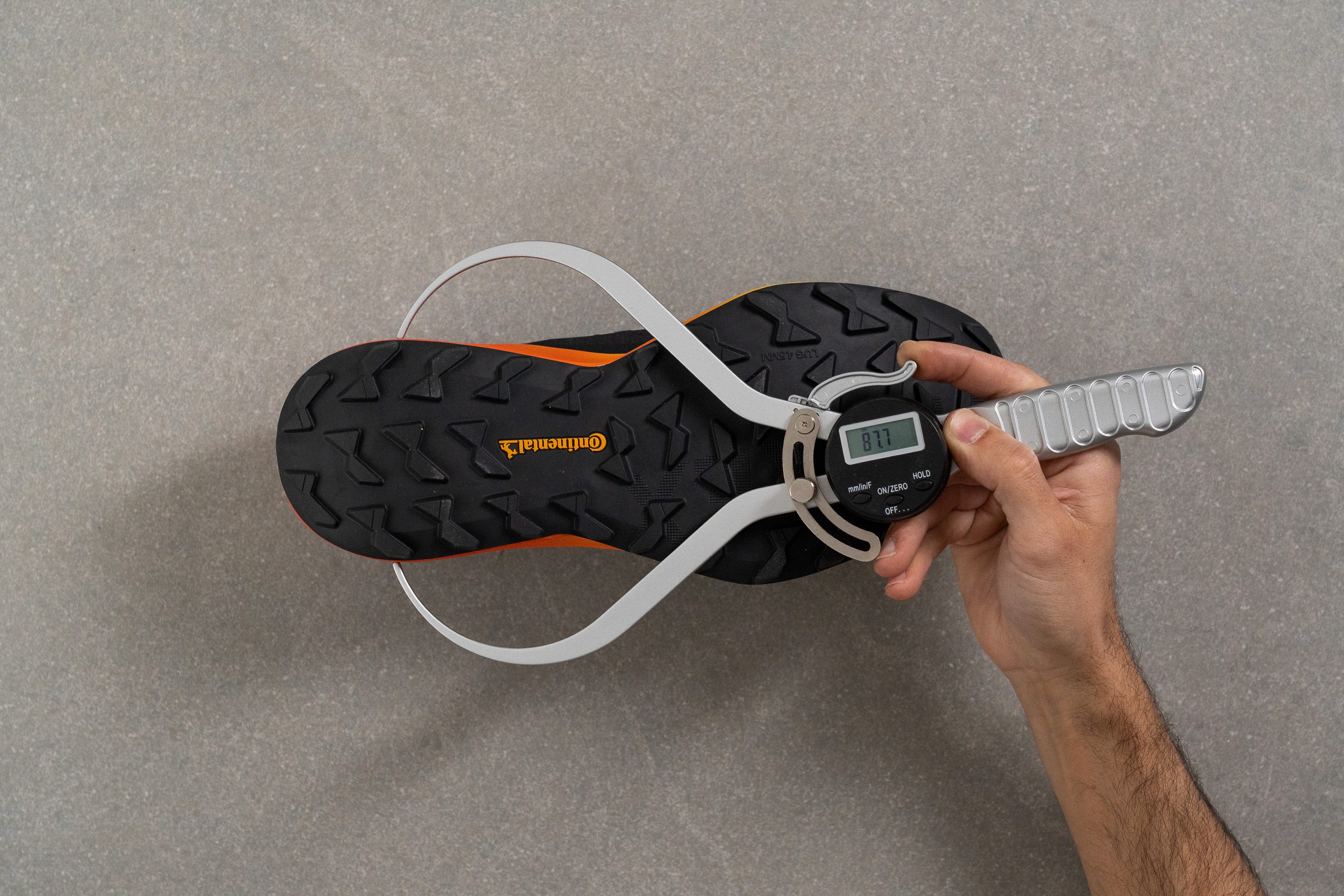
The heel measures 87.7 mm, but it can feel narrower due to the aggressive midfoot design, which creates a pronounced taper. That likely explains why adidas added a stiff heel counter and sidewalls to enhance stability in the rear area.
| Terrex Agravic 4 | 87.7 mm |
| Average | 90.5 mm |
Durability
Toebox durability
We noticed during our breathability assessment that the upper is quite thin, and after testing hundreds of road and trail shoes in the lab, we can often anticipate how this test will go. As expected, it returned a 1 out of 5.
| Terrex Agravic 4 | 1 |
| Average | 3.1 |
Heel padding durability
The heel padding showed a slight improvement with a 2/5, but it still falls below what we consider a good durability score. It’s clearly not among the toughest uppers we’ve seen in a trail running shoe.
| Terrex Agravic 4 | 2 |
| Average | 3.1 |
Outsole durability
The outsole tells a very different story in terms of durability. Continental once again proved extremely tough, with only 0.5 mm worn away after our test, which is a very strong result.
| Terrex Agravic 4 | 0.5 mm |
| Average | 0.9 mm |
Outsole thickness
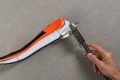
The Agravic 4 features 1.7 mm of outsole thickness, which is more than enough considering its strong performance and the shoe’s already heavy and stiff build. Adding more would likely have been unnecessary.
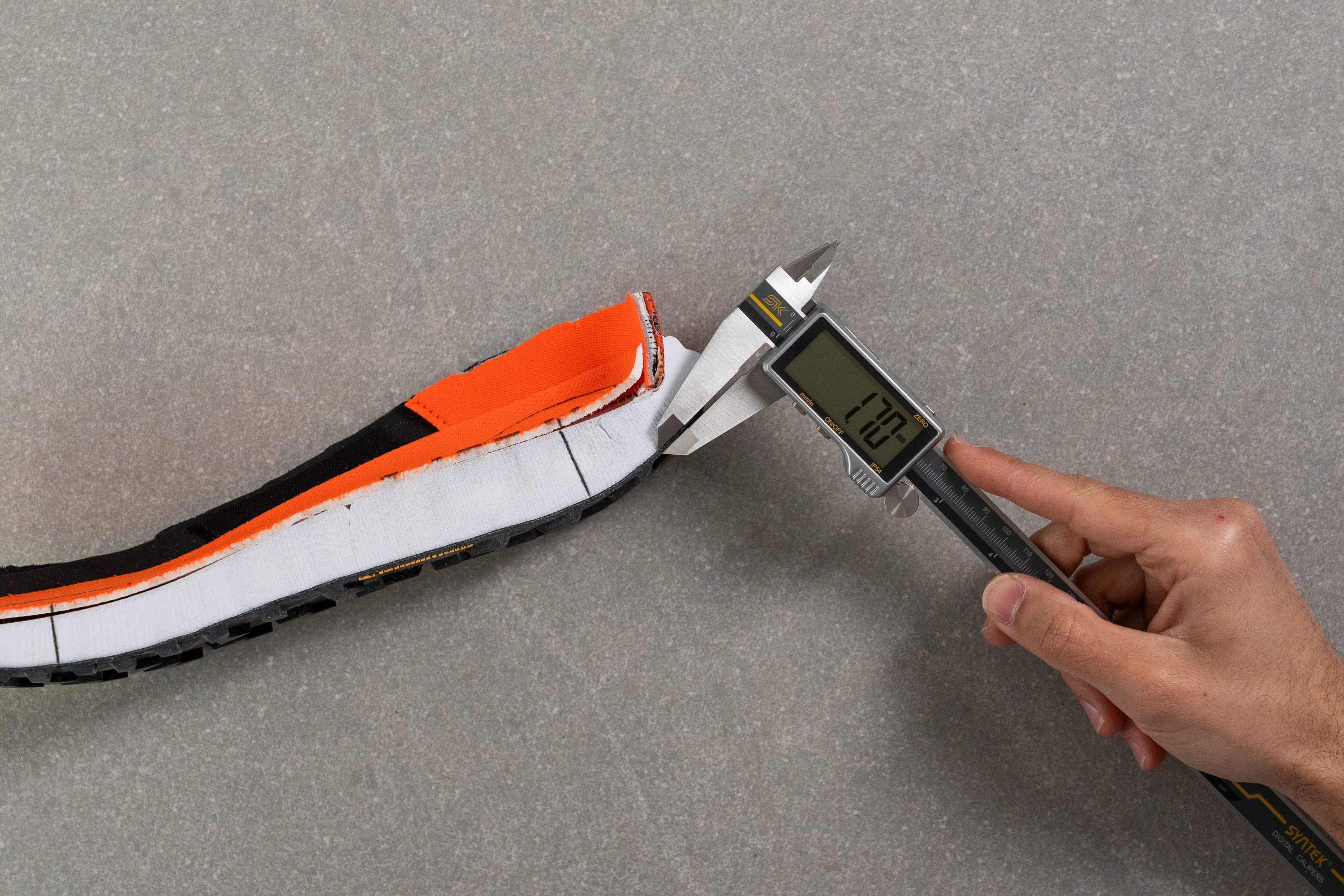
| Terrex Agravic 4 | 1.7 mm |
| Average | 1.9 mm |
Misc
Insole thickness
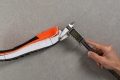
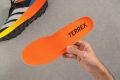
At 3.0 mm thick, the insole is thinner than what we usually see in most trail shoes.
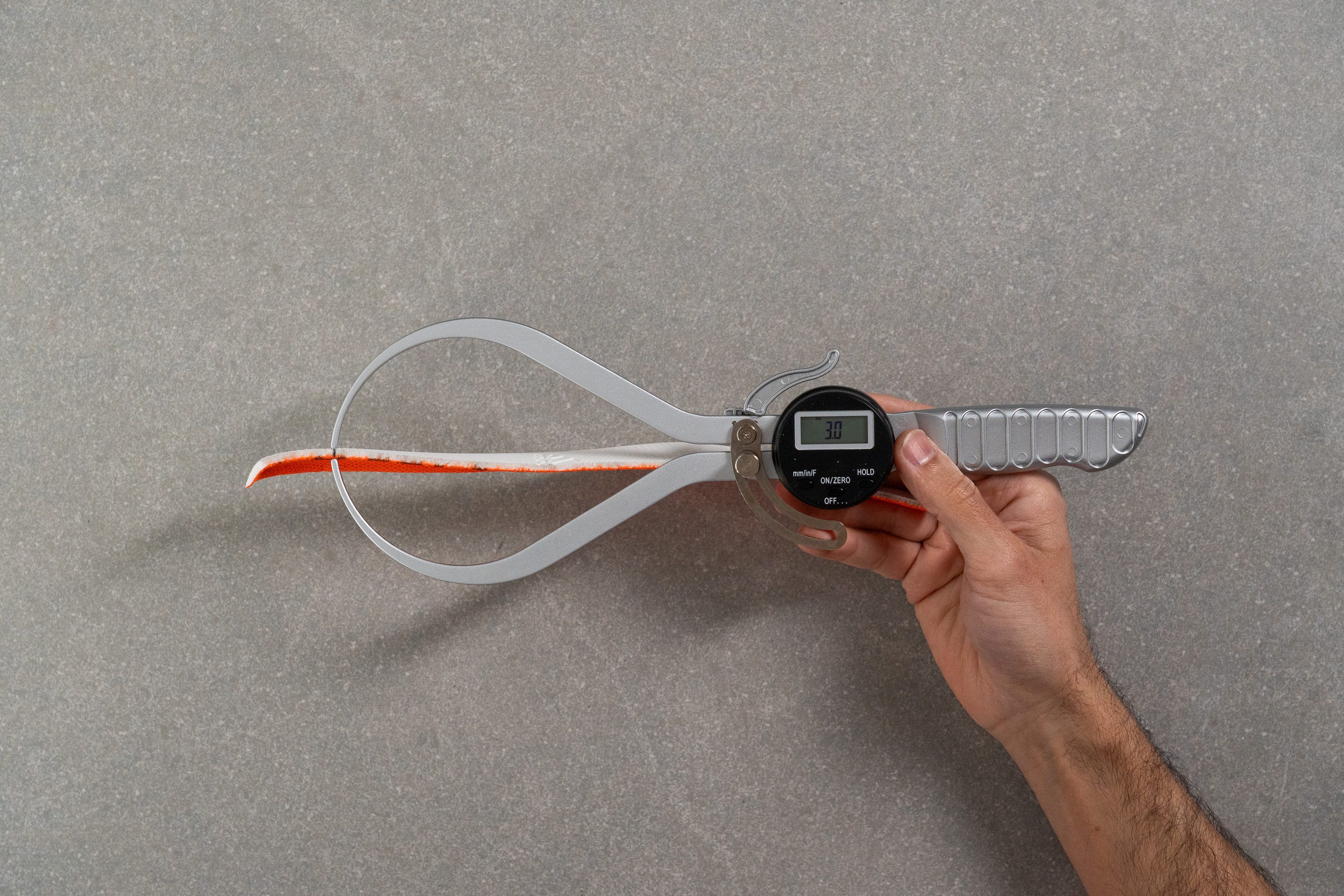
| Terrex Agravic 4 | 3.0 mm |
| Average | 4.6 mm |
Removable insole
However, you can easily remove it and replace it with another insole if you prefer.
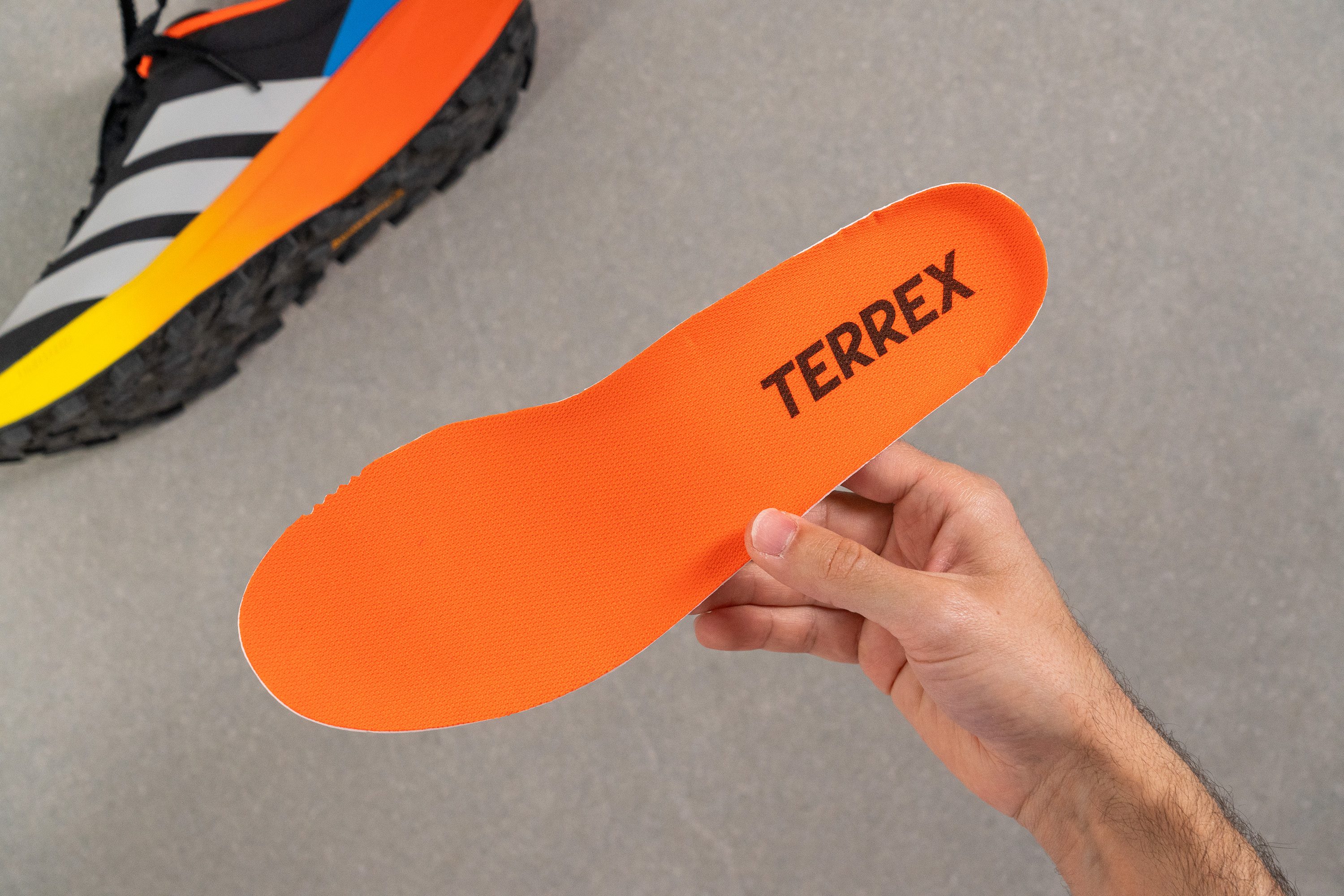
| Terrex Agravic 4 | Yes |
Reflective elements
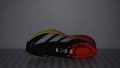
adidas added reflective elements to the Agravic 4, which is a nice touch for low-light runs.
| Terrex Agravic 4 | Yes |
Tongue padding
Another positive aspect of the Terrex Agravic 4 is the lacing system. adidas uses high-quality, textured laces here despite the affordable price, which stands out since we’ve seen much more expensive models from this brand with awful laces. This is clearly a step in the right direction, thank you guys!
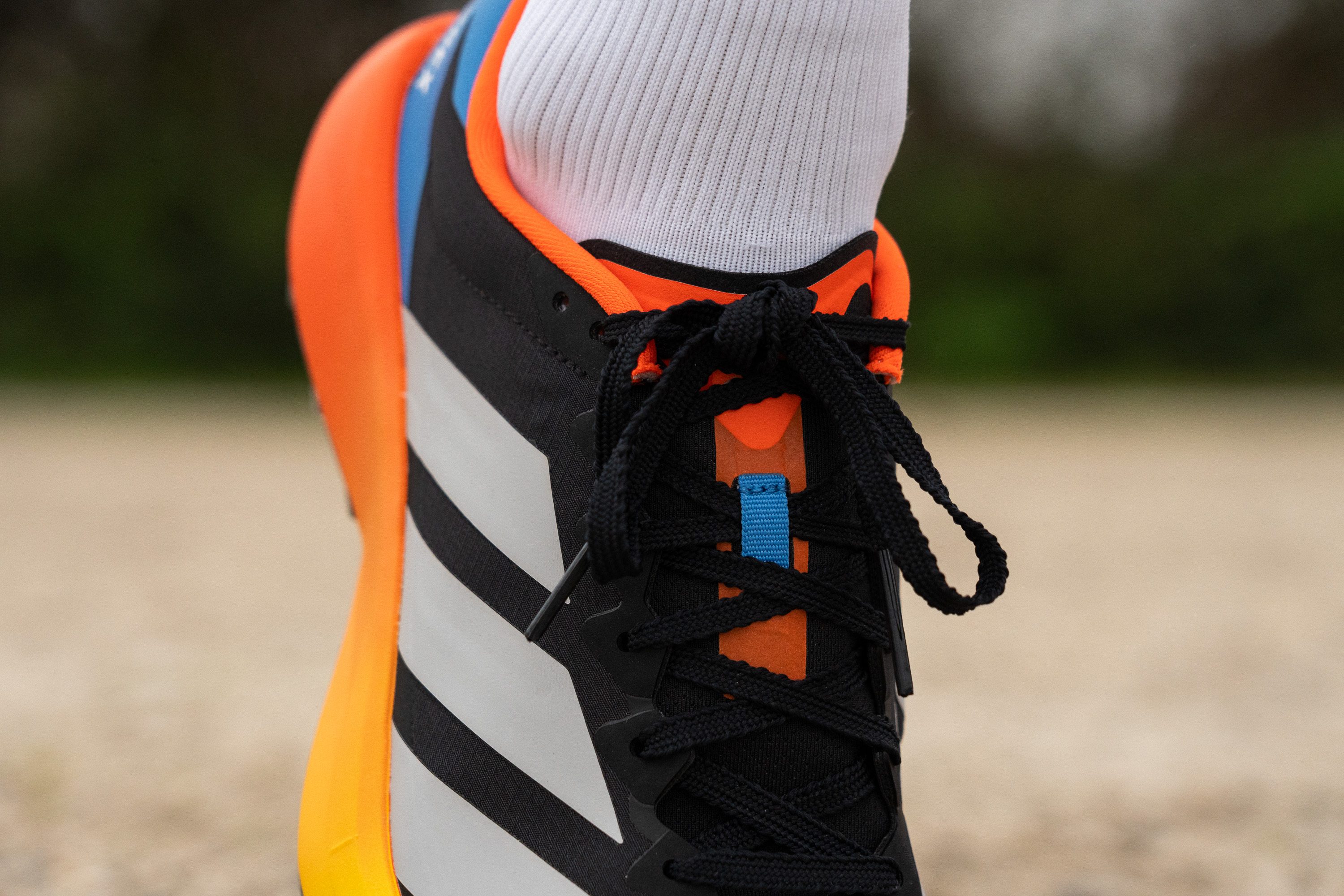
The tongue also deserves attention. It is well padded at 7.7 mm, but only in a limited area, so you need to be mindful of where pressure is applied when tightening the laces.
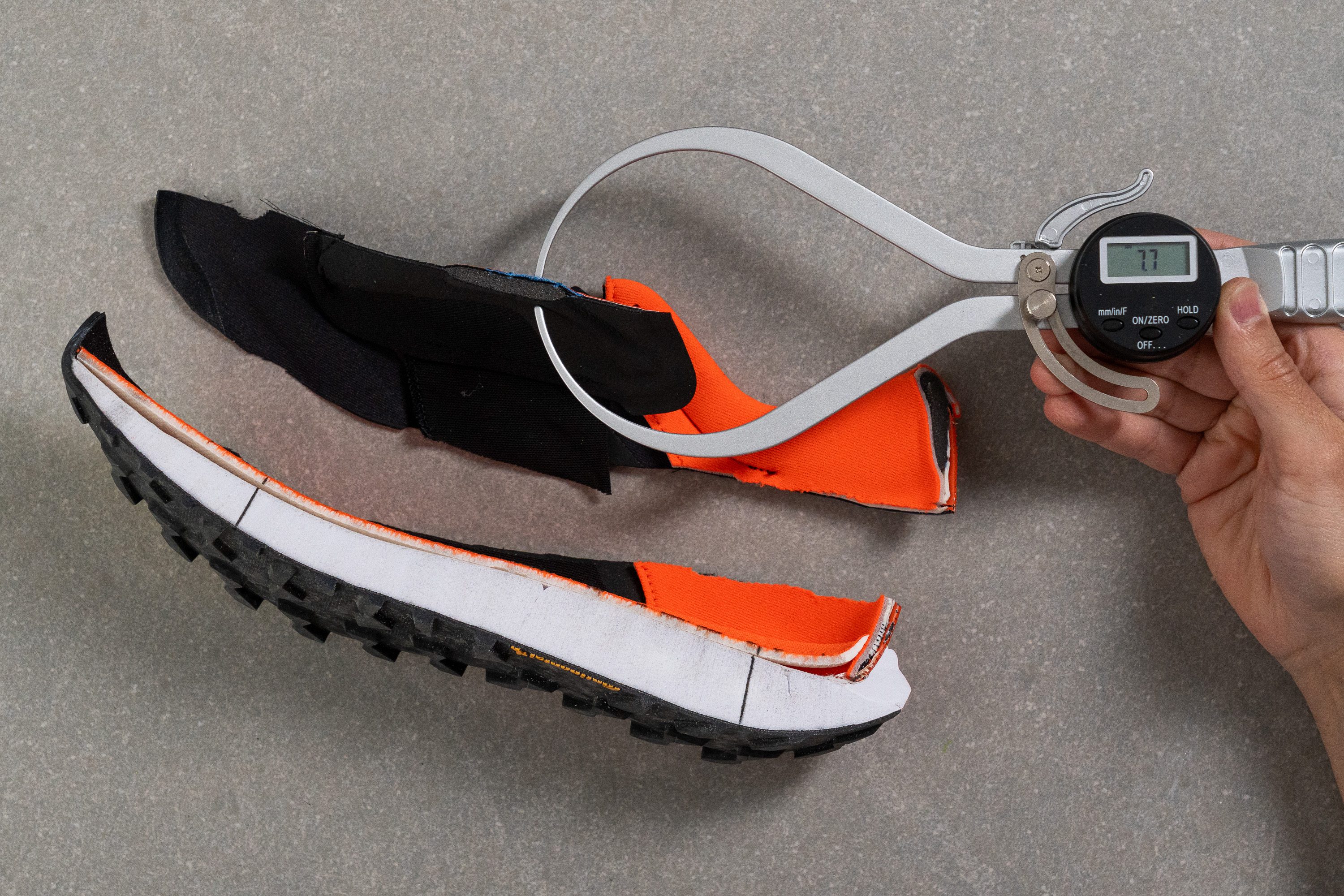
| Terrex Agravic 4 | 7.7 mm |
| Average | 6.4 mm |
Tongue: gusset type
The tongue is semi-gusseted, which is another clear sign that adidas designed this shoe for easier terrain. For more rugged conditions, they would likely have used a fully gusseted tongue to better block debris.
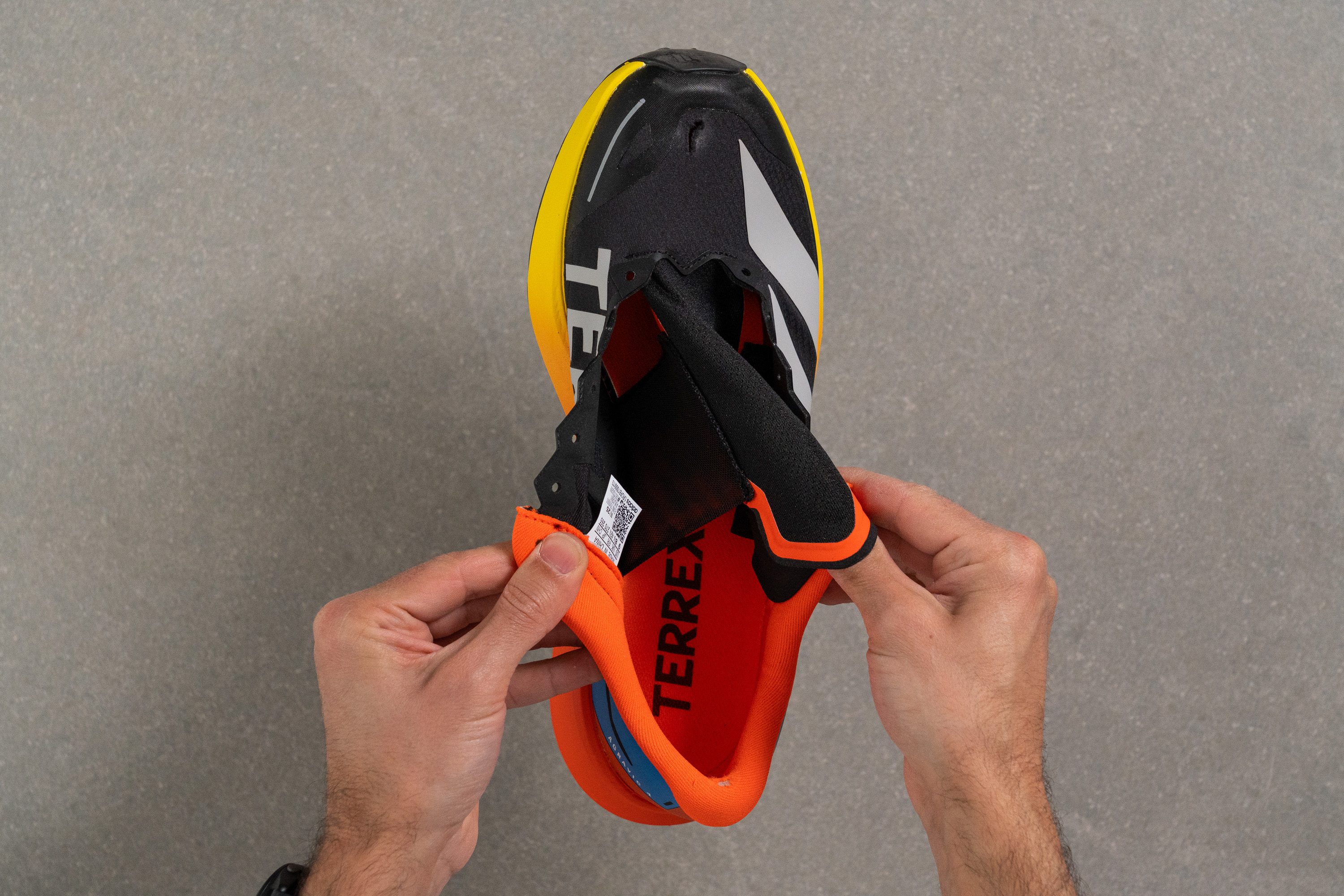
| Terrex Agravic 4 | Both sides (semi) |
Heel tab
Most brands use a finger-loop pull tab in trail shoes, as it adds to the typical trail look, but that’s not the case here. The Agravic 4 follows a more road-inspired design, similar to other adidas models.
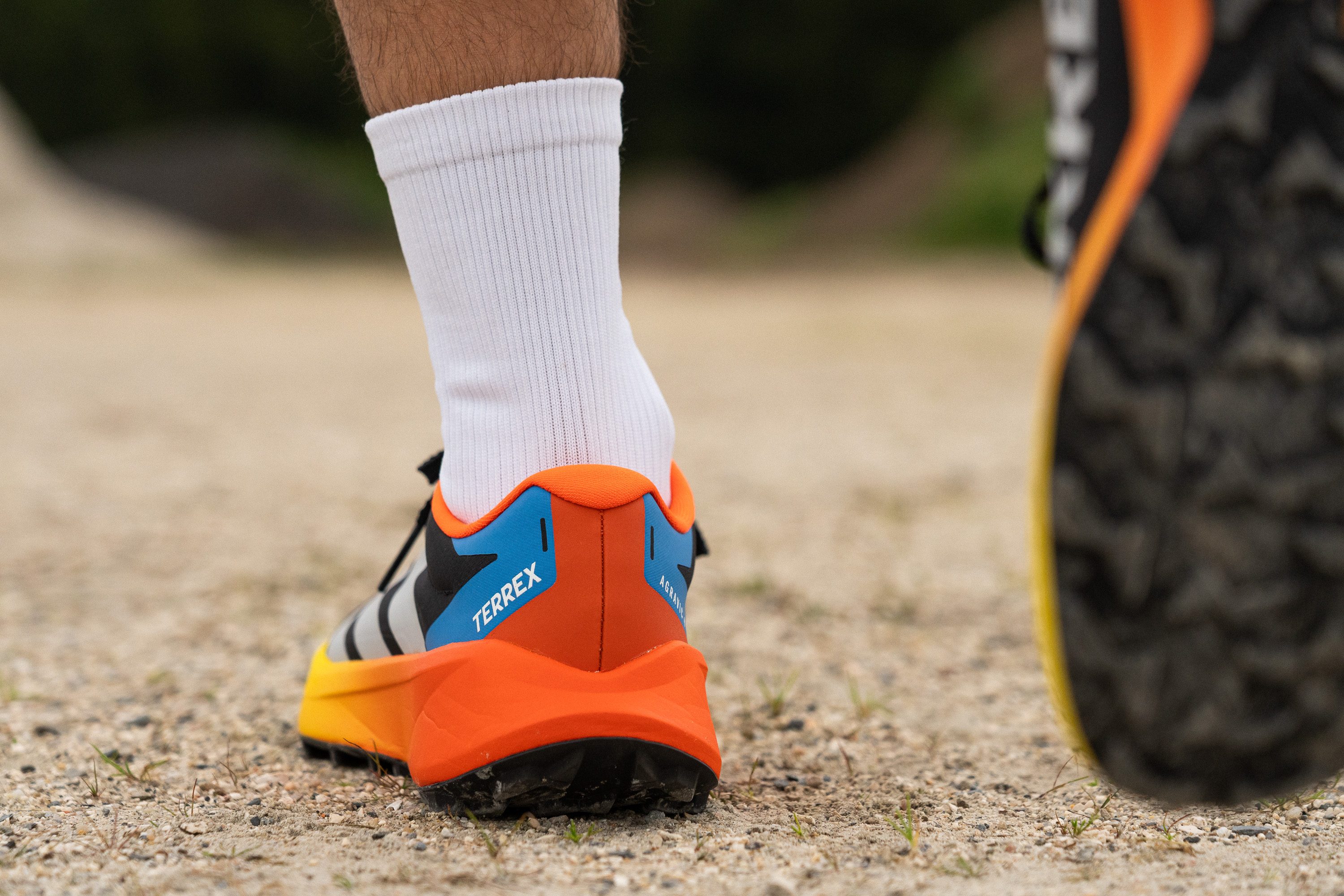
| Terrex Agravic 4 | None |
Price
We think one of the main appeals of the adidas Terrex Agravic 4 is its price. Getting a full Continental outsole at the MSRP of a road daily trainer is rare, and this shoe delivers exactly that for trail running.
| Terrex Agravic 4 | $140 |